
🌤 Weather at Algonquin State Forest by season
| Spring | Summer | Fall | Winter |
|---|---|---|---|
| 23–65 °F | 54–78 °F | 30–69 °F | 14–35 °F |
Each range runs from the coldest monthly average low to the warmest monthly average high in that season (1991-2020 climate normals), measured at Norfolk 2 SW, 7 mi away, elevation 1,340 ft. Conditions at the park can differ from the station, especially where elevation differs — check a forecast before you go.


🏆 Connecticut’s Remote Northern Forest — Wild, rugged New England woodland offering hiking, hunting, and solitude in the quiet hills of Litchfield County
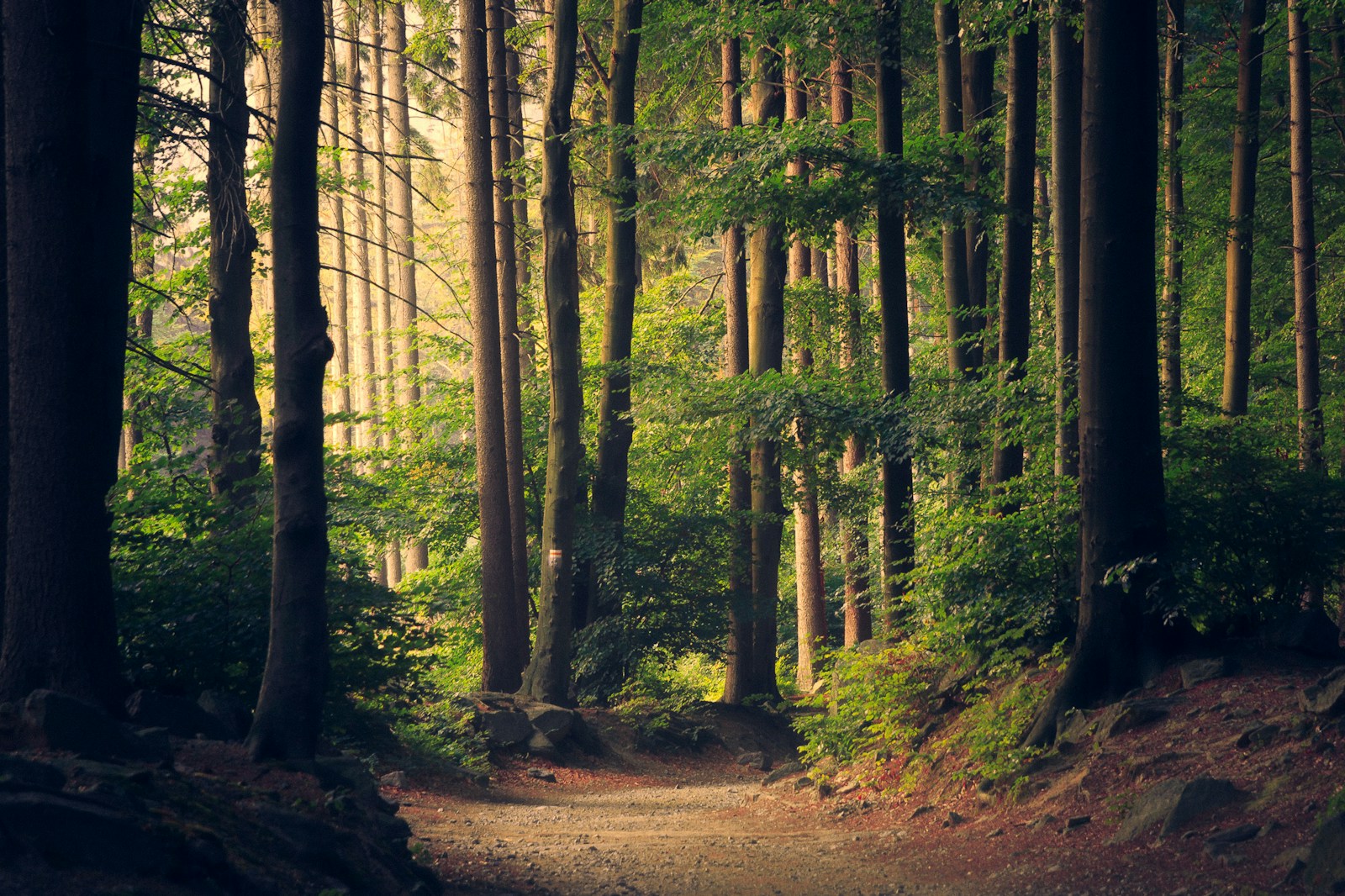
In the northwestern corner of Connecticut, where the state’s gentle suburban landscape gives way to the steep, wooded hills of Litchfield County, Algonquin State Forest sprawls across more than 700 acres of mixed hardwood and conifer forests. Named for the Algonquin-speaking peoples who inhabited this region for millennia before European contact, this state forest is not a manicured park with visitor centers and paved paths — it’s a working forest, managed for wildlife habitat, timber, and passive recreation in one of the most densely populated states in the country.
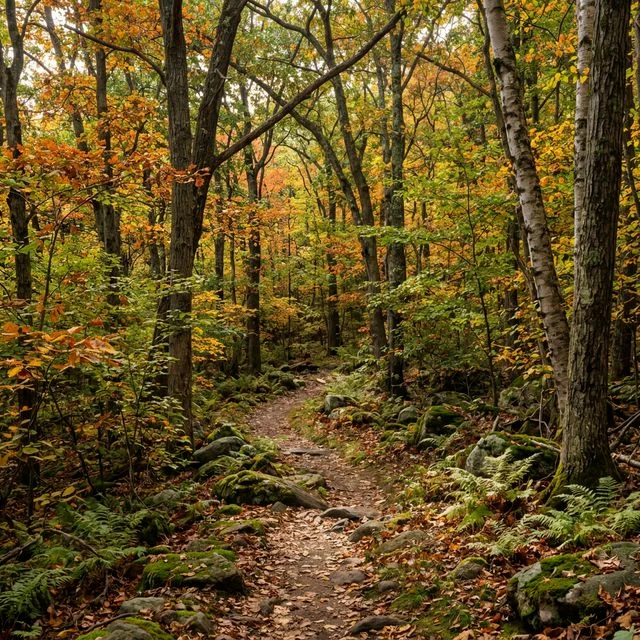
That contrast is what makes Algonquin State Forest compelling. Within an hour’s drive of Hartford, you can walk trails through mature oak-hickory forests, listen to wood thrushes and hermit thrushes call from the understory, and go an entire afternoon without seeing another person. Connecticut’s state forests were established in the early 20th century to restore land that had been clearcut for farming and charcoal production. A century later, these forests have regrown into some of the finest second-growth woodland in New England.
Table of Contents
About the Forest
Algonquin State Forest is managed by the Connecticut Department of Energy and Environmental Protection (DEEP) as part of the state forest system. Unlike state parks, which emphasize developed recreation, Connecticut’s state forests prioritize multi-use management — combining timber harvesting, wildlife habitat management, watershed protection, and passive recreation like hiking, hunting, and nature study.
📊 Forest Quick Facts
• Size: Approximately 700+ acres
• County: Litchfield County, Connecticut
• Terrain: Hilly, wooded — mixed hardwoods and conifers
• Elevation: 800–1,200 feet
• Forest type: Oak-hickory, maple-beech-birch, scattered hemlock groves
• Managed by: CT DEEP — Division of Forestry
• Key activities: Hiking, nature study, hunting, birding, cross-country skiing
Hiking Trails
The forest features a network of forest roads, logging paths, and unmarked trails that provide access to the interior. This is not a park with blazed, maintained trails and maps at every junction — it’s a forest where you navigate by terrain, compass, and occasionally by the blue blazes of the Connecticut Blue Trail system if trails pass through.
| Route | Distance | Difficulty | Highlights |
|---|---|---|---|
| Main Forest Road | 2.0 miles | Easy | Gravel road through forest, birding, wildflowers |
| Ridge Trail | 1.5 miles | Moderate | Uphill through hardwoods, rocky terrain, views |
| Hemlock Ravine Loop | 1.8 miles | Moderate | Old hemlocks, deep shade, stream crossing |
| Boundary Trail | 2.5 miles | Moderate | Forest perimeter, stone walls, wildlife corridor |
Navigation tip: Bring a printed map or GPS device. Cell service is unreliable throughout the forest. Many trails follow old stone walls — remnants of the 18th and 19th-century farms that once occupied this land before it was reforested.
Wildlife & Birding
The mature second-growth forest provides excellent habitat for woodland wildlife. The interior forest — areas far from roads and development — supports species that require large, unbroken forest blocks for nesting and foraging.
| Category | Notable Species |
|---|---|
| 🦌 Mammals | White-tailed deer, black bear (increasing), fisher, bobcat, porcupine, gray fox |
| 🦅 Raptors | Barred owl, great horned owl, red-shouldered hawk, broad-winged hawk |
| 🐦 Forest Birds | Wood thrush, hermit thrush, ovenbird, scarlet tanager, pileated woodpecker |
| 🐸 Amphibians | Wood frog, spotted salamander, red-backed salamander, spring peeper |
The wood thrush — with its haunting, flute-like song — is one of the signature species of Connecticut’s mature forests. If you hike here in June, listen for its cascading, ethereal melody echoing through the canopy at dawn and dusk.
Seasonal Highlights
| Season | Highlights |
|---|---|
| 🌸 Spring (Apr–May) | Wildflower carpets (trillium, trout lily, hepatica), vernal pools with salamanders, migrant songbirds return |
| ☀️ Summer (Jun–Aug) | Full canopy, breeding forest birds, mushroom foraging (expert only), deep shade hiking |
| 🍂 Fall (Sep–Nov) | Spectacular New England fall foliage, hunting season, comfortable hiking temperatures |
| ❄️ Winter (Dec–Mar) | Snow-covered trails, animal tracking, cross-country skiing, solitude |
Hunting & Fishing
Algonquin State Forest is open to hunting in accordance with Connecticut state regulations. White-tailed deer, wild turkey, and small game (squirrel, rabbit, grouse) can be hunted during designated seasons with valid licenses. The forest is particularly popular during fall hunting seasons. All hunters must follow CT DEEP regulations and wear blaze orange during firearm seasons.
Fishing opportunities are limited to any small streams within the forest. For lake or river fishing, nearby options in Litchfield County include the Farmington River (renowned for trout) and various state park ponds.
Visitor Information
| Detail | Information |
|---|---|
| 📍 Location | Litchfield County, Connecticut |
| 📞 Contact | CT DEEP: (860) 424-3200 |
| 🕐 Hours | Year-round, sunrise to sunset |
| 💰 Entry Fee | Free — Connecticut state forests have no entrance fees |
| 🅿️ Parking | Small gravel pulloffs at access points |
| 🚻 Restrooms | None — no developed facilities |
| ⛺ Camping | No designated camping — primitive backpack camping may be allowed with permit |
| 📡 Cell Service | Limited to none |
Best Time to Visit
Fall (October) is the premier season. Connecticut’s Litchfield County hills produce some of the finest fall foliage in New England — the maples, oaks, and birches create a blazing canopy of red, orange, gold, and amber. Spring wildflower season (mid-April to May) is also exceptional.
Nearby Attractions
| Destination | Distance | Highlights |
|---|---|---|
| Peoples State Forest | 15 miles | River trails, Stone Museum, camping |
| Mohawk State Forest | 20 miles | Mohawk Mountain lookout tower, fall colors |
| Farmington River (Wild & Scenic) | 10 miles | Trout fishing, tubing, kayaking |
| Litchfield Historic District | 15 miles | Colonial architecture, dining, shops |
| Kent Falls State Park | 25 miles | 250-foot cascading waterfall, CT’s tallest |
More parks nearby: John A. Minetto State Park is a short drive away, while Platt Hill State Park lies a short drive away.
Camping reservations: Book campsites and cabins for Connecticut state parks online at connecticutstateparks.reserveamerica.com.
Frequently Asked Questions
Is Algonquin State Forest a state park?
No — it’s a state forest, which is a different designation in Connecticut. State forests are managed for multiple uses including timber, wildlife habitat, and passive recreation. They typically have fewer developed facilities than state parks — no visitor centers, restrooms, or maintained picnic areas. Think of it as “wild Connecticut.”
Are there marked hiking trails?
The forest has a mix of forest roads, old logging paths, and informal trails. Blazing and signage are minimal compared to state parks. Bring a map, GPS, or compass. Some sections may connect to the Connecticut Blue Trail system, which is better marked.
Is there an entrance fee?
No — Connecticut state forests do not charge entrance fees. Parking is free at access pulloffs.
Can you camp at Algonquin State Forest?
There are no developed campgrounds. Primitive backpack camping may be permitted with a free camping permit from CT DEEP. Contact the CT DEEP forestry office for current policies. For developed camping nearby, Peoples State Forest and Housatonic Meadows State Park offer established campgrounds.
Is hunting allowed?
Yes — hunting is permitted in accordance with Connecticut state regulations. The forest supports deer, turkey, and small game hunting. Hunters must have valid licenses and follow all CT DEEP regulations, including wearing blaze orange during firearm seasons.
When is the best time for fall foliage?
Peak fall foliage in Litchfield County typically occurs from late September through mid-October. The exact timing varies by year — check CT DEEP fall foliage reports or local weather services for current conditions.
Are there bears at Algonquin State Forest?
Black bears have been expanding their range in northwestern Connecticut in recent years. Sightings are possible, especially in spring and fall. Store food properly and do not approach or feed wildlife. Connecticut bears are generally shy and avoid human contact.
🌲 Discover Algonquin State Forest
Walk through second-growth New England hardwoods, discover old stone walls from forgotten farms, listen for wood thrushes at dusk, and experience wild Connecticut in the quiet hills of Litchfield County.
🗺️ CT DEEP State ForestsExplore More Connecticut State Parks
Algonquin State Forest is one of many outstanding state parks in Connecticut. Discover more parks in our Best State Parks in Connecticut guide, or use our Park Finder to search by activity, location, or features.

🐾 Dogs & Pets at Algonquin State Forest
- Pets allowed? statewide rule
- Pets on a leash are permitted in most Connecticut state parks and forests, but not in buildings, swimming areas or state park campgrounds.
- Leash rule statewide rule
- Pets must be leashed and under control at all times; in state forest camping areas the leash may be no longer than 7 feet.
- Beaches & swim areas statewide rule
- Pets are prohibited in swimming areas; Sherwood Island and Squantz Pond State Parks ban pets entirely April 15 - September 30.
- Cabins & lodging statewide rule
- Pets are banned from all state park campgrounds; they are allowed only in the American Legion, Pachaug and Salt Rock state forest campgrounds, but not on rustic cabin sites.
- Statewide exceptions statewide rule
- Pets prohibited year-round at Dinosaur State Park and in the formal gardens and beach at Harkness Memorial State Park.
Are dogs allowed at Algonquin State Forest?
Pets on a leash are permitted in most Connecticut state parks and forests, but not in buildings, swimming areas or state park campgrounds. Individual parks can post stricter rules — check signage on arrival.
Rules verified July 2026 via portal.ct.gov. More: Connecticut state parks guide · Dog rules in all 50 states compared
Park Location
Plan your gear for Algonquin State Forest
From our editorial guides, matched to this park’s activities:
Top Tours & Activities Near Connecticut
 from $100
 from $28from $75