🌤 Weather at Orchard Beach State Park by season
| Spring | Summer | Fall | Winter |
|---|---|---|---|
| 25–67 °F | 54–80 °F | 33–72 °F | 19–35 °F |
Each range runs from the coldest monthly average low to the warmest monthly average high in that season (1991-2020 climate normals), measured at Manistee 3SE, 5 mi away, elevation 670 ft. Conditions at the park can differ from the station, especially where elevation differs — check a forecast before you go.

Overview: CCC Architecture on a Lake Michigan Bluff
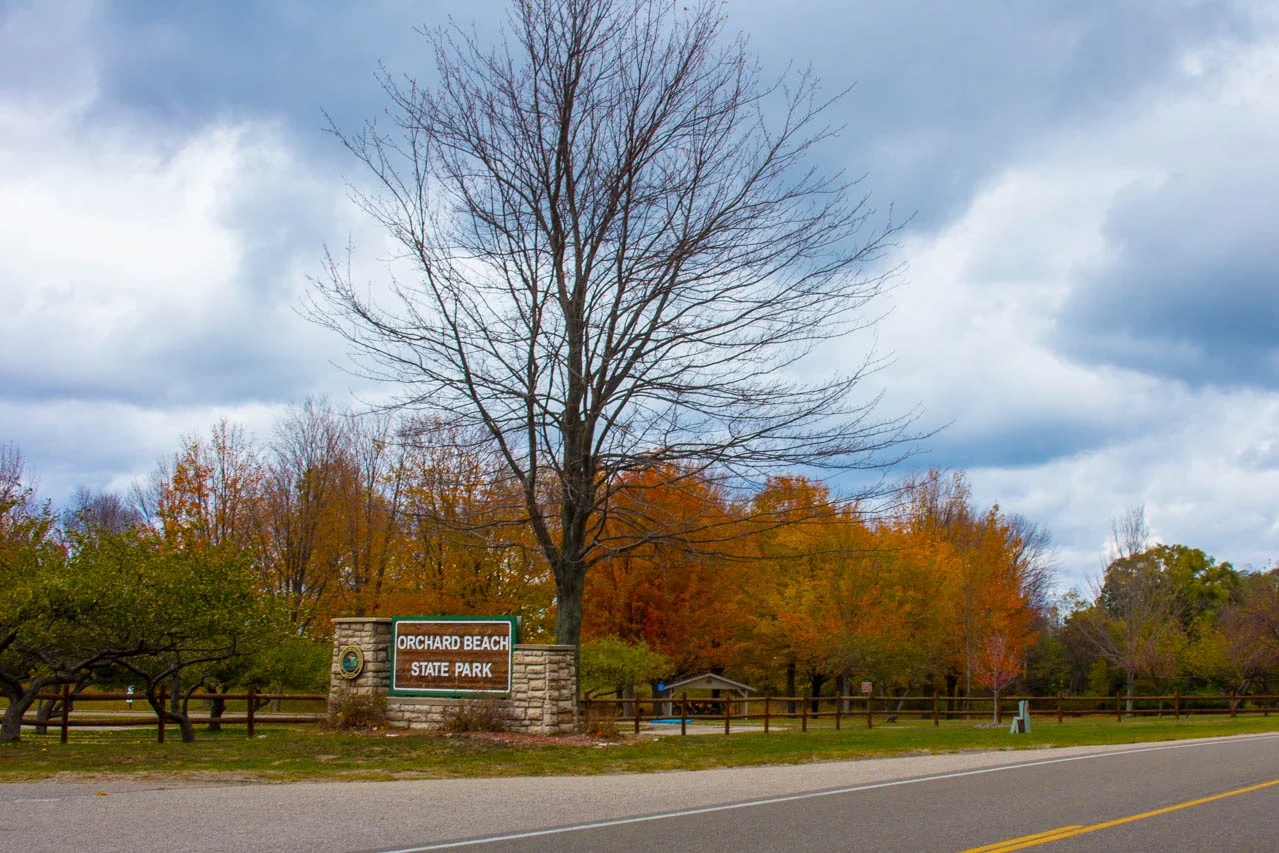
Perched atop a dramatic 100-foot bluff overlooking Lake Michigan approximately 3 miles north of the city of Manistee, Orchard Beach State Park’s 201 acres of forest, bluff-top viewpoints, and historic Civilian Conservation Corps (CCC) structures have earned it a place on the U.S. National Register of Historic Places—a distinction that recognizes the park as one of the most intact surviving examples of 1930s state park design and construction in Michigan.
Established in 1921, the park’s defining character was shaped during the Great Depression when CCC workers constructed the limestone buildings, trails, and infrastructure that continue to serve visitors today. The craftsmanship visible in the CCC stonework—hand-laid limestone walls, carefully fitted staircases, rustic shelters—reflects the Depression-era philosophy that public works should not merely be functional but should enhance the beauty of the natural landscape they serve.
The Bluff
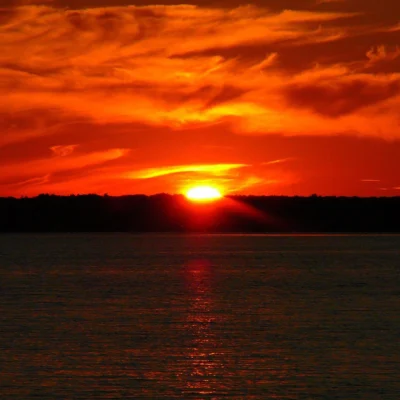
Orchard Beach’s most striking geographic feature is the 100-foot bluff that forms the park’s western boundary, rising sharply above the Lake Michigan shoreline. From the bluff-top viewing platform and multiple overlook points along the trails, visitors are rewarded with panoramic views of the open lake, the forested coastline stretching north and south, and spectacular Lake Michigan sunsets that rank among the finest on the eastern shore.
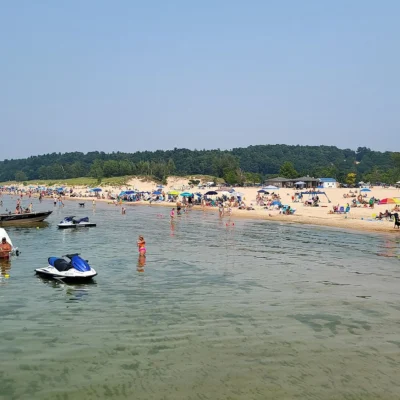
Important Note on Beach Access: Due to erosion and high Lake Michigan water levels, the beach below the bluff is no longer directly accessible from the park. Visitors seeking Lake Michigan swimming should use the public beaches in nearby Manistee.
CCC Architecture: National Register of Historic Places
The park’s 2009 addition to the National Register of Historic Places recognizes the exceptional quality and preservation of its CCC-era infrastructure. Built during the 1930s by crews of young men employed through President Roosevelt’s Civilian Conservation Corps, the park’s structures include:
- Limestone Walls and Staircases: Hand-laid from locally sourced limestone, demonstrating the skilled craftsmanship that characterized the best CCC work nationwide
- Picnic Shelters: Rustic stone-and-timber structures that blend into the forested landscape
- Original Infrastructure: Roads, drainage systems, and landscaping elements that have served continuously for nearly a century
For visitors interested in Depression-era history, architecture, or the legacy of the CCC—which built or improved infrastructure in nearly every state park in Michigan—Orchard Beach is an essential visit.
The Campground
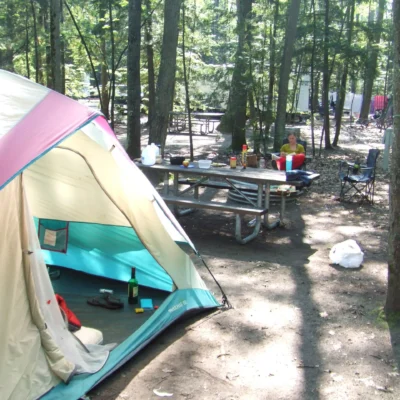
- 166 Modern Sites: Many with electric hookups, shaded by mature oaks and maples
- Camper Cabins and Mini Cabins: Sheltered accommodation options for visitors who prefer a roof
- Bluff-Top Views: Select sites offer panoramic Lake Michigan views from the 100-foot bluff edge—among the most dramatic campsite settings in the Michigan state park system
Note: The campground and day-use area are closed through June 30, 2026, for a planned enhancement project constructing a new toilet and shower building and universally accessible playground. Trails on the east side of the road remain open during construction. Check the Michigan DNR website for current reopening status.
Trails: 3.5 Miles
Over 3.5 miles of trails wind through the park’s forested landscape, offering hiking and cross-country skiing through terrain that includes bluff-top sections, ravines, and mature hardwood forest. The trails provide access to scenic overlooks, CCC structures, and wildlife observation opportunities in a compact but varied natural setting.
Manistee and the Riverwalk
The city of Manistee—just 3 miles south—provides a charming Victorian-era downtown, a popular riverwalk along the Manistee River, and access to Lake Michigan beaches that remain available when the park’s own beach is inaccessible. The Manistee area also offers:
- Manistee National Forest: Hundreds of thousands of acres of public land for hiking, mountain biking, and fishing
- North Country Trail: The 4,600+-mile National Scenic Trail passes through the Manistee region
- Pere Marquette River: A nationally recognized salmon and steelhead fishery within a short drive
Seasonal Guide
Spring (April–May)
Trails open. Wildflowers in the forest understory. Lake Michigan views at their clearest before summer haze.
Summer (June–August)
Peak season (when campground is operational). Sunset viewing from the bluff at its longest and most spectacular. Manistee festivals and farmers’ markets.
Autumn (September–October)
Fall color under the mature hardwood canopy is outstanding. Reduced crowds. Clear skies and dramatic lake views.
Winter (December–March)
Cross-country skiing on the trail system. Winter lake views from the bluff. Manistee area snowmobiling.
Frequently Asked Questions
Can I access the beach? Currently no. Erosion and high water levels have made the beach below the bluff inaccessible from the park. Public beaches in Manistee (3 miles south) provide Lake Michigan swimming access.
Why is the park on the National Register? The park was added to the National Register of Historic Places in 2009 as an exceptionally intact example of CCC-era state park construction, featuring original limestone structures, trails, and infrastructure from the 1930s.
Is the campground currently open? The campground and day-use area are closed through June 30, 2026, for infrastructure improvements. Trails on the east side remain open. Check the Michigan DNR website for current status.
What is the CCC? The Civilian Conservation Corps was a New Deal work relief program (1933–1942) that employed young men to build infrastructure in public parks and forests across the United States. Their craftsmanship at Orchard Beach is among the best-preserved examples in Michigan.
Keep exploring: The closest neighbors are Tippy Dam State Recreation Area (within about an hour’s drive) and Charles Mears State Park (within about an hour’s drive).

🐾 Dogs & Pets at Orchard Beach State Park
- Pets allowed? statewide rule
- Pets are welcome in Michigan state parks, campgrounds, harbors and state-designated trails, except designated swim beaches and other posted areas.
- Leash rule statewide rule
- Pets must always be on a 6-foot leash and under the owner's immediate control.
- Beaches & swim areas statewide rule
- Pets are prohibited in buoyed swim areas but allowed along the shoreline outside them (on a 6-ft leash, even in the water); 50+ parks have pet-friendly shoreline or designated dog beaches.
- Cabins & lodging statewide rule
- Up to two pets (cats and dogs only) allowed at ~12 parks' designated pet-friendly cabins, yurts and lodges; $10 per night per pet (cabins) or $15 (lodges); otherwise pets barred from overnight lodging.
- Pet fees statewide rule
- No day-use pet fee; pet-friendly lodging costs $10/night per pet (cabins) or $15/night per pet (lodges).
- Statewide exceptions statewide rule
- Leash laws do not apply to dogs used for hunting on land open to such use; pets may not be left unattended.
Are dogs allowed at Orchard Beach State Park?
Pets are welcome in Michigan state parks, campgrounds, harbors and state-designated trails, except designated swim beaches and other posted areas. Individual parks can post stricter rules — check signage on arrival.
Rules verified July 2026 via michigan.gov. More: Michigan state parks guide · Dog rules in all 50 states compared
Park Location
Plan your gear for Orchard Beach State Park
From our editorial guides, matched to this park’s activities:

Top Tours & Activities Near Frankfort
 from $15
 from $17