🌤 Weather at Port Crescent State Park by season
| Spring | Summer | Fall | Winter |
|---|---|---|---|
| 23–64 °F | 54–78 °F | 32–70 °F | 15–35 °F |
Each range runs from the coldest monthly average low to the warmest monthly average high in that season (1991-2020 climate normals), measured at Port Austin Wwtp, 5 mi away, elevation 605 ft. Conditions at the park can differ from the station, especially where elevation differs — check a forecast before you go.

Overview: Dark Skies and Geodesic Domes at the Tip of the Thumb
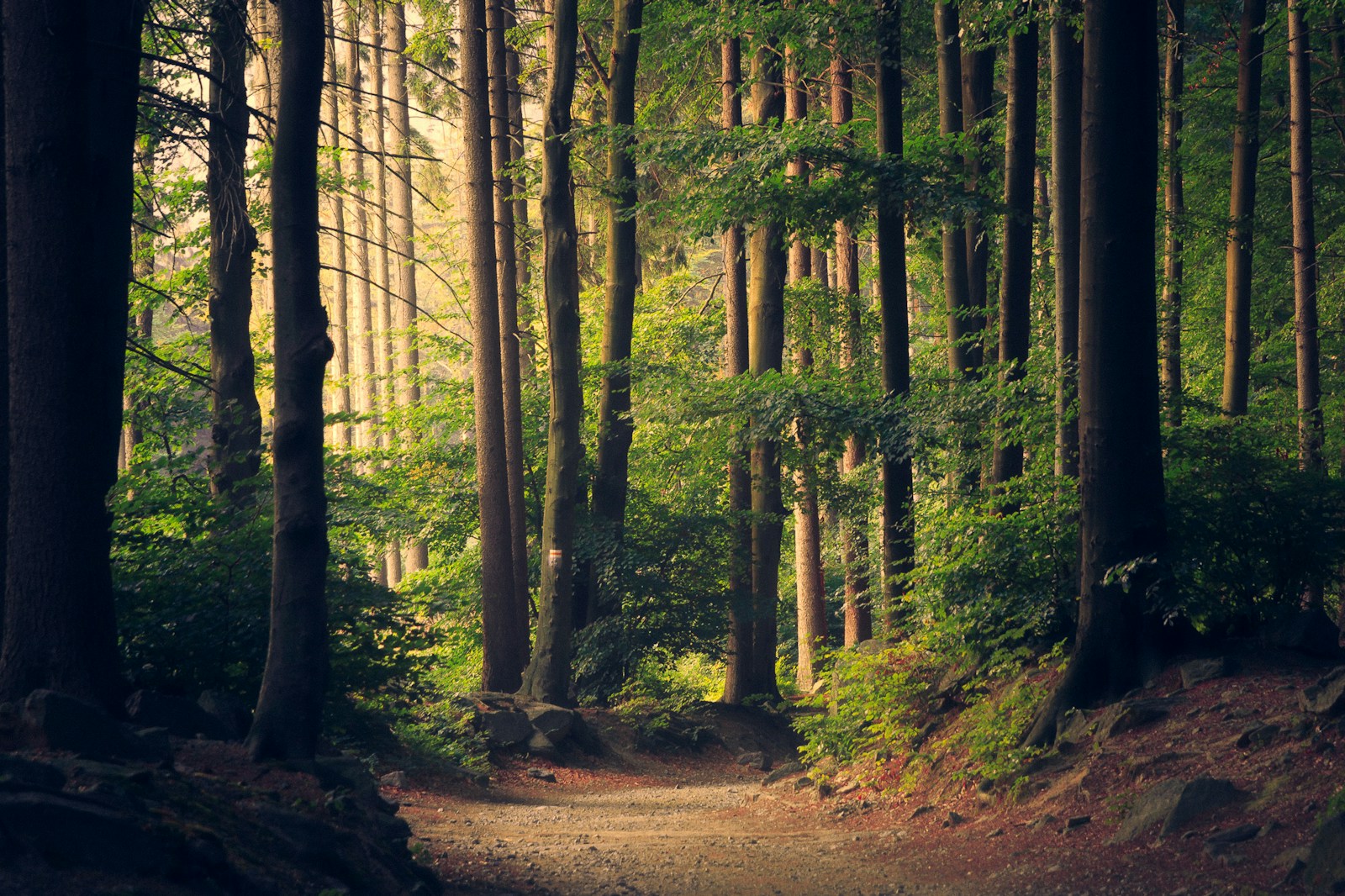
Occupying 640 acres of sandy shoreline, wooded dunes, and wetlands on Saginaw Bay near the tip of Michigan’s Thumb region, Port Crescent State Park combines a beautiful warm-water Great Lakes beach, over 140 modern campsites, and one of Michigan’s most celebrated dark sky preserves into a package that has made it one of the most popular parks in the Thumb—and increasingly, a destination for stargazers from across the Midwest.
The park sits on the site of the vanished lumber town of Port Crescent, which thrived during the 1860s–1880s timber boom and disappeared entirely after the forests were logged out. Today, only faint traces of the town remain—an old steel bridge, fragments of foundation—while the forest has reclaimed the land and the park has established itself as one of Michigan’s most forward-looking outdoor recreation destinations, offering unique lodging options including geodesic domes alongside traditional campsites and cabins.
Dark Sky Preserve (Since 2012)
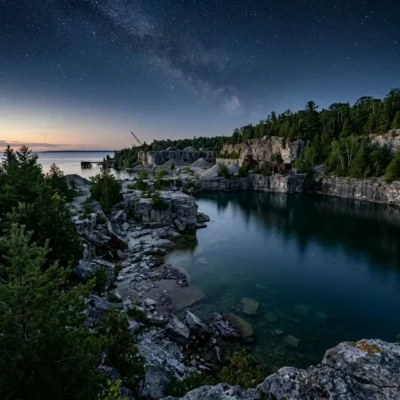
Port Crescent’s 2012 designation as a Michigan Dark Sky Preserve recognizes what its geography makes obvious: positioned at the tip of the Thumb with Saginaw Bay to the north, west, and southwest, the park is surrounded on three sides by water—effectively eliminating light pollution from those directions and creating some of the darkest skies in the Lower Peninsula.
- Best Viewing: The day-use area near Parking Lot D features a dedicated observation/viewing platform popular with stargazers and birders
- Milky Way: Clearly visible on clear, moonless nights from June through October
- Meteor Showers: The Perseid (August) and Geminid (December) showers are spectacular from the park
- Light Management: The park actively manages its lighting to minimize light pollution, including shielded fixtures and reduced overnight illumination
The Beach
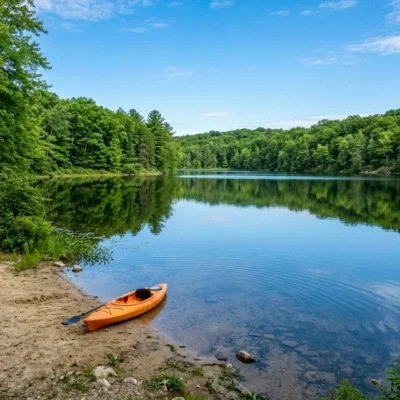
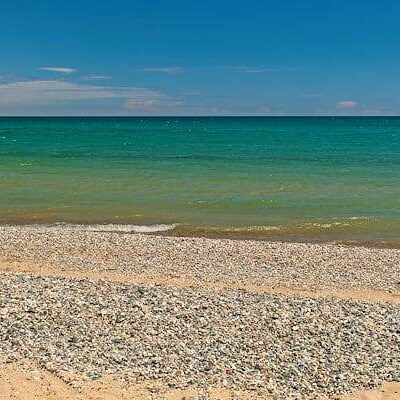
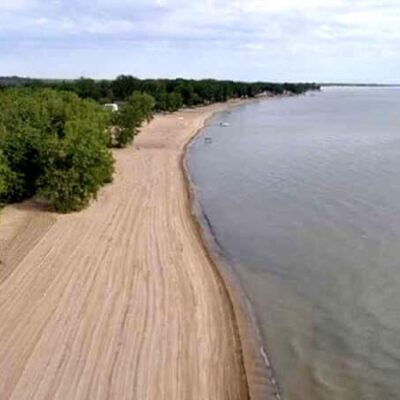
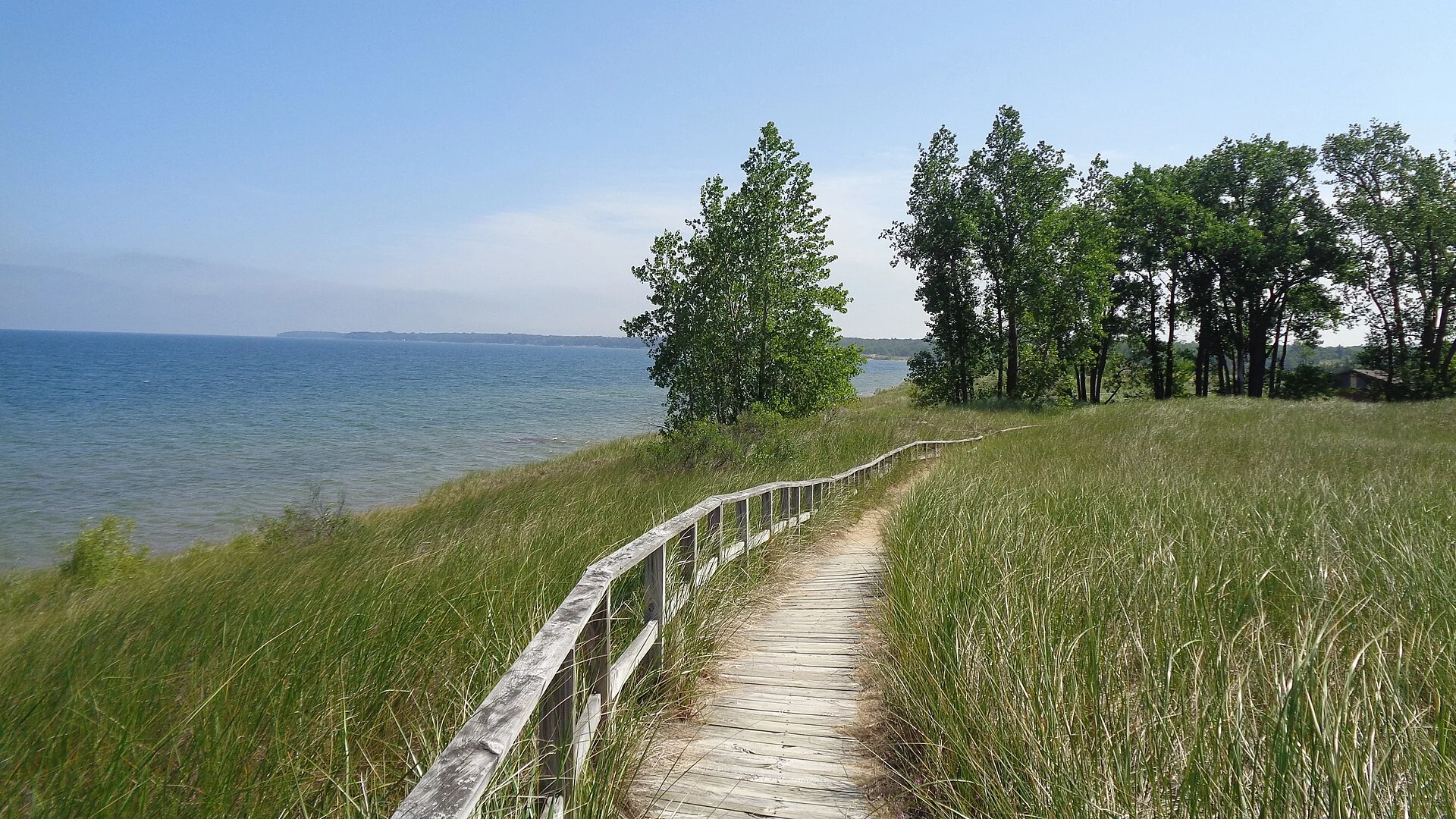
Port Crescent’s Saginaw Bay beach provides the same warm-water advantage found at nearby Sleeper State Park. The bay’s shallow, protected waters warm significantly faster and to higher temperatures than open Lake Huron, making swimming comfortable from mid-June through September. The sandy beach extends along a generous stretch of the park’s shoreline, with the day-use area providing bathhouse facilities, picnic areas, and a volleyball court.
Unique Lodging: From Tents to Geodesic Domes
Port Crescent has embraced the growing “glamping” trend by offering an unusually diverse range of accommodation types.
- Modern Campsites (140+): Traditional sites with water and electric hookups (20/30/50 amp). Some waterfront sites offer direct Saginaw Bay views.
- Geodesic Domes: Distinctive, futuristic-looking dome structures that provide sheltered accommodations with a unique aesthetic—a standout option that has generated significant social media attention
- Cottage Cabins: Fully equipped cabins with climate control and amenities for families seeking comfort
- Camper Cabins and Mini Cabins: Simpler sheltered options for visitors who want a roof without the full cottage experience
- Rustic Cabins: Basic structures for visitors seeking a minimal-amenity overnight experience
The Ghost Town of Port Crescent
Before the park existed, this stretch of Saginaw Bay shoreline was home to the lumber town of Port Crescent—a community that sprang up during the 1860s to serve the logging industry and vanished completely when the surrounding forests were stripped. At its peak, Port Crescent supported sawmills, a general store, homes, and a harbor. When the timber was exhausted by the late 1880s, the town simply ceased to exist. Today, the park occupies the former townsite, and only subtle archaeological traces—a decommissioned steel bridge, scattered foundation remnants—hint at the community that once stood here.
Port Austin and Turnip Rock
Port Crescent’s location just 5 miles from Port Austin—the charming resort village at the very tip of the Thumb—provides access to one of Michigan’s most photographed natural features: Turnip Rock, a mushroom-shaped sea stack accessible only by kayak. Multiple outfitters in Port Austin offer guided kayak tours to Turnip Rock, and the paddle route passes dramatic eroded sandstone shoreline, sea caves, and forested bluffs.
Seasonal Guide
Spring (April–May)
Campground opens. Bay water begins warming. Bird migration produces good viewing from the observation platform. Wildflowers emerge.
Summer (June–August)
Peak season. Swimming, stargazing, and camping at full capacity. Reserve domes and cabins well in advance. Guided Turnip Rock kayak tours from Port Austin.
Autumn (September–October)
Fall color. Darkest skies of the year during new moon periods. Reduced crowds. Bay water still swimmable through early September.
Winter (December–March)
Some cabins available year-round. Geminid meteor shower in December. Ice formations along the bay shoreline. Winter stargazing is exceptional on clear, cold nights.
Frequently Asked Questions
What are the geodesic domes? Distinctive dome-shaped structures available for overnight reservation. They provide a unique, Instagram-worthy glamping experience that has become one of the park’s signature attractions.
How dark are the skies? Port Crescent is one of Michigan’s designated Dark Sky Preserves, with water on three sides eliminating most light pollution. The Milky Way is clearly visible on clear, moonless nights.
What is Turnip Rock? A famous mushroom-shaped sea stack near Port Austin, accessible only by kayak. It is approximately 5 miles from the park, and guided tours are available from Port Austin outfitters.
What happened to the town of Port Crescent? Port Crescent was a lumber town that thrived during the 1860s–1880s. When the surrounding forests were logged out, the town was abandoned and eventually disappeared completely. The park now occupies the former townsite.
Wildlife & Nature
Port Crescent SP — at the Thumb’s tip — has 3 miles of beach and dark sky stargazing. Piping plovers may nest. Bald eagles fish the bay. Monarch butterflies stage for migration.
Nearby Attractions
Port Austin — 5 miles north. Caseville — 15 miles south. Sleeper SP — 20 miles south.
Nearby parks: If you have extra time, Port Austin State Harbor is a short drive away, and Albert E. Sleeper State Park is a short drive away.

🐾 Dogs & Pets at Port Crescent State Park
- Pets allowed? statewide rule
- Pets are welcome in Michigan state parks, campgrounds, harbors and state-designated trails, except designated swim beaches and other posted areas.
- Leash rule statewide rule
- Pets must always be on a 6-foot leash and under the owner's immediate control.
- Beaches & swim areas statewide rule
- Pets are prohibited in buoyed swim areas but allowed along the shoreline outside them (on a 6-ft leash, even in the water); 50+ parks have pet-friendly shoreline or designated dog beaches.
- Cabins & lodging statewide rule
- Up to two pets (cats and dogs only) allowed at ~12 parks' designated pet-friendly cabins, yurts and lodges; $10 per night per pet (cabins) or $15 (lodges); otherwise pets barred from overnight lodging.
- Pet fees statewide rule
- No day-use pet fee; pet-friendly lodging costs $10/night per pet (cabins) or $15/night per pet (lodges).
- Statewide exceptions statewide rule
- Leash laws do not apply to dogs used for hunting on land open to such use; pets may not be left unattended.
Are dogs allowed at Port Crescent State Park?
Pets are welcome in Michigan state parks, campgrounds, harbors and state-designated trails, except designated swim beaches and other posted areas. Individual parks can post stricter rules — check signage on arrival.
Rules verified July 2026 via michigan.gov. More: Michigan state parks guide · Dog rules in all 50 states compared
Park Location
Plan your gear for Port Crescent State Park
From our editorial guides, matched to this park’s activities: