🌤 Weather at Starved Rock State Park by season
| Spring | Summer | Fall | Winter |
|---|---|---|---|
| 29–72 °F | 60–83 °F | 32–76 °F | 15–36 °F |
Each range runs from the coldest monthly average low to the warmest monthly average high in that season (1991-2020 climate normals), measured at Ottawa 5SW, 4 mi away, elevation 525 ft. Conditions at the park can differ from the station, especially where elevation differs — check a forecast before you go.

🏞️ Guide to Illinois’ Canyon Country
Quick Facts
| Detail | Information |
|---|---|
| Location | Utica, LaSalle County, Illinois |
| Size | 2,630 acres |
| Established | 1911 (Illinois’ second state park) |
| Canyons | 18 sandstone canyons |
| Waterfalls | 8 seasonal waterfalls |
| Trails | 13+ miles of marked trails |
| Entry Fee | Free (no entry or parking fee) |
| Hours | Sunrise to sunset daily |
| Visitor Center | Open daily 9:00 AM – 4:00 PM |
| Annual Visitors | 2+ million |
| Pets | Allowed on leash |
Overview
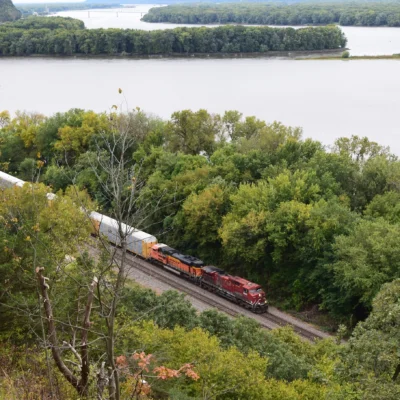
Starved Rock State Park is one of the most visited natural destinations in the Midwest, drawing over two million visitors annually to its dramatic sandstone canyons and seasonal waterfalls along the Illinois River. The park’s 2,630 acres encompass 18 distinct canyons carved over millions of years by glacial meltwater, creating a landscape that feels more like the American Southwest than central Illinois. Named after an 18th-century legend involving the Illiniwek and Potawatomi tribes, Starved Rock has been a designated state park since 1911 and remains Illinois’ most popular outdoor attraction.
Things to Do
Hiking the Canyon Trails
Starved Rock features over 13 miles of well-marked hiking trails that wind through the park’s signature sandstone canyons. Trails are color-coded with brown, green, and red markers for easy navigation, and trail maps are available at parking areas, trail intersections, and the Visitor Center. The terrain ranges from flat, accessible paths along the river bluffs to moderate descents into narrow canyon corridors. The most popular route connects the Visitor Center to the falls area, passing through French Canyon, St. Louis Canyon, and the dramatic Ottawa Canyon overlook.
💡 Trail Strategy: The park has many stairs — some canyons require climbing 100+ wooden steps. There are no ADA-accessible trails into the canyons. If you have mobility concerns, the Bluff Trail and River Trail offer level alternatives with excellent views.
Waterfall Chasing
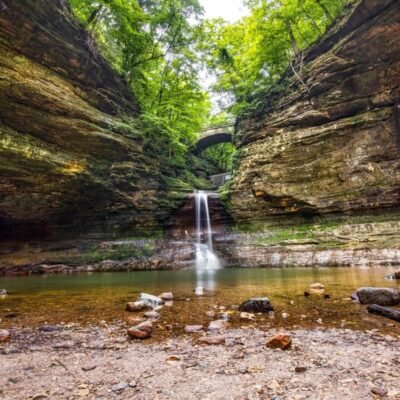
Eight of Starved Rock’s 18 canyons feature waterfalls: French, Wildcat, LaSalle, Ottawa, Kaskaskia, Illinois, St. Louis, and Aurora. These seasonal cascades are fed entirely by rainfall and snowmelt, making spring (March through June) the best time to witness them at full force. After heavy rains, the waterfalls transform from gentle trickles into thundering cascades that echo off the canyon walls. By late summer and fall, many dry up completely. Note that swimming, wading, and playing in the canyons or waterfalls is strictly prohibited for safety reasons.
Canyon Guide
| Canyon | Waterfall | Difficulty | Best Feature |
|---|---|---|---|
| French Canyon | Yes | Easy | Most accessible; walk behind the waterfall |
| St. Louis Canyon | Yes | Moderate | Tallest waterfall in the park |
| LaSalle Canyon | Yes | Moderate | Sandstone shelf, hidden alcove |
| Ottawa Canyon | Yes | Moderate | Dramatic overlook, river views |
| Wildcat Canyon | Yes | Moderate | Dramatic walls, winter ice climbing |
| Kaskaskia Canyon | Yes | Moderate | Twin canyons, less crowded |
| Illinois Canyon | Yes | Easy | Moss-covered walls, ferns, solitude |
| Aurora Canyon | Yes | Moderate | Remote, dramatic formations |
| Tonti Canyon | No | Moderate | Deep and narrow, ice formations |
| Starved Rock Summit | No | Easy | 125-foot butte, panoramic river views |
Winter Ice Formations
Winter transforms Starved Rock into an ice wonderland. From December through February, the waterfalls and canyon walls develop spectacular ice formations, including massive icefalls that attract photographers and ice climbers. Experienced ice climbers may access designated canyons — Wildcat, LaSalle, Ottawa, and Tonti — following park guidelines. The frozen landscape offers a completely different atmosphere from the lush green of summer, making winter one of the most dramatic seasons to visit.
Eagle Watching
Starved Rock is one of the best locations in the Midwest for viewing bald eagles. Each winter, eagles congregate near the Illinois River dam to feed on fish in the open water below the Lock and Dam. The park hosts the popular Eagle Watch Weekend in January, featuring educational programs, live birds of prey exhibits, and expert-led viewing sessions. On prime winter days, visitors can spot dozens of eagles soaring above the river bluffs.
Fishing
Fishing is permitted at two designated locations: the boat ramp area west of the Visitor Center (along the Illinois River seawall) and at Lone Point Shelter on the eastern edge of the park. A valid Illinois fishing license is required. Common catches include catfish, white bass, sauger, walleye, and crappie. Fishing is not allowed in any other areas, including the canyons.
Trolley Tours & River Cruises
The Starved Rock Lodge offers narrated historic trolley tours that provide a relaxing way to see the park and surrounding area, including downtown Utica and the Illinois Waterway Visitor Center. During warmer months, scenic river cruises depart from the park and offer a unique perspective on the sandstone bluffs from the water. Reservations are recommended and can be made through the Starved Rock Lodge at 815-667-4211.
Best Trails
| Trail | Distance | Difficulty | Highlights |
|---|---|---|---|
| French Canyon Trail | 0.5 mi | Easy | Most accessible canyon, seasonal waterfall |
| St. Louis Canyon Trail | 1.5 mi RT | Moderate | Tallest waterfall in the park |
| Ottawa & Kaskaskia Loop | 3.0 mi | Moderate | Two waterfalls, river overlooks |
| Wildcat Canyon Trail | 2.0 mi RT | Moderate | Dramatic canyon walls, ice climbing in winter |
| Illinois Canyon Trail | 1.0 mi RT | Easy | Quieter canyon, moss-covered walls |
| Bluff Trail | 4.0 mi | Easy | Illinois River views, connects major canyons |
| River Trail | 2.5 mi | Easy | Flat riverside walk, eagle viewing |
Wildlife & Nature
The Illinois River corridor and sheltered canyon ecosystems make Starved Rock a prime wildlife habitat spanning from river bottoms to bluff-top prairies.
Wildlife Viewing Guide
| Species | Where to See | Best Season |
|---|---|---|
| Bald Eagle | Illinois River near Lock & Dam | December–March (peak: January) |
| White-tailed Deer | Forest edges, early morning/dusk | Year-round |
| Great Blue Heron | River banks and wetlands | Spring–Fall |
| Red Fox | Meadows and trail edges | Year-round |
| Wild Turkey | Forest floor and clearings | Year-round |
| Pileated Woodpecker | Mature forest canopy | Year-round |
| Beaver | River banks and backwaters | Dawn and dusk |
| Spring Wildflowers | Canyon floors (trillium, bloodroot, bluebells) | April–May |
The canyon micro-environments harbor delicate ferns, liverworts, mosses, and wildflowers that thrive in the sheltered, humid conditions created by the sandstone walls. Virginia bluebells, bloodroot, and trillium carpet the canyon floors each spring, creating one of the best wildflower displays in Illinois.
Best Time to Visit
Spring (March through June) is the ideal season for waterfall viewing, as snowmelt and spring rains bring the cascades to life. Fall (September through November) offers spectacular foliage as the canyon forests blaze with color. Winter (December through February) attracts ice climbers and eagle watchers, while summer provides the most consistent weather for general hiking. Weekends and holidays year-round can be extremely busy — arriving before 9 AM on peak days is strongly recommended, as parking lots frequently fill to capacity.
Starved Rock Lodge
Built by the Civilian Conservation Corps between 1933 and 1939, the Starved Rock Lodge is a National Historic Landmark that serves as the park’s central hub for dining, lodging, and visitor services. The main lodge features massive log beams, a two-story stone fireplace, and a warm, rustic atmosphere that transports visitors to another era.
Lodge Accommodations
| Room Type | Features | Best For |
|---|---|---|
| Lodge Rooms | Historic wing, rustic decor, shared hallways | Budget-friendly stays |
| Log Cabins | Private cabin with fireplace, some with whirlpool | Romantic getaways |
| West Wing Rooms | Modern hotel-style, updated amenities | Families |
| Poolside Rooms | Indoor pool access, family-friendly | Kids and groups |
Dining Options
The lodge offers multiple dining venues open to the public year-round:
- Main Dining Room: Rustic atmosphere with massive stone fireplace, serving breakfast, lunch, dinner, and a popular Sunday brunch
- Back Door Lounge & Veranda: Casual dining with outdoor seating and scenic views
- Starved Rock Cafe: Quick bites and lighter fare for hikers on the go
💡 Booking Tip: Lodge rooms and cabins book months in advance during fall foliage season (mid-October) and holiday weekends. For the best availability, book 3–6 months ahead for peak weekends.
Geology and Formation
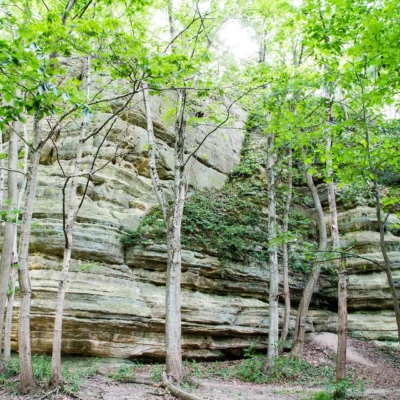
The sandstone canyons of Starved Rock were carved over 450 million years ago, beginning with the deposition of St. Peter Sandstone during the Ordovician Period when central Illinois lay beneath a warm, shallow sea. The distinctive buff-colored sandstone, remarkably pure in silica content, was sculpted into its current canyon formations primarily during the last Ice Age approximately 15,000 to 20,000 years ago. As glaciers retreated, massive volumes of meltwater from glacial Lake Ottawa carved deep channels through the soft sandstone, creating the 18 canyons visitors explore today. The ongoing process of erosion by rain, freeze-thaw cycles, and seasonal stream flow continues to slowly reshape these formations, making each visit unique as the landscape gradually evolves.
History and Cultural Significance
The park takes its name from an 18th-century legend involving a conflict between the Illiniwek and Potawatomi tribes. According to oral tradition, following the assassination of Chief Pontiac in 1769, a band of Illiniwek warriors took refuge on the 125-foot sandstone butte. They were besieged by Potawatomi and Ottawa warriors and eventually perished from starvation — giving the rock its name. While historians debate the accuracy of this account, the name has endured since French explorers first documented it in the 1700s.
The site has deep archaeological significance, with evidence of human habitation dating back at least 10,000 years. Multiple Native American cultures — Hopewellian, Woodland, Mississippian, and the Illinois Confederation — called this area home. French explorers Louis Jolliet and Father Jacques Marquette visited in 1673, and the legendary Fort St. Louis was established atop Starved Rock by René-Robert Cavelier, Sieur de La Salle in 1682–1683 as a center of trade and defense. The Civilian Conservation Corps (CCC) built the current Lodge, shelters, and trail infrastructure during the 1930s, creating the rustic stone-and-timber architecture that gives the park its distinctive character today.
Visitor Tips & Practical Information
- Parking is free but limited — arrive before 9 AM on weekends during peak season (spring, fall foliage)
- Wear sturdy footwear with good traction; canyon trails can be muddy, slippery, and involve many stairs
- Download the trail map from the IDNR website before your visit (cell service is limited in the canyons)
- Check the weather forecast for Utica, IL — waterfalls are most active after rain
- The Visitor Center (open 9 AM–4 PM daily) has current trail conditions, maps, and restrooms
- Stay on designated trails — sandstone is fragile and cliff edges can be unstable
- Rock climbing is prohibited on all formations due to the soft sandstone (ice climbing permitted in designated canyons in winter)
- Dogs are allowed on trails but must be leashed at all times
- Swimming is prohibited in all canyons and waterfalls
- From Chicago (~100 miles): Take I-80 West to Route 178 South; approximately 1.5–2 hours
- Park address: 2668 E. 950th Road, Oglesby, IL 61348
Seasonal Events and Programs
Starved Rock hosts year-round programming through the Visitor Center and Lodge. Winter brings the popular Eagle Watch Weekend in January, when naturalists lead viewing sessions as bald eagles congregate near the dam. Spring wildflower walks guide visitors through canyon ecosystems bursting with trillium, bloodroot, and Virginia bluebells. Summer features guided canyon hikes, river ecology programs, and evening campfire talks. Fall foliage tours are among the most popular events, with guided hikes to the most colorful canyon overlooks and photography workshops. The park also offers astronomy programs, bird identification walks, and geology talks throughout the year, all free with park admission.
Nearby Attractions
Matthiessen State Park, located just 2 miles south, offers a less crowded but equally beautiful alternative with its own set of canyons and waterfalls. Buffalo Rock State Park, 5 miles west, features the massive Effigy Tumuli — five monumental earth sculptures representing native animals. The historic Illinois and Michigan Canal Corridor provides cycling and walking paths connecting multiple trailheads. The charming town of Utica, just outside the park entrance, offers craft breweries, antique shops, local restaurants, and the popular trolley service.
💒 Elopements at Starved Rock
With its dramatic canyon backdrops, seasonal waterfalls, and the historic CCC-era lodge, Starved Rock offers a uniquely atmospheric elopement setting in the heart of Illinois. The park’s sandstone formations and forested bluffs provide natural ceremony locations that feel worlds away from the surrounding prairie. Illinois state parks require a Special Event Permit — contact the park office for ceremony locations, group size limits, and photography guidelines.
Read our complete State Park Wedding Planning Guide for Illinois park wedding options.
Frequently Asked Questions
Is there an entrance fee at Starved Rock State Park?
No. Starved Rock State Park is completely free to enter and park. There are no day-use fees, parking fees, or reservation requirements for day visitors. This applies year-round to all parking areas and trails.
When are the waterfalls running at Starved Rock?
The waterfalls at Starved Rock are seasonal and fed entirely by rainfall and snowmelt. Spring (March through June) is the best time to see them at full force. After heavy rains in any season, the falls can be spectacular. By late summer and fall, many waterfalls dry up completely. Winter brings dramatic ice formations instead.
Are the trails at Starved Rock wheelchair accessible?
There are no ADA-accessible trails leading into the canyons, as most require navigating many wooden stairs and uneven terrain. However, the Bluff Trail and some sections of the River Trail are relatively flat and suitable for visitors with limited mobility. The Visitor Center area and Lodge are accessible.
Can I go ice climbing at Starved Rock?
Yes. Experienced ice climbers can access designated canyons — Wildcat, LaSalle, Ottawa, and Tonti — during winter months when ice formations develop. You must follow park guidelines, bring your own equipment, and climb at your own risk. Standard rock climbing on sandstone formations is prohibited year-round due to the soft stone.
When is the best time to see bald eagles at Starved Rock?
January and February are the prime months for eagle watching. Bald eagles congregate near the Illinois River Lock and Dam to feed on fish in the open water. The park hosts an annual Eagle Watch Weekend in January with expert-led viewing sessions and educational programs. On peak days, dozens of eagles can be spotted from the river bluffs.
Can I bring my dog to Starved Rock State Park?
Yes, dogs are allowed on all trails at Starved Rock but must be kept on a leash (6 feet or shorter) at all times. Be aware that canyon trails involve many stairs and uneven surfaces that may be challenging for some dogs. Bring water for your pet, as there are no water sources along most trails.
How early should I arrive at Starved Rock to get parking?
On weekends and holidays during peak seasons (spring waterfall season and fall foliage), arrive before 9:00 AM to secure parking. The main lot at the Visitor Center fills first, followed by overflow lots along the park road. On weekdays and during winter, parking is rarely an issue.
Explore More Illinois State Parks
Starved Rock is one of many outstanding state parks in Illinois. Discover more parks in our Best State Parks in Illinois guide, or use our Park Finder to search by activity, location, or features.
Nearby parks: If you have extra time, Matthiessen State Park is a short drive away, and Buffalo Rock State Park is a short drive away.

🐾 Dogs & Pets at Starved Rock State Park
Park policy: IDNR's official park Q&A booklet states that dogs are allowed at Starved Rock but not inside the buildings unless they are certified service animals with a vest or collar. Dogs must always be kept on a leash, provided water, and never left unattended or alone inside a parked vehicle. The park explicitly warns that hikers and pets alike suffer heat exhaustion and even heat stroke on the exposed overlook trails in summer, so pack extra water for your dog.
- Pets allowed?
- Dogs allowed on all trails but not inside park buildings; lodge cabins pet-friendly
- Leash rule statewide rule
- Leash required at all times; state code caps leash length at 10 feet
- Beaches & swim areas statewide rule
- Pets are prohibited in areas posted 'NO PETS', reserved for beach areas, concession areas and crowded campground/picnic areas (e.g. no dogs on the beach at Illinois Beach State Park)
- Cabins & lodging statewide rule
- Pets are not allowed in campground cabins
- Park-specific rules
- Lodging inside the park is run by the Starved Rock Lodge concession, which accepts dogs only in the Pioneer Cabins with two queen beds, at $40 per dog per night, with a 70-pound weight limit and veterinarian certification of rabies vaccination required. Dogs may not be left alone in a cabin for more than two hours, must be crated when left, and cannot be tied up in the cabin yard or on the porch.
- Statewide exceptions statewide rule
- Leash rule exceptions for hunting dogs, field trials and dog training areas; pets must not be left unattended
Are dogs allowed at Starved Rock State Park?
Dogs allowed on all trails but not inside park buildings; lodge cabins pet-friendly.
Beyond that, Illinois’s statewide rules apply.
Rules verified July 2026 via dnr.illinois.gov. More: Illinois state parks guide · Dog rules in all 50 states compared
Park Location
Plan your gear for Starved Rock State Park
From our editorial guides, matched to this park’s activities: