
🌤 Weather at Whitefish Dunes State Park by season
| Spring | Summer | Fall | Winter |
|---|---|---|---|
| 21–62 °F | 53–78 °F | 29–69 °F | 10–31 °F |
Each range runs from the coldest monthly average low to the warmest monthly average high in that season (1991-2020 climate normals), measured at Sturgeon Bay Exp Farm, 7 mi away, elevation 699 ft. Conditions at the park can differ from the station, especially where elevation differs — check a forecast before you go.

🏖️ Wisconsin’s Tallest Sand Dunes on Lake Michigan — Old Baldy’s 93-foot summit, a mile of pristine beach, 8,000 years of archaeological history, and Door County’s finest nature trails through ancient dune ecosystems
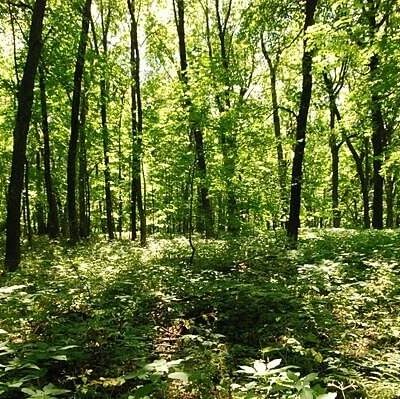
On the eastern shore of Wisconsin’s Door Peninsula, where the waters of Lake Michigan crash against a shoreline shaped by 5,000 years of wind and waves, Whitefish Dunes State Park protects the most significant sand dune formation on the western shore of the Great Lakes. The park’s 867 acres encompass towering parabolic dunes, dense boreal forest, a mile-long crescent beach of fine white sand, and archaeological sites documenting 8,000 years of continuous human habitation — one of the longest occupation records in the upper Midwest.
The centerpiece is Old Baldy, an exposed dune rising 93 feet above the lake — the tallest sand dune in Wisconsin. From its summit, the view stretches across the turquoise waters of Clark Lake Bay to the distant limestone bluffs of Cave Point County Park. But Whitefish Dunes is far more than a single dune: the park preserves an entire spectrum of Great Lakes coastal geology, from active beach ridges and backdune meadows to ancient stabilized dunes blanketed in hemlock and cedar forest. For visitors exploring Door County beyond the cherry orchards and fish boils, this park offers a stark, beautiful reminder that the peninsula sits at the intersection of geological forces that have been reshaping this landscape since the last glaciers retreated.
The Dunes: Geology and Formation
The dunes at Whitefish Bay formed through a process that began roughly 5,000 years ago, when post-glacial lake levels dropped and exposed wide sand flats along the shoreline. Prevailing westerly winds — funneled by the narrow bay between the Door Peninsula and the Niagara Escarpment — swept that sand inland, building the parabolic dune formations visible today.
Old Baldy
At 93 feet, Old Baldy is Wisconsin’s tallest sand dune. Unlike the vegetated dunes deeper in the park, Old Baldy’s summit remains exposed — a bald cap of sand that shifts and reshapes with every storm. A boardwalk and stairway system (currently under renovation with expected reopening mid-2026) provides access to the summit viewpoint. The panoramic view encompasses Clark Lake, the Lake Michigan shoreline, the forested dune ridges stretching south, and on clear days, the Michigan shoreline across the lake.
Dune Ridge System
Behind Old Baldy, the park contains a series of stabilized dune ridges that represent successive shorelines from different periods of lake level history. Walking from the beach inland is essentially walking backward through time — each ridge represents an older beach line, now anchored by vegetation. The oldest ridges, deep in the forest interior, date back nearly 5,000 years.
| Dune Feature | Height | Age | Access |
|---|---|---|---|
| Old Baldy | 93 feet | ~3,000 years | Boardwalk & stairs (reopening mid-2026) |
| Primary Foredune | 15-25 feet | Active | Beach trail access |
| Stabilized Ridge 1 | 40-60 feet | ~2,000 years | Red Trail |
| Ancient Interior Ridges | 30-50 feet | ~5,000 years | Yellow Trail |
What to Do at Whitefish Dunes
1. Hiking the Trail System
Whitefish Dunes offers approximately 14 miles of trails through remarkably diverse terrain. The trails are well-marked, generally flat to gently rolling, and accessible for most fitness levels.
| Trail | Distance | Difficulty | Highlights |
|---|---|---|---|
| Red Trail | 2.8 miles | Easy-Moderate | Dune ridges, forest interior, Old Baldy access |
| Yellow Trail | 2.5 miles | Easy | Ancient dune ridges, boreal forest, ferns |
| Green Trail | 3.4 miles | Moderate | Longest loop, Brachiopod Trail connection, wetlands |
| Black Trail | 0.8 miles | Easy | Beach access, foredune ecosystem |
| Brachiopod Trail | 1.2 miles | Easy | Fossil-rich limestone outcrops, geological history |
The Red Trail is the most popular, combining the Old Baldy experience with a loop through the forested dune ridges. The Brachiopod Trail is a hidden gem — a relatively unknown path that leads to exposed Silurian-age limestone outcrops studded with 425-million-year-old marine fossils, a vivid reminder that this entire peninsula was once beneath a shallow tropical sea.
2. Beach Walking and Beachcombing
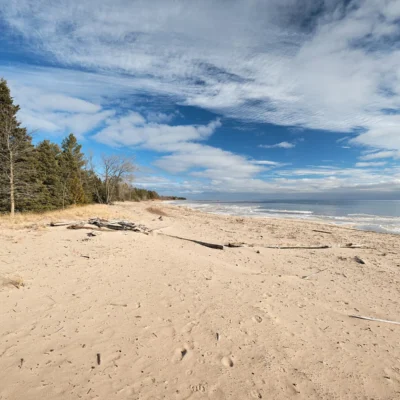
The park’s mile-long crescent beach is widely considered the finest sand beach in Door County. The sand is exceptionally fine and white, washed clean by Lake Michigan’s powerful waves. The beach faces south into Whitefish Bay, providing some shelter from the open lake’s full force.
- Beach Walking: Open year-round for walking, photography, and nature observation
- Beachcombing: Lake Michigan regularly deposits interesting stones, including Petoskey stones (fossilized coral), granite erratics from northern Canada, and red jasper
- Sunset Viewing: The south-facing orientation means excellent light in the late afternoon
Important Note: Swimming is not permitted at Whitefish Dunes. The beach is open for walking and nature enjoyment only. Dangerous currents and underwater drop-offs make swimming hazardous. Visitors seeking swimming should head to nearby Peninsula State Park or Nicolet Bay Beach.
3. Nature Center and Archaeological Exhibits
The park’s Nature Center houses exhibits covering three interconnected stories: the geological formation of the dunes, the ecological communities they support, and the 8,000-year human history of the site.
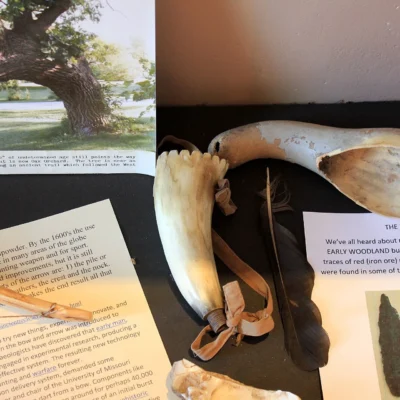
Archaeological excavations in the park have uncovered evidence of continuous human habitation stretching back to the Archaic period (approximately 6000 BC). Eight distinct cultural levels have been identified, documenting the progression from nomadic hunter-gatherer bands to the complex societies of the Woodland period and eventually the Potawatomi people who occupied the site when European fur traders arrived in the 1600s. Artifacts on display include stone tools, pottery fragments, bone implements, and trade goods that illustrate how this sheltered bay served as a resource-rich gathering point for millennia.
4. Winter Activities
Whitefish Dunes transforms into a winter wonderland from December through March:
- Cross-Country Skiing: Groomed trails through the dune forest on the Red and Yellow trail system
- Snowshoeing: All trails open to snowshoes, with rentals often available at the Nature Center
- Winter Photography: Lake Michigan ice formations, frozen spray on the dune grass, and dramatic winter light make this a photographer’s paradise
- Ice Shelf Walking: In cold winters, massive ice shelves build up along the shoreline, creating otherworldly blue-white formations
5. Birding and Wildlife
The park’s position on the Door Peninsula — a natural migration corridor extending into Lake Michigan — makes it an excellent birding location, particularly during spring and fall migrations.
- Spring Migration (May): Warblers, vireos, thrushes, and other neotropical migrants stop in the forested dunes
- Nesting Season (Jun-Jul): Piping plovers have nested on the beach in recent years — watch for protected nesting enclosures
- Fall Migration (Sep-Oct): Raptors, waterfowl, and songbirds funnel down the peninsula
- Year-Round Residents: Pileated woodpecker, barred owl, bald eagle, white-tailed deer, red fox
Essential Visitor Information
| Detail | Information |
|---|---|
| Address | 3275 Clark Lake Rd, Sturgeon Bay, WI 54235 |
| Hours | 6 AM – 8 PM daily, year-round |
| Vehicle Fee | WI Annual Sticker $28 (resident), $38 (non-resident), or daily pass |
| Camping | Not available (day-use only). Camp at Peninsula SP or Potawatomi SP |
| Swimming | Not permitted — beach walking only |
| Pets | Not allowed in the park (service animals excepted) |
| Nature Center | Open seasonally (generally Memorial Day – October) |
| Phone | (920) 823-2400 |
Getting There
Whitefish Dunes State Park is located on the Lake Michigan side of the Door Peninsula, approximately 10 miles northeast of Sturgeon Bay. From Highway 42/57 in Sturgeon Bay, take Highway 57 north and turn east onto Clark Lake Road. Follow Clark Lake Road approximately 5 miles to the park entrance on the right.
The park is approximately 45 minutes from Green Bay, 3.5 hours from Milwaukee, and 4 hours from Chicago. It sits alongside Clark Lake and is just 2 miles south of Cave Point County Park, making it easy to combine both in a single visit.
Best Time to Visit
| Season | Highlights | Crowd Level |
|---|---|---|
| Spring (Apr-May) | Wildflowers, bird migration, empty beach | Low |
| Summer (Jun-Aug) | Warm beach, full facilities, Nature Center | High |
| Fall (Sep-Oct) | Door County foliage, hawk migration, golden light | High |
| Winter (Dec-Mar) | XC skiing, ice formations, snowshoeing | Low |
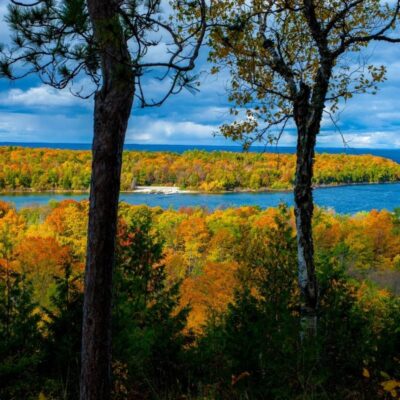
Late September and early October offer the ideal combination: Door County’s legendary fall color lights up the dune forest, summer crowds have departed, the beach is peaceful, and the angled autumn light makes Old Baldy glow golden at sunset. For beach walking, late June through August provides the warmest weather, though the park can get busy on summer weekends — arrive before 10 AM for easy parking.
Nearby Attractions
- Cave Point County Park: 2 miles north — dramatic wave-carved limestone cliffs, sea caves accessible by kayak
- Peninsula State Park: 15 miles north — Eagle Bluff, beach, camping, golf, bike trails, Door County’s largest park
- Jacksonport: 5 miles south — small lakeside village, Lakeside Park beach, restaurants
- Door County Wineries & Orchards: Multiple options within 20 minutes, including cherry and apple picking in season
- Potawatomi State Park: 12 miles south — observation tower, camping, hiking, Sturgeon Bay views
Frequently Asked Questions
Can you swim at Whitefish Dunes State Park?
No. Swimming is not permitted at Whitefish Dunes due to dangerous currents and underwater hazards. The beach is open for walking, beachcombing, and nature observation only. For swimming in Door County, head to Nicolet Bay Beach in Peninsula State Park (about 15 miles north), which has a designated swimming area with sandy entry.
Is Old Baldy open for climbing?
Old Baldy is accessible via a boardwalk and stairway system. However, the trail and stairs are currently under renovation and expected to reopen in mid-2026. Check with the park office at (920) 823-2400 for the latest reopening status before visiting specifically for Old Baldy. When open, the summit provides panoramic views of Clark Lake, Lake Michigan, and the dune ridge system.
Are dogs allowed at Whitefish Dunes?
No. Pets are not allowed at Whitefish Dunes State Park. This restriction protects the fragile dune ecosystem and nesting shorebirds, including the endangered piping plover. Service animals are the only exception. For Dog-friendly Door County parks, try Peninsula State Park or Potawatomi State Park, where leashed dogs are welcome on most trails.
Can you camp at Whitefish Dunes?
No, Whitefish Dunes is a day-use only park. For camping in Door County, the best options are Peninsula State Park (468 sites, 15 miles north) and Potawatomi State Park (123 sites, 12 miles south). Both can be reserved through the Wisconsin DNR’s reservation system. Summer weekends book out months in advance — reserve early.
How long do you need at Whitefish Dunes?
Plan for 2-4 hours for a thorough visit. This allows time to hike the Red Trail loop (about 1.5 hours), explore the beach (30-45 minutes), and visit the Nature Center (30 minutes). If you combine it with nearby Cave Point County Park (a 2-mile drive), plan a half-day. The park pairs naturally with a Cave Point visit — many visitors do Cave Point in the morning and Whitefish Dunes in the afternoon.
Nearby parks: If you have extra time, Potawatomi State Park is a short drive away, and Peninsula State Park is within about an hour’s drive.

🐾 Dogs & Pets at Whitefish Dunes State Park
- Pets allowed? statewide rule
- Pets are welcome in most Wisconsin state park campgrounds, trails, roads and outlying areas, but must be leashed and under control at all times.
- Leash rule statewide rule
- 8 ft maximum physical leash required at all times (except in designated pet swim areas while the pet is in the water)
- Beaches & swim areas statewide rule
- Pets are not allowed on public beaches, but over 30 properties (e.g. Devil's Lake, Governor Dodge, Point Beach) have designated pet swim areas
- Cabins & lodging statewide rule
- Pets are not allowed in buildings, picnic shelters or other structures unless specifically signed as open to pets
- Statewide exceptions statewide rule
- Pets prohibited entirely at Copper Culture, Heritage Hill and Hoffman Hills State Recreation Areas; designated pet picnic areas exist at many properties
Are dogs allowed at Whitefish Dunes State Park?
Pets are welcome in most Wisconsin state park campgrounds, trails, roads and outlying areas, but must be leashed and under control at all times. Individual parks can post stricter rules — check signage on arrival.
Rules verified July 2026 via dnr.wisconsin.gov. More: Wisconsin state parks guide · Dog rules in all 50 states compared
Park Location
Plan your gear for Whitefish Dunes State Park
From our editorial guides, matched to this park’s activities: