🌤 Weather at William G. Milliken State Park and Harbor by season
| Spring | Summer | Fall | Winter |
|---|---|---|---|
| 28–70 °F | 60–84 °F | 34–74 °F | 20–37 °F |
Each range runs from the coldest monthly average low to the warmest monthly average high in that season (1991-2020 climate normals), measured at Detroit City Airport, 5 mi away, elevation 626 ft. Conditions at the park can differ from the station, especially where elevation differs — check a forecast before you go.

Overview: Michigan’s First Urban State Park
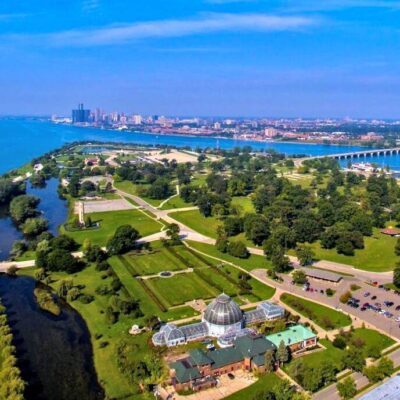
Rising from the revitalized waterfront of downtown Detroit, the William G. Milliken State Park and Harbor holds a unique distinction in the Michigan state park system: it is the state’s first—and, as of now, only—urban state park. Occupying just 31 acres along the Detroit River immediately east of the city’s gleaming Renaissance Center, Milliken State Park is less a wilderness retreat than a carefully designed green oasis that weaves together ecological restoration, maritime infrastructure, public art, and riverfront recreation into a compact, walkable package that has become one of the most visible symbols of Detroit’s ongoing renaissance.
The park was established in 2004 as Tri-Centennial State Park and Harbor, commemorating Detroit’s 300th anniversary. In 2009, it was renamed in honor of William G. Milliken, Michigan’s longest-serving governor (1969–1982) and a champion of environmental protection and urban renewal. Today, the park serves as a critical link in the Detroit International Riverfront—a continuous waterfront pathway stretching over 5 miles along the Detroit River—and provides Detroiters and visitors with direct access to harbor facilities, wetland habitat, paved trails, fishing, and unobstructed views of the river, Belle Isle, and the Canadian skyline of Windsor, Ontario.
The Harbor: 52 Slips on the Detroit River
The park’s 52-slip harbor of refuge is one of only a handful of protected marina facilities available to recreational boaters on the Detroit River within the city limits. The harbor provides both transient and seasonal tie-ups, making it a critical stop for cruising boaters transiting the Great Lakes waterway system between Lake Erie and Lake Huron.
- Transient Slips: Available for visiting boaters on a nightly basis, providing electricity, water, and pump-out services.
- Seasonal Slips: Available for longer-term rental during the boating season (approximately May through October).
- Harbor of Refuge: The designation as a “harbor of refuge” means the facility is specifically designed to provide emergency shelter for boaters caught in deteriorating weather conditions on the river.
The Lighthouse
The park’s most distinctive architectural feature is a 63-foot conical brick lighthouse tower at the harbor entrance. Designed as a scaled-down replica of the historic Tawas Point Light on Lake Huron, the lighthouse serves as both a functional navigational aid and a dramatic visual landmark visible from the river and the Riverwalk. While not open for interior tours, the lighthouse has become one of the most photographed structures on the Detroit waterfront.
Restored Wetlands: Nature Returns to Detroit
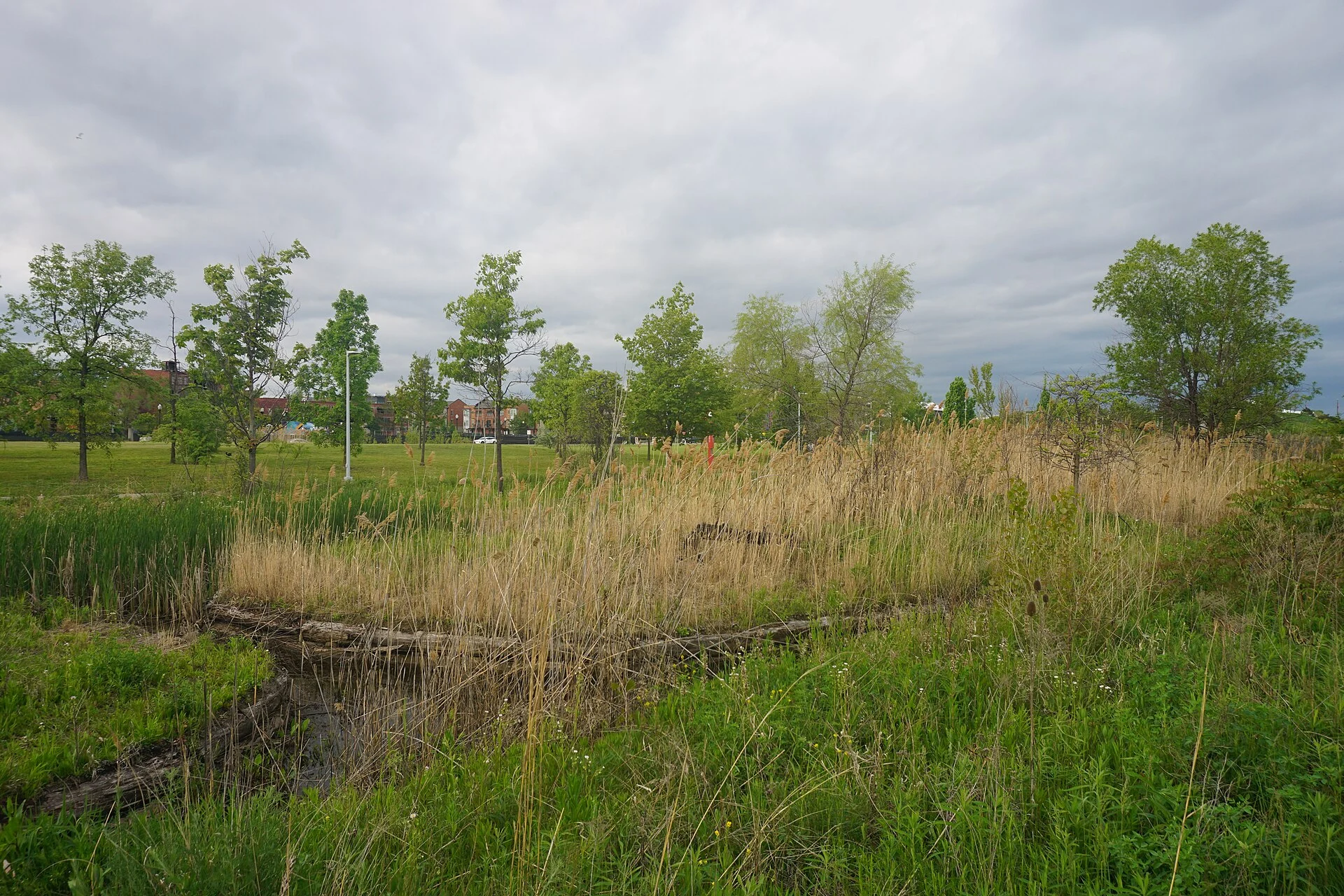
Perhaps the park’s most ecologically significant feature is its constructed wetland system—a series of carefully engineered marshes and shallow-water habitats designed to replicate the riverine wetlands that once lined the Detroit River before centuries of industrial development eliminated them.
The wetlands serve multiple functions simultaneously. They filter stormwater runoff from the surrounding urban landscape before it enters the river, improving water quality. They provide habitat for fish, amphibians, turtles, and migratory birds—the kind of wildlife that most Detroit residents would never expect to encounter within sight of the Renaissance Center. And they serve as an outdoor classroom, demonstrating the principles of ecological restoration and urban sustainability to thousands of visitors annually.
During spring and fall migration, the wetlands attract surprisingly diverse bird life, including great blue herons, green herons, various duck species, spotted sandpipers, and songbirds that use the riverfront corridor as a migration pathway.
The Riverwalk and Dequindre Cut
Milliken State Park is seamlessly integrated into Detroit’s broader waterfront trail network.
- The Detroit Riverwalk: A paved, accessible pathway that stretches over 5 miles along the riverfront, connecting the park to Hart Plaza, the Renaissance Center, GM headquarters, and numerous public art installations, restaurants, and gathering spaces.
- The Dequindre Cut: A below-grade, graffiti-adorned urban greenway built in a former railroad corridor that connects the Riverwalk to Eastern Market, Detroit’s legendary open-air food market. The Cut is one of the city’s most popular walking and cycling destinations.
Together, these connected pathways allow visitors to walk or cycle from Milliken State Park through miles of Detroit’s revitalized waterfront and into the heart of the city’s cultural and culinary districts without ever encountering a car.
Fishing on the Detroit River
The Detroit River is one of the most productive urban fisheries in North America. Anglers fishing from the park’s shoreline and accessible fishing areas can target an impressive roster of species.
- Walleye: The Detroit River supports one of the largest walleye spawning runs in the Great Lakes basin. Spring fishing (March through May) can be exceptional.
- Smallmouth Bass: Rocky shoreline areas near the park hold strong populations of hard-fighting smallmouth bass throughout the summer.
- Muskellunge: The river supports a healthy muskie population, with fish regularly exceeding 40 inches.
- White Bass, Yellow Perch, Channel Catfish: All present in fishable numbers and accessible from shore.
Accessibility and Inclusive Design
As a modern urban park built from the ground up, Milliken incorporates accessibility features throughout its design.
- Paved Trails: All pathways are paved, level, and wheelchair-accessible.
- EnChroma Viewers: The park features EnChroma-enabled scenic viewers on its elevated berm—specialized optical devices that allow people with color vision deficiency to perceive the full spectrum of colors in the river landscape and Canadian skyline.
- Sail-Covered Pavilions: Picnic pavilions with dramatic tensile fabric canopies provide shade and shelter for group gatherings and events.
Visiting Milliken
Getting There
The park is located at 1900 Atwater Street, Detroit, MI 48207. It is accessible by car, bicycle, the Detroit People Mover (Rivard Station), and QLine streetcar. Paid parking is available in adjacent lots.
Hours and Fees
The park is open year-round during daylight hours. A Michigan Recreation Passport is required for vehicle entry. Pedestrians and cyclists enter free of charge.
Events
The park hosts various public events throughout the year, including fishing clinics, nature education programs, outdoor concerts, and community gatherings. Check the Michigan DNR website for current event schedules.
Frequently Asked Questions
Is this really a state park in downtown Detroit? Yes. William G. Milliken State Park and Harbor is Michigan’s first and only urban state park, located on the Detroit River within sight of the Renaissance Center and the Canadian skyline.
Can I camp at Milliken State Park? No. The park does not offer camping facilities. It is primarily a day-use park with harbor, trail, fishing, and picnic amenities.
Can I dock my boat at the harbor? Yes. The 52-slip harbor provides both transient (nightly) and seasonal tie-ups with electricity, water, and pump-out services.
Is the lighthouse open for tours? No. The 63-foot lighthouse is not open for interior access but serves as a functional navigational aid and a popular photographic subject.
What are the EnChroma viewers? Specialized optical devices installed at scenic viewpoints that allow people with color vision deficiency (color blindness) to perceive a broader spectrum of colors in the landscape.
More parks nearby: Outdoor Adventure Center is a short drive away, while Belle Isle Park lies a short drive away.
Camping reservations: Book campsites and cabins for Michigan state parks online at midnrreservations.com.

🐾 Dogs & Pets at William G. Milliken State Park and Harbor
- Pets allowed? statewide rule
- Pets are welcome in Michigan state parks, campgrounds, harbors and state-designated trails, except designated swim beaches and other posted areas.
- Leash rule statewide rule
- Pets must always be on a 6-foot leash and under the owner's immediate control.
- Beaches & swim areas statewide rule
- Pets are prohibited in buoyed swim areas but allowed along the shoreline outside them (on a 6-ft leash, even in the water); 50+ parks have pet-friendly shoreline or designated dog beaches.
- Cabins & lodging statewide rule
- Up to two pets (cats and dogs only) allowed at ~12 parks' designated pet-friendly cabins, yurts and lodges; $10 per night per pet (cabins) or $15 (lodges); otherwise pets barred from overnight lodging.
- Pet fees statewide rule
- No day-use pet fee; pet-friendly lodging costs $10/night per pet (cabins) or $15/night per pet (lodges).
- Statewide exceptions statewide rule
- Leash laws do not apply to dogs used for hunting on land open to such use; pets may not be left unattended.
Are dogs allowed at William G. Milliken State Park and Harbor?
Pets are welcome in Michigan state parks, campgrounds, harbors and state-designated trails, except designated swim beaches and other posted areas. Individual parks can post stricter rules — check signage on arrival.
Rules verified July 2026 via michigan.gov. More: Michigan state parks guide · Dog rules in all 50 states compared
Park Location
Plan your gear for William G. Milliken State Park and Harbor
From our editorial guides, matched to this park’s activities: