🌤 Weather at Warren Woods State Park by season
| Spring | Summer | Fall | Winter |
|---|---|---|---|
| 29–70 °F | 60–82 °F | 33–74 °F | 17–36 °F |
Each range runs from the coldest monthly average low to the warmest monthly average high in that season (1991-2020 climate normals), measured at Laporte, 16 mi away, elevation 809 ft. Conditions at the park can differ from the station, especially where elevation differs — check a forecast before you go.

Overview: Michigan’s Last Virgin Forest
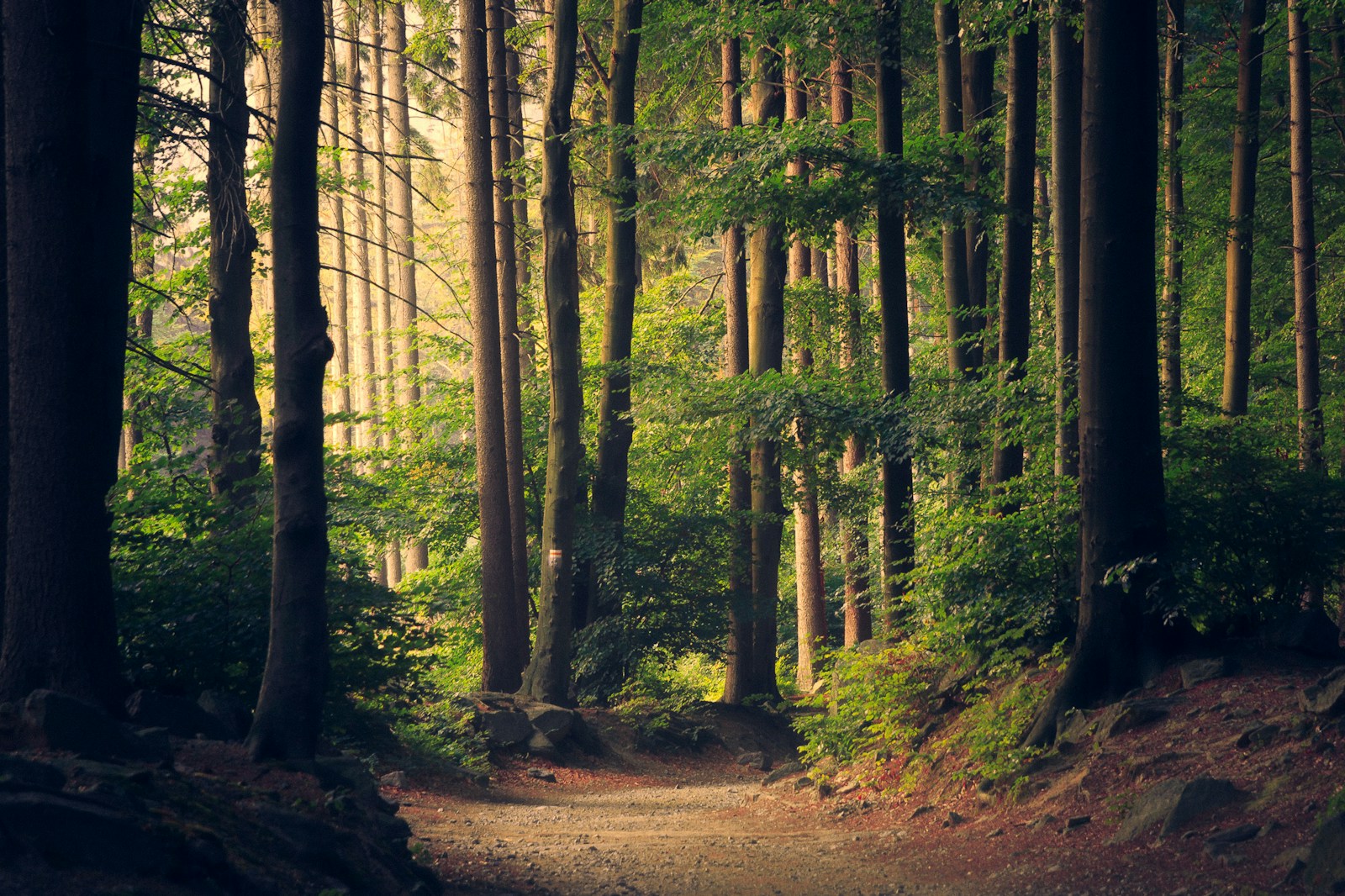
Hidden in the rolling countryside of Berrien County near the village of Three Oaks in Michigan’s far southwestern corner, the 311-acre Warren Woods State Park protects one of the rarest and most ecologically significant natural areas in the entire state: approximately 200 acres of virgin, never-logged beech-maple climax forest. These ancient trees—many reaching heights of 125 feet with trunk girths exceeding 5 feet in diameter—have stood undisturbed for centuries, creating a cathedral-like forest canopy that offers visitors the extraordinarily rare opportunity to walk through a Michigan woodland that looks essentially as it did before European settlement.
Designated a National Natural Landmark in 1967 by the National Park Service, Warren Woods is not a typical state park. There is no campground, no swimming beach, no boat launch, and no playground. What it offers instead is far more precious: a quiet, contemplative walk along the Galien River through one of the last remnants of the primeval forest that once covered most of southern Michigan—an ecological time capsule of almost incalculable scientific and spiritual value.
The Virgin Forest
The beech-maple forest at Warren Woods is classified as a “climax” or “old-growth” community—meaning these trees have reached their ecological maturity without significant human disturbance. Unlike the second-growth forests that cover virtually all of Michigan’s Lower Peninsula (regrown after the devastating logging of the 19th century), the trees at Warren Woods were never cut.
The Beeches
The American beech trees are the forest’s most visually striking inhabitants. Their smooth, pewter-gray bark—unlike the rough, furrowed bark of most other hardwoods—gives them an almost sculptural quality, as if they were carved from polished stone. Some of the largest specimens are estimated to be 300+ years old, with trunks so massive that a single person cannot reach around them. Their spreading, horizontal branches create a dense, overlapping canopy that filters sunlight into a soft, green-gold glow on the forest floor.
The Maples
Sugar maples share dominance with the beeches, their deeply furrowed bark and broad, palmate leaves providing visual contrast to the smooth beeches. The maples contribute spectacular autumn color—though the fall season in this shaded, sheltered valley tends to peak later than the surrounding open countryside.
The Understory
The deep shade cast by the closed canopy creates a forest floor that is dramatically different from younger, more open forests. The understory is relatively sparse—few plants can photosynthesize effectively in such dim light. Spring wildflowers (hepatica, trillium, spring beauty) exploit the brief window of sunlight before the canopy leafs out, creating ephemeral carpets of color in April and May. The rest of the year, the forest floor is covered in fallen leaves, scattered logs in various stages of decomposition, and the quiet, deep-brown palette of an undisturbed woodland.
The Galien River
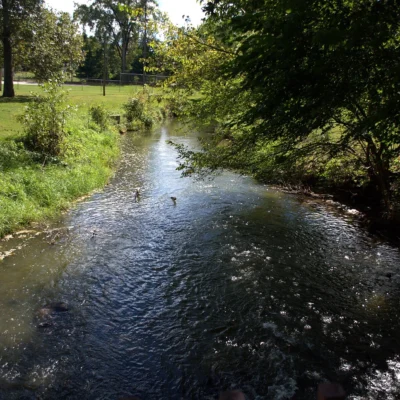
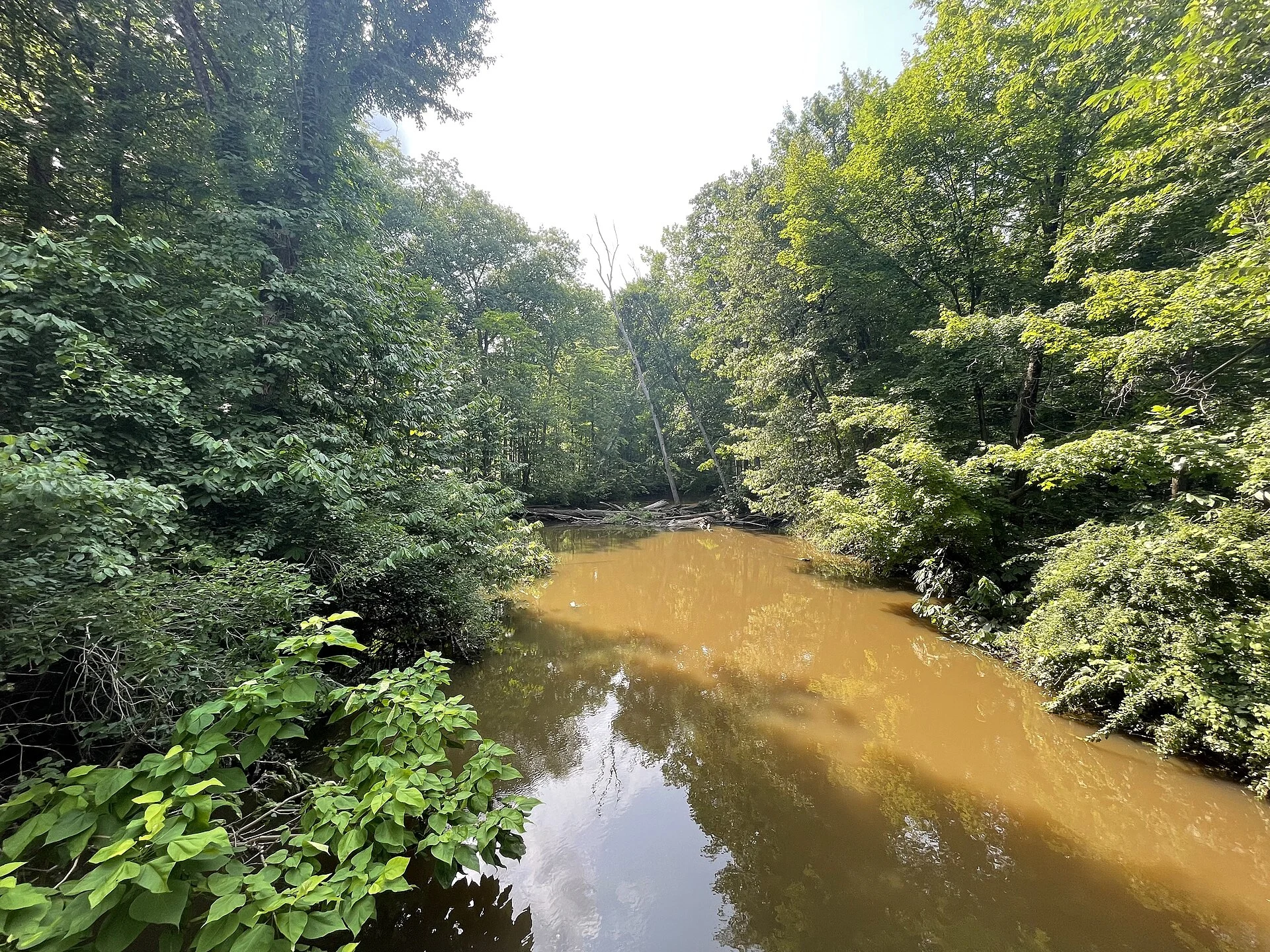
The Galien River flows through the heart of Warren Woods, its gentle, meandering course adding acoustic and visual texture to the forest experience. The river is small—wadeable in most conditions—and its banks are lined with the root systems of enormous trees that lean over the water, creating shaded pools and riffles that support a modest but healthy fish population. The river’s floodplain supports a slightly different forest community—oak and hickory rather than beech and maple—adding habitat diversity to the park’s relatively small acreage.
The Trail
A single, well-maintained trail of approximately 3 miles loops through the old-growth forest and along the Galien River. The path is unpaved and gently rolling, following the river valley through the tallest, most impressive stands of ancient trees. The trail is easy to follow and suitable for visitors of most fitness levels, though the natural surface can be slippery when wet.
Walking through Warren Woods demands a different pace than most outdoor recreation. This is not a trail for speed hiking, interval running, or mountain biking (which is prohibited). It is a place for slow, deliberate walking—for looking up at the towering canopy, listening to the sound of wind in branches that have swayed for three centuries, and absorbing the profound quiet of a forest that has never heard a chainsaw.
Edward Kirk Warren: The Unlikely Conservationist
The forest owes its survival to a most unlikely hero: Edward Kirk Warren, a 19th-century industrialist who made his fortune inventing the “featherbone” corset—a flexible boning material made from turkey quills that replaced uncomfortable whalebone in women’s undergarments. Beginning in 1879, Warren began purchasing the forested land along the Galien River specifically to prevent it from being logged during Michigan’s timber boom. His explicit goal was to preserve the trees for future generations—an extraordinary act of private conservation at a time when virtually every standing tree in southern Michigan was being felled for lumber.
Warren’s family continued to protect the forest after his death, and the land is now leased to the Michigan DNR for management as a state park. The park bears Warren’s name in recognition of his visionary act of preservation.
Visiting Warren Woods
- Location: Warren Woods Road, near Three Oaks, Berrien County
- Hours: Dawn to dusk, year-round
- Fees: Michigan Recreation Passport required
- Dogs: Permitted on leash
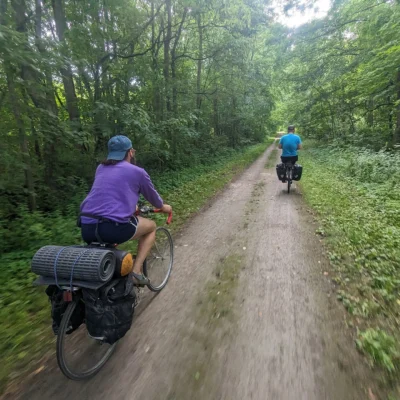
- Bikes: Not permitted on trails
- Camping: Not available
- Best Seasons: Spring (wildflowers), summer (full canopy), autumn (fall color)
Frequently Asked Questions
How old are the trees at Warren Woods? The oldest trees are estimated at 300+ years. The forest has never been logged, making it one of the last remnants of Michigan’s original pre-settlement beech-maple climax forest.
Can I camp at Warren Woods? No. Warren Woods is a day-use-only park with no camping facilities. Warren Dunes State Park, approximately 15 miles north, offers full camping amenities.
Is mountain biking allowed? No. The trail is for walking only. The old-growth forest ecosystem is too fragile to support mountain bike traffic.
What is a National Natural Landmark? A designation by the National Park Service recognizing sites that contain the best-known examples of biological or geological features in the United States. Warren Woods was designated in 1967 for its exceptional old-growth beech-maple forest.
Who saved these trees? Edward Kirk Warren, a 19th-century industrialist (inventor of the featherbone corset), began purchasing the land in 1879 specifically to prevent logging. His deliberate act of private conservation saved this forest from the fate that befell virtually every other stand of virgin timber in southern Michigan.
Wildlife & Nature
Warren Woods SP — preserves 300-year-old virgin beech-maple forest. Pileated woodpeckers drum the ancient trunks. Barred owls hunt at dusk. The old-growth trees reach 125 feet tall.
Nearby Attractions
Warren Dunes SP — 5 miles west. Three Oaks — adjacent. New Buffalo — 10 miles southwest.
More parks nearby: Grand Mere State Park is a short drive away, while Van Buren Trail State Park lies within about an hour’s drive.

🐾 Dogs & Pets at Warren Woods State Park
- Pets allowed? statewide rule
- Pets are welcome in Michigan state parks, campgrounds, harbors and state-designated trails, except designated swim beaches and other posted areas.
- Leash rule statewide rule
- Pets must always be on a 6-foot leash and under the owner's immediate control.
- Beaches & swim areas statewide rule
- Pets are prohibited in buoyed swim areas but allowed along the shoreline outside them (on a 6-ft leash, even in the water); 50+ parks have pet-friendly shoreline or designated dog beaches.
- Cabins & lodging statewide rule
- Up to two pets (cats and dogs only) allowed at ~12 parks' designated pet-friendly cabins, yurts and lodges; $10 per night per pet (cabins) or $15 (lodges); otherwise pets barred from overnight lodging.
- Pet fees statewide rule
- No day-use pet fee; pet-friendly lodging costs $10/night per pet (cabins) or $15/night per pet (lodges).
- Statewide exceptions statewide rule
- Leash laws do not apply to dogs used for hunting on land open to such use; pets may not be left unattended.
Are dogs allowed at Warren Woods State Park?
Pets are welcome in Michigan state parks, campgrounds, harbors and state-designated trails, except designated swim beaches and other posted areas. Individual parks can post stricter rules — check signage on arrival.
Rules verified July 2026 via michigan.gov. More: Michigan state parks guide · Dog rules in all 50 states compared
Park Location
Plan your gear for Warren Woods State Park
From our editorial guides, matched to this park’s activities: