🌤 Weather at Yankee Springs State Recreation Area by season
| Spring | Summer | Fall | Winter |
|---|---|---|---|
| 24–69 °F | 55–82 °F | 30–74 °F | 16–35 °F |
Each range runs from the coldest monthly average low to the warmest monthly average high in that season (1991-2020 climate normals), measured at Hastings, 11 mi away, elevation 821 ft. Conditions at the park can differ from the station, especially where elevation differs — check a forecast before you go.

Overview: 5,200 Acres of Glacial Lakes and Rugged Trails
Sprawling across 5,200 acres of heavily forested, glacially sculpted terrain in Barry County, Yankee Springs State Recreation Area is one of southwestern Michigan’s most diverse and heavily utilized outdoor destinations. Located roughly midway between Grand Rapids and Kalamazoo, the park encompasses nine distinct lakes, over 30 miles of multi-use trails, a major modern campground, and a landscape so dramatically contoured by the retreating continental glaciers that it feels more like northern Wisconsin than the typically flat farmland of southern Michigan.
Managed by the Michigan Department of Natural Resources, Yankee Springs attracts a remarkably wide spectrum of visitors. Families flock to the modern campground and swimming beaches on Gun Lake during the summer. Mountain bikers traverse the park’s technically challenging singletrack network. Equestrians ride dedicated horse trails through the deep hardwood forests. And hikers following the federally designated North Country National Scenic Trail pass through six miles of the park’s most remote, atmospheric terrain. Few Michigan state recreation areas pack this much ecological diversity, recreational variety, and historical interest into a single property.
A Landscape Carved by Ice
The dramatic terrain of Yankee Springs is the direct legacy of the Wisconsin Glaciation, which retreated from this area approximately 10,000 years ago. As the massive ice sheets melted, they deposited enormous quantities of sand, gravel, and glacial till in complex, chaotic patterns. The result is a landscape of sharp ridges (moraines), deep depressions (kettles), and scattered lakes and wetlands that make the park’s trail system far more physically demanding than most visitors expect from a southern Michigan park.
Devil’s Soupbowl
The park’s most famous geological feature is Devil’s Soupbowl, a massive, perfectly formed glacial kettle—a steep-sided, bowl-shaped depression created when a buried block of glacial ice slowly melted, causing the overlying sediment to collapse. The Soupbowl is approximately 100 feet deep and several hundred feet across, with remarkably steep, forested walls. An interpretive trail loops around and descends into the formation, providing a vivid, tangible lesson in glacial geology. During autumn, when the surrounding hardwood canopy blazes with color, the view down into the Soupbowl from the rim is one of the most dramatic natural vistas in the region.
Graves Hill Overlook
For the opposite perspective, Graves Hill offers one of the highest natural elevations in the area. A short but steep climb reaches the summit, which provides panoramic views across the rolling, forested landscape of the park and the surrounding countryside. On clear days, the horizon stretches for miles in every direction.
The Nine Lakes
Yankee Springs contains nine named lakes within its boundaries, each with a distinct character and recreational profile.
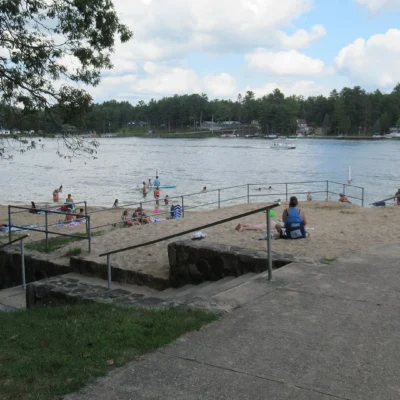
- Gun Lake: The largest and most developed, featuring a modern campground, swimming beach, and boat launch. Gun Lake is a popular warm-water fishery supporting bass, bluegill, and northern pike.
- Deep Lake: Home to the park’s rustic campground, Deep Lake is smaller, quieter, and surrounded by dense forest. Its clear, deep water supports a cold-water fishery including trout.
- Long Lake, Hall Lake, Payne Lake: Smaller, more secluded lakes offering quiet fishing, paddle sports, and wildlife viewing away from the busier developed areas.
Several of the smaller lakes have no motorized boat access, making them ideal for kayaking, canoeing, and stand-up paddleboarding in a peaceful, motor-free setting.
The Trail Network
Yankee Springs boasts one of the most extensive and varied trail networks of any state recreation area in southwestern Michigan.
Hiking Trails (30+ Miles)
The hiking trail system ranges from easy, flat loops near the campgrounds to strenuous ridge-and-valley routes through the park’s interior. The terrain is genuinely challenging in places, with significant elevation changes, exposed roots, and rocky sections that demand sturdy footwear and reasonable fitness.
Mountain Bike Trails (12 Miles)
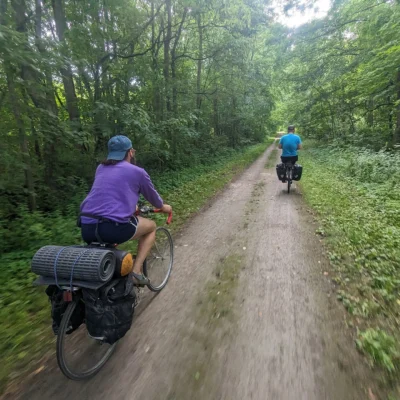
The designated mountain bike trail system is a regional destination for riders seeking technical, wooded singletrack. The trails exploit the park’s glacial terrain to create a rollercoaster of short, punchy climbs, fast descents, tight switchbacks, and rooty technical sections. The system is well-marked and maintained by a combination of DNR staff and local volunteer trail organizations.
North Country National Scenic Trail (6 Miles)
Six miles of the North Country Trail—the longest off-road hiking trail in the United States, stretching from Vermont to North Dakota—pass through Yankee Springs. This federally designated National Scenic Trail segment traverses some of the park’s most remote, heavily forested terrain, offering a genuine backcountry hiking experience within a surprisingly accessible state recreation area.
Equestrian Trails (9 Miles)
A dedicated 9-mile equestrian trail system, supported by a 25-site horse camping area, weaves through the park’s forests and meadows. The trails are wide enough for comfortable riding and are separated from the hiking and biking networks to minimize user conflicts.
Camping at Yankee Springs
The park offers a comprehensive range of camping options to suit different preferences and experience levels.
- Modern Campground (Gun Lake): Approximately 200 sites with electrical hookups, modern restrooms with flush toilets and showers, and proximity to the swimming beach and boat launch. These sites are heavily booked during summer weekends; reservations through the Michigan DNR system are strongly recommended.
- Rustic Campground (Deep Lake): Approximately 120 sites without electrical hookups, featuring vault toilets and hand-pump water. The deep forest setting provides more privacy and a quieter, more immersive camping experience.
- Equestrian Campground: 25 sites designed for visitors with horses, including tie-out areas and direct trail access.
- Cabins: Two rustic cabins are available for reservation, providing a roof-over-head option for visitors who prefer not to tent camp.
CCC Heritage
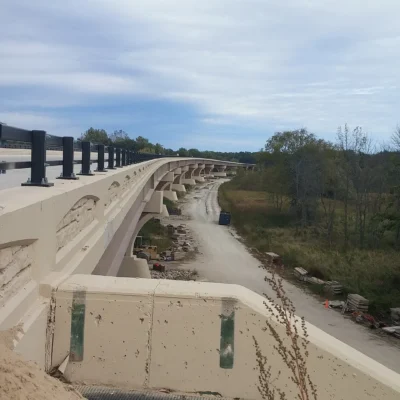
Several structures within Yankee Springs date to the Civilian Conservation Corps (CCC) era of the 1930s. The CCC—President Roosevelt’s Depression-era work program—employed young men to build infrastructure in state and national parks across the country. At Yankee Springs, CCC crews constructed roads, bridges, picnic shelters, and other facilities that remain in use nearly a century later. These stone-and-timber structures, built with exceptional craftsmanship from locally sourced materials, are historical landmarks in their own right.
Seasonal Guide
Spring (April–May)
Wildflowers carpet the forest floor. The lakes are still cold but trail conditions improve rapidly. Spring turkey hunting is popular in the surrounding areas.
Summer (June–August)
Peak season. Campground reservations are essential. Swimming, fishing, and boating on Gun Lake are the primary draws. Mountain bike trails are in prime condition.
Autumn (September–October)
The hardwood forests produce exceptional fall color. Devil’s Soupbowl and Graves Hill are particularly stunning. Campground availability improves dramatically. Deer hunting seasons begin in October.
Winter (December–March)
Cross-country skiing and snowshoeing on the trail network. Groomed fat-tire bike trails are available in some winters, depending on snow conditions. Ice fishing on the lakes. The rustic campground remains accessible for winter camping enthusiasts.
Frequently Asked Questions
What is Devil’s Soupbowl? Devil’s Soupbowl is a massive glacial kettle—a steep, bowl-shaped depression approximately 100 feet deep created by a melting block of glacial ice thousands of years ago. It is the park’s most dramatic geological feature and is accessible via a short interpretive trail.
Can I reserve a campsite in advance? Yes. Reservations for the modern campground at Gun Lake and the rustic campground at Deep Lake can be made through the Michigan DNR’s online reservation system (midnrreservations.com). Summer weekend reservations should be made well in advance.
Is the mountain bike trail system suitable for beginners? The trails range from moderate to technically challenging. Beginners with basic mountain biking skills can enjoy the smoother sections, but the more technical singletrack involves steep climbs, tight turns, and root-covered descents that require intermediate skills. Riding with an experienced partner is recommended for first-time visitors.
Does the North Country Trail pass through the park? Yes. Six miles of the North Country National Scenic Trail traverse the park’s interior. Through-hikers and day hikers can access this federally designated trail from several points within the recreation area.
Are there boat launches on the lakes? Yes. Gun Lake has a developed boat launch suitable for trailered boats. Several of the smaller lakes have carry-in access only (kayaks, canoes, small inflatables). Check with the park office for specific lake restrictions on motorized watercraft.
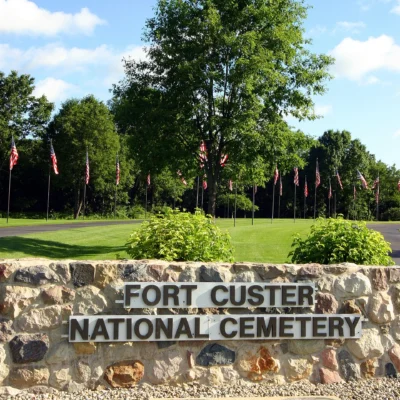
More parks nearby: Fort Custer State Recreation Area is within about an hour’s drive, while Ionia State Recreation Area lies within about an hour’s drive.

🐾 Dogs & Pets at Yankee Springs State Recreation Area
- Pets allowed? statewide rule
- Pets are welcome in Michigan state parks, campgrounds, harbors and state-designated trails, except designated swim beaches and other posted areas.
- Leash rule statewide rule
- Pets must always be on a 6-foot leash and under the owner's immediate control.
- Beaches & swim areas statewide rule
- Pets are prohibited in buoyed swim areas but allowed along the shoreline outside them (on a 6-ft leash, even in the water); 50+ parks have pet-friendly shoreline or designated dog beaches.
- Cabins & lodging statewide rule
- Up to two pets (cats and dogs only) allowed at ~12 parks' designated pet-friendly cabins, yurts and lodges; $10 per night per pet (cabins) or $15 (lodges); otherwise pets barred from overnight lodging.
- Pet fees statewide rule
- No day-use pet fee; pet-friendly lodging costs $10/night per pet (cabins) or $15/night per pet (lodges).
- Statewide exceptions statewide rule
- Leash laws do not apply to dogs used for hunting on land open to such use; pets may not be left unattended.
Are dogs allowed at Yankee Springs State Recreation Area?
Pets are welcome in Michigan state parks, campgrounds, harbors and state-designated trails, except designated swim beaches and other posted areas. Individual parks can post stricter rules — check signage on arrival.
Rules verified July 2026 via michigan.gov. More: Michigan state parks guide · Dog rules in all 50 states compared
Park Map
Plan your gear for Yankee Springs State Recreation Area
From our editorial guides, matched to this park’s activities: