🌤 Weather at Kal-Haven Trail by season
| Spring | Summer | Fall | Winter |
|---|---|---|---|
| 30–68 °F | 60–80 °F | 36–74 °F | 22–39 °F |
Each range runs from the coldest monthly average low to the warmest monthly average high in that season (1991-2020 climate normals), measured at S Haven, 1 mi away, elevation 590 ft. Conditions at the park can differ from the station, especially where elevation differs — check a forecast before you go.

Overview: 33 Miles from Kalamazoo to the Beach
The Kal-Haven Trail Sesquicentennial State Park is a legendary 33-mile rail-trail cutting a scenic, arrow-straight line across the gentle agricultural landscape of southwestern Michigan, connecting the energetic college city of Kalamazoo to the iconic Lake Michigan beach town of South Haven. Built on the abandoned corridor of the historic Kalamazoo & South Haven Railroad—originally constructed in 1871—the Kal-Haven Trail is one of Michigan’s oldest and most beloved rail-trail conversions, and it remains one of the premier long-distance cycling and hiking experiences in the entire Midwest.
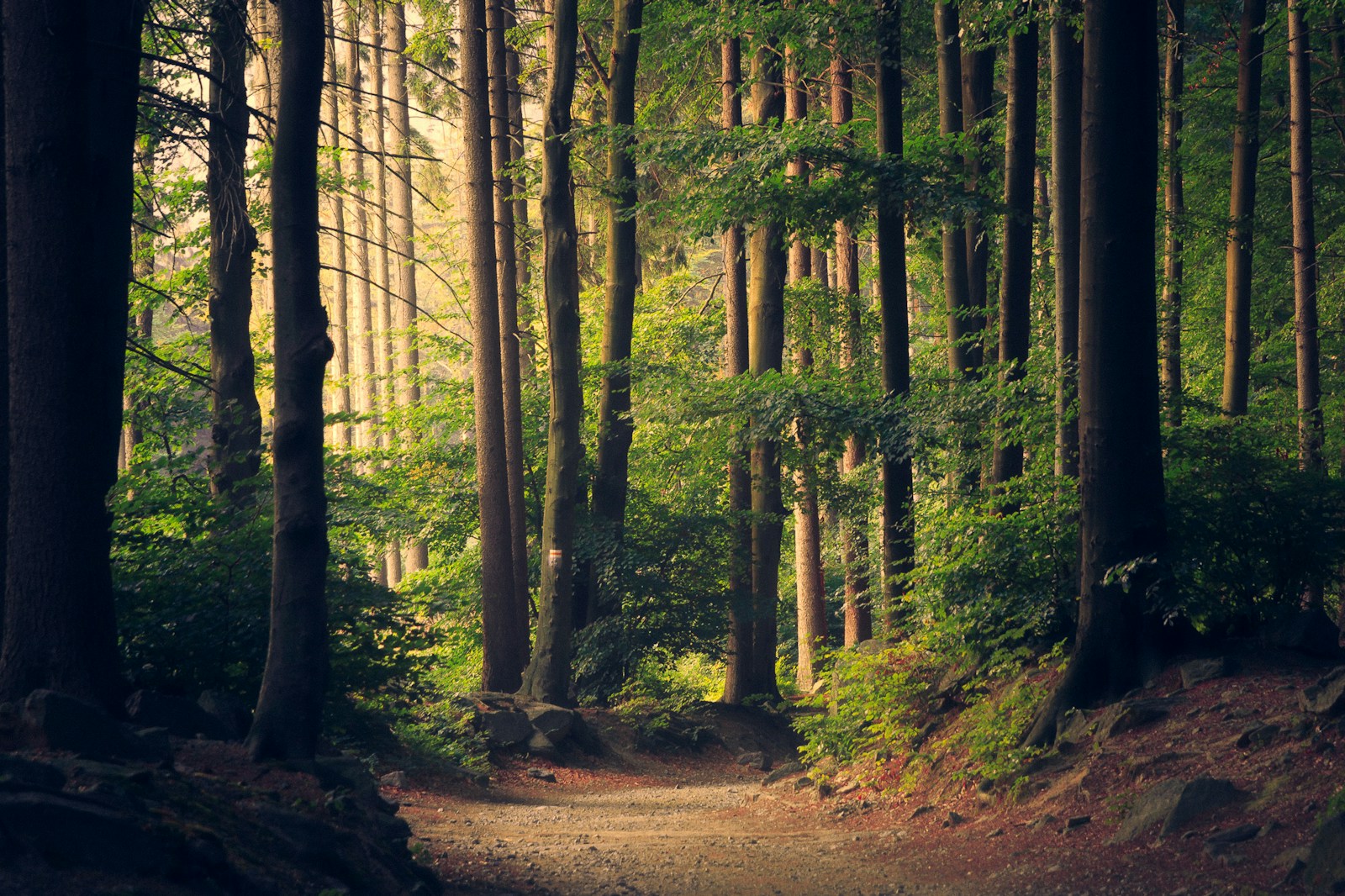
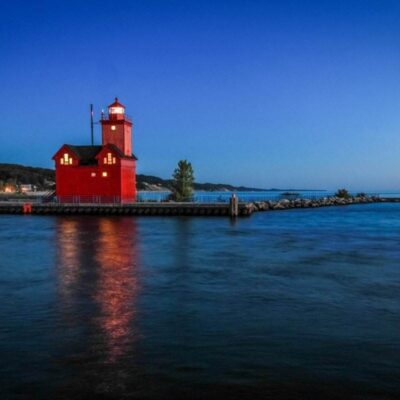
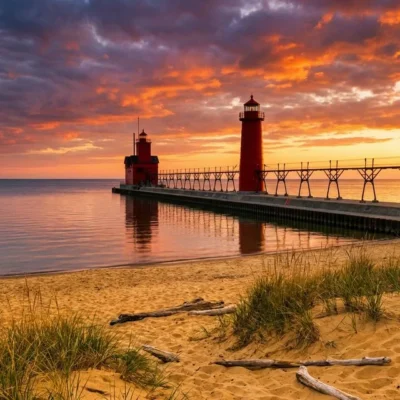
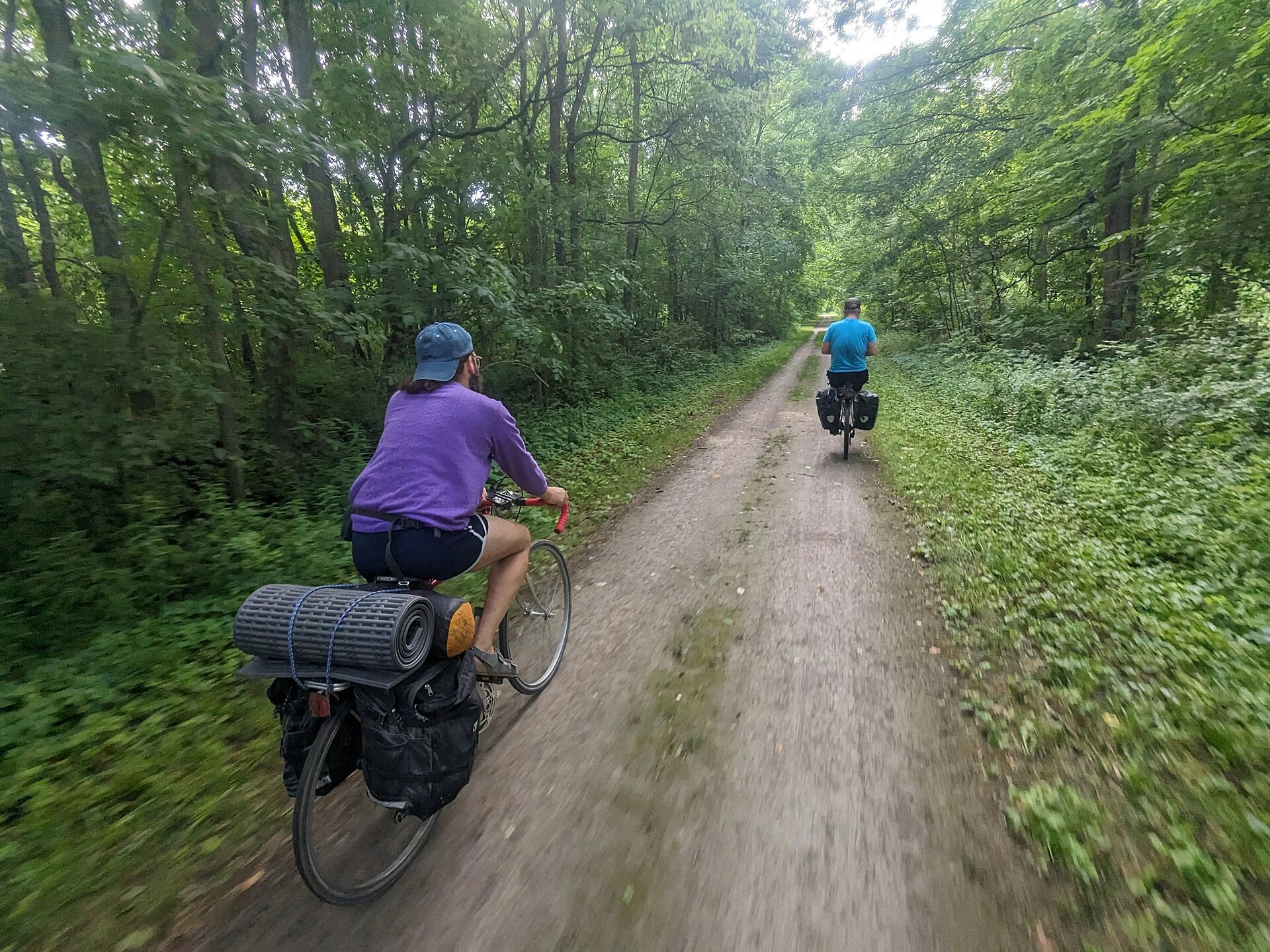
The trail’s crushed limestone surface rolls through a remarkably diverse succession of landscapes: dense hardwood forests, open farmland, commercial fruit orchards, historic small towns, and gently flowing rivers and creeks. The gentle railroad grade ensures a comfortable, consistent ride with virtually no significant elevation changes, making it accessible to cyclists of widely varying fitness levels. The trail’s western terminus in South Haven delivers riders to within easy walking distance of sandy Lake Michigan beaches, fresh fish restaurants, and the town’s photogenic red lighthouse—a fitting, celebratory reward after a day of riding through Michigan’s heartland.
The Railroad That Built the Trail
The Kalamazoo & South Haven Railroad was chartered in 1868 and completed its line between the two cities in 1871. The railroad was a lifeline for the farming communities along its route, enabling the rapid, efficient transport of fresh fruit—particularly blueberries, peaches, and grapes—from the fertile Lake Michigan “fruit belt” to the larger markets and rail hubs in Kalamazoo and beyond.
The “Sesquicentennial” in the trail’s official name commemorates Michigan’s 150th anniversary of statehood in 1987, the year the abandoned railroad corridor was officially dedicated as a state park trail. The conversion preserved the flat, cleared right-of-way and the mature tree lines that had grown up along the abandoned tracks over the preceding decades.
Trail Surface and Character
The Kal-Haven Trail features a crushed limestone and slag surface for the vast majority of its length. In dry conditions, this surface is firm, well-packed, and comfortable for hybrid bikes, mountain bikes, and gravel bikes. Standard road bikes with narrow tires (under 28mm) will find the surface challenging, particularly on sections with loose gravel or after rainfall when the limestone becomes softer.
The trail is generally well-maintained, with regular grading and drainage improvements. However, certain sections—particularly through low-lying areas near stream crossings—can retain moisture and become muddy during extended wet periods. Riders planning a full traverse should be prepared for occasional soft spots, regardless of the overall weather.
Towns and Landmarks Along the Way
One of the Kal-Haven Trail’s greatest charms is the series of small Michigan towns it passes through or near. Each offers a different character and a potential rest or resupply stop.
Kalamazoo (Eastern Terminus)
The trail begins at a dedicated trailhead on 10th Street North in Kalamazoo, marked by a historic red caboose that serves as a visual landmark and popular photo opportunity. From here, the trail heads west through the outskirts of the city. In Kalamazoo, the Kal-Haven Trail connects to the Kalamazoo River Valley Trail, creating an even larger regional trail network for extended rides.
Bloomingdale
Roughly at the trail’s midpoint, the small village of Bloomingdale features a restored railroad depot that now functions as a trail information center and rest stop. This is an ideal turnaround point for riders not attempting the full 33-mile one-way trip. The depot building provides shade, restrooms, water, and historical displays about the original railroad.
Grand Junction
A quiet farming community where riders can find basic refreshments. The surrounding landscape here features some of the trail’s most expansive views of open farmland and distant tree lines.
Gobles and Lacota
Small communities offering local charm and the occasional roadside fruit stand during harvest season. These towns typify the rural, agricultural character that defines the Kal-Haven experience.
South Haven (Western Terminus)
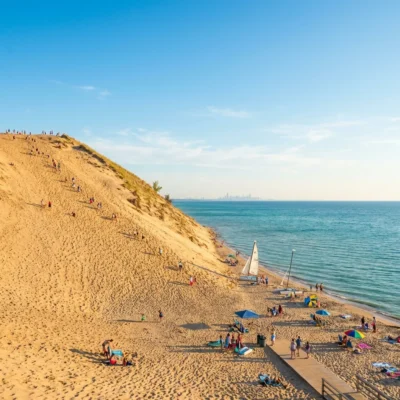
The trail’s western end arrives in South Haven, one of Michigan’s most popular Lake Michigan resort towns. From the trailhead, it is a short ride or walk to South Beach, the historic South Haven Lighthouse and pier, and a vibrant downtown filled with restaurants, ice cream shops, breweries, and art galleries. For many riders, arriving in South Haven after a 33-mile ride and walking directly onto the warm sand of Lake Michigan is the defining memory of the Kal-Haven experience.
The Covered Bridge
Perhaps the single most photographed feature on the Kal-Haven Trail is the wooden covered bridge located near the trail’s midpoint. Spanning a gentle creek in a wooded hollow, this picturesque structure was built specifically for the trail. Modeled after the historic covered bridges of rural Michigan, it provides a shaded, atmospheric crossing that has become an iconic symbol of the trail itself. During peak autumn color, the combination of the weathered timber bridge, the flowing creek, and the blazing maple canopy overhead creates one of the most photographed scenes on any Michigan trail.
Seasonal Guide
Spring (April–May)
Wildflowers line the trail edges, and the fruit orchards visible from the corridor burst into spectacular bloom. Trail surfaces may be soft after spring rains. Insect pressure increases as temperatures warm.
Summer (June–August)
Peak season. Long daylight hours allow for comfortable full-length rides. The blueberry and grape harvest begins in July, and the fragrance of ripe fruit in the adjacent fields is unmistakable. South Haven’s beaches and restaurants are at their busiest. Starting rides early in the morning is strongly recommended.
Autumn (September–October)
The undisputed best season for the Kal-Haven Trail. The hardwood forests flanking the corridor erupt in brilliant fall color, temperature are perfect for riding, and the summer crowds thin dramatically. The covered bridge during peak color is particularly spectacular. Peak foliage typically occurs in the second and third weeks of October in this part of Michigan.
Winter (December–March)
The Kal-Haven Trail is one of the few Michigan rail-trails that officially permits snowmobile use during the winter season (December 1 through March 31). Cross-country skiing is also possible when snow cover is sufficient, though trails are not groomed. Non-motorized users should be aware of snowmobile traffic during winter months.
Planning Your Ride
One-Way vs. Out-and-Back
The full 33-mile one-way ride is a significant day trip. Many riders arrange a shuttle (either via a second car staged at the opposite trailhead, or by using a local shuttle service during peak season) to avoid a 66-mile round trip. Alternatively, riding to a midpoint town like Bloomingdale and back creates a manageable 30-mile round trip.
Trail Pass
A Michigan Recreation Passport ($15 residents, $42 non-residents) or daily pass is required. Passes can be purchased at the trailheads or online through the Michigan DNR.
Bike Rentals
Several outfitters in both South Haven and Kalamazoo offer bike rentals, including hybrid and mountain bikes suitable for the trail surface. Some outfitters may offer shuttle services for one-way riders.
Frequently Asked Questions
Can I ride the Kal-Haven Trail on a road bike? It is not recommended. The crushed limestone surface is challenging for narrow road bike tires (under 28mm), especially in sections with loose gravel or after rain. A hybrid bike, gravel bike, or mountain bike with wider tires is strongly preferred.
Is the trail flat? Yes. As a former railroad corridor, the Kal-Haven Trail maintains a remarkably gentle, consistent grade with virtually no significant hills. This makes it accessible to riders of all fitness levels, though 33 miles is still a substantial distance requiring adequate hydration and stamina.
Are there restrooms along the trail? Yes. Vault restrooms are available at several locations including the Kalamazoo trailhead, the Bloomingdale depot, and the South Haven trailhead. There are no restrooms in the more remote sections between towns.
Can I bring my dog? Dogs are permitted on the trail but must be kept on a leash no longer than six feet. Owners are required to clean up after their pets. Be aware that the trail can get busy during summer weekends.
Where is the famous covered bridge? The covered bridge is located roughly at the trail’s midpoint, between Bloomingdale and Grand Junction. It is well-signed and impossible to miss if you are riding the full trail. It is one of the most popular rest and photography stops on the entire corridor.
Wildlife & Nature
Kal-Haven Trail — a 34-mile rail-trail from Kalamazoo to South Haven — passes through farmland, forests, and small towns. The trail’s varied habitats support white-tailed deer, wild turkeys, and songbirds. Red-tailed hawks perch on fence posts. Bluebirds nest in boxes along the trail. Monarch butterflies migrate the corridor.
Nearby Attractions
Kalamazoo — eastern terminus — has breweries and Bell’s Eccentric Café. South Haven — western terminus — has the Lake Michigan beach, lighthouse, and blueberry farms.
Nearby parks: If you have extra time, Van Buren State Park is a short drive away, and Van Buren Trail State Park is a short drive away.

🐾 Dogs & Pets at Kal-Haven Trail
- Pets allowed? statewide rule
- Pets are welcome in Michigan state parks, campgrounds, harbors and state-designated trails, except designated swim beaches and other posted areas.
- Leash rule statewide rule
- Pets must always be on a 6-foot leash and under the owner's immediate control.
- Beaches & swim areas statewide rule
- Pets are prohibited in buoyed swim areas but allowed along the shoreline outside them (on a 6-ft leash, even in the water); 50+ parks have pet-friendly shoreline or designated dog beaches.
- Cabins & lodging statewide rule
- Up to two pets (cats and dogs only) allowed at ~12 parks' designated pet-friendly cabins, yurts and lodges; $10 per night per pet (cabins) or $15 (lodges); otherwise pets barred from overnight lodging.
- Pet fees statewide rule
- No day-use pet fee; pet-friendly lodging costs $10/night per pet (cabins) or $15/night per pet (lodges).
- Statewide exceptions statewide rule
- Leash laws do not apply to dogs used for hunting on land open to such use; pets may not be left unattended.
Are dogs allowed at Kal-Haven Trail?
Pets are welcome in Michigan state parks, campgrounds, harbors and state-designated trails, except designated swim beaches and other posted areas. Individual parks can post stricter rules — check signage on arrival.
Rules verified July 2026 via michigan.gov. More: Michigan state parks guide · Dog rules in all 50 states compared
Park Location
Plan your gear for Kal-Haven Trail
From our editorial guides, matched to this park’s activities: