🌤 Weather at Fort Gibson Historic Site by season
| Spring | Summer | Fall | Winter |
|---|---|---|---|
| 39–79 °F | 67–93 °F | 38–85 °F | 26–54 °F |
Each range runs from the coldest monthly average low to the warmest monthly average high in that season (1991-2020 climate normals), measured at Muskogee, 5 mi away, elevation 518 ft. Conditions at the park can differ from the station, especially where elevation differs — check a forecast before you go.

Oklahoma State Historic Site — 19th-Century Military Fort, National Historic Landmark, Managed by Oklahoma Historical Society, Fort Gibson Muskogee County
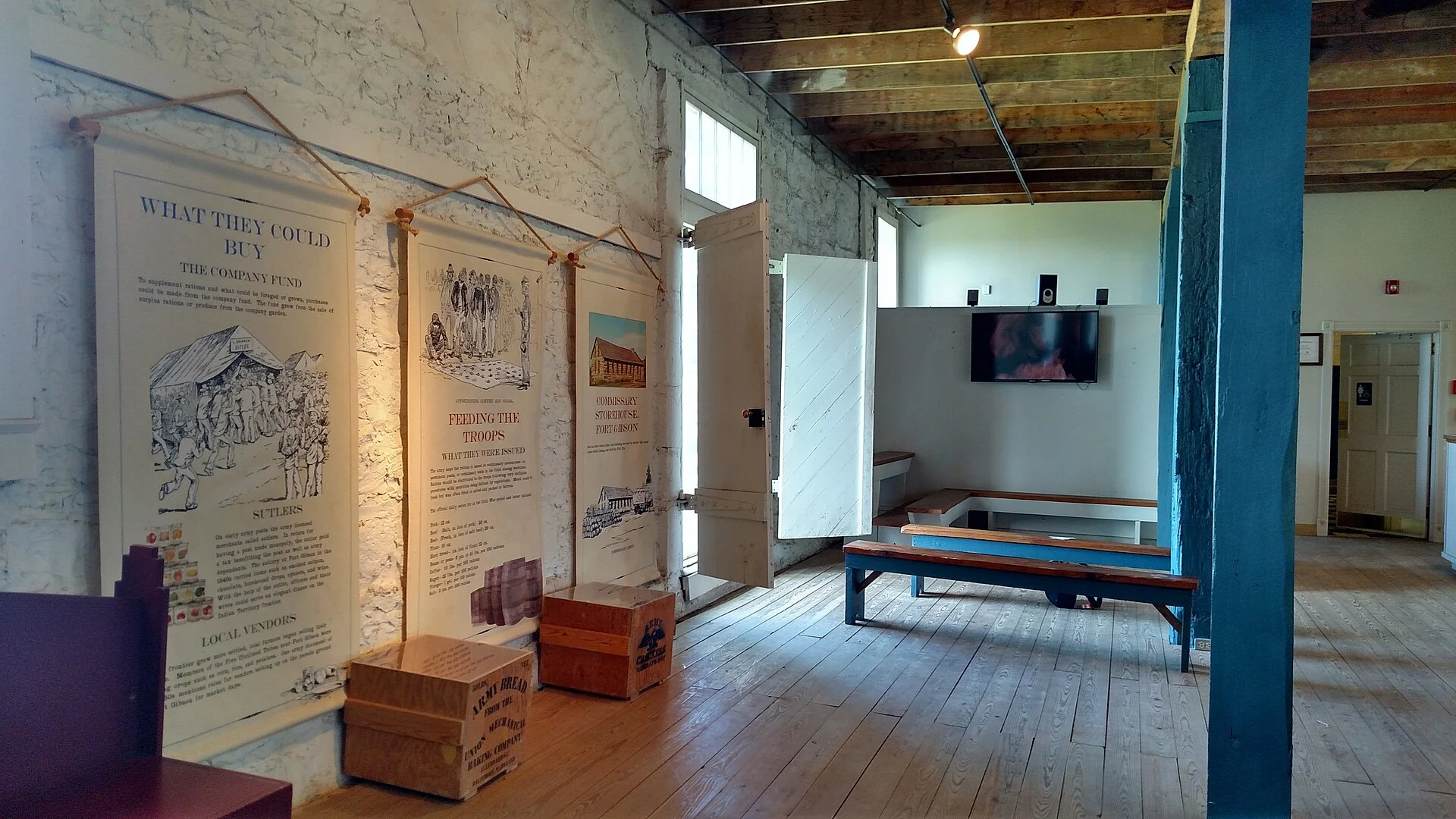
Fort Gibson Historic Site is a state-managed historic site in Fort Gibson, Muskogee County, Oklahoma, operated by the Oklahoma Historical Society. The site features restored and reconstructed buildings from the original 19th-century military fort, National Historic Landmark designation, interpretive exhibits on frontier military history, and a significant role in the history of Indian Territory and the Trail of Tears.
Fort Gibson was established in 1824 as one of the earliest military posts in Indian Territory. It served as a key installation during the Indian Removal era and the Civil War.
Site Information
| Feature | Details |
|---|---|
| Location | Fort Gibson, Muskogee County, OK |
| Type | State Historic Site |
| Designation | National Historic Landmark |
| Managed By | Oklahoma Historical Society |
| Coordinates | 35.7992° N, 95.2502° W |
Last updated: May 2026
Getting There
Located in the town of Fort Gibson, Muskogee County. The reconstructed fort is open Wednesday through Saturday. Fort Gibson sits at the confluence of the Grand and Arkansas Rivers — a strategic junction that made the fort essential for controlling Indian Territory. Nearby Honor Heights Park in Muskogee hosts one of America’s largest azalea festivals each April. The Three Forks area (where three rivers meet) is Oklahoma’s earliest non-Native settlement.
Insider Tips
Gateway to Indian Territory: Fort Gibson (1824) was the westernmost US military post for decades — the gateway where the Five Civilized Tribes arrived after the Trail of Tears. Pro tip: The Cherokee, Choctaw, Chickasaw, Creek, and Seminole were forcibly relocated to Indian Territory (Oklahoma) in the 1830s-1840s — thousands died on the journey. Three Forks: The fort sits where the Arkansas, Grand, and Verdigris Rivers meet.
Frequently Asked Questions
What was the Trail of Tears?
The Trail of Tears (1830s-1840s) was the forced relocation of 60,000+ Native Americans from the Southeast to Indian Territory (Oklahoma). President Andrew Jackson’s Indian Removal Act (1830) authorized it despite a Supreme Court ruling (Worcester v. Georgia) declaring removal illegal. An estimated 15,000 people died from exposure, disease, and starvation during the marches. The Cherokee call it “Nunahi-Duna-Dlo-Hilu-I” — “The Trail Where They Cried.”
Wildlife & Nature
Fort Gibson HS — the first military post in Indian Territory (established 1824) — served as the end of the Trail of Tears for the Cherokee, Creek, and Seminole Nations. The site’s grounds, stockade, and Arkansas River support songbirds, raptors, and white-tailed deer.
Nearby Attractions
Fort Gibson — adjacent. Muskogee — 7 miles south — home of the Five Civilized Tribes Museum. Grand River — nearby.
More parks nearby: Sequoyah Bay State Park is a short drive away, while Sequoyah State Park lies a short drive away.

Park Map
Plan your gear for Fort Gibson Historic Site
From our editorial guides, matched to this park’s activities: