🌤 Weather at Fort Sisseton Historic State Park by season
| Spring | Summer | Fall | Winter |
|---|---|---|---|
| 18–67 °F | 58–82 °F | 23–72 °F | 3–27 °F |
Each range runs from the coldest monthly average low to the warmest monthly average high in that season (1991-2020 climate normals), measured at Roy Lake, 6 mi away, elevation 1,810 ft. Conditions at the park can differ from the station, especially where elevation differs — check a forecast before you go.

🏛️ One of America’s Best-Preserved Frontier Forts — 14 Original Buildings from 1864, Buffalo Soldiers, Dakota Scouts, and South Dakota’s Oldest Residence on the Glacial Highlands — Fort Sisseton State Historic Park near Lake City, South Dakota with 14 original restored buildings (1864–1868), stone guardhouse, powder magazine, officers quarters (oldest residence in SD), barracks, hospital, U.S.-Dakota War aftermath, originally Fort Wadsworth, Sisseton-Wahpeton scouts, Buffalo Soldiers (25th Infantry), Coteau des Prairies glacial highlands, annual Historical Festival (June), military reenactments, tipi encampment, camping, cabins, hiking, Kettle Lakes, Roy Lake, near Sica Hollow, National Register of Historic Places — Marshall County, SD
Fort Sisseton stands on the Coteau des Prairies — “hills of the prairies” — a glacial highland rising above the surrounding plains of northeastern South Dakota. Built in 1864 in the aftermath of the U.S.-Dakota War, the fort is one of the best-preserved frontier military posts in America, with 14 original buildings still standing around the original parade ground.
The commanding officer’s quarters is the oldest standing residence in South Dakota. Walk through the stone guardhouse, powder magazine, barracks, and hospital — the same buildings where cavalry, infantry, Dakota scouts, and Buffalo Soldiers served for 25 years on the edge of the American frontier.
The Historic Buildings
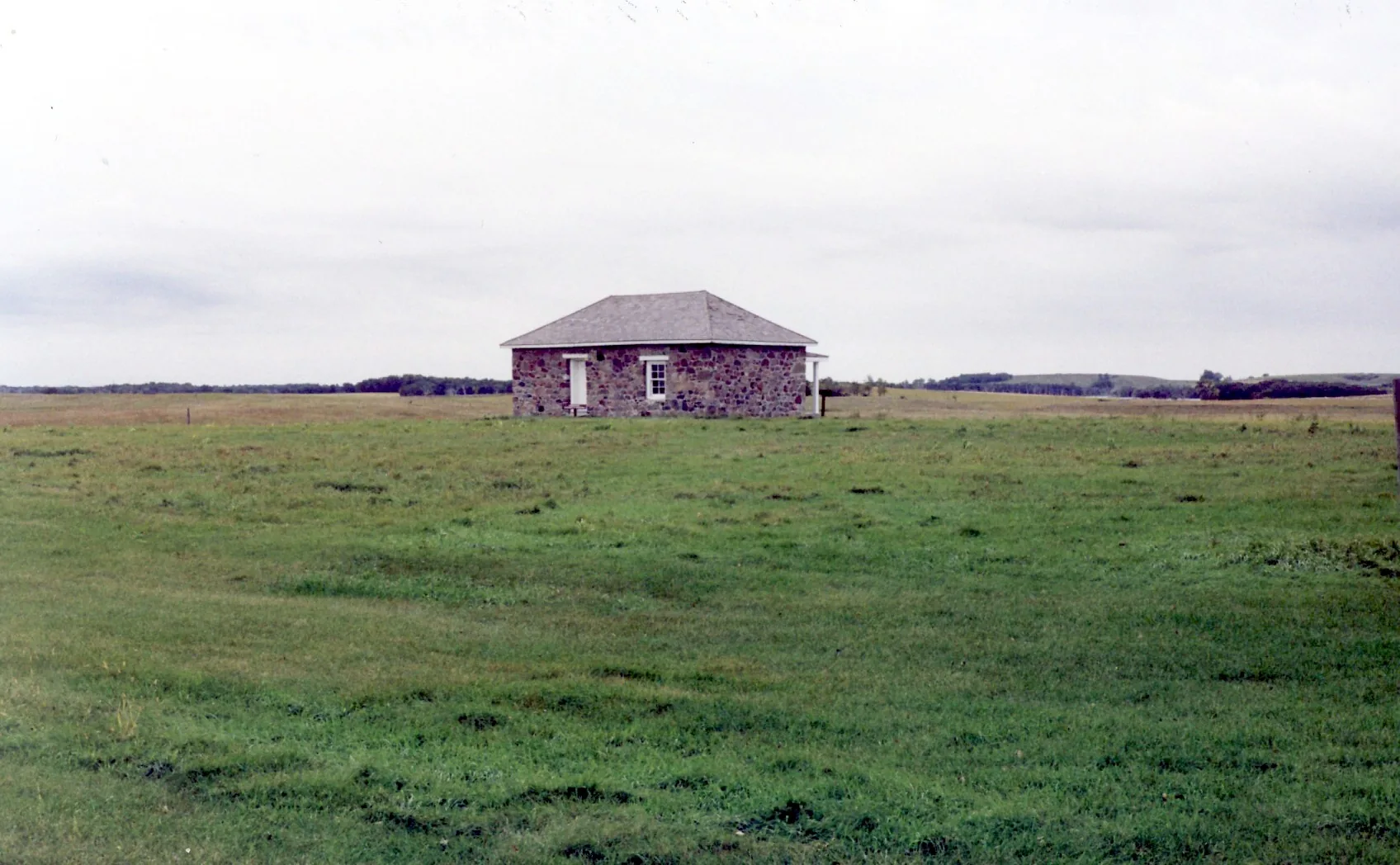
The fort’s 14 surviving structures are arranged around the original military parade ground — the same layout established in 1864. The buildings were constructed using local materials: native fieldstone, timber from the Coteau’s forests, and bricks manufactured on-site from local clay.
| Building | Construction | Significance |
|---|---|---|
| Commanding Officer’s Quarters | 1864 | Oldest standing residence in South Dakota. Where the fort’s commander and family lived |
| Stone Guardhouse | Fieldstone | Held prisoners. Thick stone walls — the fort’s security center |
| Powder Magazine | Stone | Reinforced walls designed to safely store ammunition and explosives |
| Officers’ Quarters (Row) | Various | Restored living quarters showing frontier officer family life |
| Enlisted Barracks | Stone/Timber | Where soldiers lived — daily routines, sleeping quarters, common areas |
| Hospital | Various | Frontier medicine — treating injuries, disease, and the harsh Dakota winters |
| Parade Ground | Original layout | Central formation area — still used for reenactments and the annual festival |
| Visitor Center/Museum | Modern | Interpretive displays, artifacts, guided tours (summer months) |
History
| Year | Event |
|---|---|
| 1862 | U.S.-Dakota War erupts in Minnesota. Conflict and displacement spill into Dakota Territory |
| Aug 1, 1864 | Fort Wadsworth established on the Coteau des Prairies — protecting settlers, guarding routes to Montana/Idaho gold fields |
| 1864–1876 | Sisseton-Wahpeton Dakota serve as army scouts — crucial role as intermediaries between military and other bands |
| Aug 29, 1876 | Renamed Fort Sisseton — honoring the Sisseton band who provided scouts. Avoids confusion with Fort Wadsworth, NY |
| May 1884 | Buffalo Soldiers arrive — Companies E and G, 25th Infantry Regiment (African-American unit) stationed at the fort |
| 1888 | Buffalo Soldiers reassigned after 4 years of service at the fort |
| 1889 | Fort decommissioned after 25 years. Frontier era ends with South Dakota statehood |
| 1935 | WPA restores the buildings during the Great Depression — preserving them for future generations |
| Today | 14 original buildings preserved. National Register of Historic Places. Annual Historical Festival |
The People of Fort Sisseton
Sisseton-Wahpeton Dakota Scouts
The fort’s story cannot be told without the Sisseton and Wahpeton bands of the Dakota people. Many served as government-employed army scouts — acting as vital intermediaries between the U.S. Army and other Indigenous bands. They facilitated communication, guided military expeditions, and played a complex role in a turbulent era. The fort was renamed in their honor in 1876.
Buffalo Soldiers
In May 1884, Companies E and G of the 25th Infantry Regiment — one of the four African-American “Buffalo Soldier” units in the post-Civil War army — were stationed at Fort Sisseton. They served here for four years until 1888, enduring the same harsh Dakota winters and monotonous frontier routine as all garrison soldiers.
Daily Life on the Frontier
Life at Fort Sisseton was defined by harsh weather, monotonous routine, and strenuous labor. Beyond military duties — guard duty, drills, inspections — soldiers performed “fatigue duties”:
| Duty | Details |
|---|---|
| Timber Cutting | Harvesting wood from the Coteau’s forests for fuel and construction |
| Brickmaking | Manufacturing bricks on-site from local clay and lime |
| Building Construction | Soldiers built their own quarters — the stone buildings still standing today |
| Company Gardens | Growing vegetables to supplement army rations |
| Water Hauling | No running water — every drop carried by hand |
| Off-Duty | Gambling, card games, reading, and organized baseball on the parade ground |
The Coteau des Prairies
The fort sits on one of North America’s most distinctive glacial landforms — the Coteau des Prairies (“hills of the prairies”). This wedge-shaped plateau was formed by glacial activity, rising hundreds of feet above the surrounding plains. The landscape is dotted with kettle lakes — depressions formed when buried ice blocks melted after the glaciers retreated.
| Nearby | Distance | Highlights |
|---|---|---|
| Kettle Lakes | Adjacent | Glacially-formed lakes — boating, canoeing, fishing |
| Roy Lake SP | ~15 mi | Larger lake — swimming, sailing, camping. Sandy beaches |
| Sica Hollow SP | ~20 mi | Deeply carved ravines, old-growth oak, natural springs. Rich Indigenous cultural history |
Annual Historical Festival
First full weekend of June — the fort comes alive with the sounds and sights of the 1860s–1880s frontier:
| Event | Details |
|---|---|
| Military Reenactments | Cavalry and infantry drills in period uniforms on the original parade ground |
| Tipi Encampment | Large encampment demonstrating Dakota life and culture |
| Fur Trade Rendezvous | Mountain men, traders, and trappers in period costume and camps |
| Military Ball | Period music and dancing — the social tradition of the frontier officer class |
| Arts & Crafts | Period crafts, demonstrations, blacksmithing, and living history |
| Cannon & Musket Fire | Live firing demonstrations throughout the weekend |
Recreation
| Activity | Details |
|---|---|
| Camping | Electrical and non-electrical sites plus camping cabins on the fort grounds |
| Hiking | Trails through the fort grounds and surrounding Coteau des Prairies grasslands |
| Fishing | Nearby Kettle Lakes and Roy Lake — walleye, perch, bass |
| Snowshoeing | Year-round access. Winter on the Coteau is hauntingly beautiful |
| Photography | The stone buildings against prairie sky — iconic Great Plains imagery |
Best Time to Visit
| Season | Weather | Best For |
|---|---|---|
| June (Festival) | 65–80°F | 🏛️ Annual Historical Festival — reenactments, tipi encampment, military ball, cannon fire |
| Summer (Jun–Aug) | 70–85°F | Guided tours, full building access, camping, nearby lake recreation |
| Fall (Sep–Oct) | 45–65°F | Prairie grass turns golden. Quieter, deeply atmospheric |
| Winter (Nov–Mar) | 5–30°F | Snowshoeing through the fort. Hauntingly beautiful Dakota solitude |
Frequently Asked Questions
Why was Fort Sisseton built?
In 1864, after the U.S.-Dakota War of 1862, the military established the fort (originally Fort Wadsworth) on the Coteau des Prairies to protect settlers, guard survey parties, and secure wagon routes to the Montana and Idaho goldfields.
How many original buildings survive?
14 original buildings from 1864–1868 — including the commanding officer’s quarters (the oldest standing residence in South Dakota), stone guardhouse, powder magazine, barracks, and hospital. It’s one of the best-preserved frontier forts in America.
Were Buffalo Soldiers stationed here?
Yes — from 1884 to 1888. Companies E and G of the 25th Infantry Regiment, one of the four African-American “Buffalo Soldier” units in the post-Civil War army, served at Fort Sisseton for four years.
What role did the Dakota people play?
The Sisseton and Wahpeton bands served as army scouts — acting as intermediaries between the U.S. military and other Indigenous groups. Their contribution was significant enough that the fort was renamed in their honor in 1876.
What is the Historical Festival?
First full weekend of June each year. Military reenactments on the original parade ground, a tipi encampment, fur trade rendezvous, cannon and musket fire, period music, a military ball, and living history demonstrations. The fort comes alive with hundreds of participants in period dress.
What is the Coteau des Prairies?
A glacially-formed plateau rising above the surrounding plains. “Hills of the prairies” in French. The landscape is dotted with kettle lakes formed when buried ice blocks melted after the glaciers retreated. The fort was built here for its strategic elevation, timber, and water.
How did soldiers build the fort?
They built it themselves. Soldiers cut timber from the Coteau’s forests, manufactured bricks from local clay and lime, and quarried native fieldstone. “Fatigue duty” — construction labor — was a major part of frontier military life.
What’s nearby?
Roy Lake State Park (~15 mi) for swimming, sailing, and sandy beaches. Sica Hollow State Park (~20 mi) for deeply carved ravines, old-growth oak, natural springs, and rich Indigenous cultural history.
Can I camp at the fort?
Yes — electrical and non-electrical campsites plus camping cabins on the fort grounds. The park is open year-round, with guided tours primarily available in summer.
Why is this fort so well preserved?
The remote location saved it. After decommissioning in 1889, the buildings weren’t demolished for development because the area remained sparsely settled. WPA restoration in 1935 stabilized the structures, and South Dakota has maintained them since.
More parks in South Dakota: Roy Lake State Park and Sica Hollow State Park. See the full South Dakota state parks guide.
🏛️ Walk Through 1864 — One of America’s Best-Preserved Frontier Forts
14 original buildings from the Dakota Territory frontier — stone guardhouse, powder magazine, South Dakota’s oldest residence. Buffalo Soldiers, Dakota scouts, and 25 years of frontier history on the glacial highlands.
🎪 Annual Historical Festival — First Weekend of June
Military reenactments, tipi encampment, fur trade rendezvous, cannon fire, and a military ball on the original 1864 parade ground. Hundreds of participants in period dress bring the frontier to life.
Wildlife & Nature
Fort Sisseton SHP — a remarkably well-preserved 1864 frontier military post — one of the best-preserved frontier forts in the US. Built during the Dakota Conflict. The fort’s native prairie, wetlands, and Coteau des Prairies support white-tailed deer, sharp-tailed grouse, and ring-necked pheasants.
Nearby Attractions
Lake City — nearby. Sica Hollow SP — 10 miles east. Coteau des Prairies — surrounding.

⛺ Camping at Fort Sisseton Historic State Park: Campgrounds & Cabins
| Campsites | 14 sites — 14 campsites: electrical ($30/night) and non-electrical ($16/night). |
|---|---|
| Cabins & Lodging | 3 rustic camping cabins, each sleeping 6 people, $60/night. |
| Pets | Statewide SD GFP leash rule applies (leash required April 1–Sept. 30, immediate control year-round; pets excluded from buildings and designated swim areas). |
| Reservations | Reserve online at reservations.gooutdoorssouthdakota.com or call 1.800.710.2267; the reservation window opens at 7 a.m. 90 days prior to arrival. South Dakota park entrance license required per vehicle: daily $10 resident/$15 nonresident. |
| Special sites | During the annual Historical Festival (first full weekend in June), dry camping with no electricity, water, or fire grates is available on a first-come basis, with campsites assigned upon arrival — a temporary exception to the normal reservation system. |
| Season notes | Open year-round. Between Oct. 1 and April 30, showers, flush toilets, and other water systems may be closed. |
Camping questions about Fort Sisseton Historic State Park
Can you camp at Fort Sisseton Historic State Park?
Yes. Fort Sisseton Historic State Park has 14 campsites. 14 campsites: electrical ($30/night) and non-electrical ($16/night).
How do you reserve a campsite at Fort Sisseton Historic State Park?
Reserve online at reservations.gooutdoorssouthdakota.com or call 1.800.710.2267; the reservation window opens at 7 a.m. 90 days prior to arrival. South Dakota park entrance license required per vehicle: daily $10 resident/$15 nonresident.
Are there cabins at Fort Sisseton Historic State Park?
3 rustic camping cabins, each sleeping 6 people, $60/night.
Are pets allowed at the Fort Sisseton Historic State Park campground?
Statewide SD GFP leash rule applies (leash required April 1–Sept. 30, immediate control year-round; pets excluded from buildings and designated swim areas).
Source: gfp.sd.gov (verified July 2026). Details change seasonally — confirm when booking.
🐾 Dogs & Pets at Fort Sisseton Historic State Park
- Pets allowed? statewide rule
- Pets are allowed in South Dakota state parks and recreation areas, including campgrounds and most trails, but not in park buildings or on designated swim beaches.
- Leash rule statewide rule
- April 1 - September 30: leash no longer than 10 ft required at all times; October 1 - March 31: leash optional but pets must be under immediate control
- Beaches & swim areas statewide rule
- Pets (except service animals) are not allowed on designated swimming beaches
- Cabins & lodging statewide rule
- Dogs and cats allowed in pet-designated lodges, cabins and suites (roughly 40 parks/recreation areas have designated pet-friendly cabins) with payment of a pet accommodation fee
- Pet fees statewide rule
- No day-use or camping pet fee; a pet accommodation fee is charged for pet-designated lodging
- Statewide exceptions statewide rule
- Pets prohibited in all park buildings and on the Summit Trail at Bear Butte State Park
Are dogs allowed at Fort Sisseton Historic State Park?
Pets are allowed in South Dakota state parks and recreation areas, including campgrounds and most trails, but not in park buildings or on designated swim beaches. Individual parks can post stricter rules — check signage on arrival.
Rules verified July 2026 via gfp.sd.gov. More: South Dakota state parks guide · Dog rules in all 50 states compared
Park Map
Plan your gear for Fort Sisseton Historic State Park
From our editorial guides, matched to this park’s activities: