
🌤 Weather at Duck Lake State Park by season
| Spring | Summer | Fall | Winter |
|---|---|---|---|
| 25–67 °F | 53–79 °F | 32–72 °F | 19–35 °F |
Each range runs from the coldest monthly average low to the warmest monthly average high in that season (1991-2020 climate normals), measured at Montague 4 NW, 11 mi away, elevation 650 ft. Conditions at the park can differ from the station, especially where elevation differs — check a forecast before you go.

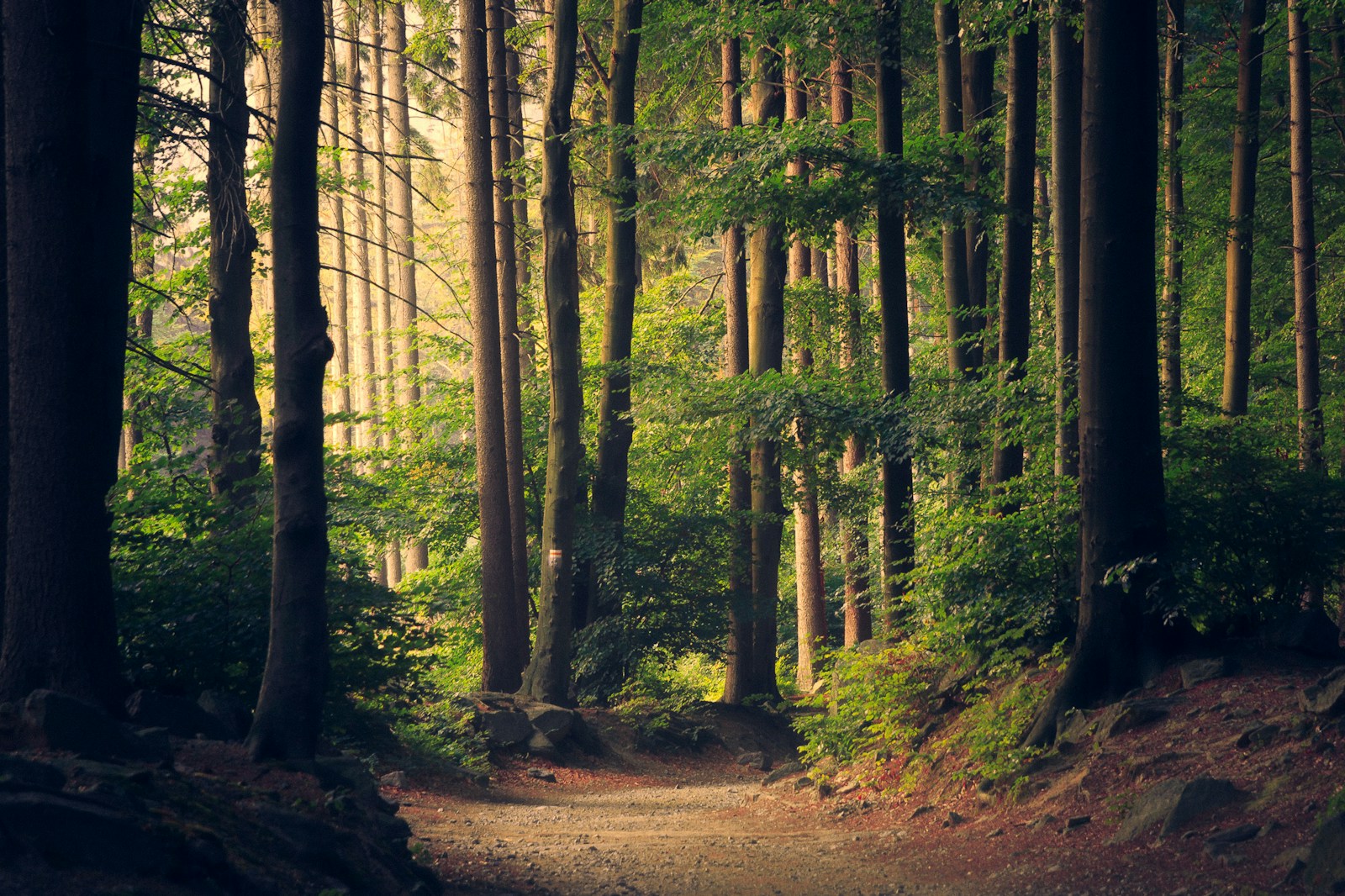
🏖️ Where Lake Michigan Meets Duck Lake — Towering sand dunes, half-mile Lake Michigan beach, warm inland lake swimming, 7 miles of trails through dune forests, and a day-use paradise on Michigan’s west coast
On Michigan’s west coast, between the resort towns of Muskegon and Grand Haven, a narrow strip of sand dunes separates Lake Michigan from the smaller, warmer Duck Lake. A shallow channel connects the two, creating a natural playground where swimmers can choose between the cool, endless waves of the Great Lake and the calm, solar-warmed shallows of the inland one — literally steps apart. Add 728 acres of towering coastal dunes, mature beech-maple forests, open meadows, and 7 miles of hiking trails, and you have what locals consider one of the most underrated day-use parks on Michigan’s Gold Coast.
Duck Lake State Park doesn’t have a campground. It doesn’t have cabins or a lodge. What it has is a stunning half-mile stretch of Lake Michigan beach, some of the tallest coastal dunes on the lakeshore, trails that wind through ecosystems ranging from open dune grass to dense forest, and the kind of quiet that larger, more developed parks cannot deliver. For families with small children, the warm shallows where Duck Lake meets Lake Michigan through the connecting channel are ideal — waist-deep, gently moving water with a sandy bottom. For hikers, the dune-top views stretching north and south along the Lake Michigan coastline rival anything at Sleeping Bear Dunes, without the crowds.
Things to Do at Duck Lake State Park
1. Swim on the Lake Michigan Beach
The park’s main beach is a broad, sandy half-mile stretch facing Lake Michigan. The sand is fine and clean, the water is characteristically cold and clear (this is Lake Michigan, after all), and the dunes rise behind the beach like a natural amphitheater. There is no lifeguard — swim at your own risk. The beach faces west, making it one of the best sunset spots on the Michigan coast. Bring beach chairs, sunscreen, and a blanket — there is no shade on the beach itself.
2. Swim in the Duck Lake Channel
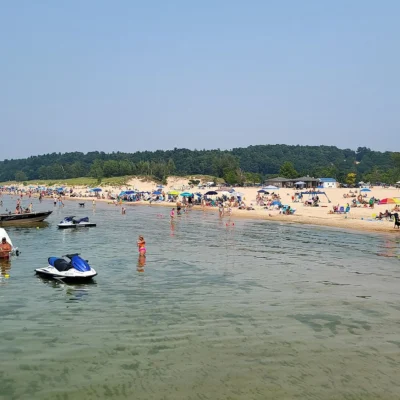
Where Duck Lake connects to Lake Michigan through a shallow channel, the water is warmer, calmer, and shallower than the open lake. This is the family-friendly zone — small children can wade and play in water that rarely exceeds waist depth, and the sandy bottom is gentle on bare feet. It is one of the most appealing features of the park for families with toddlers and young swimmers who find Lake Michigan’s waves and temperature intimidating.
3. Hike the Dune Trails
Seven miles of natural-surface trails wind through the park’s diverse landscapes: open dune ridges with panoramic views, dense beech-maple forest, meadows filled with wildflowers, and wetland edges. A paved, ADA-compliant path provides a gentler walk through the woods and along the Duck Lake shoreline for those who need accessible routes.
| Trail | Distance | Difficulty | Highlights |
|---|---|---|---|
| Dune Ridge Trail | ~2.5 mi | Moderate | Highest dune views, Lake Michigan panoramas |
| Forest Loop | ~2.0 mi | Easy | Beech-maple canopy, wildflowers, shade |
| Meadow Trail | ~1.5 mi | Easy | Open grasslands, birdwatching, butterflies |
| Accessible Path | ~1.0 mi | Easy (paved) | ADA path along Duck Lake shore |
The Dune Ridge Trail is the highlight — climbing to the top of the coastal dunes for views that stretch along the Lake Michigan shoreline in both directions. The sand can be soft and steep in places, so wear sturdy shoes rather than flip-flops. Morning is the best time to hike in summer, before the dune sand heats up.
4. Kayak or Paddle Duck Lake
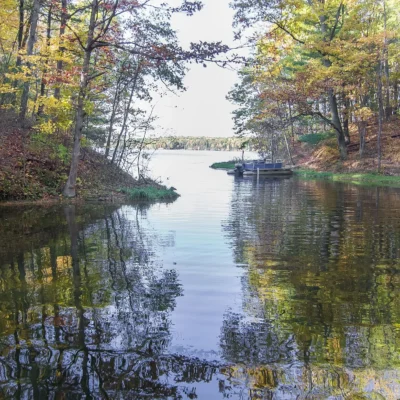
Duck Lake is a warm, shallow inland lake ideal for kayaking, canoeing, and stand-up paddleboarding. The lake holds bass, crappie, and panfish, so combining a paddle with fishing is a natural pairing. Launch from the Duck Lake parking area — no formal boat launch exists, but the access is manageable for small watercraft. Bring your own equipment.
5. Fish Duck Lake
Duck Lake supports largemouth bass, crappie, bluegill, and other panfish. Bank fishing is possible from several shoreline access points along the trails. A Michigan fishing license is required. The warm, shallow lake is productive throughout the summer season.
6. Watch the Sunset
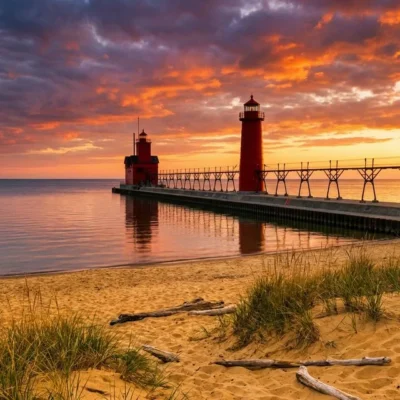
West-facing Lake Michigan beaches are Michigan’s premium sunset venues, and Duck Lake’s beach is no exception. The sun drops directly into the lake from mid-spring through early fall, often producing spectacular color displays. Arrive 30–45 minutes before sunset for the best spot on the beach. Fall evenings (September–October) often produce the most dramatic skies.
7. Cross-Country Ski or Snowshoe (Winter)
The park is open year-round for foot traffic, though motor vehicle access is typically restricted in winter. The trail system transforms into cross-country ski and snowshoe routes when snow cover allows. The frozen dune landscape in winter — wind-sculpted snow, ice-covered lake, bare forest — is starkly beautiful and nearly deserted.
Visitor Information
| Detail | Info |
|---|---|
| Park Type | Day-use only (no camping) |
| Size | 728 acres |
| Hours | Dawn to dusk, year-round |
| Entry Fee | Michigan Recreation Passport required |
| Parking | Two lots: Lake Michigan side + Duck Lake side |
| Restrooms | Available at both parking areas (seasonal) |
| Pets | Leashed pets allowed on trails (not on beach) |
| Lifeguard | No — swim at your own risk |
Best Time to Visit
| Season | Weather | Best For |
|---|---|---|
| Spring (Apr–May) | 45–65°F | Wildflowers, uncrowded trails, birdwatching |
| Summer (Jun–Aug) | 70–85°F | Swimming, beach days, sunsets, paddling |
| Fall (Sep–Oct) | 45–65°F | Foliage, dramatic sunsets, quiet beach walks |
| Winter (Nov–Mar) | 15–35°F | XC skiing, snowshoeing, frozen dune photography |
Summer weekends — especially July 4th through Labor Day — are the busiest. The Lake Michigan parking lot fills by late morning on hot Saturday-Sundays. Arrive before 10 AM or visit on weekdays for a more relaxed experience. The Duck Lake side parking area is typically less crowded. September offers warm-enough water, fewer people, and the beginning of fall color in the forest trails.
Know Before You Go
Getting There
Duck Lake State Park is located on Scenic Drive in Muskegon County, approximately 5 miles north of the town of Lakewood Club and 15 miles northwest of downtown Muskegon. From US-31, exit onto Lakewood Road heading west, then follow signs to Scenic Drive. The park has two parking areas connected by a boardwalk under Scenic Drive — one on the Lake Michigan side and one on the Duck Lake side.
No Camping
Duck Lake is day-use only. The nearest state park camping is at Muskegon State Park (about 10 miles south), which has modern campsites, a channel leading to Lake Michigan, and the Muskegon Winter Sports Complex. P.J. Hoffmaster State Park (15 miles south) also offers camping along with the Gillette Sand Dune Visitor Center for dune ecology education.
What to Bring
Pack everything you need — there are no concessions, shops, or food vendors in the park. Bring water, snacks, sunscreen, towels, and beach gear. The nearest food and fuel are in Whitehall or Montague (10–15 minutes). Sturdy shoes for dune hiking; water shoes for the channel area.
💰 Trip Cost Estimator
| Expense | Per Car/Family | Notes |
|---|---|---|
| MI Recreation Passport | $12 (day) / $42 (annual) | Required for entry |
| Food/Snacks | $15–30 | Bring your own — no vendors |
| Gas (from Grand Rapids) | $20 | ~55 miles each way |
| Total (Day Trip) | $50–70 | Family of 4 |
Nearby Attractions
Muskegon State Park (10 min south) offers camping, a Lake Michigan beach, and the Muskegon Winter Sports Complex with luge and cross-country skiing. P.J. Hoffmaster State Park (15 min south) has the Gillette Sand Dune Visitor Center — one of the best dune ecology education facilities in the Great Lakes region — plus camping and trails. White Lake (5 min) provides dining, shopping, and a charming lakeside downtown. The Muskegon Lakeshore Trail connects many of the area’s lakefront parks by paved path for cycling.
Frequently Asked Questions
Is there camping at Duck Lake State Park?
No — Duck Lake is a day-use park with no overnight camping. The nearest camping is at Muskegon State Park (10 miles south) or P.J. Hoffmaster State Park (15 miles south).
Is there a fee to enter?
A Michigan Recreation Passport is required for all vehicles. Michigan residents can add it to their vehicle registration ($15/year). Non-residents can purchase a daily ($12) or annual ($42) pass at the park.
Can I swim in Duck Lake?
Yes — the Duck Lake side and the channel connecting Duck Lake to Lake Michigan provide warm, calm, shallow water ideal for families and young children. Lake Michigan swimming is also available on the main beach but tends to be colder with surf.
Are dogs allowed?
Yes — leashed dogs are welcome on trails. Pets are not permitted on the swimming beach.
Does the parking lot fill up?
Yes — on summer weekends, the Lake Michigan parking lot can fill by late morning. Arrive before 10 AM or use the Duck Lake side lot (often less crowded). Weekdays are significantly quieter.
Nearby parks: If you have extra time, Muskegon State Park is a short drive away, and Hart-Montague Trail State Park is a short drive away.
🏖️ Ready for Dunes, Beaches, and Warm Water?
Half a mile of Lake Michigan beach, warm Duck Lake shallows for kids, 7 miles of dune trails, and sunsets that define Michigan’s Gold Coast. No camping, no crowds (if you time it right), no reservations needed — just show up.
Explore More Michigan State Parks
Duck Lake State Park is one of many outstanding state parks in Michigan. Discover more parks in our Best State Parks in Michigan guide, or use our Park Finder to search by activity, location, or features.
Wildlife & Nature
Duck Lake SP — between Duck Lake and Lake Michigan — features one of the tallest dune formations on Michigan’s west coast. The towering dunes, interdunal wetlands, and forested ridges support piping plovers (endangered), bank swallows, and various warblers. Monarch butterflies stage for their fall migration. Painted turtles bask in Duck Lake.

🐾 Dogs & Pets at Duck Lake State Park
- Pets allowed? statewide rule
- Pets are welcome in Michigan state parks, campgrounds, harbors and state-designated trails, except designated swim beaches and other posted areas.
- Leash rule statewide rule
- Pets must always be on a 6-foot leash and under the owner's immediate control.
- Beaches & swim areas statewide rule
- Pets are prohibited in buoyed swim areas but allowed along the shoreline outside them (on a 6-ft leash, even in the water); 50+ parks have pet-friendly shoreline or designated dog beaches.
- Cabins & lodging statewide rule
- Up to two pets (cats and dogs only) allowed at ~12 parks' designated pet-friendly cabins, yurts and lodges; $10 per night per pet (cabins) or $15 (lodges); otherwise pets barred from overnight lodging.
- Pet fees statewide rule
- No day-use pet fee; pet-friendly lodging costs $10/night per pet (cabins) or $15/night per pet (lodges).
- Statewide exceptions statewide rule
- Leash laws do not apply to dogs used for hunting on land open to such use; pets may not be left unattended.
Are dogs allowed at Duck Lake State Park?
Pets are welcome in Michigan state parks, campgrounds, harbors and state-designated trails, except designated swim beaches and other posted areas. Individual parks can post stricter rules — check signage on arrival.
Rules verified July 2026 via michigan.gov. More: Michigan state parks guide · Dog rules in all 50 states compared
Park Location
Plan your gear for Duck Lake State Park
From our editorial guides, matched to this park’s activities:
Top Tours & Activities Near Grand Rapids
 from $36
 from $80
 from $24