🌤 Weather at Calvert Cliffs State Park by season
| Spring | Summer | Fall | Winter |
|---|---|---|---|
| 38–74 °F | 68–88 °F | 43–80 °F | 30–50 °F |
Each range runs from the coldest monthly average low to the warmest monthly average high in that season (1991-2020 climate normals), measured at Solomons, 5 mi away, elevation 12 ft. Conditions at the park can differ from the station, especially where elevation differs — check a forecast before you go.

Calvert Cliffs State Park: Hunting 15-Million-Year-Old Shark Teeth on the Chesapeake
On the western shore of Maryland’s Chesapeake Bay, ancient cliffs of sand, clay, and shell rise from the waterline — cliffs that hold the fossilized remains of a tropical sea that covered this region 15 million years ago. This is Calvert Cliffs State Park, where you can walk a forested trail to a quiet bay beach and search for Miocene-era shark teeth, prehistoric whale bones, and fossilized shells that wash out of the eroding cliffs with every tide and storm.
Over 600 species of fossils have been identified from the Calvert Cliffs formation — one of the richest fossil deposits on the Eastern Seaboard. For families, aspiring paleontologists, and anyone who’s ever dreamed of finding a shark tooth on a beach, this park offers a remarkable and accessible window into deep time.
Park Facts at a Glance
| Information | Details |
|---|---|
| 📍 Location | Calvert County, Southern Maryland (Chesapeake Bay) |
| 📐 Park Size | 1,313 acres |
| 🦷 Fossils | 600+ species, Miocene era (10-20 million years) |
| 🏖️ Beach | Quarter-mile sandy bay beach |
| 🥾 Trails | 13 miles of marked trails |
| 🦈 Famous Finds | Megalodon teeth, Ecphora (state fossil), whale bones |
| 💰 Entry Fee | $5/vehicle (MD), $7 (out-of-state) |
| 🕐 Hours | Sunrise to sunset (day-use only) |
| 🐕 Pets | Leashed dogs welcome |
| 📞 Phone | (301) 743-7613 |
The Fossils: A Window to the Miocene
The Calvert Cliffs expose layers of sediment deposited 10-20 million years ago when a warm, shallow sea covered what is now Maryland. As the cliffs erode under the forces of waves, rain, and gravity, fossils tumble onto the beach — free for anyone to discover and keep.
What You Can Find
| Fossil Type | Rarity | Size Range |
|---|---|---|
| Shark Teeth (various species) | Common | 0.5-3 inches (most are 1 inch) |
| Megalodon Teeth | Rare | 2-6+ inches (the holy grail!) |
| Chesapecten (scallop shells) | Common | 2-5 inches |
| Ecphora (MD state fossil) | Moderate | 1-3 inches |
| Whale & Dolphin Bones | Rare | Fragments to large bones |
| Ancient Oyster Shells | Very Common | Various |
The Hike to the Beach
Unlike many state park beaches, you can’t just drive up and walk out. The beach at Calvert Cliffs requires a 1.8-mile hike from the parking lot via the Red Trail — a relatively flat path through deciduous forest. This walk is part of the experience, filtering the crowds and building anticipation for the fossil beach at the end.
Trail Options
| Trail | Distance | Difficulty | Highlights |
|---|---|---|---|
| Red Trail | 1.8 mi (one-way) | Easy | Most direct route to beach; flat, forested |
| Orange Trail | 2.5 mi (one-way) | Moderate | Hillier alternative with more elevation |
| Blue Trail | Varies | Easy-Mod | Interior forest loop |
| Silver Trail | Varies | Easy | Connector trail through wetlands |
The Beach
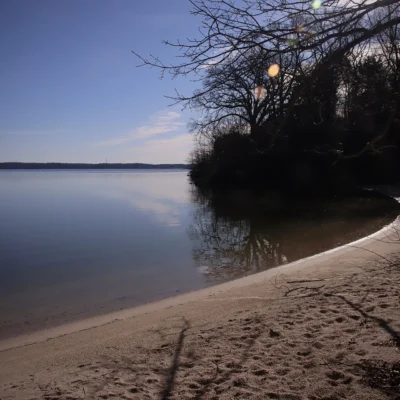
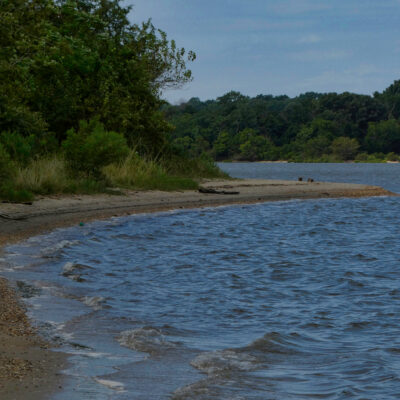
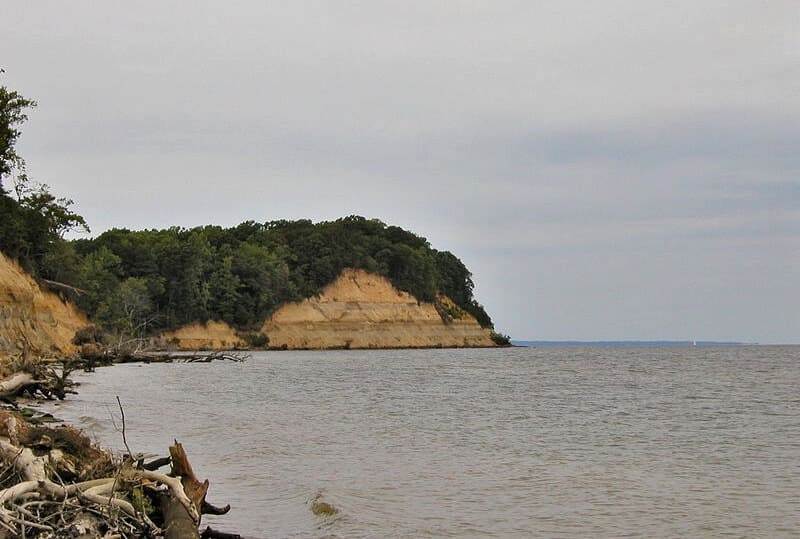
The quarter-mile sandy beach faces the Chesapeake Bay, with the fossil-bearing cliffs rising behind you. Swimming is possible but there are no lifeguards. The cliffs themselves — layered bands of sand, clay, and shell deposits — form an open-air geology textbook. You can see the different Miocene layers clearly, each representing thousands of years of sedimentation on the ancient sea floor.
Frequently Asked Questions
Can you really find Megalodon teeth at Calvert Cliffs?
Yes! Megalodon teeth have been found at Calvert Cliffs, though they are rare. Most shark teeth you’ll find are from smaller species and measure 1-2 inches. Megalodon teeth can be 3-6+ inches and are dark brown to black. The best conditions for finding them are after storms at low tide, when wave erosion exposes fresh fossils from the cliff face. You are allowed to keep any fossils you find on the beach.
How long is the walk to the beach at Calvert Cliffs?
The Red Trail (most direct route) is approximately 1.8 miles from the parking lot to the beach. It’s a relatively flat, easy walk through forest that takes about 30-45 minutes each way. The Orange Trail is a slightly longer alternative (2.5 miles) with more hills. Plan for at least 3-4 hours total including time for fossil hunting on the beach.
Is digging in the Calvert Cliffs allowed?
No. Digging in the actual cliffs is strictly prohibited for two reasons: the cliffs are unstable and prone to sudden landslides (extremely dangerous), and removing material accelerates erosion. However, you are free to search for and collect fossils that have naturally fallen onto the beach and into the surf zone. The best strategy is to search the loose gravel and sand along the waterline.
What is the best time to find fossils at Calvert Cliffs?
The absolute best time is at low tide after a storm, when waves have eroded fresh material from the cliffs and deposited it along the waterline. Spring and fall offer milder hiking weather. Arrive early on weekends to avoid parking issues. Check the tide charts for the Chesapeake Bay before visiting — the difference between high and low tide significantly affects how much beach is exposed for searching.
Explore More Maryland State Parks
Calvert Cliffs State Park is one of many outstanding state parks in Maryland. Discover more parks in our Best State Parks in Maryland guide, or use our Park Finder to search by activity, location, or features.
Keep exploring: The closest neighbors are Greenwell State Park (a short drive away) and Jefferson Patterson Park and Museum (a short drive away).

🐾 Dogs & Pets at Calvert Cliffs State Park
- Pets allowed? statewide rule
- Maryland state parks welcome leashed pets, but where they may go is set park by park under the Maryland Park Service Pet Policy — check each park's designated pet areas.
- Leash rule statewide rule
- 6 ft maximum in designated pet areas and 10 ft in undeveloped areas; off-leash under voice control only while swimming in designated areas
- Beaches & swim areas statewide rule
- At most parks pets are barred from sandy swim beaches from Memorial Day weekend through Labor Day; many parks allow shoreline swimming outside the swim beach
- Cabins & lodging statewide rule
- Most cabins are pet-free, but select parks designate pet-friendly cabins (e.g. Herrington Manor cabins 1-10, New Germany cabins 3-7)
- Statewide exceptions statewide rule
- Pets not allowed in park buildings or playgrounds; pets must be licensed and vaccinated
Are dogs allowed at Calvert Cliffs State Park?
Maryland state parks welcome leashed pets, but where they may go is set park by park under the Maryland Park Service Pet Policy — check each park's designated pet areas. Individual parks can post stricter rules — check signage on arrival.
Rules verified July 2026 via dnr.maryland.gov. More: Maryland state parks guide · Dog rules in all 50 states compared
Park Location
Plan your gear for Calvert Cliffs State Park
From our editorial guides, matched to this park’s activities: