🌤 Weather at Kettle Moraine State Forest – Southern Unit by season
| Spring | Summer | Fall | Winter |
|---|---|---|---|
| 25–69 °F | 57–82 °F | 29–74 °F | 12–33 °F |
Each range runs from the coldest monthly average low to the warmest monthly average high in that season (1991-2020 climate normals), measured at Whitewater, 7 mi away, elevation 875 ft. Conditions at the park can differ from the station, especially where elevation differs — check a forecast before you go.

🌲 Kettle Moraine State Forest – Southern Unit — A unit of Wisconsin’s Kettle Moraine State Forest covering more than 22,000 acres of forested glacial hills, kettle lakes and prairies, with its forest headquarters in Eagle, Waukesha County.
Wisconsin DNR lists the forest headquarters of the Southern Unit at S91W39091 State Rd 59 in Eagle, in Waukesha County. The park’s coordinates are 42.8572, -88.5833. DNR places the unit 61 miles east of Madison and 37 miles southwest of Milwaukee.
The campgrounds each have their own address, so check the DNR directions for the one you are heading to. DNR adds that check-in for camping is not required: campers go directly to the campsite named in their confirmation letter.
Visitor Information
| Detail | Information |
|---|---|
| Location | Forest headquarters: S91W39091 State Rd 59, Eagle, WI 53119 (Waukesha County) |
| Hours | Wisconsin DNR lists the forest as open 6 a.m. to 11 p.m. daily; the headquarters museum keeps its own hours, which DNR says are subject to change |
| Size | More than 22,000 acres |
| Facilities | Forest headquarters with museum and gift shop; visitor centers at Ottawa Lake and Whitewater Lake; picnic tables and grills at many recreation and trail areas; reservable shelters and an amphitheater; playground equipment at Ottawa Lake, Rice Lake and near the Pinewoods shower building; McMiller Sports Center in Eagle for target shooting |
| Camping | Three family campgrounds, a Horseriders’ Campground, two group camps and backpack shelters on the Ice Age Trail; reservations required, online or at 1-888-947-2757 |
| Entrance fee | Vehicle admission pass required: $13 daily or $28 for 12 months with Wisconsin plates; $16 daily or $50 for 12 months with out-of-state plates (DNR rates effective Aug. 19, 2025). A state trail pass is also required for bikers, horseback riders and skiers 16 and older; camping rates vary by residency, campsite type and season |
| Phone | (262) 594-6200 |
Things to Do
More than 100 miles of trail cross the forested glacial hills of the Southern Unit. Hikers have the Scuppernong loops (2.3 to 4.9 miles, no bikes), the Emma Carlin and John Muir systems and a 30-mile stretch of the Ice Age National Scenic Trail that runs the full length of the unit. Short nature trails fit a lunch break: Bald Bluff (0.5 mile) climbs a former Native American signal hill, the paved Paradise Springs trail passes a fieldstone spring house and a catch-and-release trout pond, Stute Springs (1.5 miles) passes old farm foundations, with an extra mile to Big Hill, which the DNR calls the highest point in the Kettle Moraine, and Stony Ridge (1 mile) starts behind the forest headquarters. Dogs need a leash of 8 feet or shorter and are not allowed on the Paradise Springs or Scuppernong Springs trails (DNR hiking page).
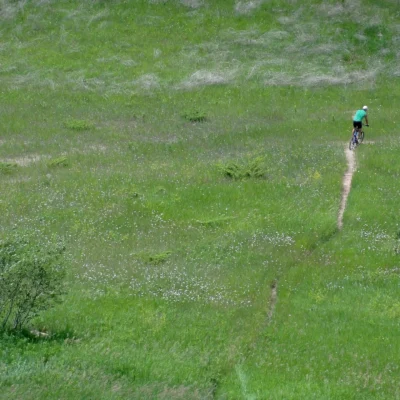
Mountain bikers ride about 30 miles of single track on the John Muir loops (1.25 to 12 miles, plus a skills course and a 0.4-mile loop for young riders) and the generally harder Emma Carlin loops. The bike trails are normally open mid-April to mid-February but close in wet conditions; the DNR asks riders to wait four to six hours after rain stops and to call the trail line at 262-594-6202 first (DNR biking page). Horseback riders have 87 miles of bridle trail and a Horseriders’ Campground with 56 sites, open April through November. Bikers, riders and skiers 16 and older need a state trail pass.
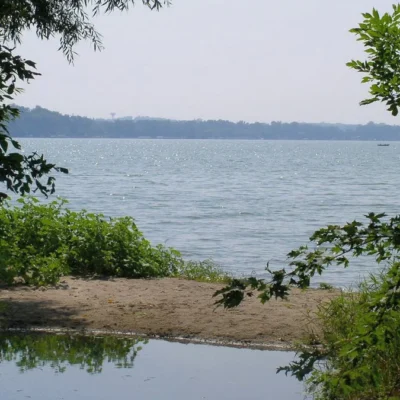
Four lakes lie in or next to the unit, 860 acres in all, with panfish and walleye plus musky, largemouth and smallmouth bass, trout and northern pike. Ottawa Lake (no gas motors) and Whitewater Lake have swimming beaches without lifeguards and accessible fishing spots, and Ottawa, Whitewater and Rice lakes have boat launches. Ottawa Lake lends basic fishing gear, a beach wheelchair and an adaptive tandem kayak at no charge. Camping is by reservation: Ottawa Lake (100 sites, 65 with electricity, showers, the only year-round campground), Pinewoods (101 non-electric sites with a pet-free quiet loop) and the primitive Whitewater Lake campground (63 sites), plus walk-in sites and three backpack shelters on the Ice Age Trail (DNR camping page). The forest headquarters on Highway 59 houses a museum on the area’s glacial features, wildlife and plants.
Best Time to Visit
The forest is open 6 a.m. to 11 p.m. daily. Pinewoods and Whitewater Lake campgrounds operate from mid-May to mid-October, the Horseriders’ Campground from April through November, and Ottawa Lake all year, with a limited number of sites plowed in winter. Bike trails close after rain, so call the trail line before a spring or fall ride. In winter the Nordic and McMiller trails are groomed for classic and skate skiing when there is enough snow (no hiking, dogs or snowshoes on groomed trails), 87 miles of snowmobile trail link to Waukesha, Jefferson and Walworth counties, and the lakes freeze for about three months; the forest does not measure ice thickness, so judge the ice yourself. The headquarters museum is also open Sundays from November to March. Checked against the Wisconsin DNR forest pages in October 2026.
Wildlife & Nature
The Southern Unit covers more than 22,000 acres of glacial hills, kettles, lakes, prairie restoration sites, pine woods and hardwood forests. Nine State Natural Areas lie within it, among them Bluff Creek, Ottawa Lake Fen and Scuppernong Prairie, and the 3,500-acre Scuppernong River Habitat Area is, in the Wisconsin DNR’s words, the largest wet prairie east of the Mississippi River. Watch and listen for coyotes, red foxes, sandhill cranes and Cooper’s hawks (DNR nature page).
History
The Southern Unit holds three restored log cabins that DNR says still stand on their original sites. The Gotten cabin was built by German immigrant Henry Gotten, the Emerson cabin by Norwegian immigrant Barne Emerson and the Oleson cabin by Norwegian immigrant Ole Oleson. Each has information about the family that lived there, and the forest office can tell you when the cabins are open for guided tours.
DNR also points to Old World Wisconsin, which it describes as America’s largest outdoor museum of rural life, with ethnic farmsteads and crossroads villages.
Visitor Tips
- Camping reservations are required before you set up on any site. They can be made for the day of arrival or up to 11 months ahead.
- Do not move firewood. Wisconsin restricts it because of tree pests and diseases.
- The Whitewater Lake campground has vault toilets but no showers; DNR lists showers at Pinewoods and Ottawa Lake.
- Hunting is open on most of the unit during established seasons, but not in parking lots, picnic areas, wildlife refuges, Old World Wisconsin, the two springs nature areas, the Rice Lake Nature Trail or within 100 yards of any campground or picnic area.
- Target shooting is allowed only at the McMiller Sports Center in Eagle, which is operated by a concessionaire.
- On Saturdays from April to October the headquarters museum and gift shop run on volunteer staffing and do not sell admission passes.
- Pets are not allowed in marked swim areas.
Frequently Asked Questions
Can I camp at Kettle Moraine State Forest – Southern Unit?
Yes. Wisconsin DNR lists three family campgrounds, a Horseriders’ Campground, two group camps, walk-in sites and backpack shelters on the Ice Age Trail; reservations are required, and check-in at a contact point is not required.
Do I need a trail pass to mountain bike at the Southern Unit?
Yes. Wisconsin DNR says a state trail pass is required for riders 16 and older on the bike trails, on top of the vehicle admission pass for your car.
Can I hunt in the Southern Unit?
Yes, in most of the unit. Wisconsin DNR says most of the 22,000 acres are open during established seasons, with exceptions near campgrounds, picnic areas and posted areas, and a hunting map is available online and at the forest headquarters.
Nearby Attractions
The closest parks and sites to Kettle Moraine State Forest – Southern Unit on this site are Lapham Peak State Park, Big Foot Beach State Park, Aztalan State Park and Glacial Drumlin State Trail.
Keep exploring: The closest neighbors are Lapham Peak State Park (within about an hour’s drive) and Big Foot Beach State Park (within about an hour’s drive).
🌲 Visit Kettle Moraine State Forest – Southern Unit
Current conditions, hours and directions from Wisconsin DNR.
Sources: Wisconsin Department of Natural Resources (DNR) property pages and vehicle admission rates; U.S. Census Bureau geocoder (county). As of October 2026.

🐾 Dogs & Pets at Kettle Moraine State Forest – Southern Unit
- Pets allowed? statewide rule
- Pets are welcome in most Wisconsin state park campgrounds, trails, roads and outlying areas, but must be leashed and under control at all times.
- Leash rule statewide rule
- 8 ft maximum physical leash required at all times (except in designated pet swim areas while the pet is in the water)
- Beaches & swim areas statewide rule
- Pets are not allowed on public beaches, but over 30 properties (e.g. Devil's Lake, Governor Dodge, Point Beach) have designated pet swim areas
- Cabins & lodging statewide rule
- Pets are not allowed in buildings, picnic shelters or other structures unless specifically signed as open to pets
- Statewide exceptions statewide rule
- Pets prohibited entirely at Copper Culture, Heritage Hill and Hoffman Hills State Recreation Areas; designated pet picnic areas exist at many properties
Are dogs allowed at Kettle Moraine State Forest – Southern Unit?
Pets are welcome in most Wisconsin state park campgrounds, trails, roads and outlying areas, but must be leashed and under control at all times. Individual parks can post stricter rules — check signage on arrival.
Rules verified July 2026 via dnr.wisconsin.gov. More: Wisconsin state parks guide · Dog rules in all 50 states compared
Park Map
Plan your gear for Kettle Moraine State Forest – Southern Unit
From our editorial guides, matched to this park’s activities:
Top Tours & Activities around Milwaukee (about 35 mi away)
 from $18
 from $207
 from $40