🌤 Weather at Talbot Islands State Parks by season
| Spring | Summer | Fall | Winter |
|---|---|---|---|
| 54–83 °F | 73–90 °F | 56–86 °F | 46–66 °F |
Each range runs from the coldest monthly average low to the warmest monthly average high in that season (1991-2020 climate normals), measured at Mayport Pilot Stn, 4 mi away, elevation 16 ft. Conditions at the park can differ from the station, especially where elevation differs — check a forecast before you go.

Talbot Islands State Parks is a joint name for several parks in Duval County managed by Florida State Parks, not a single park. Established in 1949, the park offers a peaceful retreat into nature for visitors of all ages.
Quick Facts
| State | Florida |
| County | Duval |
| Established | 1949 |
Things to Do
Florida’s 175 state parks protect some of the most unique ecosystems in North America — from crystalline freshwater springs and cypress swamps to barrier island beaches, mangrove estuaries, and subtropical hammocks. Activities vary by region: snorkeling and swimming in spring-fed rivers with crystal-clear 72°F water year-round, kayaking through mangrove tunnels and tidal creeks, hiking through palm hammocks and pine flatwoods, fishing for tarpon and snook in coastal parks, camping on undeveloped barrier islands, biking paved trails through shady canopies, birding among over 500 resident and migratory species, and exploring historic Spanish-era forts and Seminole War sites. Florida’s springs — including Ichetucknee, Rainbow, and Wakulla — offer world-class underwater visibility.
Best Time to Visit
Florida’s parks are a year-round destination, but the experience varies significantly by season. Winter (December–February) brings ideal weather — comfortable 60s–70s°F temperatures, low humidity, minimal mosquitoes, and the best manatee viewing at warm-water springs. Spring is excellent for wildflowers and birding migration. Summer (June–September) means heat (90s°F), humidity, daily afternoon thunderstorms, and aggressive mosquitoes in marsh and forest parks — but springs offer welcome cooling and sea turtle nesting peaks on Atlantic beaches. Fall is a underrated sweet spot with dropping temperatures, thinning crowds, and warm ocean water. Hurricane season runs June through November — always check forecasts before coastal park visits.
Visitor Tips
Florida state parks charge a per-vehicle entrance fee of $2–$8 per vehicle depending on the park (up to 8 people; most parks charge $3–$6). An annual pass ($60 individual / $120 family) covers unlimited visits to all state parks. Popular spring parks (like Ichetucknee and Devil’s Den) require advance reservations during peak season — book through the Florida State Parks reservation system. Tubing, kayaking, and snorkeling gear rentals are available at many spring parks. Alligators are present at virtually every freshwater park — maintain at least 15 feet of distance and never feed them. Dogs are allowed in most parks on leash but are prohibited on most beaches and in springs.
Explore More Florida State Parks
Talbot Islands State Parks is one of many outstanding state parks in Florida. Discover more parks in our Best State Parks in Florida guide, or use our Park Finder to search by activity, location, or features.
Wildlife & Nature
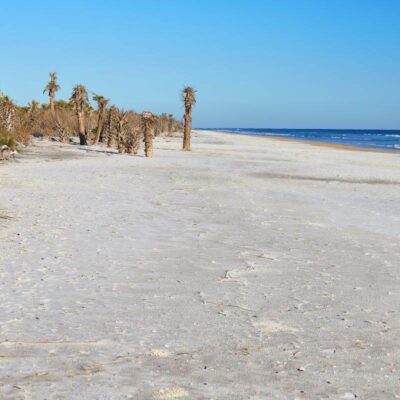
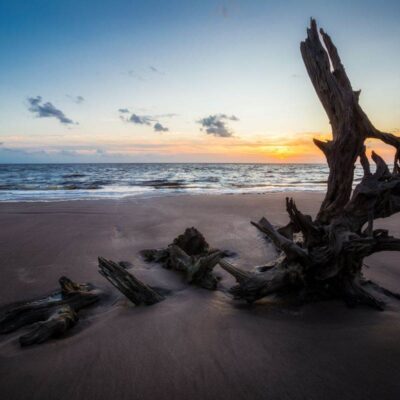
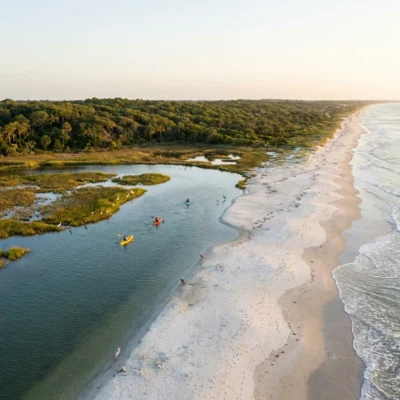
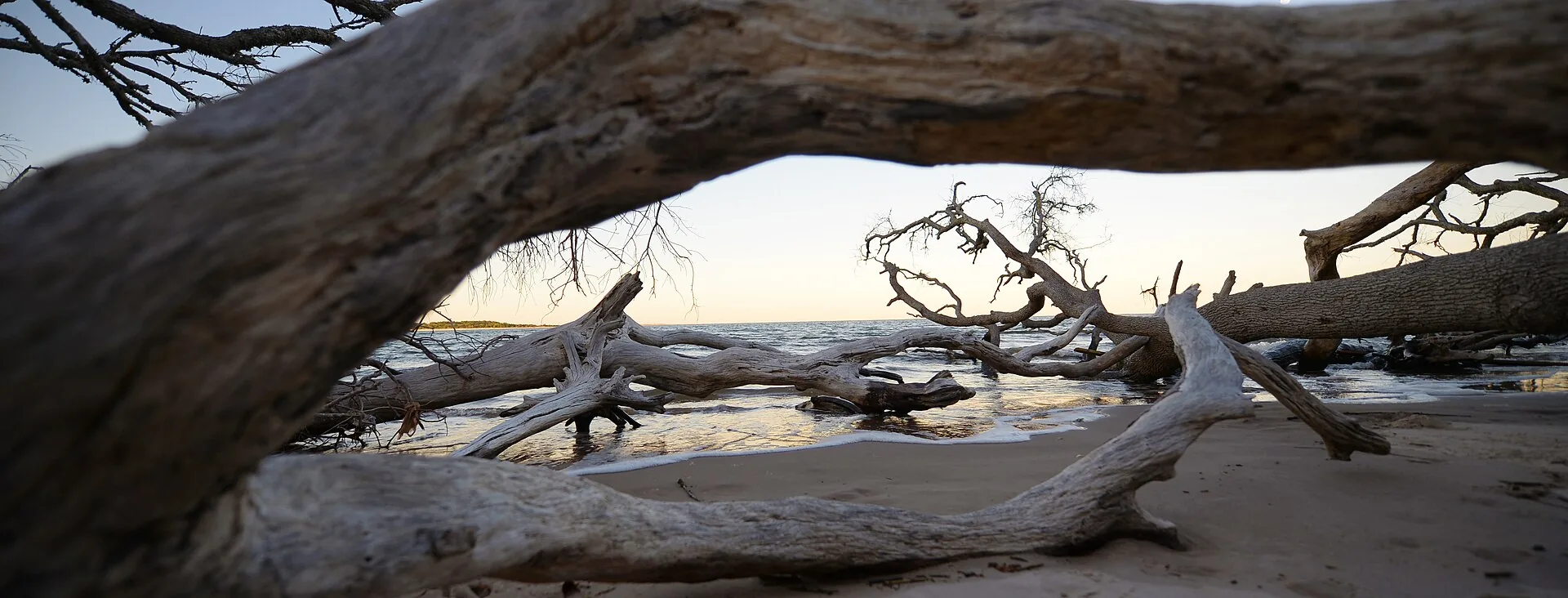
Talbot Islands SPs — encompasses Big Talbot and Little Talbot Islands — among the few remaining undeveloped barrier islands in northeast Florida. Big Talbot’s Boneyard Beach — a haunting landscape of weathered, skeletal live oaks — is one of the most photographed beaches in the Southeast. Nesting sea turtles, marsh rabbits, and shorebirds inhabit the islands.
Nearby Attractions
Jacksonville — 20 miles south. Fort George Island Cultural SP — adjacent. Amelia Island — 10 miles north. Kingsley Plantation — adjacent.
Make it a road trip: Pair a visit with George Crady Bridge Fishing Pier State Park (a short drive away) or Fort Clinch State Park (a short drive away).

🐾 Dogs & Pets at Talbot Islands State Parks
- Pets allowed? statewide rule
- Domestic pets are welcome in many Florida State Parks — on hiking trails, in picnic areas and campgrounds — but only in designated areas.
- Leash rule statewide rule
- Leashes may not exceed 6 feet; pets must be under physical control at all times.
- Beaches & swim areas statewide rule
- Pets are not permitted on beaches, boardwalks or playgrounds, or in bathing areas — swimming pets can be viewed as prey by alligators.
- Cabins & lodging statewide rule
- Pets are not allowed in any state park buildings, cabins or cabin areas.
- Statewide exceptions statewide rule
- Pets prohibited at several parks including Ellie Schiller Homosassa Springs (free kennels at the entrance), Weeki Wachee Springs and Egmont Key; in campgrounds pets must be confined in the camping unit 11 p.m.-7 a.m.
Are dogs allowed at Talbot Islands State Parks?
Domestic pets are welcome in many Florida State Parks — on hiking trails, in picnic areas and campgrounds — but only in designated areas. Individual parks can post stricter rules — check signage on arrival.
Rules verified July 2026 via floridastateparks.org. More: Florida state parks guide · Dog rules in all 50 states compared
Park Location
Plan your gear for Talbot Islands State Parks
From our editorial guides, matched to this park’s activities: