🌤 Weather at Bean Hollow State Beach by season
| Spring | Summer | Fall | Winter |
|---|---|---|---|
| 42–64 °F | 48–70 °F | 41–72 °F | 40–60 °F |
Each range runs from the coldest monthly average low to the warmest monthly average high in that season (1991-2020 climate normals), measured at San Gregorio 2 SE, 6 mi away, elevation 275 ft. Conditions at the park can differ from the station, especially where elevation differs — check a forecast before you go.

🌊 Where the Pacific Sculpted a Natural Rock Museum — Tidepools, Pebble Mosaics, and Coastal Erosion Art — Bean Hollow State Beach on the San Mateo Coast, California, two pocket beaches along Highway 1 near Pescadero, world-class tidepools, natural pebble beach with polished stones, tafoni rock formations (honeycomb erosion patterns), sea anemones sea stars hermit crabs, coastal bluff trail, whale watching, Arroyo de los Frijoles — San Mateo County, CA
Most beaches give you sand. Bean Hollow gives you a geology lesson. Two small pocket beaches on the San Mateo coast — one sand, one entirely covered in polished pebbles and agates that the Pacific has been tumbling for millennia. And at the south end, some of the finest tidepools on the California coast.
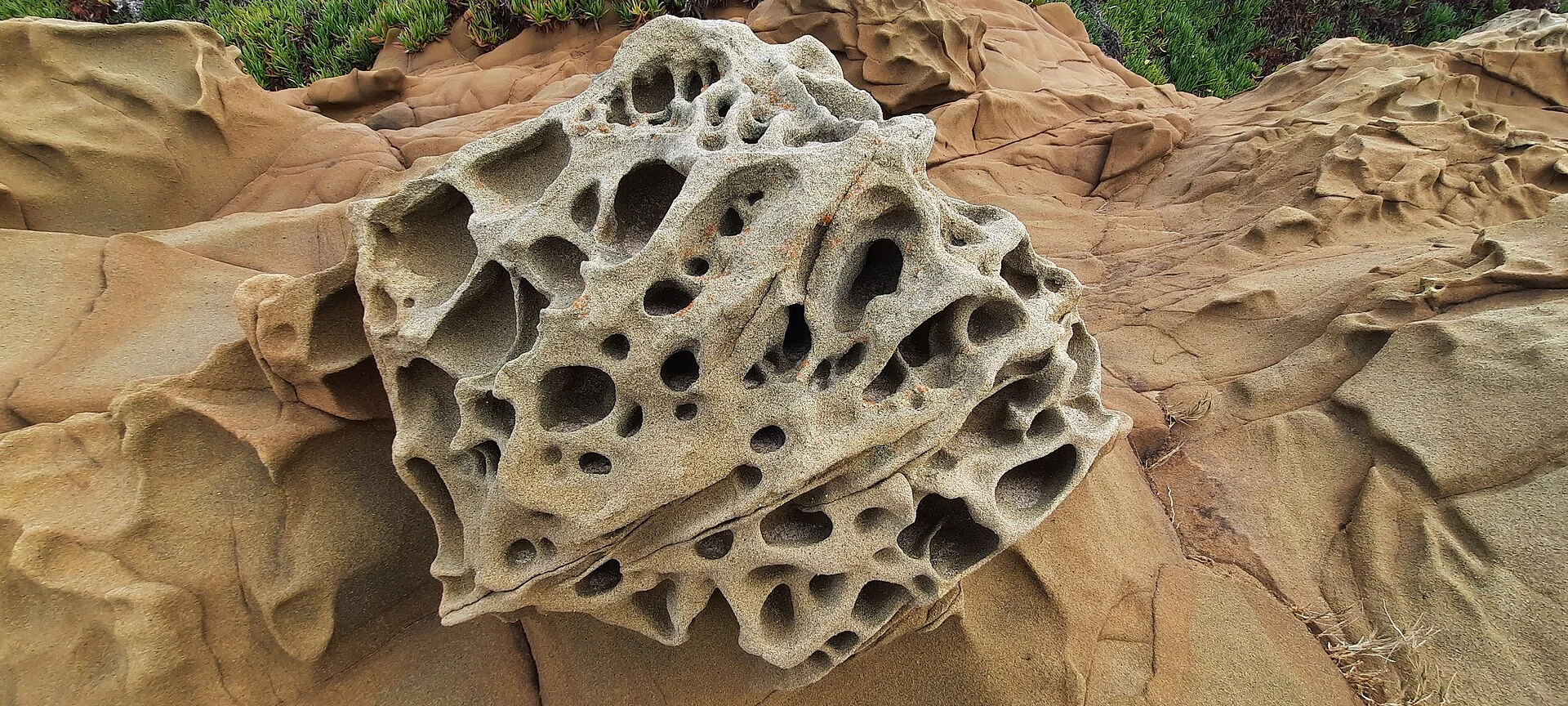
But the real star is the rock. Centuries of salt spray have carved the sandstone into tafoni — honeycomb erosion patterns that look like something from another planet. The coastal bluff trail connects the two beaches and passes through these formations, each one a small masterpiece of wind and water.
What to See
| Feature | Details |
|---|---|
| Tidepools | World-class tidepools at the south beach — purple sea urchins, giant green anemones, sea stars, hermit crabs, and nudibranchs. Best at minus tides. Protected — look but don’t touch |
| Pebble Beach | The north beach is covered entirely in smooth, wave-polished pebbles and agates — jasper, carnelian, moonstone, and quartz. No sand. Just thousands of polished stones, still being tumbled by the surf |
| Tafoni Formations | Honeycomb erosion patterns in the sandstone cliffs — created by salt crystallization over centuries. Otherworldly texture. Photographers love these |
| Coastal Bluff Trail | Short trail connecting the two beaches along the bluffs. Wildflowers in spring. Whale watching in winter. Views up and down the San Mateo coast |
| Arroyo de los Frijoles | “Creek of the Beans” — a small seasonal creek that flows through the park. The Spanish named it. It still runs |
The Science of the Beach
| Feature | How It Works |
|---|---|
| Pebble Sorting | The Pacific sorts the stones by size and weight with every wave. Heavy stones settle. Light stones tumble farther. The result is a beach organized by geology — each wave refining the collection |
| Tafoni | Salt spray penetrates the sandstone. Salt crystals grow in the pores, breaking the rock from within. Wind removes the loose grains. Over centuries, this creates the honeycomb patterns — each hole a tiny cave carved by chemistry |
| Tidepools | The rocky reef at the south end traps seawater at low tide, creating miniature ecosystems. Each pool is a self-contained world — predators, grazers, and filter feeders competing in a space the size of a bathtub |
Best Time to Visit
| Season | Best For |
|---|---|
| Fall (Sep–Nov) | 🍂 Best weather on the San Mateo coast. Clear skies. Excellent tidepooling at low tides. Calm seas. Fewer visitors than summer |
| Spring (Mar–May) | 🌸 Wildflowers on the bluffs. Gray whale migration offshore. Tidepools active. Minus tides for exploring |
| Summer (Jun–Aug) | Fog — the San Mateo coast is foggy in summer. Cool temperatures. Still beautiful. Tidepools accessible. Pebble hunting in the mist |
| Winter (Dec–Feb) | Whale watching (gray whales and humpbacks). Dramatic surf. Storm watching. Minus tides for tidepooling. Rainy but spectacular |
Frequently Asked Questions
Can I take the pebbles?
No — collecting is not allowed at Bean Hollow. The pebbles, agates, and rocks are part of the state beach ecosystem. Leave them for the next visitor. Photography is the way to take them home.
Is swimming safe?
No — dangerous surf, cold water, and strong currents. Bean Hollow is not a swimming beach. The water is cold (50–55°F year-round), the waves are powerful, and there are no lifeguards. This is a tidepooling and beachcombing destination.
Make it a road trip: Pair a visit with Pescadero State Beach (a short drive away) or Pigeon Point Light Station State Historic Park (a short drive away).
🌊 A Beach Made of Polished Stones and Rock Carved by Salt
No sand. Just pebbles the Pacific has been polishing for 10,000 years. Tidepools full of purple urchins. Honeycomb rock carved by salt air. The most interesting beach on the California coast isn’t for swimming — it’s for looking.
Wildlife & Nature
Bean Hollow State Beach — along the San Mateo Coast (Highway 1) — features rocky coves, tide pools, and a unique pebble beach with naturally polished, multicolored stones. The tidal rocks support purple sea urchins, sea stars, hermit crabs, and turban snails. Harbor seals rest on offshore rocks. Brown pelicans dive along the coast. Western snowy plovers (federally threatened) may nest on adjacent sandy areas.
Nearby Attractions
Pescadero — 2 miles east — has the Arcangeli Grocery (famous artichoke bread) and Harley Farms Goat Dairy. Pigeon Point Lighthouse — 3 miles south — has a historic hostel. Año Nuevo State Park — 10 miles south — has elephant seal colonies. Half Moon Bay — 10 miles north — has pumpkin festivals (October).

🐾 Dogs & Pets at Bean Hollow State Beach
- Pets allowed? statewide rule
- Dogs are permitted in California State Parks only in developed areas — campgrounds, picnic areas, parking lots and paved roads — and are prohibited on most trails, beaches and undeveloped areas unless specifically designated as dog-friendly.
- Leash rule statewide rule
- Maximum 6-foot leash at all times; dogs may not be left unattended.
- Beaches & swim areas statewide rule
- Dogs are prohibited on most state beaches; only beaches specifically designated as dog-allowed permit them (varies by park).
- Cabins & lodging statewide rule
- Pets are generally not allowed in buildings or cabins; overnight campers must keep dogs inside a tent or vehicle at night.
- Statewide exceptions statewide rule
- Designated dog-friendly trails and beaches vary park by park; misrepresenting a pet as a service animal is a misdemeanor.
Are dogs allowed at Bean Hollow State Beach?
Dogs are permitted in California State Parks only in developed areas — campgrounds, picnic areas, parking lots and paved roads — and are prohibited on most trails, beaches and undeveloped areas unless specifically designated as dog-friendly. Individual parks can post stricter rules — check signage on arrival.
Rules verified July 2026 via parks.ca.gov. More: California state parks guide · Dog rules in all 50 states compared
Park Location
Plan your gear for Bean Hollow State Beach
From our editorial guides, matched to this park’s activities:
Top Tours & Activities Near Santa Cruz
 from $85
 from $220
 from $205