Black Mesa State Park
🏜️ Trusted Guide to Oklahoma’s Highest Point – Updated 2025
Standing on Oklahoma’s Rooftop
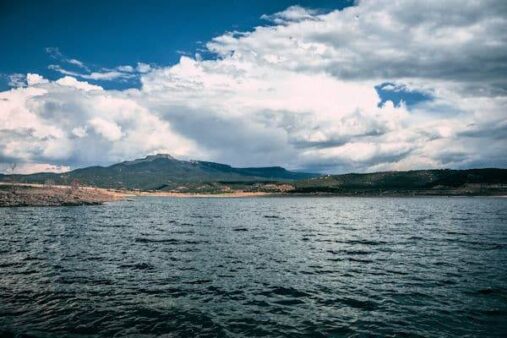
In the remote far western tip of Oklahoma’s panhandle, where the borders of three states converge, Black Mesa State Park occupies 349 acres of high-plains landscape unlike anything else in the Sooner State. Just beyond the park, the Black Mesa Nature Preserve adds another 1,600 acres protecting Oklahoma’s highest point — Black Mesa summit at 4,973 feet. The mesa takes its name from the dark layer of ancient lava rock that caps its flat top, deposited by volcanic eruptions 3 to 30 million years ago. This is Oklahoma at its most unexpected: dinosaur country, dark sky haven, and geological wonderland rolled into one.
The Hike to Oklahoma’s High Point
The High Point Trail is a pilgrimage for state highpointers and adventurous hikers alike. The 8.2-mile round-trip trail crosses the Nature Preserve’s rolling grasslands and rocky terrain, climbing gradually to the granite monument marking Oklahoma’s ultimate elevation. The hike is moderate rather than strenuous — the real challenge is the remoteness and exposure. There’s no shade, no water sources, and weather can shift rapidly on the high plains. Start early to avoid midday heat, carry at least 2 liters of water per person, and watch for rattlesnakes in the rocks.
Dinosaur Tracks & Ancient Geology
Near the trailhead, theropod dinosaur tracks dating to the Jurassic period were exposed when a spillway was constructed in 1982 — rare physical evidence of the prehistoric creatures that once roamed this landscape. The mesa’s geological layers tell a story of volcanic eruption, sedimentary deposition, and millions of years of erosion, creating a timeline visible in the rock strata.
Lake Carl Etling & Recreation
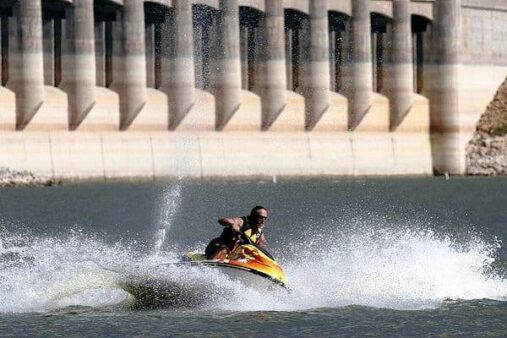
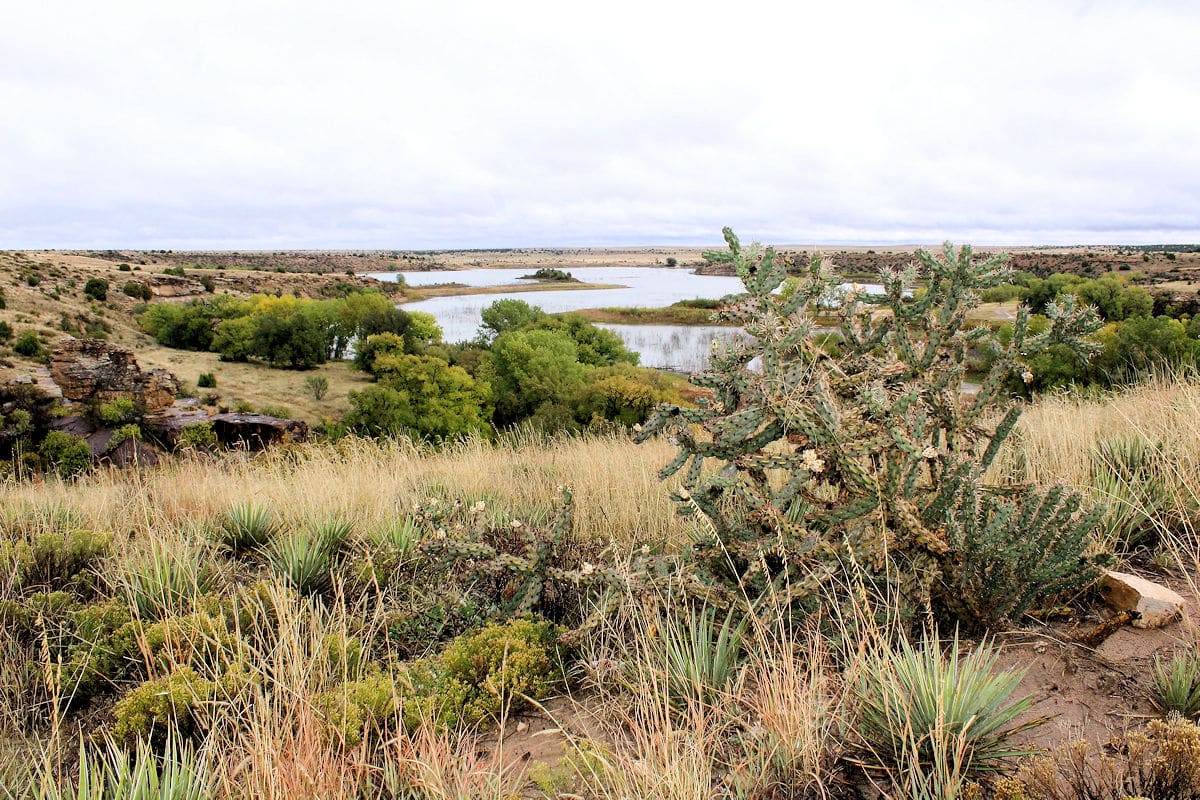
The park centers on Lake Carl Etling, a small but scenic reservoir offering fishing, boating, and quiet water recreation. The lake is stocked with bass, catfish, and channel cat, providing decent fishing in a setting where the reward is as much about the solitude as the catch. A boat ramp provides easy access, though this is a no-wake lake suited for canoes, kayaks, and small fishing boats.
Camping Under Dark Skies
Black Mesa’s campground offers RV, tent, and group campsites with picnic areas, restrooms with showers, and the kind of quiet you can only find hundreds of miles from the nearest city. The park’s extreme remoteness makes it one of the darkest sky locations in the central United States — the Milky Way is visible in stunning detail, and meteor showers are unforgettable experiences here. Astronomers and dark-sky photographers make pilgrimages to this corner of Oklahoma for exactly this reason.
Practical Tips
- From Boise City (30 miles): Take OK-325 West — this is extremely rural, gas up before you leave town
- Entry fee: Free (camping fees apply)
- Best hiking: March-May and September-November — summer heat on the exposed mesa is brutal
- The park sits at the tripoint of OK/NM/CO — you can visit three states in one trip
- No water on the trail — pack more than you think you need, especially in warmer months
- Camping is not permitted in the Nature Preserve — use the state park campground
- This is one of the most remote state parks in America — nearest full-service town is Boise City; nearest hospital is 80+ miles away
- Stargazing is the reward for the remoteness — bring a telescope, camera tripod, and warm layers for cool nighttime temperatures