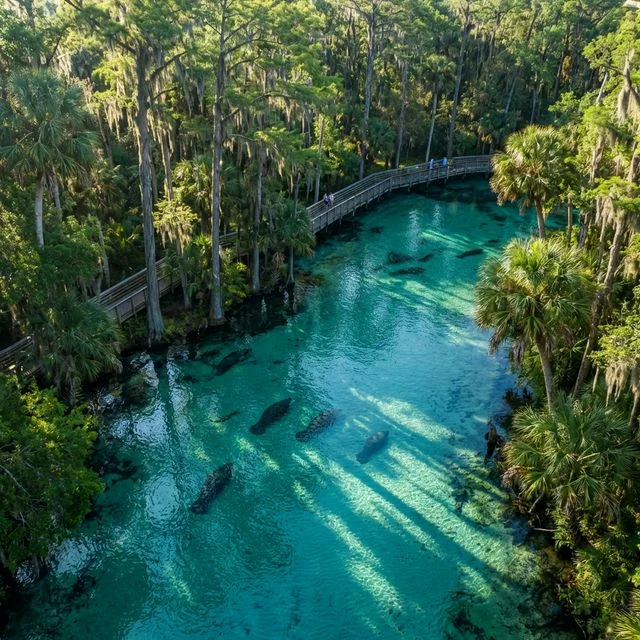
Blue Spring State Park
🏆 Florida’s Premier Manatee Sanctuary — First-magnitude spring pumping 100 million gallons of crystal-clear 72°F water daily, hosting record-breaking manatee gatherings of 900+ animals each winter
Why Blue Spring State Park Is Florida’s Natural Wonder
There are moments at Blue Spring State Park that make you forget you’re in Florida — or anywhere on Earth, really. You stand on the boardwalk at the spring head and look down into water so clear it doesn’t appear to exist. The sandy bottom 25 feet below looks close enough to touch. Fish drift through this invisible medium like they’re suspended in air. And then, between November and March, the spring run fills with West Indian manatees — hundreds of them, their enormous gray forms gliding through the crystalline water like a scene from a nature documentary, except you’re standing ten feet above them.
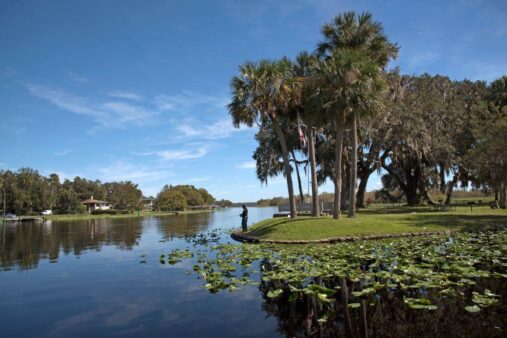
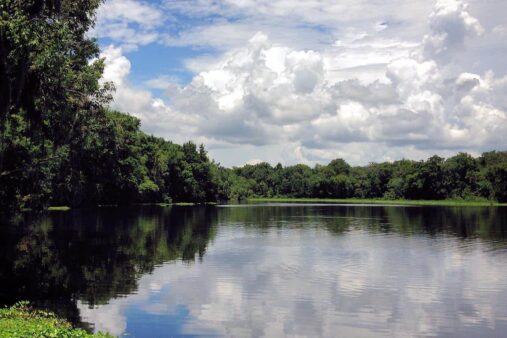
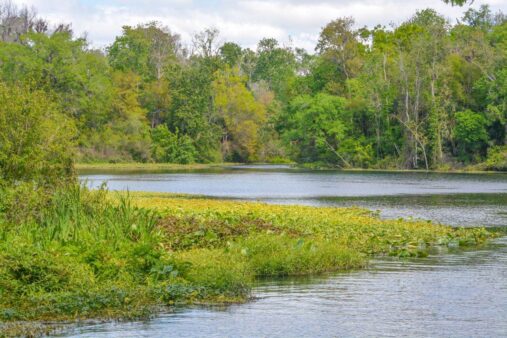
This 2,643-acre park in Orange City protects one of Florida’s most powerful first-magnitude springs, discharging over 100 million gallons of water daily at a constant 72°F. The spring run flows through a lush subtropical corridor of cypress, live oak, and palm before joining the St. Johns River. When the river cools in winter, manatees — Florida’s beloved “sea cows” — seek the warmer spring water for survival, creating one of the most accessible and spectacular wildlife viewing experiences in the entire Southeast. The park recorded a single-day record of 932 manatees in January 2024.
Manatee Season: November Through March
The winter manatee gathering at Blue Spring is one of Florida’s great natural spectacles. As the St. Johns River drops below 68°F, West Indian manatees — which cannot survive prolonged exposure to water below 60°F — swim upstream into the spring run seeking the constant 72°F water. On peak cold days, 500-700 manatees pack the spring run shoulder to shoulder, a concentration visible from the elevated boardwalk that parallels the entire run.
| Month | Avg. Manatees | Water Activities | What to Expect |
|---|---|---|---|
| November | 50-150 | Closed in spring run | Early arrivals; smaller groups, easier viewing |
| December | 150-400 | Closed in spring run | Larger herds forming; best month for photography |
| January | 300-932 | Closed in spring run | Peak season; record counts during cold snaps |
| February | 200-600 | Closed in spring run | Still strong numbers; Valentine’s Day weekend busy |
| March | 50-200 | Reopening mid-March | Numbers declining; transition to spring activities |
| April-October | 0-15 | Open — swim, tube, kayak | Occasional resident manatees; full water access |
📸 Manatee Viewing Tips
• Best Time: Arrive at park opening (8 AM) on cold mornings (below 60°F air temp). Manatees are most active and concentrated in early morning.
• Best Spot: The elevated boardwalk at the spring boil offers the clearest water and highest manatee concentration. The platform near the spring head provides overhead views.
• Photography: Polarizing filter is essential to cut surface glare. Morning light from the east illuminates the spring run beautifully. 70-200mm lens ideal from the boardwalk height.
• Capacity: The park implements capacity limits during peak manatee season. Arrive before 9 AM on weekends to guarantee entry. The parking lot frequently fills by 10 AM on cold January weekends.
Swimming and Tubing: April Through October
When manatee season ends (typically mid-March), the spring transforms into one of Florida’s most spectacular natural swimming holes. The spring head — a circular pool roughly 30 feet deep with visibility exceeding 100 feet — offers swimming in water so clear you can count individual grains of sand on the bottom. The constant 72°F temperature feels refreshingly cool on Florida summer days and surprisingly warm on spring mornings.
Tubing the spring run is the park’s signature summer activity. The float from the swimming area down the spring run to the St. Johns River takes approximately 30-45 minutes, drifting through a cathedral of ancient cypress trees festooned with Spanish moss. The water remains crystal-clear for most of the run before mixing with the tannin-stained river. Tube rentals are available through the park concessionaire, Blue Springs Adventures.
| Activity | Season | Cost | Notes |
|---|---|---|---|
| 🏊 Swimming | Mid-Mar to Mid-Nov | Included with entry | No lifeguards; 72°F year-round |
| 🛟 Tubing | Mid-Mar to Mid-Nov | $15-$25 rental | ~30-45 min float; bring water shoes |
| 🤿 Snorkeling | Mid-Mar to Mid-Nov | Included with entry | Bring your own gear; unreal visibility |
| 🛶 Kayaking | Year-round (St. Johns River) | $25-$40 rental | Spring run closed during manatee season |
| 🚤 River Boat Tour | Year-round | $25-$30/person | 2-hour narrated tour on St. Johns River |
Hiking the Pine Island Trail
The Pine Island Trail is a 4.5-mile loop through the park’s interior — a surprisingly wild hike through hammock forest, scrubby flatwoods, and floodplain swamp that feels utterly removed from the busy spring area. The trail winds through stands of cabbage palm, live oak draped in resurrection fern, and longleaf pine before looping back to the picnic area. This is excellent birding habitat: barred owls, pileated woodpeckers, red-shouldered hawks, and various warblers frequent the canopy.
| Trail | Distance | Difficulty | Highlights |
|---|---|---|---|
| Pine Island Trail | 4.5 mi loop | Easy-Moderate | Hammock forest, birding, solitude |
| Spring Run Boardwalk | 0.5 mi one-way | Easy (accessible) | Manatee viewing, clear water, Thursby House |
| French Avenue Connector | 0.8 mi | Easy | Connects picnic area to river overlook |
The Thursby House: Florida Pioneer History
The Louis P. Thursby House, built in 1872 on a shell mound at the confluence of the spring run and the St. Johns River, offers a window into pioneer-era Florida. Thursby was an orange grower who established a steamboat landing at the spring, which became a regular stop on the St. Johns River route between Jacksonville and Sanford. The house — a handsome white frame structure with wraparound porches — has been restored and serves as a free museum interpreting 6,000 years of human habitation at the spring, from Timucuan shell middens to the steamboat era. It was listed on the National Register of Historic Places in 1975.
Camping at Blue Spring
| Campground | Sites | Amenities | Character |
|---|---|---|---|
| Main Campground | 51 sites | Electric/water, modern restrooms, showers | Wooded, near spring run |
| Cabins | 6 cabins | Full kitchen, A/C, linens, screened porch | Overlooking St. Johns River |
| Primitive Group Camp | 1 area | Fire rings, pit toilets | Youth groups only |
The campground books solid during manatee season (November-March) and should be reserved through ReserveFlorida.com at least 3-4 months in advance for winter weekends. The riverfront cabins are incredibly popular — expect to book 6+ months ahead for peak manatee season. Summer camping offers easier availability and the unique pleasure of walking from your campsite to the spring for an evening swim.
Best Time to Visit Blue Spring State Park
| Season | Weather | Crowds | Best For |
|---|---|---|---|
| Winter (Nov-Mar) | 55-75°F | Very High | Manatee viewing (hundreds of animals) |
| Spring (Apr-May) | 75-85°F | Moderate | Swimming season opens, comfortable temps |
| Summer (Jun-Sep) | 85-95°F | High | Swimming, tubing, snorkeling in 72°F water |
| Fall (Oct-Nov) | 70-85°F | Low-Moderate | Quiet hiking, kayaking, first manatees arriving |
Budget Planning: Blue Spring State Park
| Expense | Day Trip | Weekend Camp | Week (Cabin) |
|---|---|---|---|
| Entry Fee | $6/vehicle | Included with camping | Included |
| Camping/Cabin | — | $48-$60 | $700-$1,050 |
| Tube Rental | $15-$25 | $15-$25 | $15-$25 |
| Kayak Rental | $25-$40 | $25-$40 | $25-$40 |
| Boat Tour | $25-$30 | $25-$30 | $25-$30 |
| Total (per person) | $6-$95 | $73-$155 | $740-$1,145 |
🔍 Jacques Cousteau Connection
Blue Spring’s designation as a state park in 1972 was directly influenced by legendary ocean explorer Jacques Cousteau, whose 1971 documentary “The Forgotten Mermaids” (filmed at this spring) drew international attention to the plight of Florida manatees and the need to protect their winter habitat. Without Cousteau’s camera, this spring might never have been preserved.
Nearby Attractions
Blue Spring sits in the heart of Central Florida’s spring country. De Leon Springs State Park — famous for its pancake restaurant where you cook your own pancakes on a griddle at your table — is just 15 minutes north. The charming town of DeLand, with its historic downtown, craft breweries, and SkyDive DeLand (one of the busiest skydiving operations in the world), is 20 minutes away. Ocala National Forest’s other springs (Alexander, Silver Glen) are within an hour’s drive, making a multi-spring road trip an excellent option.
🐋 Ready to Meet the Manatees?
Plan your visit to Florida’s most accessible manatee sanctuary and swim in water so clear it looks like air.
Frequently Asked Questions
Can you swim with manatees at Blue Spring State Park?
No. All water activities in the spring run — swimming, snorkeling, tubing, kayaking — are closed from mid-November through mid-March to protect the wintering manatee population. You can view manatees from the boardwalk and observation platforms, but entering the water during manatee season is prohibited and enforced. Outside of manatee season (April-October), you can swim in the spring and may occasionally encounter resident manatees, but intentional contact is illegal under federal law.
When is the best time to see manatees at Blue Spring?
January is peak manatee season, with the park recording up to 932 manatees on a single cold day in 2024. The best viewing occurs during cold snaps when air temperatures drop below 60°F — this pushes the most manatees into the warm spring run. Arrive at park opening (8 AM) for the best viewing and to guarantee entry, as the park frequently reaches capacity by mid-morning during peak winter weekends.
How cold is the water at Blue Spring?
The spring maintains a constant 72°F (22°C) year-round, regardless of air temperature. This makes it feel refreshingly cool on hot summer days (when air temps reach 95°F) and surprisingly warm on winter mornings. The consistency comes from the spring drawing water from the deep Floridan Aquifer, which maintains stable temperatures regardless of surface conditions. The 72°F is also what makes this spring critical habitat for manatees — warm enough to keep them healthy when the St. Johns River drops to dangerous temperatures.
Is Blue Spring State Park worth visiting if manatees aren’t there?
Absolutely. Many locals prefer the summer months, when you can actually swim in the crystalline spring water, float the spring run on a tube, snorkel over the spring boil, and kayak the St. Johns River. The water clarity is extraordinary regardless of season, and summer offers direct engagement with the spring rather than just viewing. The Pine Island Trail, Thursby House, and river boat tours operate year-round. The lack of winter crowds is an added bonus.
How deep is the spring at Blue Spring State Park?
The main spring boil is approximately 25-30 feet deep, with visibility often exceeding 100 feet in the spring run. The water is so clear that the depth is deceptive — the bottom looks much closer than it actually is. The spring run averages 6-12 feet deep for most of its length before joining the St. Johns River. This first-magnitude spring pumps approximately 100 million gallons of water daily from the Floridan Aquifer, making it one of the most powerful springs in the state.
Can you bring your own kayak to Blue Spring?
Yes. You can launch personal kayaks and canoes at the park. During manatee season (mid-November through mid-March), personal watercraft cannot access the spring run but can paddle the St. Johns River. Outside manatee season, you can paddle both the spring run and the river. Kayak and canoe rentals are also available through Blue Springs Adventures, the park concessionaire, along with paddleboards and guided tour options.