🌤 Weather at Cape Hatteras State Park by season
| Spring | Summer | Fall | Winter |
|---|---|---|---|
| 46–77 °F | 71–87 °F | 52–82 °F | 40–58 °F |
Each range runs from the coldest monthly average low to the warmest monthly average high in that season (1991-2020 climate normals), measured at Frisco 2NNE, 5 mi away, elevation 0 ft. Conditions at the park can differ from the station, especially where elevation differs — check a forecast before you go.

🏆 Where the Outer Banks Meet the Atlantic — Wild Beaches, Wild Horses & America’s Tallest Brick Lighthouse — Updated for 2026 with lighthouse climbing schedule, beach driving permits, and seasonal tips
The Outer Banks are a contradiction — a ribbon of sand in the Atlantic Ocean that shouldn’t exist, yet stubbornly does. And at their heart stands a 198-foot lighthouse, spiraled in black and white, rising above miles of empty beach where the waves arrive unimpeded from Africa and the sand shifts in the wind like something alive. This is Cape Hatteras, where the Gulf Stream meets the Labrador Current, where more than 600 ships have wrecked in the treacherous shoals that earned this coast its name: the Graveyard of the Atlantic. It’s also where some of the wildest beaches, best fishing, and most dramatic lighthouse views on the East Coast wait for anyone willing to drive to the end of the road.
Cape Hatteras sits on Hatteras Island, part of North Carolina’s Outer Banks barrier islands. The famous Cape Hatteras Lighthouse — the tallest brick lighthouse in the United States at 198 feet — is the centerpiece, but the experience extends far beyond: wide, uncrowded beaches, world-class surf, excellent fishing, migratory bird watching, and the remote, windswept atmosphere of a barrier island where nature is in charge.
What Makes Cape Hatteras Iconic
Tallest Brick Lighthouse in US
198 feet tall with distinctive black-and-white spiral stripes — 257 steps to the top for Atlantic panoramas.
Graveyard of the Atlantic
Where the Gulf Stream meets the Labrador Current — 600+ shipwrecks in these waters.
World-Class Surf
Some of the best surfing on the East Coast — consistent swells from Atlantic storms.
Wild Barrier Beaches
Miles of uncrowded beach where you can drive on the sand, fish the surf, and watch the sun rise over the Atlantic.
Cape Hatteras Lighthouse
The Cape Hatteras Lighthouse is the tallest brick lighthouse in America — 198 feet tall, with 257 iron steps spiraling to the top. Its distinctive black-and-white spiral pattern makes it one of the most recognized lighthouses in the world. First lit in 1870, the lighthouse was famously moved 2,900 feet inland in 1999 to save it from ocean erosion — one of the largest structural moves ever completed.
🗼 Climbing the Lighthouse
• Open for climbing seasonally (typically mid-April through Columbus Day) • 257 steps to the top — no elevator • Small fee ($8 adults, $4 seniors/children) • First-come, first-served OR timed tickets depending on season • Views from top: 360° panorama of the Atlantic, Pamlico Sound, and the barrier island
Beaches & Activities
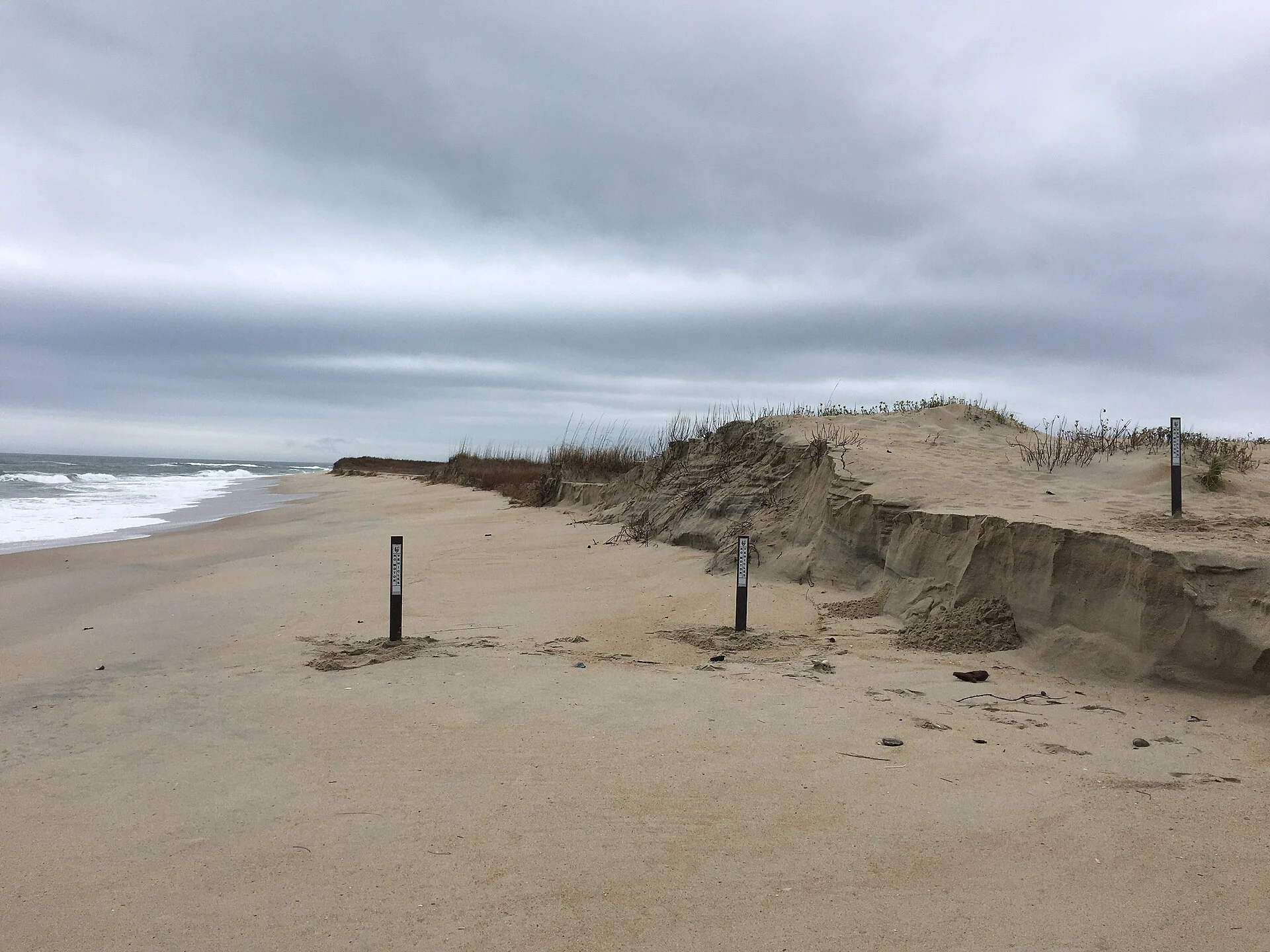
The Outer Banks beaches around Cape Hatteras are wild, wide, and uncrowded — a stark contrast to the resort beaches further north. Activities include:
- 🏄 Surfing: Cape Hatteras is one of the best surf breaks on the East Coast. Consistent swells from Atlantic storms create excellent conditions, especially in fall
- 🎣 Surf Fishing: Red drum, bluefish, striped bass. The Cape Point area is legendary among surf fishermen
- 🚗 Beach Driving: 4WD beach driving permitted on specific sections with a permit — access remote stretches of sand
- 🐦 Bird Watching: The Outer Banks are a major migratory corridor. Shorebirds, raptors, and waterfowl pass through spring and fall
- 🤿 Scuba Diving: Wreck diving on the Graveyard of the Atlantic. Multiple dive operations available
Photography Guide
📸 Best Photo Spots & Tips
• Lighthouse at sunrise: The spiral pattern catches the first light beautifully. Shoot from the southeast for direct illumination.
• Lighthouse from the beach (low tide): The reflection in wet sand at low tide creates a mirror effect — time it right for a stunning composition.
• Cape Point: Where the island narrows to a sandy point — dramatic meeting of currents, surf, and sky.
• Milky Way (summer): Minimal light pollution makes the Outer Banks excellent for astrophotography. The lighthouse makes a dramatic foreground.
When to Visit: Seasonal Guide
| Season | Months | Weather | Best For |
|---|---|---|---|
| ☀️ Summer | Jun–Aug | 80-90°F | 🏆 Lighthouse climbing, swimming, beach. Warm water. Peak season |
| 🍂 Fall | Sep–Nov | 60-80°F | 🏆 Best surf, red drum fishing, bird migration, fewer crowds |
| 🌸 Spring | Apr–May | 60-75°F | Lighthouse opens for season. Wildflowers. Comfortable temperatures |
| ❄️ Winter | Dec–Feb | 40-55°F | Solitude. Storm watching. Dramatic winter beach photography |
Budget Calculator
| Expense | Day Trip | Weekend Stay | Notes |
|---|---|---|---|
| Beach Access | FREE | FREE | No beach entry fees on Outer Banks |
| Lighthouse Climb | $8/adult | $8/adult | $4 seniors/children. Worth every step |
| Beach Driving Permit | $25-50 | $25-50 | If 4WD beach access desired |
| Lodging (OBX) | — | $150-300/night | Vacation rentals, motels in Buxton/Hatteras |
| Total (2 adults) | $8-$60 | $310-$660 | Beach access is free — the value is in the experience |
Frequently Asked Questions
Can I climb the lighthouse?
Yes — typically open mid-April through Columbus Day. 257 steps, no elevator. $8/adult. Views from 198 feet are spectacular. Children must be tall enough to climb unassisted.
Why was the lighthouse moved?
In 1999, the lighthouse was moved 2,900 feet inland to save it from advancing ocean erosion. The move took 23 days and is considered one of the greatest structural engineering feats of the 20th century.
Can I drive on the beach?
Yes — 4WD vehicles only on designated sections with an ORV permit. Check current access points — some sections close for bird nesting season (spring-summer).
How’s the surfing?
Excellent — Cape Hatteras is considered one of the best surf spots on the East Coast. Fall brings the most consistent swells from Atlantic hurricanes and nor’easters. Multiple surf shops offer rentals and lessons.
What’s the Graveyard of the Atlantic?
The treacherous Diamond Shoals off Cape Hatteras, where the Gulf Stream and Labrador Current collide, have caused over 600 shipwrecks. The Graveyard of the Atlantic Museum in Hatteras village tells the story.
Is there camping?
Yes — the National Park Service operates several campgrounds on the Cape Hatteras National Seashore, including sites near the lighthouse.
How do I get there?
Cape Hatteras is on Hatteras Island, accessible via NC-12 from the northern Outer Banks or by the Hatteras-Ocracoke ferry from the south. Nearest airports: Norfolk, VA (3 hrs) or Raleigh-Durham (4 hrs).
🗼 257 Steps to Where the Atlantic Begins
Stand at the base and look up — 198 feet of black and white spiraling into the sky, the tallest brick lighthouse in America, built to warn ships away from the most dangerous stretch of water on the East Coast. Climb it. All 257 steps. At the top, the wind hits you first, then the view: miles of empty barrier beach, the Atlantic stretching to Europe, Diamond Shoals churning where two ocean currents collide. Below you, the beach where Blackbeard ran aground and hundreds of ships followed him to the bottom. Cape Hatteras is where America’s coastline gets serious — wild, beautiful, and utterly unforgettable.
📍 Location: Cape Hatteras National Seashore, Buxton, NC 27920
📞 Phone: (252) 475-9000
Nearby state parks: If you have extra time, Jockeys Ridge State Park is elsewhere in the state, and Run Hill State Natural Area is elsewhere in the state.

🐾 Dogs & Pets at Cape Hatteras State Park
- Pets allowed? statewide rule
- Pets are permitted in all North Carolina state parks as long as they are on an attended leash and under the constant control of the owner.
- Leash rule statewide rule
- Attended leash or other restraint no longer than 6 feet required at all times
- Beaches & swim areas statewide rule
- Pets are not permitted at swim areas or in bathhouses
- Cabins & lodging statewide rule
- Pets are strictly prohibited from entering any building, including cabins; no pet-friendly cabin program
- Statewide exceptions statewide rule
- Not all campgrounds allow pets (contact the park office first); pets must be confined to tent or vehicle during quiet hours (10 p.m.-7 a.m.); at Hammocks Beach visitors must arrange their own transportation for pets to Bear Island
Are dogs allowed at Cape Hatteras State Park?
Pets are permitted in all North Carolina state parks as long as they are on an attended leash and under the constant control of the owner. Individual parks can post stricter rules — check signage on arrival.
Rules verified July 2026 via ncparks.gov. More: North Carolina state parks guide · Dog rules in all 50 states compared
Park Location
Plan your gear for Cape Hatteras State Park
From our editorial guides, matched to this park’s activities: