🌤 Weather at Caspar Headlands State Beach by season
| Spring | Summer | Fall | Winter |
|---|---|---|---|
| 41–60 °F | 47–65 °F | 43–65 °F | 40–54 °F |
Each range runs from the coldest monthly average low to the warmest monthly average high in that season (1991-2020 climate normals), measured at Fort Bragg 5 N, 11 mi away, elevation 123 ft. Conditions at the park can differ from the station, especially where elevation differs — check a forecast before you go.

🌊 Where the Mendocino Coast Turns Wild — A Secret Headland Above the Pacific — Caspar Headlands State Beach and State Natural Reserve on the Mendocino Coast, California, remote headland beach, rocky coastline, tide pools, whale watching, wildflowers, no facilities, undeveloped California coast, near Mendocino village and Fort Bragg — Mendocino County, CA
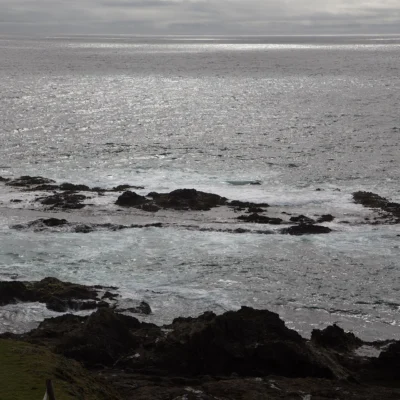
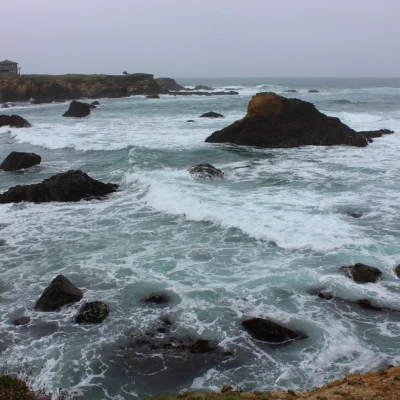
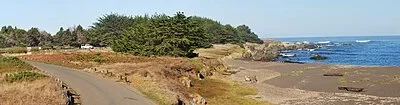
Most California beaches have parking lots, lifeguards, and someone selling açaí bowls. Caspar Headlands has a rocky path, a crescent of sand between cliffs, and nobody. This is the California coast before it was discovered — a headland jutting into the Pacific on the Mendocino Coast, where the only development is a trail and the only amenity is the view.
The headland rises 80 feet above the ocean. Gray whales pass within binocular range during migration season. The tide pools in the rocky intertidal zone are some of the most pristine on the North Coast. And the wildflower meadows on the headland bloom with coastal lupine, paintbrush, and seaside daisies from March through July.
What to See
| Feature | Details |
|---|---|
| The Headland | A grassy promontory extending into the Pacific between Caspar Beach to the south and Russian Gulch to the north. Unimproved trails cross the headland through wildflower meadows. The cliffs drop vertically to the ocean — stay back from edges |
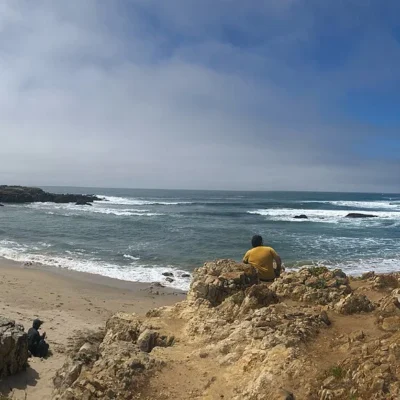
| The Beach | Caspar Beach — a crescent of sand in a sheltered cove at the base of the headlands. Access via a steep, informal trail. Swimming is dangerous (cold water, rip currents, no lifeguards). Beachcombing, photography, and solitude are the draw |
| Tide Pools | Rocky intertidal zone exposed at low tide — sea stars, anemones, urchins, chitons, and nudibranchs. Among the least-disturbed tide pools on the California coast. Best at minus tides. Check tide tables and wear grippy shoes |
| Whale Watching | Gray whales migrate past the headland December through April (southbound) and March through May (northbound). The elevated headland provides an ideal vantage point — whales often pass within a quarter mile of the cliffs |
| Wildflowers | Coastal prairie wildflowers bloom March through July: lupine, Indian paintbrush, seaside daisies, Douglas iris, and yarrow. The headland meadows are a designated State Natural Reserve specifically for their botanical significance |
The Mendocino Coast
| Feature | Details |
|---|---|
| The Region | The Mendocino Coast — 100 miles north of San Francisco — is one of the most dramatic stretches of Pacific coastline in North America. Sea stacks, blowholes, wave-cut platforms, and fog-shrouded forests define the landscape |
| Mendocino Village | The historic Victorian village of Mendocino sits 5 miles south on a headland above the ocean. Art galleries, restaurants, and bed-and-breakfasts in restored 19th-century buildings. The village that inspired Cabot Cove in “Murder, She Wrote” |
| Fort Bragg | The larger town 3 miles north — Glass Beach (sea glass from a former dump), the Skunk Train (heritage railway), and working-class character that contrasts with Mendocino’s polish. Both towns serve as base camps for coast exploration |
| No Development | Caspar Headlands has no facilities — no restrooms, no parking lot, no signs, no rangers. This is intentional. The State Natural Reserve designation protects the headland from development. Bring water, wear layers, and leave no trace |
Best Time to Visit
| Season | Best For |
|---|---|
| Spring (Mar–May) | 🌸 Wildflower peak. Whale migration (both directions overlap in March–April). Tide pools at winter low tides. The headland at its most colorful |
| Fall (Sep–Nov) | ☀️ Clearest weather. Fog lifts. Warm (for Mendocino). The ocean deepest blue. Best photography light. Fewer visitors than summer |
| Summer (Jun–Aug) | Fog. Dense, persistent, beautiful fog. The headland wrapped in white. Temperatures in the 50s–60s. Bring layers. The fog burns off by afternoon — sometimes |
| Winter (Dec–Feb) | Whale watching peak (southbound grays). Storm watching — Pacific storms hit the headland with tremendous force. Dramatic. Dangerous near cliffs. The coast at its most primal |
Frequently Asked Questions
Is this a developed park?
No — Caspar Headlands is essentially undeveloped. No restrooms, no parking lot (park on the roadside), no maintained trails. The State Natural Reserve designation prioritizes ecological preservation over recreation. This is for people who want wild coast, not amenities.
Can I swim at the beach?
Technically yes, but it’s dangerous. The water is 48–55°F year-round. Rip currents are strong. There are no lifeguards. This is the Mendocino Coast — the ocean is cold, powerful, and indifferent. Wade, don’t swim.
Keep exploring: The closest neighbors are Caspar Headlands State Natural Reserve (a short drive away) and Jughandle State Natural Reserve (a short drive away).
🌊 No Parking Lot. No Lifeguards. No Açaí Bowls. Just the Pacific.
A headland 80 feet above the ocean. Gray whales below the cliffs. Wildflowers that bloom because nobody mows. And the kind of California coast that existed before California became a brand.
Wildlife & Nature
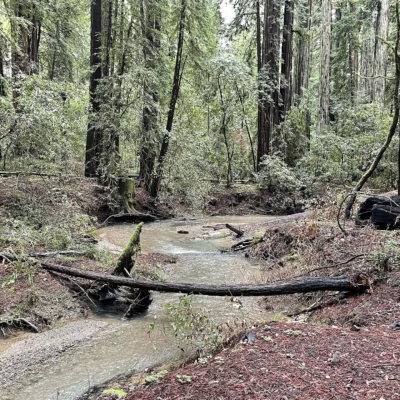
Caspar Headlands State Beach — on the Mendocino Coast — features a pocket beach in a cove between rocky headlands. The Caspar Creek flows through the beach. Tide pools support sea stars, anemones, and hermit crabs. Gray whales pass close to shore during migration (December-April). Harbor seals rest on offshore rocks. Black oystercatchers patrol the rocky intertidal.
Nearby Attractions
Mendocino — 5 miles north — has a New England-style village with art galleries, the Mendocino Headlands, and the Kelley House Museum. Fort Bragg — 5 miles north — has Glass Beach and the Skunk Train. Russian Gulch State Park — 3 miles north — has a blowhole and waterfall. Jug Handle SNR — 3 miles north — has the ecological staircase.

🐾 Dogs & Pets at Caspar Headlands State Beach
- Pets allowed? statewide rule
- Dogs are permitted in California State Parks only in developed areas — campgrounds, picnic areas, parking lots and paved roads — and are prohibited on most trails, beaches and undeveloped areas unless specifically designated as dog-friendly.
- Leash rule statewide rule
- Maximum 6-foot leash at all times; dogs may not be left unattended.
- Beaches & swim areas statewide rule
- Dogs are prohibited on most state beaches; only beaches specifically designated as dog-allowed permit them (varies by park).
- Cabins & lodging statewide rule
- Pets are generally not allowed in buildings or cabins; overnight campers must keep dogs inside a tent or vehicle at night.
- Statewide exceptions statewide rule
- Designated dog-friendly trails and beaches vary park by park; misrepresenting a pet as a service animal is a misdemeanor.
Are dogs allowed at Caspar Headlands State Beach?
Dogs are permitted in California State Parks only in developed areas — campgrounds, picnic areas, parking lots and paved roads — and are prohibited on most trails, beaches and undeveloped areas unless specifically designated as dog-friendly. Individual parks can post stricter rules — check signage on arrival.
Rules verified July 2026 via parks.ca.gov. More: California state parks guide · Dog rules in all 50 states compared
Park Location
Plan your gear for Caspar Headlands State Beach
From our editorial guides, matched to this park’s activities:
Top Tours & Activities Near Mendocino
 from $172
 from $65
 from $286