Cook Forest State Park
Cook Forest State Park: Pennsylvania’s Ancient Forest Cathedral
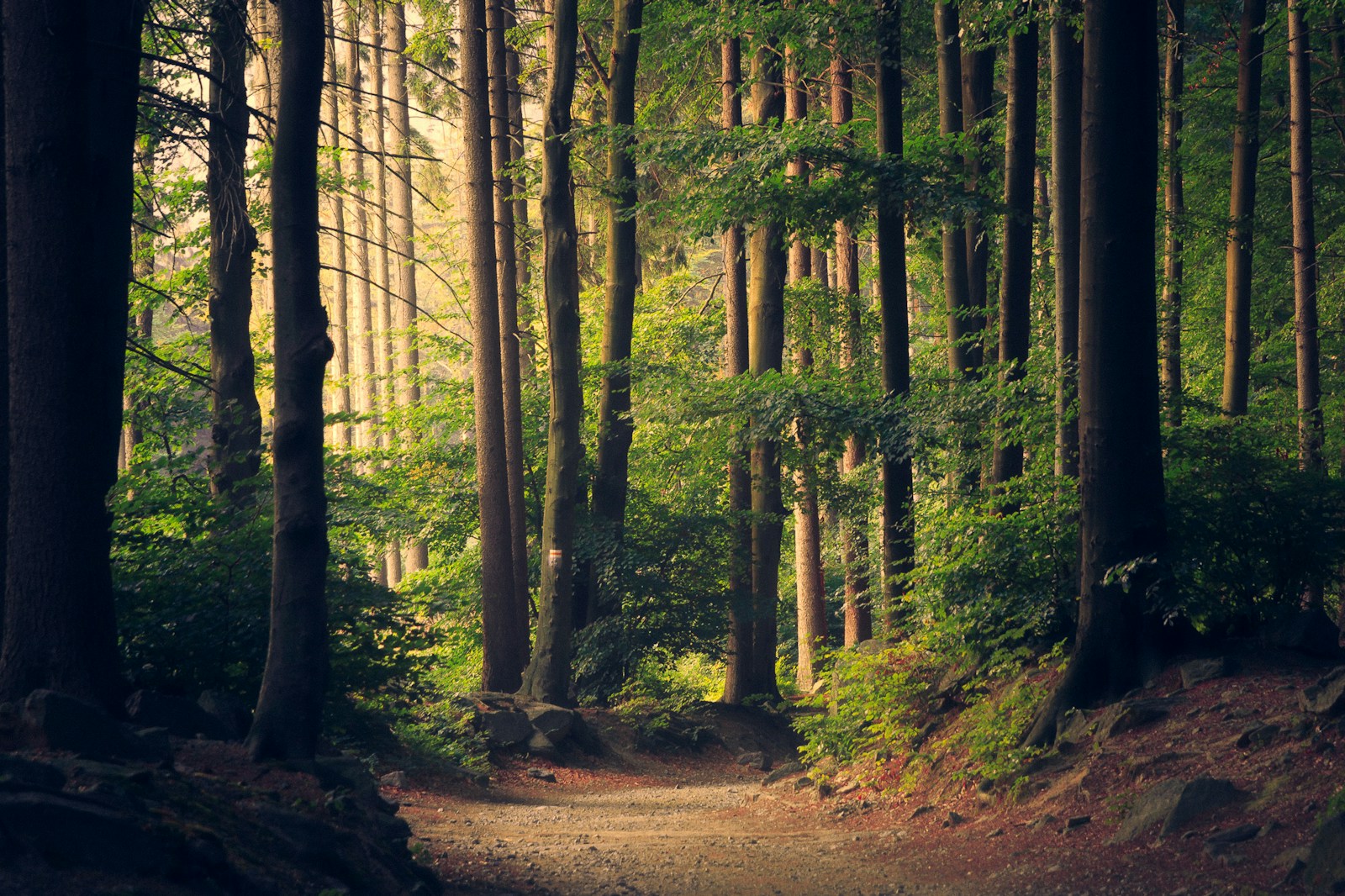
Deep in the heart of northwestern Pennsylvania, Cook Forest State Park protects one of the finest remaining old-growth forests in the eastern United States. Established in 1928 as Pennsylvania’s first state park created specifically to preserve a natural area, this 8,500-acre sanctuary shelters towering white pines and eastern hemlocks that have stood since before the American Revolution — some dating back to a drought and fire in 1644, making them nearly 400 years old.
The park’s crown jewel is the Forest Cathedral Natural Area, designated a National Natural Landmark in 1966. This primeval grove contains more white pine trees exceeding 150 feet in height than any other location in the northeastern United States. Walking among these ancient giants, with cathedral-like canopy arching overhead, creates a spiritual experience that draws nature lovers from across the country.
Park Facts at a Glance
| Information | Details |
|---|---|
| 📍 Location | Cooksburg, Clarion & Forest Counties, Pennsylvania |
| 📐 Size | 8,500 acres (3,440 ha) |
| 🏛️ Established | December 28, 1928 |
| 🏷️ Designation | National Natural Landmark (1966) |
| 🕐 Hours | Sunrise to sunset, year-round |
| 💰 Entry Fee | FREE (all PA State Parks) |
| 🏕️ Camping | 210 campsites + rustic cabins |
| 📞 Phone | (814) 744-8407 |
| 🌐 Website | dcnr.pa.gov |
| ⭐ Highlights | Forest Cathedral, Clarion River, old-growth hemlocks, CCC cabins |
The Forest Cathedral: Walking Among Ancient Giants
The Forest Cathedral Natural Area is the park’s most treasured feature and the primary reason Cook Forest was preserved. This extraordinary grove contains 11 distinct old-growth forest areas encompassing over 2,300 acres — one of the largest collections of virgin timber remaining in the eastern United States.
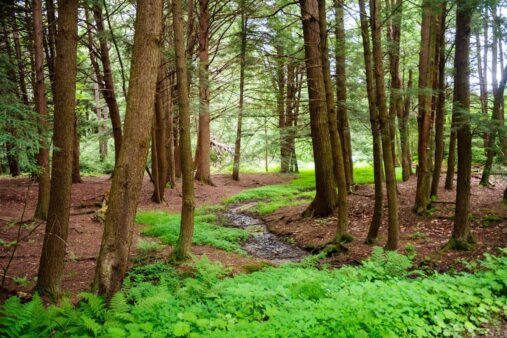
The ancient trees here are staggering in scale. Eastern white pines reach heights of 150 to 185 feet with trunk diameters exceeding 4 feet. Eastern hemlocks, many over 300 years old, create a dense understory canopy that filters sunlight into ethereal green shafts. Cook Forest is considered the finest remaining old-growth hemlock forest in the eastern U.S., as the hemlock woolly adelgid has devastated similar stands throughout the Appalachians.
The Longfellow Trail is the most popular route through the Forest Cathedral, a gentle 1.2-mile loop that passes beneath the park’s tallest specimens. Stand at the base of the Seneca Pine — one of the tallest trees in the northeastern United States — and look straight up through nearly 200 feet of trunk to understand why early visitors called this place a cathedral.
Top Trails in Cook Forest
| Trail | Distance | Difficulty | Highlight |
|---|---|---|---|
| Longfellow Trail | 1.2 mi loop | Easy | Heart of the Forest Cathedral, tallest pines |
| Joyce Kilmer Trail | 1.5 mi | Easy | Old-growth loop, interpretive signs |
| Rhododendron Trail | 1.0 mi | Easy | Rhododendron blooms June-July |
| Seneca Trail | 3.8 mi | Moderate | Ridge views, connects to Baker Trail |
| Baker Trail | 141 mi total | Strenuous | Long-distance trail through park |
| North Country NST | 4,800 mi total | Varies | National Scenic Trail passes through park |
| Indian Trail | 2.5 mi | Moderate | River views, Seneca history |
| Mohawk Trail | 1.8 mi | Moderate | Hemlock groves, creek crossings |
With 47 miles of hiking trails and an additional 24 miles on the adjacent Clarion River Lands, Cook Forest offers exploration for every skill level. Multi-use trails accommodate hiking, biking, and horseback riding. In winter, many trails become cross-country ski routes through the snow-draped old-growth forest.
Clarion River: Wild and Scenic Waterway
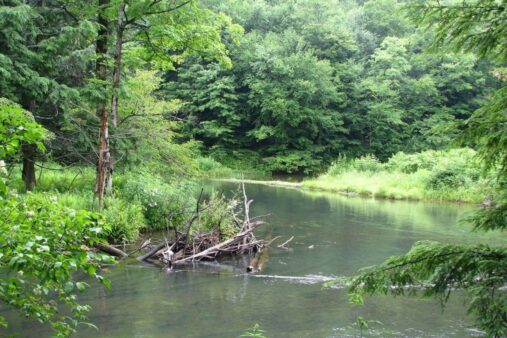
The Clarion River, a nationally designated Wild and Scenic Waterway, flows through the heart of Cook Forest State Park. This pristine river offers some of Pennsylvania’s finest canoeing, kayaking, and tubing, with gentle Class I-II rapids that are perfect for families and beginners.
Several outfitters operate along the river, offering canoe, kayak, and tube rentals with shuttle service. Popular float trips range from 2-hour paddles to full-day adventures covering 10+ miles of scenic river. The water is remarkably clean and clear, making it excellent for swimming during summer months — though there are no lifeguards on duty.
Fishing is another major draw, with the Clarion River and its tributaries offering excellent smallmouth bass, musky, and walleye fishing. Trout stocking occurs in several streams within the park.
Camping and Lodging
| Option | Sites/Units | Season | Features |
|---|---|---|---|
| Ridge Campground | 210 sites | Mid-Apr – Mid-Oct | Full hookups (water, 50A electric, sewer), showers |
| Indian Cabins | Multiple | Mid-Apr – Mid-Dec | Rustic, near park office, some ADA accessible |
| River Cabins | Multiple | Mid-Apr – Mid-Dec | Near Henry Run, pet-friendly (2 dogs, fee applies) |
| Group Tenting | Available | Year-round | Organized groups only, reservations required |
| River Camping | Thompson Eddy | Seasonal | Canoe/kayak access only, 1-night limit |
The rustic cabins were originally built by the Civilian Conservation Corps (CCC) in the 1930s from American chestnut logs — a wood that no longer exists due to the chestnut blight. These historic cabins include beds with mattresses, a gas heater, and a refrigerator, but no running water. They represent a true back-to-basics wilderness experience.
History: Saving Pennsylvania’s Ancient Forest
Before European settlement, the Cook Forest region served as hunting grounds for the Seneca Nation of the Iroquois Confederacy. In 1826, John Cook became the first permanent American settler, establishing a homestead and sawmill along the Clarion River.
By the early 1900s, logging had devastated most of Pennsylvania’s original forests. In August 1910, businessman and conservation advocate M. Israel McCreight urged Anthony Wayne Cook — an heir to the Cook family lands — to preserve the remaining old-growth timber. The Cook Forest Association was formed in the 1920s, raising $200,000 with support from Gifford Pinchot, Chief of the U.S. Forest Service.
In 1927, the commonwealth purchased over 6,055 acres from the A. Cook Sons Company for $640,000, formally establishing Cook Forest State Park on December 28, 1928. It became Pennsylvania’s first state park dedicated to preserving a natural area — a milestone in American conservation history.
During the 1930s, the CCC built trails, roads, cabins, and the iconic Log Cabin Inn Environmental Learning Center, many of which remain in use today.
Seasonal Guide
| Season | Highlights | What to Pack |
|---|---|---|
| 🌸 Spring (Mar-May) | Wildflower blooms, trillium displays, bird migration, rhododendron buds | Rain gear, layers, waterproof boots |
| ☀️ Summer (Jun-Aug) | Clarion River tubing/swimming, full campground, rhododendron blooms | Swimsuit, sunscreen, insect repellent |
| 🍂 Fall (Sep-Nov) | Peak foliage late Oct, reduced crowds, hunting season starts | Blaze orange (hunting season), layers |
| ❄️ Winter (Dec-Feb) | Cross-country skiing, snowshoeing, snow-draped Forest Cathedral | XC ski gear, warm layers, hand warmers |
Wildlife Watching
Cook Forest’s old-growth ecosystem supports an extraordinary diversity of wildlife. The towering trees and minimal understory disturbance create habitat found increasingly rarely in the eastern U.S.
- Birds: Pileated woodpecker, barred owl, red-shouldered hawk, scarlet tanager, cerulean warbler, wood thrush, and over 200 species total
- Mammals: White-tailed deer, black bear, bobcat, river otter, fisher, porcupine, flying squirrel
- Reptiles/Amphibians: Timber rattlesnake (rare), spotted salamander, red-spotted newt
- Fish: Smallmouth bass, rock bass, musky, walleye, brown trout (stocked)
The Clarion River corridor is particularly excellent for birdwatching, with bald eagles regularly spotted soaring above the water. Spring warbler migration (May) brings dozens of songbird species through the forest canopy.
Budget Planner
| Expense | Cost | Notes |
|---|---|---|
| Park Entry | FREE | All PA State Parks are free |
| Campsite | $21-$51/night | Varies by hookup type and season |
| Rustic Cabin | $50-$100/night | Week minimum in peak season |
| Canoe/Kayak Rental | $30-$60/trip | Through local outfitters |
| Tube Rental | $15-$25/trip | Shuttle included |
| Reservation Fee | $6.50 | Non-refundable transaction fee |
| Pet Fee | $2/night | Designated pet sites/cabins only |
| Firewood | $5-$8/bundle | Don’t bring outside firewood (invasive species) |
Nearby Attractions
- Clear Creek State Park — 10 miles south, swim beach, 53 campsites, managed jointly with Cook Forest
- Elk Country Visitor Center — 45 minutes, PA’s wild elk herd (800+ animals)
- Kinzua Bridge State Park — 60 minutes, 2,053-foot viaduct-turned-skywalk
- Allegheny National Forest — Adjacent, 500,000 acres of public land
- Gateway Lodge — Historic lodge near park entrance, fine dining and lodging
Safety and Tips
- Cell service: Very limited within the park — plan accordingly and download offline maps
- Ticks: Deer ticks carrying Lyme disease are common — check yourself frequently and use repellent
- Hunting season: Wear blaze orange during PA hunting seasons (fall-winter) even on marked trails
- Firewood: Do not bring firewood from outside the area — purchase locally to prevent spread of invasive species
- River safety: No lifeguards on the Clarion River — wear a PFD when paddling and check water levels before swimming
Frequently Asked Questions
How old are the trees in Cook Forest State Park?
The oldest trees in Cook Forest date back to approximately 1644, making them nearly 400 years old. Many of the white pines and hemlocks in the Forest Cathedral are over 300 years old. Some white pines exceed 180 feet in height — taller than the Statue of Liberty.
Is there an entrance fee for Cook Forest State Park?
No. Cook Forest State Park, like all Pennsylvania State Parks, is completely free to enter and enjoy. There are no day-use fees or parking fees. Camping and cabin rentals have separate fees.
Can you swim in the Clarion River at Cook Forest?
Yes, swimming is allowed in the Clarion River, which flows through the park. However, there are no lifeguards on duty. The river offers clean, clear water during summer months, but always check current conditions and use caution in deeper areas. The park also has a swimming pool with accessibility features.
What is the Forest Cathedral at Cook Forest?
The Forest Cathedral Natural Area is the park’s most famous feature — a grove of towering old-growth white pines and hemlocks designated a National Natural Landmark in 1966. It contains more white pine trees exceeding 150 feet in height than any other location in the northeastern United States. The name comes from the cathedral-like canopy formed by the ancient trees.
Are dogs allowed at Cook Forest State Park?
Yes, pets are allowed at Cook Forest on designated campsites and in select River Cabins (up to 2 dogs, with an additional fee of $2/night per pet). Dogs must be leashed at all times (maximum 6-foot leash) and are not permitted in swimming areas or buildings.
What trails should I hike first at Cook Forest?
Start with the Longfellow Trail (1.2-mile loop), which passes through the heart of the Forest Cathedral and beneath the park’s tallest trees. If you have more time, add the Joyce Kilmer Trail (1.5 miles) for interpretive signs about the old-growth ecosystem, and the Rhododendron Trail (1.0 mile) for beautiful blooms in June-July.
When is the best time to visit Cook Forest State Park?
Each season offers something unique. Summer (June-August) is best for river activities and camping. Fall (late October) brings spectacular foliage against the evergreen backdrop. Spring (April-May) features wildflowers and bird migration. Winter transforms the Forest Cathedral into a magical snow-covered landscape perfect for cross-country skiing and snowshoeing.
Getting There
Cook Forest State Park is located along Route 36 in Cooksburg, Pennsylvania, at the intersection of Clarion and Forest Counties. The park is approximately:
- Pittsburgh: 95 miles northeast (1 hr 45 min)
- Erie: 85 miles south (1 hr 30 min)
- State College: 100 miles west (2 hrs)
- Buffalo, NY: 130 miles south (2 hrs 15 min)
Address: 113 River Road, Cooksburg, PA 16217
GPS may struggle in the park due to limited cell service. Download offline maps before arriving. The main entrance is well-signed from Route 36.