First Peoples Buffalo Jump State Park
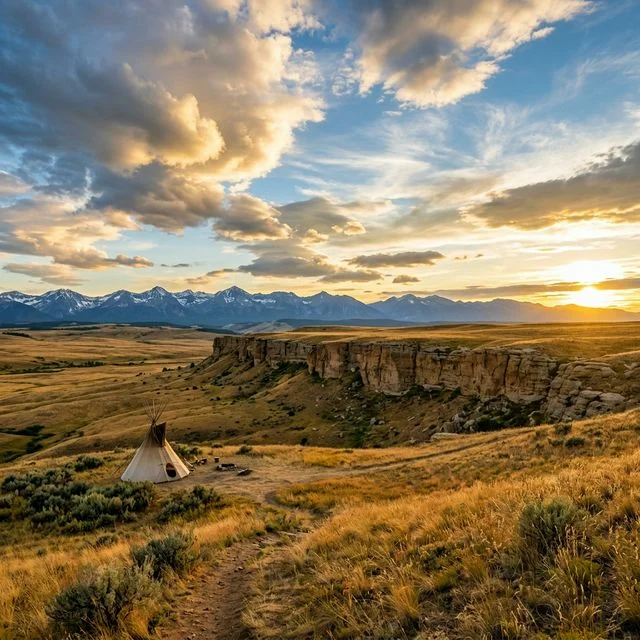
Rising from the golden prairie grasslands of central Montana, First Peoples Buffalo Jump State Park protects one of the most extraordinary archaeological sites in all of North America. Designated a National Historic Landmark in 2015, this mile-long sandstone cliff—known as a “pishkun,” a Blackfeet word meaning “deep kettle of blood”—was used by Indigenous peoples for at least 1,000 years to drive entire herds of bison to their deaths in a sophisticated, communal hunting practice that was essential to survival on the Great Plains.
With a world-class interpretive center, sweeping panoramic views of the Rocky Mountain Front, and a bone bed at the cliff’s base reaching 18 feet deep, this park offers a powerful, deeply moving window into the ingenuity and culture of the First Peoples who called this land home long before European contact.
Table of Contents
The Pishkun: America’s Greatest Buffalo Jump
The defining feature of the park is the massive sandstone cliff, stretching for a full mile and varying between 30 and 50 feet in height. Archaeological excavations at the base have revealed a compacted bone bed running the entire length of the cliff and plunging up to 18 feet deep—a staggering testament to the centuries of use. While over 300 buffalo kill sites have been documented across Montana, First Peoples Buffalo Jump is considered the largest and most extensively used pishkun in the world. It is also one of only three such sites that are protected.
How the Jump Worked
The buffalo jump was far more than simply chasing animals off a cliff. It was an incredibly sophisticated, coordinated community effort that required deep ecological knowledge. During the “Dog Days” before 1700 CE—before horses were introduced—hunters used carefully constructed “drive lines,” fences made of twisted vines and large rocks, to funnel bison herds toward the cliff’s edge. The remains of these drive lines can still be seen today on the prairie above the cliff. Once at the edge, the sheer weight and momentum of the herd made escape impossible. Every part of the killed bison was then used: meat for food, hides for clothing and shelter, bones for tools, and sinew for bowstring. Nothing was wasted.
The Interpretive Center
The park’s 6,000-square-foot interpretive center is a must-visit destination that brings this ancient history to life. Inside, you’ll find immersive exhibits covering buffalo culture, traditional tools, archaeological findings, and the survival techniques of the Plains tribes—including the A’aninin, Assiniboine, Cree, Kalispel, Piegan Blackfeet, Salish, and Shoshoni peoples, all of whom have oral histories connected to this site. The center also features a storytelling circle, a classroom, an art gallery, and a bookstore. Outside, an amphitheater and traditional games fields offer seasonal programming and demonstrations.
Trails and Exploration
Interpretive trails wind through native prairie grass, leading visitors to the top of the cliff for breathtaking panoramic views of the Missouri River Valley and the snow-capped peaks of the Rocky Mountain Front. A 3-mile hiking trail provides access to the summit, where you can look down over the edge and imagine the thundering herds. Along the way, you’ll encounter a full-sized tipi and the ghostly outlines of ancient tipi rings embedded in the grassland. Horseback riding is also permitted on designated trails, and the park is an excellent location for birding, with diverse prairie species spotted year-round.
Essential Visitor Information
- Location: 342 Ulm Vaughn Road, Ulm, Montana 59485. Approximately 10 miles south of Great Falls.
- Interpretive Center: Open May 1 through September 30. Hours vary by month. Admission fees apply for adults; children under 18 are free.
- Grounds: The trails and cliff area are accessible year-round from sunrise to sunset.
- History: Formerly known as Ulm Pishkun State Park. The park was established in 1972, the visitor center opened in 1999, and it received National Historic Landmark status in 2015.
FAQ: First Peoples Buffalo Jump State Park
What is a buffalo jump?
Is the interpretive center worth visiting?
Can you see the bone bed?
