🌤 Weather at Iona Island State Park by season
| Spring | Summer | Fall | Winter |
|---|---|---|---|
| 30–72 °F | 60–85 °F | 36–76 °F | 21–41 °F |
Each range runs from the coldest monthly average low to the warmest monthly average high in that season (1991-2020 climate normals), measured at West Point, 6 mi away, elevation 320 ft. Conditions at the park can differ from the station, especially where elevation differs — check a forecast before you go.

A Hudson River Island Bird Sanctuary — Bald Eagles, Tidal Marsh & National Natural Landmark
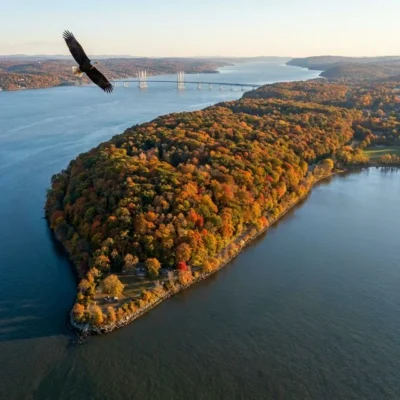
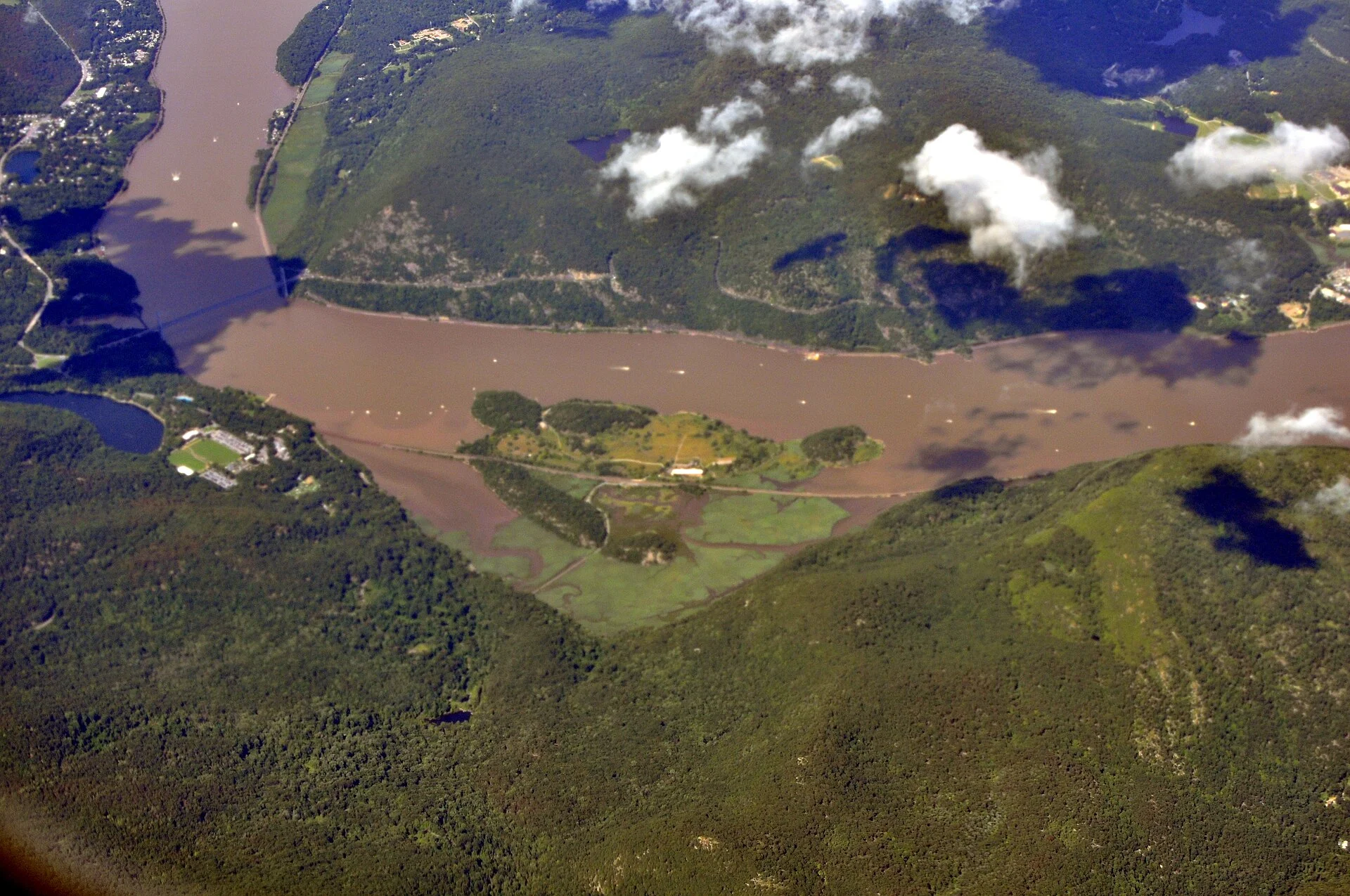
Iona Island State Park is a 118-acre tidal marsh and rocky island on the west bank of the Hudson River, approximately one mile south of the Bear Mountain Bridge in Stony Point, Rockland County, New York. Designated a National Natural Landmark and managed as a bird sanctuary, Iona Island is one of the most ecologically significant sites on the lower Hudson — a critical habitat for bald eagles, ospreys, great blue herons, and dozens of migratory species.
The island’s history adds layers: during World War II and the Korean War, Iona Island served as a U.S. Navy ammunition depot. After decommissioning, the site was transferred to the Palisades Interstate Park Commission and eventually became part of the Hudson River National Estuarine Research Reserve (HRNERR). Today, most of the island east of the railroad tracks is closed to public access to protect nesting habitat. Visitors access the site via a causeway off Route 9W, where the restricted-access policy creates an unusually undisturbed environment — and some of the best birding in the Hudson Valley.
Things to Do
Bald Eagle Watching
Iona Island is one of the most reliable bald eagle viewing locations in the lower Hudson Valley:
- Winter roosting: Eagles congregate here from November through March, using the island’s tall trees as nighttime roosts
- Year-round nesting: Active eagle nests are monitored by researchers
- Best viewing: From the causeway and designated observation areas; bring high-powered binoculars or a spotting scope
Birding
The combination of tidal marsh, open water, forest, and rocky shoreline creates exceptional habitat diversity:
- Nesting species: Marsh wrens, least bitterns, great blue herons, ospreys
- Migration: Warblers, raptors, and waterfowl pass through in spring and fall
- Part of: The Iona Island/Doodletown Bird Conservation Area
Guided Canoe Programs
The Hudson River National Estuarine Research Reserve occasionally offers guided canoe programs in the marsh during summer — a rare opportunity to paddle through habitat normally closed to the public. Check HRNERR for program schedules.
Walking & Nature Observation
The accessible portions of the island (primarily the causeway and areas west of the railroad tracks) provide walking opportunities with views of the marsh, river, and Bear Mountain. Interpretive signage explains the island’s ecology and military history.
Access & Regulations
| Area | Access | Notes |
|---|---|---|
| Causeway | Open to public | Walking; wildlife observation; parking at kiosk |
| West of Railroad | Limited public access | Some areas accessible; check posted signs |
| East of Railroad / Knolls | CLOSED to public | Protected bird sanctuary; no trespassing |
| Marsh by Boat | Prohibited (public kayaking) | Guided HRNERR canoe programs only |
Best Time to Visit
| Season | Highlights | Considerations |
|---|---|---|
| Winter (Nov–Mar) | ⭐ PEAK EAGLES: Bald eagle roosting; winter raptors; quiet observation | Cold; dress warmly; limited daylight; bring optics |
| Spring (Apr–Jun) | ⭐ Migration peak; warbler waves; nesting osprey and herons; marsh greening | Mosquitoes increasing; some areas may restrict access for nesting |
| Summer (Jul–Aug) | Guided canoe programs (check schedule); full marsh vegetation; fledging birds | Hot and humid; mosquitoes; limited access areas |
| Fall (Sep–Oct) | Raptor migration; fall warblers; foliage on surrounding mountains | Eagles arriving late season; cooler temps; shorter days |
Visitor Tips
- Optics essential: This is a birding-first destination. Bring binoculars at minimum — a spotting scope is ideal for watching eagles in distant roost trees and ospreys on the nest platforms.
- Respect closures: Large portions of the island are closed to protect sensitive habitat. Stay on designated paths and respect all posted signs — the restricted access is what makes the wildlife so abundant.
- Parking: A small parking area is located at the kiosk near the railroad tracks at the end of the causeway. Space is limited.
- No camping: Iona Island is a day-use only site. For camping nearby, use Harriman State Park or Bear Mountain State Park, both within a few miles.
- Bear Mountain combo: The park is directly adjacent to Bear Mountain State Park — combine your visit with Bear Mountain’s trails, zoo, and lake for a full day in the Hudson Highlands.
Frequently Asked Questions
Can you see bald eagles at Iona Island?
Yes — Iona Island is one of the most reliable bald eagle viewing locations in the lower Hudson Valley. Eagles roost on the island primarily from November through March, with the best viewing from the causeway using binoculars or a spotting scope. Active eagle nests are also monitored on the island year-round. Winter mornings, when eagles leave their roost to fish, provide the most dramatic viewing opportunities.
Can you walk on Iona Island?
Access is limited. The causeway from Route 9W and areas west of the railroad tracks are generally open to the public for walking and wildlife observation. However, the eastern portions of the island and the steep-sloped knolls are closed to protect nesting bird habitat. Public kayaking or canoeing in the marsh is not permitted, though the Hudson River National Estuarine Research Reserve occasionally offers guided canoe programs in summer.
Last updated: April 2026
More parks nearby: Bear Mountain State Park is a short drive away, while Lake Welch Beach – Harriman lies a short drive away.

🐾 Dogs & Pets at Iona Island State Park
- Pets allowed? statewide rule
- Pets are permitted in most state parks and campgrounds (maximum two pets per site where allowed), but policies vary by park and some parks prohibit pets entirely.
- Leash rule statewide rule
- Leash no longer than 6 ft required, pet under control at all times
- Beaches & swim areas statewide rule
- Pets are not permitted on guarded beaches, boardwalks, pools or spray-grounds
- Cabins & lodging statewide rule
- No uniform statewide rule — pets are prohibited in buildings and most cabins, but some parks designate pet-friendly cabin areas (e.g. Letchworth Cabin Area C); check with the individual park
- Statewide exceptions statewide rule
- Proof of rabies vaccination required upon request; maximum two pets per campsite; some parks (e.g. Wildwood State Park) do not allow pets at all
Are dogs allowed at Iona Island State Park?
Pets are permitted in most state parks and campgrounds (maximum two pets per site where allowed), but policies vary by park and some parks prohibit pets entirely. Individual parks can post stricter rules — check signage on arrival.
Rules verified July 2026 via parks.ny.gov. More: New York state parks guide · Dog rules in all 50 states compared
Park Location
Plan your gear for Iona Island State Park
From our editorial guides, matched to this park’s activities: