🌤 Weather at Iroquois County State Wildlife Area by season
| Spring | Summer | Fall | Winter |
|---|---|---|---|
| 28–74 °F | 60–85 °F | 31–79 °F | 16–38 °F |
Each range runs from the coldest monthly average low to the warmest monthly average high in that season (1991-2020 climate normals), measured at Watseka 2 NW, 3 mi away, elevation 620 ft. Conditions at the park can differ from the station, especially where elevation differs — check a forecast before you go.

🏆 Grand Prairie — Managed grasslands and wetlands in the heart of the Grand Prairie — restoring Illinois’s agricultural heartland for wildlife
Iroquois County State Wildlife Area protects managed grasslands and wetlands in Iroquois County — the heart of Illinois’s Grand Prairie region. The Grand Prairie was the largest continuous grassland east of the Mississippi, stretching across central Illinois in an ocean of tallgrass. Iroquois County was some of the last prairie settled because the thick sod was nearly impossible to break with early plows. John Deere’s steel plow (invented 1837 in Grand Detour, IL) finally conquered the prairie — and 99.99% was plowed under within decades.
Visitor Information
| Detail | Information |
|---|---|
| Location | Iroquois County, IL |
| Entry Fee | Free |
| History | John Deere plow conquered this prairie! |
About Iroquois County SWA
Iroquois County State Wildlife Area in eastern Illinois provides managed grassland and wetland habitat on the vast Grand Prairie — the most productive agricultural land in the world. The area preserves remnants of the tallgrass prairie ecosystem that once covered most of Illinois. Less than 0.01% of Illinois’ original prairie remains, making every preserved acre precious.
Things to Do
Hunting (pheasant, deer, dove, waterfowl), birdwatching for grassland species, and wildlife observation. The managed grasslands support ring-necked pheasants and northern harriers.
Insider Tips
Prairie restoration: Iroquois County WA manages restored prairie and wetland habitat in east-central Illinois. Pro tip: The Iroquois County area contains some of the last remnants of the Grand Prairie — the vast tallgrass prairie that once covered central Illinois. Pheasant territory: The area supports ring-necked pheasants — increasingly rare in Illinois as habitat shrinks.
Best Time to Visit
Fall: Pheasant season and waterfowl migration. Summer: Prairie wildflower peak — compass plant, prairie dock, and rattlesnake master. Spring: Shorebird migration in flooded fields. Winter: Quiet wildlife viewing.
Frequently Asked Questions
What was the Grand Prairie?
The Grand Prairie was a vast tallgrass prairie covering most of central Illinois — so flat and treeless that early settlers called it “the prairie ocean.” It was the richest farmland in the world once drained and plowed. Today, less than 0.01% of the original Grand Prairie remains — making Illinois prairie remnants among the rarest ecosystems in North America.
Wildlife & Nature
Iroquois County State Wildlife Area — in the flat agricultural landscape of east-central Illinois — provides managed habitat for grassland and wetland wildlife. The area sits in what was once the Grand Prairie — a vast, treeless grassland that stretched across central Illinois. Before settlement, this was one of the most productive ecosystems in North America — big bluestem grass grew 8+ feet tall, supported by deep root systems extending 12 feet underground. The area’s restored grasslands and wetlands attract migrating waterfowl, shorebirds, and grassland songbirds. Northern harriers — low-flying raptors — hunt voles and mice over the open landscape. Short-eared owls — increasingly rare grassland specialists — are occasionally spotted during winter.
Nearby Attractions
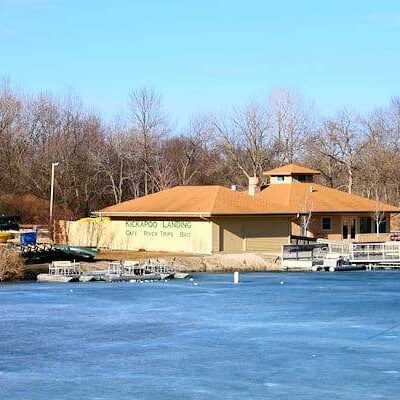
Iroquois County offers peaceful rural Illinois recreation. Watseka is the county seat. Kankakee River State Park — featuring spectacular limestone canyons — is 30 miles west. Momence hosts the annual Gladiolus Festival. Middleport and area communities preserve prairie heritage. Champaign-Urbana — home of the University of Illinois — is 60 miles south. Danville has the Vermilion County War Museum and Kickapoo State Recreation Area.
Keep exploring: The closest neighbors are Kankakee State Park (within about an hour’s drive) and Middle Fork State Fish and Wildlife Area (within about an hour’s drive).

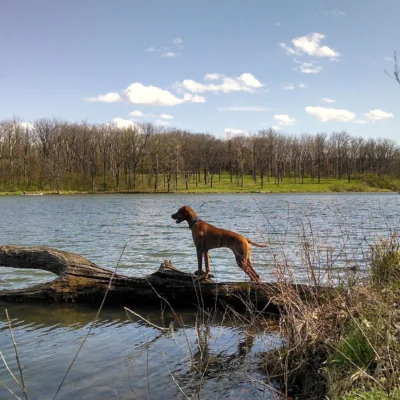
🐾 Dogs & Pets at Iroquois County State Wildlife Area
- Pets allowed? statewide rule
- Pets are allowed in Illinois state parks and on trails as long as they are leashed at all times.
- Leash rule statewide rule
- Leash required at all times; state code caps leash length at 10 feet
- Beaches & swim areas statewide rule
- Pets are prohibited in areas posted 'NO PETS', reserved for beach areas, concession areas and crowded campground/picnic areas (e.g. no dogs on the beach at Illinois Beach State Park)
- Cabins & lodging statewide rule
- Pets are not allowed in campground cabins
- Statewide exceptions statewide rule
- Leash rule exceptions for hunting dogs, field trials and dog training areas; pets must not be left unattended
Are dogs allowed at Iroquois County State Wildlife Area?
Pets are allowed in Illinois state parks and on trails as long as they are leashed at all times. Individual parks can post stricter rules — check signage on arrival.
Rules verified July 2026 via dnr.illinois.gov. More: Illinois state parks guide · Dog rules in all 50 states compared