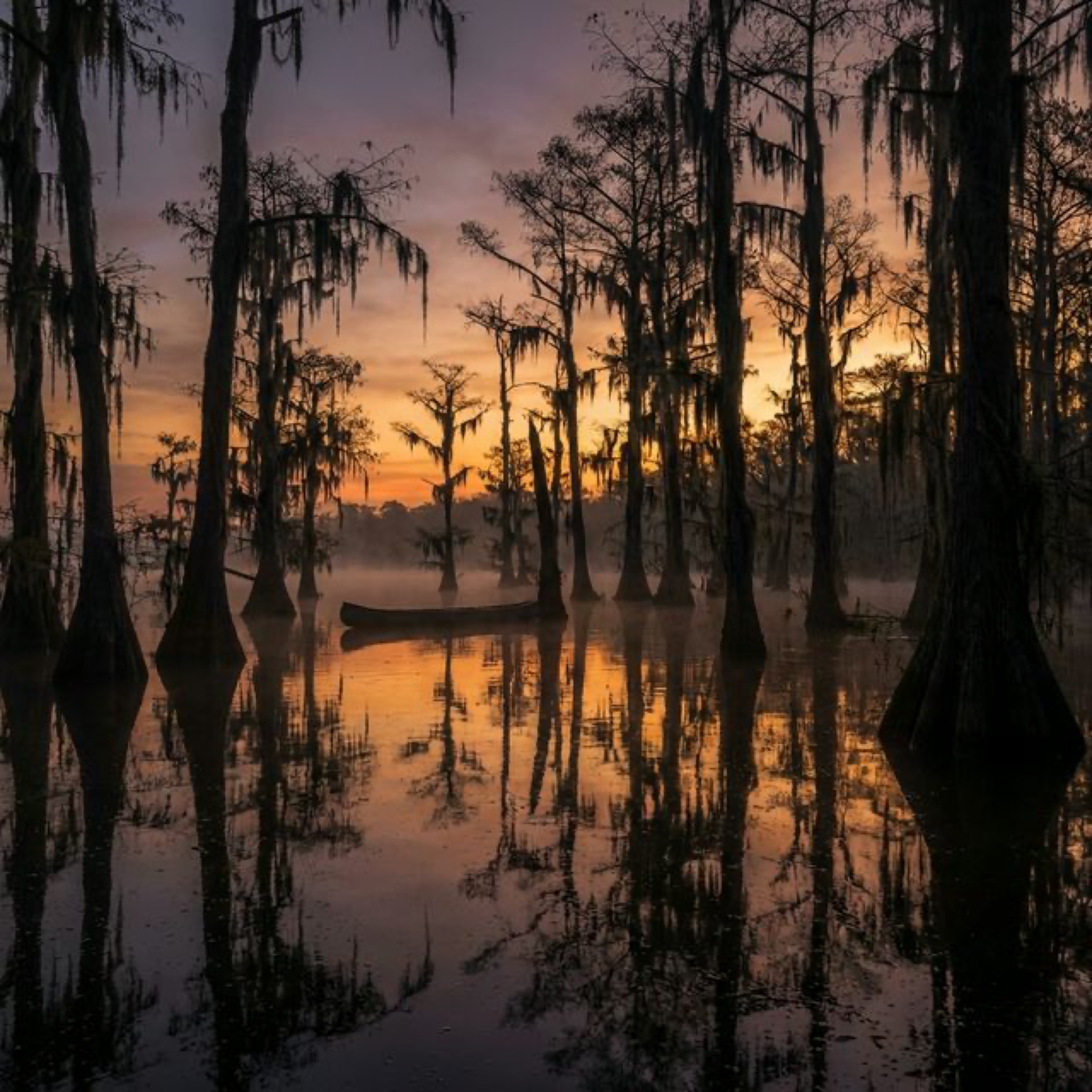
Lake Bistineau State Park
Lake Bistineau State Park is a 750-acre outdoor haven tucked into the cypress-draped shores of Lake Bistineau in northwestern Louisiana. Sitting on the banks of a 17,500-acre lake that was born from one of North America’s most remarkable geological events — a massive Red River log jam over 200 years ago — this park offers an authentic Louisiana bayou experience that’s hard to find anywhere else. From moss-draped cypress trees rising from dark waters to world-class crappie fishing and miles of woodland trails, Lake Bistineau State Park is a hidden gem of the Deep South.
Whether you’re looking for a weekend camping trip, a cozy cabin retreat, family-friendly hiking, or serious angling, this comprehensive guide covers everything you need to know about visiting Lake Bistineau State Park in 2026.
Quick Facts at a Glance
| Location | Doyline, Webster Parish, Louisiana |
| Park Size | 750 acres |
| Lake Size | 17,500 acres (26.9 sq mi) |
| Established | 1938 |
| Hours | Daily 6:00 AM – 9:00 PM (gates lock at 10:00 PM) |
| Entry Fee | $3/person (free for children under 4 & seniors 62+) |
| Campsites | 67 (improved, premium, and primitive) |
| Cabins | 7 deluxe cabins + 1 lodge + 2 group camps |
| Trails | ~10 miles hiking/biking + 11-mile canoe trail |
| Key Activities | Fishing, Camping, Hiking, Boating, Birding, Equestrian |
History of Lake Bistineau
Lake Bistineau’s origin story reads like something out of a Louisiana tall tale — except it’s entirely true. Around 1800, a colossal log jam on the Red River (known as the “Great Raft”) backed up water into the surrounding bayous and lowlands, creating a series of “raft lakes” across northwestern Louisiana. Lake Bistineau was one of the largest of these naturally formed lakes.
The lake’s name comes from the word “Bistino”, a Native American term meaning “big broth” — a reference to the foamy, soup-like appearance of the water during high levels. French settlers later adapted the word to “Bistineau.”
When the Army Corps of Engineers cleared the Great Raft in the 1830s under the direction of Captain Henry Shreve (namesake of Shreveport), the lake gradually drained. But nature and engineering had the last word: in 1935, a dam was constructed across Loggy Bayou, permanently establishing Lake Bistineau as we know it today — a sprawling reservoir with an average depth of 7 feet and a maximum depth of 25 feet.
Lake Bistineau State Park opened in 1938 as part of the Civilian Conservation Corps (CCC) era of park development. Notably, it was one of the first Louisiana state parks to accommodate African American visitors, though facilities were segregated until the Civil Rights era.
The Cypress-Tupelo Ecosystem
What makes Lake Bistineau truly special is its enchanting cypress-tupelo swamp ecosystem — a landscape that defines the spirit of Louisiana’s bayou country. Towering bald cypress trees rise from the dark, tannin-stained waters, their knobby “knees” breaking the surface while Spanish moss drapes from every branch like nature’s curtains.
The surrounding uplands feature mixed hardwood forests of pine, oak, hickory, and sweetgum, creating diverse habitat zones that support an impressive array of wildlife.
Wildlife & Birding
Lake Bistineau State Park is a premier birdwatching destination in northwestern Louisiana, with diverse species across multiple habitats:
Waterbirds & Wading Birds:
- Great Blue Heron and Great Egret — stalking the shallows year-round
- Roseate Spoonbill — unmistakable pink plumage, seen in warmer months
- Least Bittern — secretive marsh dweller found in the cattail edges
- Wood Duck — one of Louisiana’s most beautiful waterfowl, nesting in cypress cavities
- Ring-necked Duck and Canvasback — winter visitors from the northern flyway
Woodland Birds:
- Pileated Woodpecker — the crow-sized “king of the woods” heard hammering throughout the park
- Pine Warbler — year-round resident in the longleaf stands
- Northern Cardinal — Louisiana’s year-round flash of crimson
- Barred Owl — listen for their iconic “Who cooks for you?” call at dusk
Other Wildlife:
- American Alligator — common in the lake and surrounding waterways (do not feed!)
- White-tailed Deer — frequently spotted on trails at dawn and dusk
- Fox Squirrel — larger than the common gray, a hardwood forest specialist
- River Otter — playful residents of the cypress waterways
Best birding spots: Crane Island, Bird’s Island, and Goat Island — accessible by boat — offer exceptional bird and wildlife viewing opportunities.
Camping
Lake Bistineau offers some of Louisiana’s most atmospheric camping, with sites nestled among cypress and hardwoods just steps from the water.
Campsite Options
| Type | Sites | Hookups | Details |
| Premium Campsites | 17 | Water, Electric (20/30/50 amp) | 5 pull-through, 12 prime locations |
| Improved Campsites | 44 | Water, Electric | Standard sites with hookups |
| Basic Campsites | 11 | Water only | More rustic experience |
| Primitive Camping | Available | None | True backcountry feel |
RV length limits range from 20 to 62 feet depending on the site. Camping fees may be reduced by 50% for holders of America the Beautiful passes whose state of residence honors the pass.
Pro tip: Sites closest to the lake fill up fast on weekends, especially during crappie season (January–April). Book well in advance for waterfront spots.
Cabins & Lodging
Deluxe Cabins (7 Available)
The park’s seven furnished cabins offer a comfortable alternative to tent camping. Each cabin sleeps up to 8 guests with 2 vehicles and includes:
- Double bed, two bunk beds, and queen sleeper sofa
- Full kitchen with cookware, utensils, dinnerware, and silverware
- Towels and linens provided
- Central air conditioning and heat
- Covered porch with views of the surrounding forest
The Lodge
For larger groups or family reunions, the park lodge accommodates up to 12 people — ideal for multi-family weekend trips.
Group Camps
Two group camp facilities are available for organized retreats, church groups, scouts, and school outings:
- Group Camp I: 20 cabins sleeping up to 160 people, with dining hall, kitchen, sand volleyball court, and seasonal swimming pool
- Group Camp II: 6 cabins sleeping up to 40 people, with dining hall and kitchen
Trails
Lake Bistineau offers nearly 10 miles of woodland trails for hiking and biking, plus an 11-mile paddling route. The trail system winds through upland pine-hardwood forests and along the cypress-lined lakeshores.
Hiking Trails
| Trail Name | Distance | Difficulty | Highlights |
| Willis Homestead Trail | 3.8 miles | Moderate | Historic homestead site, mixed hardwoods |
| Koasati Trail | 2.0 miles | Easy-Moderate | Named for the Koasati (Coushatta) people |
| Pintail Loop Trail | 1.3 miles | Easy | Lakeside views, great for birding |
| Blue Wing Trail | 1.2 miles | Easy | Short nature walk, family-friendly |
| Discovery Circle | 0.4 miles | Easy | Interpretive trail, perfect for young children |
Canoe Trail
The park’s 11-mile canoe trail takes paddlers through some of the most beautiful cypress-tupelo swamp scenery in Louisiana. Winding through moss-draped corridors of ancient cypress trees, this trail offers an intimate look at the bayou ecosystem that no hiking trail can match.
Boat rentals available: Flat-bottom fishing boats, canoes, and kayaks can be rented at the park.
Equestrian Trail
A 6-mile equestrian trail is available for riders bringing their own horses. Requirements:
- $3 per horse daily trail fee (in addition to park entry)
- Current, clean Coggins test certification required for all horses
- Riders must stay on designated equestrian trails
Fishing
Lake Bistineau is renowned across Louisiana as a world-class fishing destination, particularly for crappie (sac-à-lait). The lake’s cypress-studded waters, submerged timber, and shallow flats create ideal habitat for multiple game fish species.
What You Can Catch
| Species | Best Season | Notes |
| Black Crappie (Sac-à-lait) | January – April | The star attraction; excellent numbers and size |
| Largemouth Bass | March – June | Florida Bass strain stocked for trophy potential |
| Yellow Bass | Spring – Fall | Aggressive schooling fish, great for action |
| Channel Catfish | Year-round | Night fishing productive in summer |
| Bluegill & Red-ear Sunfish | Spring – Summer | Perfect for family fishing trips |
⚠️ Important: Annual Lake Drawdown
From August through November each year, the lake is drawn down to combat giant salvinia — an aggressive invasive aquatic plant that has plagued Lake Bistineau since 2006. During this period:
- The boat launch is closed
- The lake is unsafe for boat use
- Fishing from the bank is still possible but limited
- Plan your fishing trip for January–July for the best experience
Fishing guides: Local guide services like 318 Guide Service offer guided crappie, bass, and catfish trips on Lake Bistineau.
Fees & Reservations
Day-Use Fees
| Category | Fee |
| Adults | $3/person |
| Children under 4 | Free |
| Seniors (62+) | Free |
| Equestrian Trail (per horse) | $3/horse |
Overnight Reservations
Cabin and campsite reservations can be made through the Louisiana State Parks reservation system. Weekend stays are popular year-round, so early booking is recommended — especially during crappie season (January–April) and fall color season (October–November).
How to Get There
Lake Bistineau State Park is located in Webster Parish, Louisiana, near the small town of Doyline.
Driving Directions
- From Shreveport (45 min): Take I-20 East to Exit 47 (Doyline/Hwy 163). Head south on Hwy 163 for approximately 7 miles to the park entrance.
- From Bossier City (40 min): Take I-20 West to Exit 47, then south on Hwy 163.
- From Monroe (2 hrs): Take I-20 West to Exit 47.
Nearest airport: Shreveport Regional Airport (SHV) — approximately 40 miles west.
Insider Tips
- Visit January–March for world-class crappie fishing — this is when Lake Bistineau truly shines as an angler’s paradise
- Avoid August–November — the annual salvinia drawdown closes the boat launch and limits water access
- Take the canoe trail at dawn — the cypress swamp in early morning mist is one of Louisiana’s most magical experiences
- Bring insect repellent — mosquitoes and other biting insects are abundant, especially in summer months
- Look up for Barred Owls at dusk — their haunting calls echo through the cypress stands every evening
- Don’t feed the alligators — they’re common and generally non-aggressive, but feeding changes their behavior toward humans
- Book waterfront campsites early — the best spots along the lake disappear quickly on weekends
- Check the lake level before your trip — water levels fluctuate significantly due to rainfall and the annual drawdown
Best Time to Visit
| Season | Conditions | Best For |
| Winter (Dec–Feb) | Mild (45–60°F), waterfowl season | Crappie fishing, birding, fewer crowds |
| Spring (Mar–May) | Warm (65–80°F), wildflowers, migrating birds | Bass fishing, hiking, camping, birding |
| Summer (Jun–Jul) | Hot & humid (85–95°F), active wildlife | Family camping, swimming, kayaking |
| Fall (Sep–Nov) | Drawdown season, cooling temps | Hiking (limited water access), fall colors |
Best overall: Visit in March or April for ideal weather, peak fishing, spring migration birding, and full lake access.
Nearby Attractions
- Shreveport-Bossier City — casinos, dining, shopping, and cultural attractions (45 minutes)
- Caney Lakes Recreation Area — two connected lakes with camping and fishing (30 minutes south)
- Lake Claiborne State Park — another excellent Louisiana fishing and camping park (50 minutes east)
- Germantown Colony Museum — historic 19th-century German utopian settlement (40 minutes south)
Frequently Asked Questions
Is Lake Bistineau good for fishing?
Yes — Lake Bistineau is one of Louisiana’s premier crappie fishing lakes and also offers excellent largemouth bass, catfish, and panfish opportunities. The best fishing runs from January through July before the annual drawdown begins.
Can you swim at Lake Bistineau State Park?
The park has a seasonal swimming pool at Group Camp I. Swimming in the lake itself is permitted but not specifically designated — the dark, tannin-stained waters and cypress stumps make it less ideal for swimming than for fishing and paddling.
Are there alligators at Lake Bistineau?
Yes, American alligators are common in the lake and surrounding waterways. They are generally non-aggressive toward humans but should be observed from a safe distance. Never feed alligators — it is both illegal and dangerous.
What is the salvinia drawdown?
Giant salvinia, an invasive floating fern from South America, has plagued Lake Bistineau since 2006. Each year from August–November, the lake is deliberately drawn down to expose and kill the salvinia. During this period, the boat launch is closed and water recreation is limited.
Do I need a fishing license?
Yes, a valid Louisiana fishing license is required for all anglers 16 and older. Licenses can be purchased online through the Louisiana Department of Wildlife and Fisheries website.
Explore More Louisiana State Parks
Lake Bistineau State Park is one of many outstanding parks in Louisiana. Discover more in our Best State Parks in Louisiana guide, or use our Park Finder to search by activity, location, or features.