🌤 Weather at Princeton Battle Monument by season
| Spring | Summer | Fall | Winter |
|---|---|---|---|
| 30–73 °F | 58–87 °F | 33–78 °F | 21–46 °F |
Each range runs from the coldest monthly average low to the warmest monthly average high in that season (1991-2020 climate normals), measured at Hightstown 2 W, 8 mi away, elevation 100 ft. Conditions at the park can differ from the station, especially where elevation differs — check a forecast before you go.

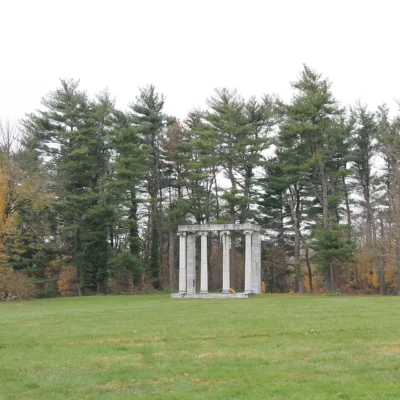
🗽 50 Feet of Limestone Marking the Battle That Completed What Trenton Started — Princeton Battle Monument in Princeton, New Jersey, 50-foot Beaux-Arts limestone relief sculpture (1922), Battle of Princeton (January 3, 1777), George Washington on horseback, General Hugh Mercer’s sacrifice, sculptor Frederick MacMonnies, architect Thomas Hastings, Piccirilli Brothers carving, dedicated by President Harding, “Ten Crucial Days” campaign — Mercer County, NJ
One week after the surprise attack at Trenton, Washington wasn’t done. On January 3, 1777, he marched his army south and attacked the British garrison at Princeton. It was a gamble — he was outnumbered, his men were exhausted, and British reinforcements were closing in from behind.
It worked. The Continental Army shattered the British line, drove them from Princeton, and completed what is now called “The Ten Crucial Days” — the campaign that saved the American Revolution. The Princeton Battle Monument, 50 feet of carved Indiana limestone, stands at the spot where it happened.
What to See
| Feature | Details |
|---|---|
| The Monument | 50-foot Beaux-Arts limestone relief sculpture. Designed by Frederick MacMonnies (sculptor) and Thomas Hastings (architect). Carved on-site by the Piccirilli Brothers — the same sculptors who carved the Lincoln Memorial |
| Washington on Horseback | The central figure: George Washington on his horse, rallying his troops at the critical moment of the battle. An allegorical figure of Liberty accompanies him |
| General Hugh Mercer | The monument honors Mercer’s sacrifice — Washington’s close friend, mortally wounded while trying to rally his troops. He died January 12, 1777. Mercer County, NJ, is named for him |
| Location | Western end of Nassau Street, near Morven and Princeton Borough Hall — the exact ground where the battle was fought |
The Ten Crucial Days
| Date | Event |
|---|---|
| Dec 25, 1776 | Washington crosses the ice-choked Delaware River on Christmas night with 2,400 troops |
| Dec 26, 1776 | Battle of Trenton — surprise attack on the Hessian garrison. 22 killed, 896 captured. American Revolution saved from extinction |
| Dec 30, 1776 | Washington re-crosses the Delaware. Enlistments are about to expire. He persuades troops to stay for six more weeks |
| Jan 2, 1777 | Second Battle of Trenton (Assunpink Creek). Washington repulses a British assault. That night, he slips away |
| Jan 3, 1777 | Battle of Princeton. Washington attacks the British garrison. Hugh Mercer is bayoneted. Washington personally rallies the line. Victory |
| Jan 3–6, 1777 | British retreat from most of New Jersey. The Continental Army goes into winter quarters at Morristown. The Revolution continues |
| 1922 | Princeton Battle Monument dedicated by President Warren G. Harding. 50 feet of carved limestone on the battlefield |
Best Time to Visit
| Season | Best For |
|---|---|
| Winter (Jan) | ❄️ Battle anniversary is January 3. Combine with Trenton Battle Monument and Washington Crossing SP |
| Spring (Apr–May) | 🌿 Comfortable weather. The monument surrounded by spring greenery. Princeton University campus nearby |
| Fall (Sep–Nov) | Fall foliage in Princeton. Crisp weather for walking the Revolutionary War trail |
| Summer (Jun–Aug) | Full daylight for photography. Can be hot |
Frequently Asked Questions
How is this connected to Trenton?
Princeton was the second victory in the “Ten Crucial Days” campaign. Washington crossed the Delaware Christmas night, won at Trenton December 26, then marched to Princeton and won again January 3. Together, these victories saved the Revolution. The Trenton Battle Monument is 10 miles northeast.
Who carved the monument?
The Piccirilli Brothers — the same family who carved the Lincoln Memorial statue in Washington, D.C. The limestone relief was carved on-site (in situ) rather than in a studio, making it an unusual and technically demanding work.
Who was Hugh Mercer?
A Scottish-born physician, former Jacobite rebel, and close friend of George Washington. At Princeton, Mercer was surrounded by British troops and bayoneted repeatedly. He refused to surrender. He died nine days later. His sacrifice became a rallying cry for the Continental Army.
Make it a road trip: Pair a visit with Drumthwacket (a short drive away) or Princeton Battlefield State Park (a short drive away).
🗽 Ten Crucial Days — And the Battle That Finished the Job
Trenton was the beginning. Princeton was the end. 50 feet of carved limestone on the spot where Washington rallied the line, Mercer fell, and the Revolution survived its darkest hour.
Wildlife & Nature
Princeton Battle Monument — a 50-foot marble sculpture by Frederick MacMonnies depicting George Washington leading the charge at the Battle of Princeton (January 3, 1777) — a turning point of the Revolution. Red-tailed hawks soar above the park.
Nearby Attractions
Princeton — adjacent. Princeton Battlefield SP — 1 mile south. Princeton University — adjacent. Morven Museum — adjacent.

🐾 Dogs & Pets at Princeton Battle Monument
- Pets allowed? statewide rule
- Pets are allowed in NJ state parks and forests on leash but are prohibited from buildings, swimming beaches and non-designated campsites.
- Leash rule statewide rule
- Leash 6 feet or less, with the pet under physical control at all times.
- Beaches & swim areas statewide rule
- Pets are prohibited from swimming beaches and swimming waters statewide.
- Cabins & lodging statewide rule
- Pets are prohibited from cabins/lodging; the Pet Friendly Camping Program designates campsites at 13 areas (e.g. Round Valley all sites, Allaire 1-8, Bass River 1-85, Stokes 101-137) for up to two dogs or cats per permit.
- Pet fees statewide rule
- $5.00 per night additional charge for a pet-friendly campsite; no day-use pet fee.
- Statewide exceptions statewide rule
- Pet Friendly Camping requires current rabies vaccination with written proof at check-in; caged birds/reptiles only allowed inside RVs.
Are dogs allowed at Princeton Battle Monument?
Pets are allowed in NJ state parks and forests on leash but are prohibited from buildings, swimming beaches and non-designated campsites. Individual parks can post stricter rules — check signage on arrival.
Rules verified July 2026 via dep.nj.gov. More: New Jersey state parks guide · Dog rules in all 50 states compared