🌤 Weather at Tchefuncte State Park and Conservation Reservation by season
| Spring | Summer | Fall | Winter |
|---|---|---|---|
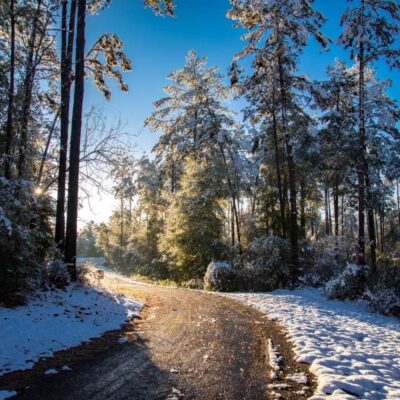
| 50–85 °F | 71–91 °F | 47–88 °F | 41–66 °F |
Each range runs from the coldest monthly average low to the warmest monthly average high in that season (1991-2020 climate normals), measured at Slidell Airport, 12 mi away, elevation 27 ft. Conditions at the park can differ from the station, especially where elevation differs — check a forecast before you go.

Louisiana’s Historic Predecessor to Fontainebleau — Tchefuncte State Park and Conservation Reservation, Original Name of Fontainebleau State Park, Tchefuncte Culture Archaeological Type Site, North Shore Lake Pontchartrain, St. Tammany Parish
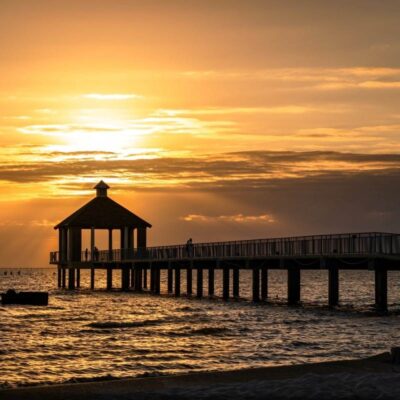
Tchefuncte State Park and Conservation Reservation was the original name of what is now Fontainebleau State Park on the north shore of Lake Pontchartrain near Mandeville, St. Tammany Parish, Louisiana. When the state began developing this land in 1938, it was named after the nearby Tchefuncte River. The park was later renamed Fontainebleau State Park and officially opened in 1943. Features include the Tchefuncte archaeological type site (16ST1), dating to 600 BCE – 200 CE, the site of the Fontainebleau Plantation established in 1829 by Bernard de Marigny de Mandeville, ruins of a 19th-century sugar mill, the historic Alley of the Oaks, camping, beach, and nature trails on Lake Pontchartrain.
The Tchefuncte Culture
This park contains the type site for the Tchefuncte culture — the first prehistoric culture in Louisiana to produce pottery in significant quantities (approximately 600 BCE – 200 CE). Discovered during 1938 park construction, the shell midden yielded thousands of pottery shards, bone tools, and stone implements revealing early hunter-gatherer life along Louisiana’s waterways.
From Plantation to State Park
Before becoming a state park, this 2,800-acre estate was the Fontainebleau Plantation, established by Bernard de Marigny de Mandeville in 1829. The plantation produced sugar, lumber, and bricks using the labor of 153 enslaved people documented in 1840 records. Today, the brick sugar mill ruins remain as a powerful reminder of this history.
Frequently Asked Questions
Is Tchefuncte State Park still open?
Yes, it operates as Fontainebleau State Park — the name was changed after its 1943 opening.
What is the Tchefuncte culture?
A prehistoric Native American culture (600 BCE – 200 CE) first identified at this site, notable as Louisiana’s earliest significant pottery producers.
Wildlife & Nature
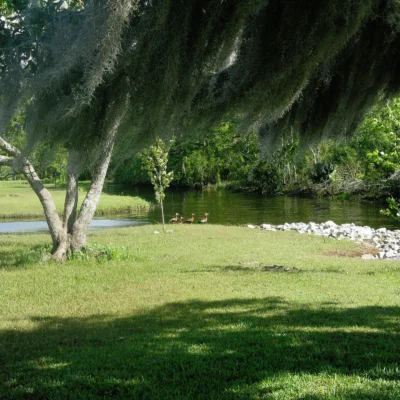
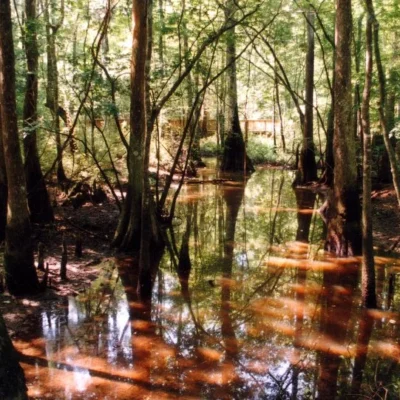
Tchefuncte SP — on the Tchefuncte River near Lake Pontchartrain. The park’s river, live oak forest, and wetlands support alligators, great blue herons, and white-tailed deer.
Nearby Attractions
Covington — nearby. Lake Pontchartrain — nearby. St. Tammany Parish — surrounding.
Make it a road trip: Pair a visit with Fontainebleau State Park (a short drive away) or Fairview-Riverside State Park (a short drive away).

🐾 Dogs & Pets at Tchefuncte State Park and Conservation Reservation
- Pets allowed? statewide rule
- Pets are welcome on trails and in outdoor spaces at Louisiana state parks provided they are on a leash no more than 6 feet long, caged or crated.
- Leash rule statewide rule
- 6 ft maximum leash required (or caged/crated)
- Beaches & swim areas statewide rule
- Pets (except service animals) are prohibited in swimming areas
- Cabins & lodging statewide rule
- Dogs are permitted in designated pet-friendly cabins at 16 parks for a $40-per-dog surcharge, max two dogs per cabin; at least half of all cabins remain pet-free; proof of vaccinations required
- Pet fees statewide rule
- No day-use pet fee; $40 per dog per stay in pet-friendly cabins
- Statewide exceptions statewide rule
- Pets banned from group camps and other enclosed structures
Are dogs allowed at Tchefuncte State Park and Conservation Reservation?
Pets are welcome on trails and in outdoor spaces at Louisiana state parks provided they are on a leash no more than 6 feet long, caged or crated. Individual parks can post stricter rules — check signage on arrival.
Rules verified July 2026 via lastateparks.com. More: Louisiana state parks guide · Dog rules in all 50 states compared
Park Location
Plan your gear for Tchefuncte State Park and Conservation Reservation
From our editorial guides, matched to this park’s activities: