
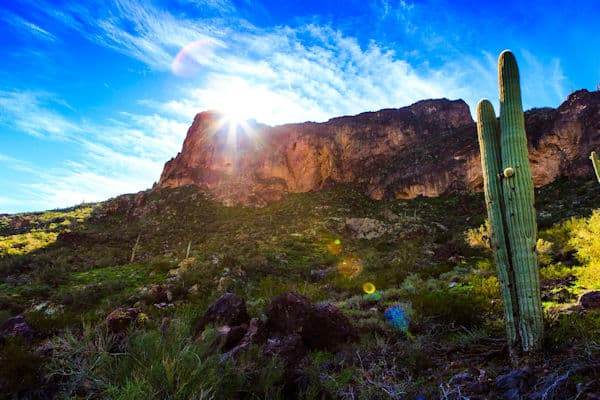
From towering saguaro cacti to ancient cliff ruins, the Sonoran Desert around Phoenix hides some of Arizona’s most remarkable state parks. Whether you’re a sunrise hiker, desert photographer, or weekend camper, this guide covers the best state parks near Phoenix, AZ — with details on trails, access, and the best season to visit each one.
🏆 Top State Parks Near Phoenix at a Glance
| Park | Distance | Best For | Highlights |
|---|---|---|---|
| Lost Dutchman SP | ~40 min E | Superstition Mountain Hiking | Siphon Draw Trail, Sonoran Desert, cabins |
| Picacho Peak SP | ~90 min SE | Spring Wildflowers, Peak Climb | Cable-assist climb, poppy superbloom |
| Tonto Natural Bridge SP | ~2 hr NE | Unique Natural Wonder | World’s largest natural travertine bridge |
| Red Rock SP | ~2 hr N | Red Rock Scenery, Guided Hikes | Sedona red rocks, Oak Creek riparian zone |
| Alamo Lake SP | ~2.5 hr NW | Remote Camping, Stargazing | Sonoran solitude, bass fishing, dark skies |
| Oracle SP | ~2 hr SE | Wildlife, Birding | 5,000 acres, 24 mi trails, high-elevation cool |
⛰️ Lost Dutchman State Park — The Phoenix Hiker’s Classic
Nestled at the foot of the legendary Superstition Mountains, Lost Dutchman State Park is Arizona’s most visited desert state park — and for excellent reason. The jagged Superstition peaks rising behind the campground create an instantly iconic Arizona backdrop. Named after the fabled “Lost Dutchman’s Gold Mine,” the park blends mystery, desert beauty, and serious hiking.
- 🏔️ Siphon Draw Trail — 4.8 miles round trip with 1,300-ft elevation gain into the Superstition Wilderness
- 🌵 Native Plant Trail — easy 0.6-mile loop identifying Sonoran Desert species
- 🦅 Wildlife viewing — Gila woodpeckers, Harris’s hawks, coyotes, javelina
- ⛺ 138 campsites — hookup and tent sites, plus air-conditioned cabins
- 🌅 Sunrise photography — the Superstitions glow orange and red at dawn
🌸 Picacho Peak State Park — Arizona’s Superbloom Capital
Halfway between Phoenix and Tucson, Picacho Peak State Park erupts into an ocean of Mexican gold poppies every March–April, making it one of the most Instagrammed spots in the Southwest during wildflower season. The park’s volcanic basalt peak rises 1,500 feet above the desert floor and offers a challenging technical ascent.
- 🌼 Mexican gold poppies — peak bloom typically mid-March to mid-April
- 🪢 Hunter & Sunset Trails — cable-assist climbing sections to the summit
- 🏛️ Civil War battle site — westernmost Civil War battle fought here in 1862
- 🌡️ Best season: October–April — summers are extreme (110°F+)
🌉 Tonto Natural Bridge — World’s Largest Travertine Bridge
About 2 hours northeast of Phoenix, Tonto Natural Bridge State Park protects an extraordinary geological feature: the world’s largest natural travertine bridge, stretching 183 feet high and 400 feet long spanning a lush, moss-lined tunnel fed by crystal-clear springs.
- 💧 183-foot travertine arch — carved by calcium-rich spring water over millennia
- 🏊 Swimming hole beneath the bridge — refreshing even in summer
- 🥾 4 trails — Cedar Rim, Pine Creek, Waterfall, and Gowan (all under 1 mile)
- 🏡 Historic 1920s lodge — still visible at the trailheads
🏜️ Red Rock State Park — Sedona Without the Crowds
Two hours north of Phoenix in the high desert near Sedona, Red Rock State Park preserves a 286-acre nature conservation area where red sandstone formations tower above a beautiful Oak Creek riparian corridor. Unlike Sedona’s busier trailheads, this park feels intimate and guided.
- 🦅 Raptor and heron sightings along Oak Creek year-round
- 🥾 5-mile interconnected trail system through red rock and juniper
- 🎓 Guided nature hikes daily at 10am (ranger-led, free with entrance)
- 🌅 Scenic drive — the approach road offers stunning Chimney Rock views
🌠 Alamo Lake State Park — Desert Solitude & Dark Skies
For true Sonoran Desert solitude, Alamo Lake State Park 2.5 hours northwest of Phoenix is hard to beat. Created by the Bill Williams River impoundment, this remote reservoir is one of Arizona’s best bass fishing lakes — and one of its darkest night skies.
- 🌌 Gold-tier dark sky site — exceptional stargazing March–October
- 🎣 Bass fishing — record-class largemouth black bass
- 🏕️ Lakeside cabins — comfortable base camp for fishing weekends
- 🦁 Desert bighorn sheep — often spotted on surrounding canyon walls
📅 Best Time to Visit State Parks Near Phoenix
| Season | Conditions | Best Parks |
|---|---|---|
| Fall (Oct–Nov) | Ideal temps (65–85°F), no crowds | Lost Dutchman, Alamo Lake, Tonto Bridge |
| Winter (Dec–Feb) | Cool, occasional frost, excellent hiking | Lost Dutchman, Red Rock, Oracle |
| Spring (Mar–Apr) | Wildflower superbloom, mild temps | Picacho Peak, Lost Dutchman |
| Summer (May–Sep) | Extreme heat (110°F+) — avoid low-elevation parks | Oracle SP (higher elevation, cooler) |
❓ Frequently Asked Questions
What is the best state park near Phoenix for hiking?
Lost Dutchman State Park is the most popular hiking destination, offering trails into the dramatic Superstition Wilderness. The Siphon Draw Trail leads to the stunning Flatiron viewpoint. For wildflower season hikes, Picacho Peak State Park is unbeatable in March and April.
When is the best time to visit Arizona state parks near Phoenix?
October through April is the ideal window. Winters are mild and pleasant (50–75°F), spring brings wildflower blooms, and fall offers comfortable temperatures without summer’s extreme heat. Avoid July–September when temperatures regularly exceed 110°F.
Can you swim at state parks near Phoenix?
Yes! Tonto Natural Bridge has a famous swimming hole beneath the travertine arch. Lost Dutchman has no swimming, but nearby Usery Mountain Regional Park does. Alamo Lake offers lake swimming in a remote desert setting.
How far is Sedona from Phoenix state parks?
Sedona is about 2 hours north of Phoenix. Red Rock State Park near Sedona is an excellent add-on to a Lost Dutchman day trip if you start early and don’t mind a longer drive.
Do Arizona state parks require reservations?
Camping reservations are strongly recommended for Lost Dutchman and Picacho Peak, especially on winter weekends and during wildflower season. Day-use visitors typically don’t need reservations but parking lots fill early.

✍️ About the Author
The State Parks Team is a group of outdoor enthusiasts, researchers, and travel writers dedicated to showcasing America's state parks. Drawing on collective experience visiting parks in all 50 states, the team creates detailed guides, curated park lists, and practical tips to help visitors make the most of their state park adventures. Our mission: making America's state parks accessible and enjoyable for everyone.