Natural Bridge State Park
A 215-Foot Natural Arch Owned by Thomas Jefferson
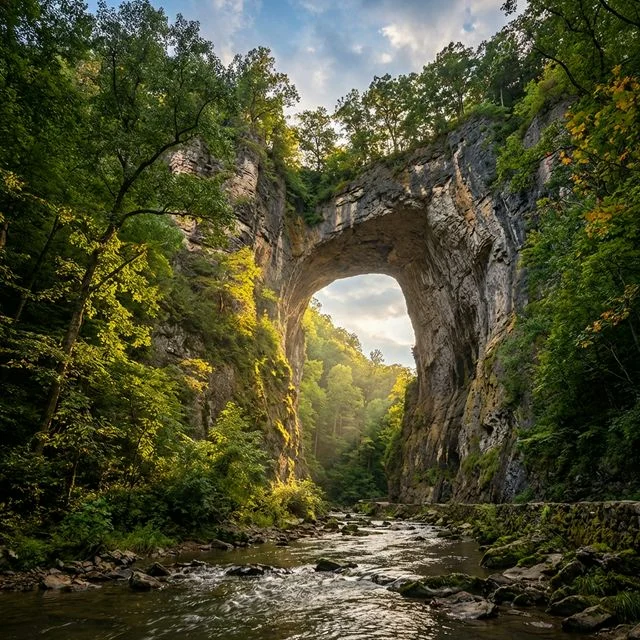
Deep in Virginia’s Shenandoah Valley, a creek has quietly carved one of the most extraordinary geological formations in the Americas. Natural Bridge — a soaring 215-foot-tall limestone arch with a 90-foot span — is the tallest natural arch in the southeastern United States, a National Historic Landmark, and one of those rare places where human history and natural wonder converge in spectacular fashion.
This is the bridge that Thomas Jefferson purchased from King George III for just 20 shillings in 1774, calling it “the most sublime of Nature’s works.” George Washington reportedly surveyed it as a young man, carving his initials into the rock wall. For the Monacan Indian Nation, it was a sacred “Bridge of God” long before European settlers arrived. Today, a road (US Route 11) still runs directly across the top of the bridge — most drivers cross it without realizing they’re 215 feet above a gorge.
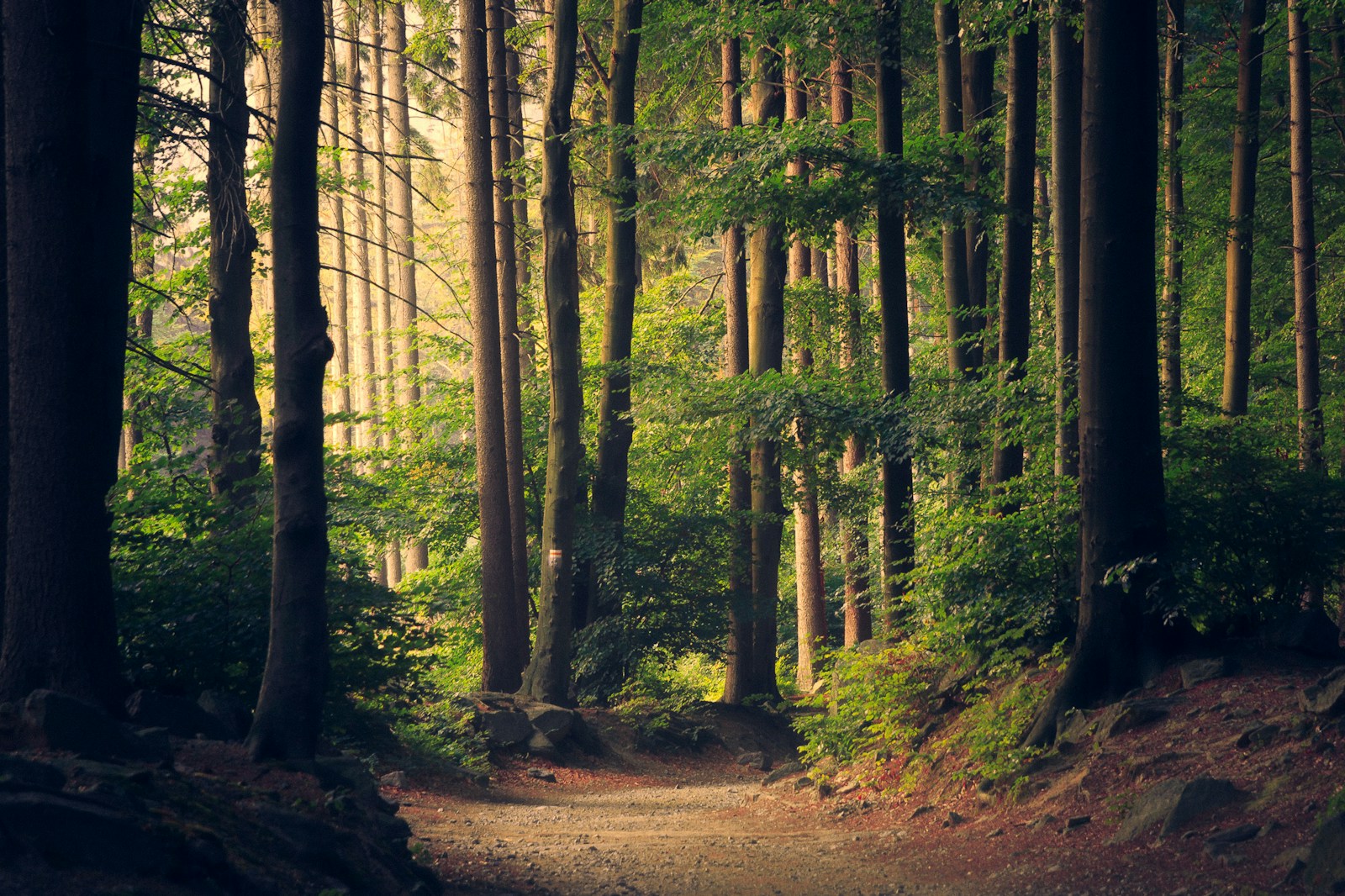
Designated a Virginia State Park in 2016, Natural Bridge combines the arch itself with over 10 miles of hiking trails, a waterfall, caves, and a stunning gorge that takes you from the bridge to the cascade-draped Lace Falls.
🏛️ The Natural Bridge
| Measurement | Value |
|---|---|
| Height | 215 feet (66 m) |
| Span | 90 feet (27 m) |
| Width | Up to 150 feet at the top |
| Age | ~500 million years (Ordovician limestone) |
| Road on Top | US Route 11 crosses the bridge |
| Designation | National Historic Landmark; Virginia State Park (2016) |
🥾 Trails
| Trail | Distance | Difficulty | Highlights |
|---|---|---|---|
| Cedar Creek Trail (to Bridge) | 0.5 mi | Moderate (137 steps down) | Descends to the base of Natural Bridge; most iconic view |
| Cedar Creek Trail (extended to Lace Falls) | 1.5 mi RT | Moderate | Continues past Saltpeter Cave, Lost River, to 30-50 ft Lace Falls |
| Buck Hill Trail | 2.0 mi RT | Moderate | Ridge-top views of the Appalachian Mountains |
| Blue Ridge Trail | 2.5 mi RT | Moderate | Blue Ridge Mountain panoramas; mixed forest |
| Skyline Trail | 3.0 mi RT | Moderate–Strenuous | Highest elevations in the park; scenic overlooks |
⛰️ Geology
Natural Bridge is composed of Ordovician-age limestone and dolomite, deposited as shallow marine sediments approximately 470 to 500 million years ago. The bridge is essentially the remnant roof of a collapsed cave. Over millions of years, Cedar Creek carved a tunnel through the limestone, gradually enlarging it into a cave. Eventually, the cave roof collapsed everywhere — except for the section that became the Natural Bridge.
The buttress of the bridge belongs to the Chepultepec Formation, while the span and upper portions are part of the Beekmantown Formation. The area’s karst terrain, characterized by sinkholes and underground drainage, is evidence of the same dissolution processes that created the bridge.
📜 History
- Sacred to the Monacan Nation — Known as the “Bridge of God” for centuries before European exploration
- 1750 — George Washington surveyed the bridge, reportedly carving his initials into the wall (his “GW” is still visible)
- 1774 — Thomas Jefferson purchased the bridge and 157 acres from King George III for 20 shillings
- 1803–1826 — Jefferson hosted guests at a cabin near the bridge; called it “the most sublime of Nature’s works”
- 1882–2014 — Operated as a private tourist attraction for over 130 years
- 2016 — Designated a Virginia State Park, making it publicly accessible
💰 Visitor Information
| Item | Details |
|---|---|
| Admission | $9 adults (13+) / $6 children (3–12) / Free under 3 |
| Park Hours | 8:00 AM – dusk daily |
| Visitor Center | 10:00 AM – 5:00 PM (6:00 PM summer) |
| Address | 6477 S. Lee Highway, Natural Bridge, VA 24578 |
| Phone | 540-291-1326 |
| Parking | Free (ample for cars, RVs, buses) |
| Pets | Leashed dogs welcome on all trails |
| Accessibility | Visitor Center ADA-accessible; bridge trail requires 137 steps (shuttle available on request) |
📅 Seasonal Guide
| Season | Highlights | Considerations |
|---|---|---|
| Spring (Mar–May) | Wildflowers, flowing waterfalls, green gorge | Trails may be muddy after rain |
| Summer (Jun–Aug) | Full hours, lush canopy, ranger programs | Peak crowds; arrive before 11 AM |
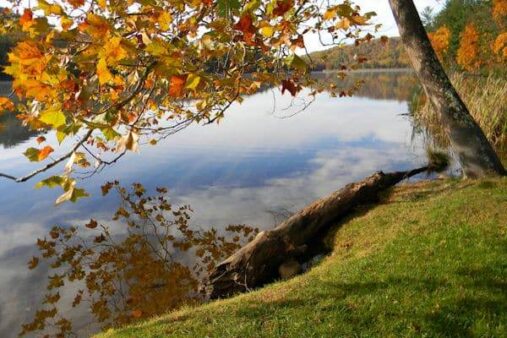
| Fall (Sep–Nov) | Spectacular foliage framing the bridge; cooler hiking | Peak colors usually mid-October |
| Winter (Dec–Feb) | Frozen falls, misty gorge, fewest visitors | Shorter hours; check for closures |
❓ Frequently Asked Questions
How tall is Natural Bridge in Virginia?
Natural Bridge stands 215 feet tall (66 meters) with a span of 90 feet — making it the tallest natural arch in the southeastern United States. For perspective, it’s 25 feet taller than the Statue of Liberty (without pedestal). US Route 11 runs directly across the top of the bridge.
Did Thomas Jefferson own Natural Bridge?
Yes! Thomas Jefferson purchased the Natural Bridge and 157 surrounding acres from King George III in 1774 for just 20 shillings. He called it “the most sublime of Nature’s works” and planned a retreat there, later hosting guests at a cabin near the bridge throughout his life.
How many steps to Natural Bridge?
From the Visitor Center, you must descend 137 steps on the Cedar Creek Trail to reach the base of the bridge. The steps are well-maintained with handrails. For visitors unable to navigate the stairs, the park offers a shuttle to the bridge overlook on request — contact the park ahead of your visit.
What else is there to see besides the bridge?
Beyond the famous arch, the Cedar Creek Trail continues to Lace Falls (a beautiful 30-50 foot cascade), Saltpeter Cave (used during the Civil War), and the Lost River (where Cedar Creek disappears underground). The park also has over 10 miles of hiking trails through forests and ridges with Appalachian Mountain views.
Is Natural Bridge worth visiting?
Absolutely. Standing beneath a 215-foot natural limestone arch that’s been awe-inspiring visitors for centuries — including Thomas Jefferson and George Washington — is a genuinely humbling experience. Combined with the gorge trail, Lace Falls, and the park’s rich history, most visitors spend 2–4 hours here and consider it a highlight of the Shenandoah Valley.