🌤 Weather at Alewife Brook Reservation by season
| Spring | Summer | Fall | Winter |
|---|---|---|---|
| 28–69 °F | 58–85 °F | 34–76 °F | 19–42 °F |
Each range runs from the coldest monthly average low to the warmest monthly average high in that season (1991-2020 climate normals), measured at Jamaica Plain, 7 mi away, elevation 95 ft. Conditions at the park can differ from the station, especially where elevation differs — check a forecast before you go.

🦅 136 Acres of Urban Wilderness Where Herring Still Spawn and Herons Still Hunt — Minutes from Downtown Boston — Alewife Brook Reservation in Cambridge, Arlington, and Somerville, Massachusetts, 136-acre urban greenway managed by DCR, restored wetlands and boardwalks, Alewife Brook tributary of Mystic River, Little Pond herring spawning grounds, birding (osprey great blue heron woodcock), Minuteman Bikeway terminus, MBTA Red Line access at Alewife Station — Middlesex County, MA
The Red Line rumbles into Alewife Station. Commuters pour out toward the parking garage. And 50 feet from the turnstiles, herring are spawning in the same brook they’ve used since before the Puritans arrived. This is Alewife Brook Reservation — 136 acres of wetland, meadow, and woodland in the middle of metro Boston.
It’s what’s left of the “Great Swamp” — the vast wetland that once covered this part of Cambridge and Arlington. Most of it was filled for houses and highways. What survived is now one of the most important urban wildlife corridors in New England — great blue herons hunting in the shallows, osprey diving for fish, and woodcock performing sky dances at dusk, all within earshot of Route 2.
What to See
| Feature | Details |
|---|---|
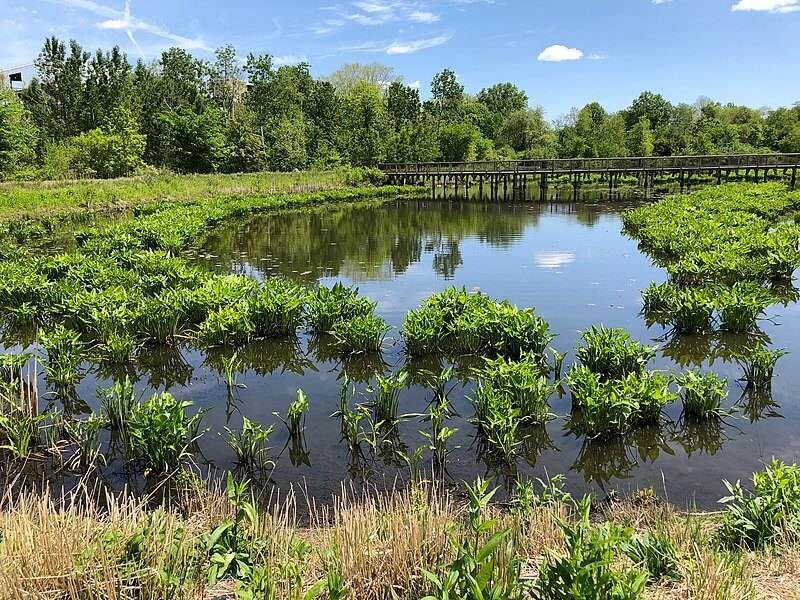
| Restored Wetlands | Large-scale stormwater wetland restoration completed 2013. Boardwalks through the marsh. Educational signage. Amphitheater for programs. A model of urban ecological engineering |
| Little Pond | Herring spawning grounds — alewife herring (the brook’s namesake) run upstream every spring. One of the few remaining anadromous fish runs in metro Boston |
| Birding | Osprey, great blue heron, green heron, woodcock, and warblers. Year-round birding. Spring migration is exceptional for an urban site. Brookline Bird Club regularly surveys here |
| Minuteman Bikeway | The famous 10-mile rail-trail from Alewife to Bedford terminates here. Connects to the Alewife Greenway and Fitchburg Cutoff paths |
| Boardwalks | Wooded boardwalks through wetland areas — accessible viewing of marsh habitats without disturbing the ecosystem |
From Great Swamp to Urban Wild
| Era | What Happened |
|---|---|
| Pre-Colonial | The “Great Swamp” — a vast wetland complex — covers the area between Cambridge, Arlington, and Somerville. Herring run up the Menotomy River (now Alewife Brook). Native Americans fish here |
| 1600s–1800s | Colonial settlement drains and fills parts of the swamp. The brook is named for the alewife herring. Industrial development and urbanization consume most of the wetland |
| 1900s | What remains of the Great Swamp is preserved as Alewife Brook Reservation. The surrounding area becomes fully urbanized — the reservation becomes an island of green |
| 1985 | The MBTA Red Line extends to Alewife Station — directly adjacent to the reservation. The wetland now has a subway stop |
| 2013 | Major stormwater wetland restoration project completed. Boardwalks, restored marsh, and educational facilities transform the park into a model urban conservation site |
Best Time to Visit
| Season | Best For |
|---|---|
| Spring (Apr–May) | 🌸 Herring run! Alewife herring spawn upstream. Woodcock sky dances at dusk. Warbler migration. The reservation at its most alive |
| Fall (Sep–Oct) | 🍂 Fall migration. Hawks and songbirds moving through. Foliage. The Minuteman Bikeway at peak beauty |
| Summer (Jun–Aug) | Herons and osprey fishing. Lush wetland vegetation. Cycling the Minuteman. Boardwalk walks. Urban nature at its greenest |
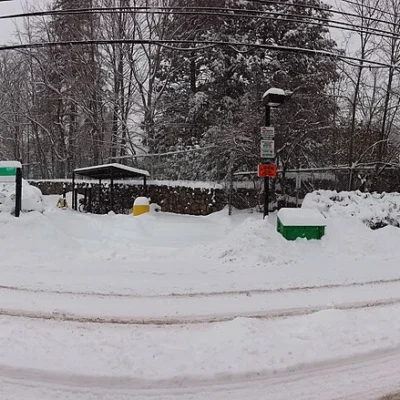
| Winter (Dec–Feb) | Quiet birding. Overwintering waterfowl on the ponds. Snow on the boardwalks. Peaceful urban escape |
Frequently Asked Questions
What are alewife herring?
Small anadromous fish that live in the ocean but spawn in freshwater streams. Every spring, alewife herring swim up Alewife Brook to spawn in Little Pond — the same run they’ve made for thousands of years. The brook, the fish, and the MBTA station are all named for them.
Can I get there by subway?
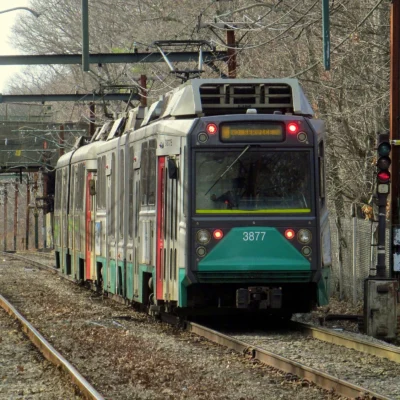
Yes — Alewife Station on the MBTA Red Line is directly adjacent to the reservation. Walk out of the station and you’re at the edge of the wetlands. One of the most transit-accessible nature reserves in America.
Nearby state parks: If you have extra time, Mystic River Reservation is a short drive away, and Middlesex Fells Reservation is a short drive away.
🦅 A Subway Stop, a Herring Run, and 136 Acres of What the Great Swamp Used to Be
The Red Line ends here. The herring run begins here. Osprey fish where commuters park. And the Great Swamp’s last fragment reminds Boston what it paved over.

🐾 Dogs & Pets at Alewife Brook Reservation
- Pets allowed? statewide rule
- The Massachusetts Department of Conservation and Recreation (DCR) welcomes dogs on-leash in most state parks, forests and reservations, though a list of specific properties prohibits dogs for safety, health or habitat reasons.
- Leash rule statewide rule
- Leash of no more than 10 feet in on-leash areas; dogs must be on-leash in all parking areas.
- Beaches & swim areas statewide rule
- Dogs are not allowed on DCR coastal beaches or in designated swimming areas of inland beaches from May 1 through September 15; shorebird-nesting beaches are closed to dogs April 1 - September 15.
- Cabins & lodging statewide rule
- Dogs are not allowed in cabins, yurts and the encompassing areas (no pet-friendly cabin program).
- Statewide exceptions statewide rule
- Designated off-leash areas at ~20 properties (e.g. Bark Place at Breakheart Reservation); max 4 dogs per person; dogs banned entirely at Walden Pond, Moore State Park, Sandy Point and Boston Harbor Islands.
Are dogs allowed at Alewife Brook Reservation?
The Massachusetts Department of Conservation and Recreation (DCR) welcomes dogs on-leash in most state parks, forests and reservations, though a list of specific properties prohibits dogs for safety, health or habitat reasons. Individual parks can post stricter rules — check signage on arrival.
Rules verified July 2026 via mass.gov. More: Massachusetts state parks guide · Dog rules in all 50 states compared
Park Location
Plan your gear for Alewife Brook Reservation
From our editorial guides, matched to this park’s activities: