
🌤 Weather at Allis State Park by season
| Spring | Summer | Fall | Winter |
|---|---|---|---|
| 17–63 °F | 51–76 °F | 26–68 °F | 7–31 °F |
Each range runs from the coldest monthly average low to the warmest monthly average high in that season (1991-2020 climate normals), measured at Chelsea 2 NW, 7 mi away, elevation 1,440 ft. Conditions at the park can differ from the station, especially where elevation differs — check a forecast before you go.

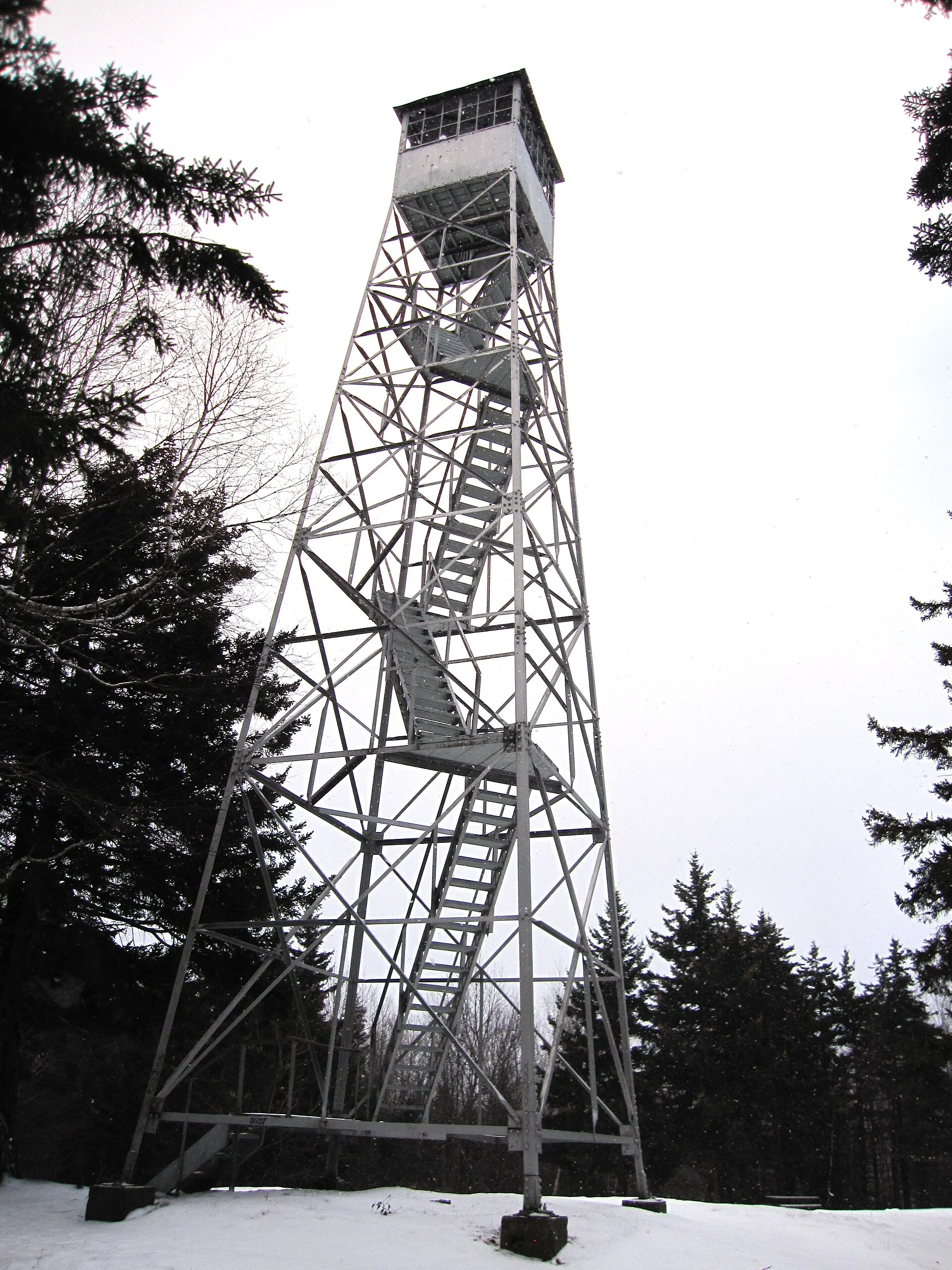
🔭 Climb the Fire Tower and See Three States — Vermont’s Best-Kept Secret Summit — Allis State Park in Brookfield, Orange County, Vermont, Bear Hill summit at 2,000 feet, 360° fire tower with panoramic views of Green Mountains and White Mountains, 26 campsites with lean-tos, CCC-built pavilion and roads, donated by Wallace Allis 1928, Vermont’s second state park, Bear Hill Nature Trail, National Register (2002) — Orange County, VT
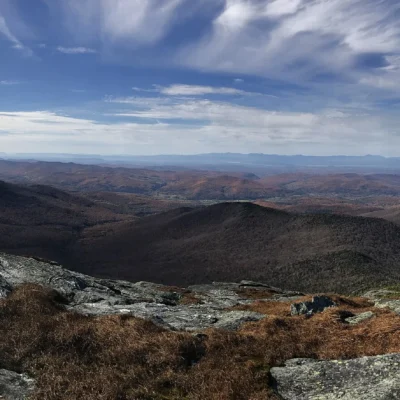
At the top of Bear Hill, above a quiet campground in central Vermont, there is a fire tower. Climb it, and you can see three states. The Green Mountains roll west — Camel’s Hump, Mansfield, Killington. The White Mountains of New Hampshire line the eastern horizon. On the clearest days, you can see into New York.
Allis State Park is Vermont’s second oldest state park, created in 1928 when farmer Wallace Allis donated his mountaintop farm to the state. The Civilian Conservation Corps built the roads, the campground, and the massive timber picnic pavilion in the 1930s. Nearly a century later, the CCC work still stands — and the views from the fire tower are exactly what they were when the first lookout climbed it.
What to See & Do
| Feature | Details |
|---|---|
| Fire Tower | 360-degree panoramic views from the Bear Hill summit (2,000 feet). See the Green Mountains, White Mountains, Killington, Camel’s Hump, Mt. Mansfield, and Mt. Ascutney. Free to climb |
| Bear Hill Nature Trail | Family-friendly loop trail (0.75–1 mile) through hardwood forest to the summit. Easy grade. Interpretive signage |
| Camping | 26 sites: 18 tent/RV sites and 8 lean-tos. Group camping area available. Flush toilets and hot showers. No hookups. Memorial Day through Labor Day |
| CCC Pavilion | Massive log picnic pavilion built by the Civilian Conservation Corps in the 1930s. Accommodates 100+ people. One of the finest surviving CCC structures in Vermont |
| Picnic Areas | Shaded picnic areas with mountain views. Day-use area is universally accessible |
The Timeline
| Year | Event |
|---|---|
| 1928 | Wallace S. Allis donates his Bear Mountain Farm to the State of Vermont for use as a campground and recreation area. It becomes Vermont’s second developed state park |
| 1930s | The Civilian Conservation Corps builds the access roads, campground, and the large timber picnic pavilion. The fire tower is installed on the summit |
| 1930s–1970s | The fire tower is actively used by forest fire lookouts. Generations of lookouts scan the Vermont hills for smoke |
| 2002 | The park’s CCC-era historic facilities are listed on the National Register of Historic Places |
Best Time to Visit
| Season | Best For |
|---|---|
| Fall (Sep–Oct) | 🍂 Peak Vermont foliage from the fire tower. 360° autumn color. This is what people come to Vermont for |
| Summer (Jun–Aug) | ☀️ Camping season. Long days. Clear summit views. Cool mountain evenings |
| Spring (May–Jun) | Mud season transitions to wildflowers. The campground opens Memorial Day weekend |
| Winter (Nov–Apr) | Park closed for camping. Snowshoeing and cross-country skiing possible on ungroomed trails |
Frequently Asked Questions
How far can you see from the fire tower?
On clear days, you can see into three states. The 360-degree views include Vermont’s Green Mountains (Camel’s Hump, Mt. Mansfield, Killington), New Hampshire’s White Mountains, and on exceptional days, peaks in New York. The tower is free to climb.
Is the campground suitable for RVs?
Small to medium RVs can use 18 of the 26 sites. There are no hookups, but a dump station is available. The mountain roads have some curves, so very large RVs may have difficulty. The 8 lean-tos are tent-camping only.
What did the CCC build here?
Nearly everything you see. The Civilian Conservation Corps built the access roads, campground infrastructure, and the massive log picnic pavilion in the 1930s. These structures are so well-built that they earned National Register status in 2002 — nearly 70 years after construction.
Nearby state parks: If you have extra time, Coolidge State Park is a short drive away, and Seyon Lodge State Park is within about an hour’s drive.
Camping reservations: Book campsites and cabins for Vermont state parks online at vtstateparks-visit.com.
🔭 Three States from One Fire Tower
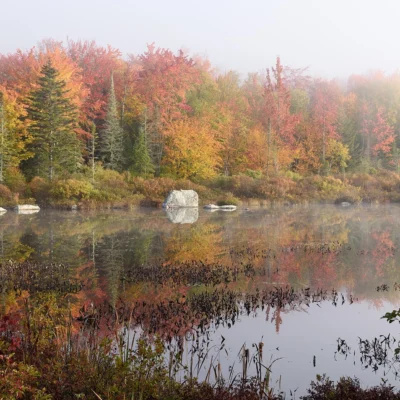
Green Mountains west. White Mountains east. Autumn color in every direction. A CCC pavilion that’s stood for 90 years. Vermont’s second state park — and still one of its best.
Wildlife & Nature
Allis SP — on Bear Mountain (2,060 ft) in Central Vermont. The summit’s fire tower provides 360-degree panoramic views of the Green Mountains, White Mountains, and Adirondacks. The park’s northern hardwood forest supports black bears, moose, and pileated woodpeckers. Brook trout inhabit nearby streams.
Nearby Attractions
Brookfield — adjacent — has the famous Floating Bridge (one of only a few in the US). Randolph — 10 miles south.

🐾 Dogs & Pets at Allis State Park
- Pets allowed? statewide rule
- Pets are allowed at all Vermont State Parks campgrounds and on trails unless otherwise posted, but are not permitted on beaches or in most picnic areas.
- Leash rule statewide rule
- Leash shorter than 10 ft required (or pet safely confined) at all times
- Beaches & swim areas statewide rule
- Pets are not permitted on beaches; limited exceptions let pets use the far side of the beach away from swim areas at Branbury, Lake Shaftsbury and Silver Lake
- Cabins & lodging statewide rule
- Pets are permitted in designated pet-friendly cabins only (full list on the Vermont State Parks cabins page); cottages do not allow pets
- Statewide exceptions statewide rule
- Pets allowed in picnic areas at Allis, Camp Plymouth, Elmore, Kill Kare, Knight Point, Lake Shaftsbury, Mt. Philo, Osmore Pond and Owl's Head; at Camp Plymouth pets may swim only at the cartop boat launch; current rabies vaccination expected
Are dogs allowed at Allis State Park?
Pets are allowed at all Vermont State Parks campgrounds and on trails unless otherwise posted, but are not permitted on beaches or in most picnic areas. Individual parks can post stricter rules — check signage on arrival.
Rules verified July 2026 via vtstateparks.com. More: Vermont state parks guide · Dog rules in all 50 states compared
Park Location
Plan your gear for Allis State Park
From our editorial guides, matched to this park’s activities:
Top Tours & Activities Near Vermont
 from $85
 from $139
 from $95