🌤 Weather at Arkansas Post Museum by season
| Spring | Summer | Fall | Winter |
|---|---|---|---|
| 46–80 °F | 70–90 °F | 45–84 °F | 35–57 °F |
Each range runs from the coldest monthly average low to the warmest monthly average high in that season (1991-2020 climate normals), measured at Arkansas Post, 0 mi away, elevation 194 ft. Conditions at the park can differ from the station, especially where elevation differs — check a forecast before you go.

🏛️ The First European Settlement in the Lower Mississippi Valley — Where France, Spain, and America Fought Over a Continent — Arkansas Post Museum State Park near Gillett, Arkansas County, Arkansas, first European settlement in the lower Mississippi Valley (1686), established by Henri de Tonti, French colonial trading post, Quapaw people, fur trade, first territorial capital of Arkansas (1819–1821), Civil War Battle of Fort Hindman (1863), 340+ years of continuous history — Arkansas County, AR
In 1686, Henri de Tonti — the Italian-born lieutenant of the explorer La Salle — established a small trading post near a Quapaw village at the confluence of the Arkansas and Mississippi Rivers. He called it the Poste de Arkansea.
It was the first permanent European settlement in the lower Mississippi Valley — and for the next 340 years, every empire that tried to control the Mississippi River had to control this spot. France held it. Spain took it. America bought it. The Confederacy fortified it. The Union destroyed it. Through it all, the Quapaw people — whose homeland this had been for centuries — watched as empires rose and fell around them.
What to See
| Feature | Details |
|---|---|
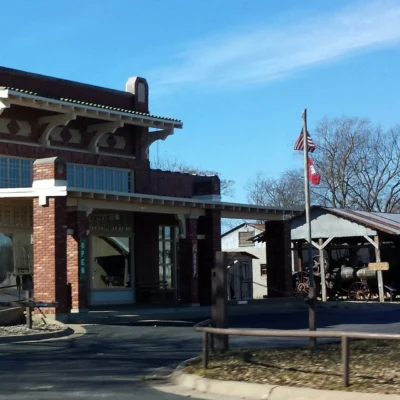
| Museum Complex | Exhibits covering 340+ years — from French colonial trade through the Civil War to 20th-century Delta life. Artifacts, documents, and interpretive displays |
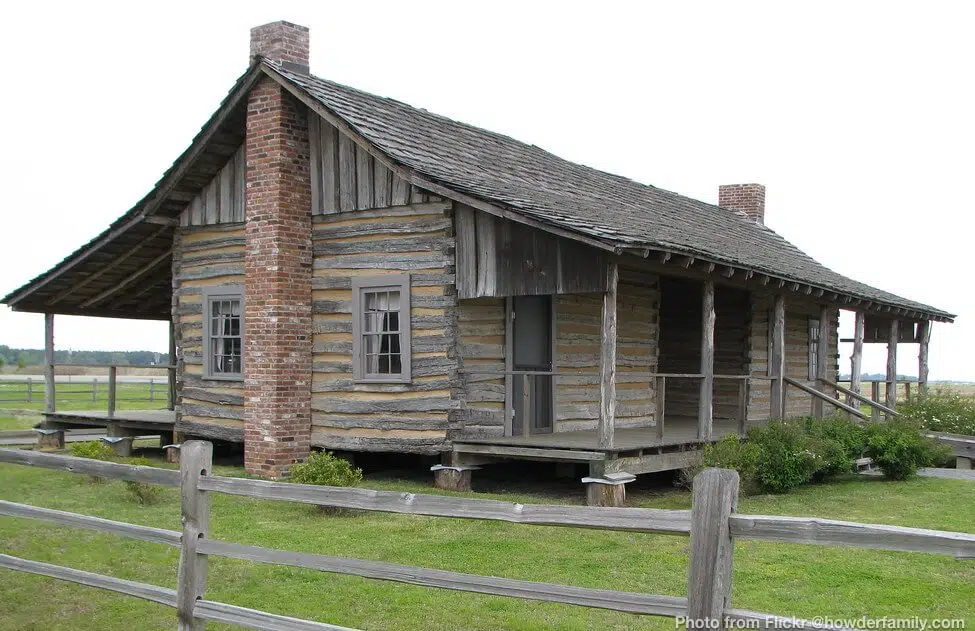
| Historic Buildings | Collection of relocated and restored historic buildings illustrating life in the Arkansas Delta from the late 1800s through the 1900s |
| Quapaw Heritage | Interpretation of the Quapaw people who lived here before European contact and maintained relations with the French trading post for generations |
| Civil War History | Fort Hindman — the Confederate fortification captured by Union forces in January 1863. The battle destroyed the post’s military significance forever |
| Nearby: Arkansas Post National Memorial | The NPS site (2 miles away) preserves the actual location of the original French settlement. Together the two sites tell the complete story |
The Timeline
| Year | Event |
|---|---|
| Pre-Contact | The Quapaw people live at the confluence of the Arkansas and Mississippi Rivers. They call themselves the Ugakhpa — “the downstream people” |
| 1686 | Henri de Tonti establishes the Poste de Arkansea near a Quapaw village. The first semi-permanent European settlement in the lower Mississippi Valley |
| 1686–1763 | French colonial period. The post serves as a fur trading center and military outpost. The Quapaw and French maintain a trading alliance |
| 1763–1800 | Spain takes control after the Treaty of Paris. The post continues as a trading center under Spanish administration |
| 1803 | Louisiana Purchase. The United States acquires the territory. Arkansas Post becomes an American settlement |
| 1819–1821 | Arkansas Post is chosen as the first territorial capital of Arkansas Territory. The capital moves to Little Rock in 1821 |
| Jan 1863 | Battle of Arkansas Post (Fort Hindman). Union forces under General John A. McClernand capture the Confederate fort. The battle effectively ends the post’s military and political importance |
| 20th Century | The area becomes agricultural Delta farmland. The museum preserves artifacts and buildings from the region’s diverse history |
Best Time to Visit
| Season | Best For |
|---|---|
| Spring (Mar–May) | 🌸 Delta in bloom. Mild weather. Rivers are high. Birdwatching along the Arkansas River |
| Fall (Oct–Nov) | 🍂 Harvest season in the Delta. Comfortable temperatures. Clear skies. Fewer mosquitoes |
| Summer (Jun–Aug) | Hot and humid Arkansas Delta summer. Air-conditioned museum. Early morning for outdoor areas |
| Winter (Dec–Feb) | Mild winters. Waterfowl migration on nearby rivers and wetlands. January battle anniversary |
Frequently Asked Questions
What’s the difference between the Museum and the National Memorial?
The Arkansas Post National Memorial (NPS) preserves the actual site of the original French settlement and focuses on the colonial and military history. The Arkansas Post Museum (State Park, 2 miles away) features historic buildings and artifacts covering a broader period, including 19th- and 20th-century Delta life. Visit both for the complete story.
Who were the Quapaw?
The Quapaw were the “downstream people” — a Dhegiha Siouan people who lived at the confluence of the Arkansas and Mississippi Rivers. They maintained alliances with the French and later the Spanish, but were eventually removed from their homeland in the 19th century. Today, the Quapaw Nation is based in Oklahoma.
Why was the capital moved to Little Rock?
Geography. Arkansas Post was remote, flood-prone, and difficult to reach from the growing interior settlements. Little Rock, located on the Arkansas River at a natural crossing point, was more central and accessible. The capital moved in 1821, just two years after Arkansas became a territory.
Make it a road trip: Pair a visit with Delta Heritage Trail State Park (within about an hour’s drive) or Lake Chicot State Park (elsewhere in the state).
🏛️ 340 Years. Four Flags. One Post at the Edge of Empire.
France planted it. Spain held it. America bought it. The Confederacy fortified it. The Union destroyed it. And the Quapaw were here before all of them.
Wildlife & Nature
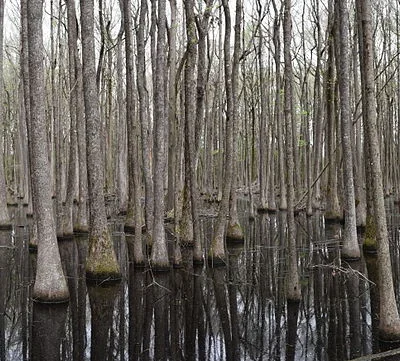
Arkansas Post Museum — near the site of the first European settlement in the lower Mississippi Valley (1686) — founded by Henri de Tonti for the French. Arkansas Post served as the first capital of Arkansas Territory (1819). The area’s bottomland hardwood forest, bayous, and wetlands support bald eagles, great blue herons, and alligators.
Nearby Attractions
Arkansas Post NM — adjacent. Gillett — 10 miles north — the “Coon Supper Capital of the World”. Stuttgart — 30 miles north — Rice and Duck Capital of the World.

🐾 Dogs & Pets at Arkansas Post Museum
- Pets allowed? statewide rule
- Pets are allowed in Arkansas State Parks, including many trails, but must be restrained and under the owner's direct physical control at all times.
- Leash rule statewide rule
- Pets must be leashed, caged or otherwise restrained under direct physical (not verbal) control; no maximum leash length is specified.
- Beaches & swim areas statewide rule
- Pets (other than service animals) are not permitted at swimming beaches or pools at any time, nor in public buildings.
- Cabins & lodging statewide rule
- Designated dog-friendly cabins and lodge rooms exist at all lodging parks (about 25% of cabins at 14+ parks incl. Petit Jean, Mount Magazine, DeGray Lake Resort, Devil's Den); limit 2 dogs per unit, non-refundable per-dog fee at check-in, proof of vaccinations required.
- Pet fees statewide rule
- No day-use pet fee; a non-refundable per-dog fee applies for dog-friendly cabins/lodge rooms.
- Statewide exceptions statewide rule
- Only dogs (no other pet types) are allowed in lodging units.
Are dogs allowed at Arkansas Post Museum?
Pets are allowed in Arkansas State Parks, including many trails, but must be restrained and under the owner's direct physical control at all times. Individual parks can post stricter rules — check signage on arrival.
Rules verified July 2026 via codeofarrules.arkansas.gov. More: Arkansas state parks guide · Dog rules in all 50 states compared