Berlin–Ichthyosaur State Park
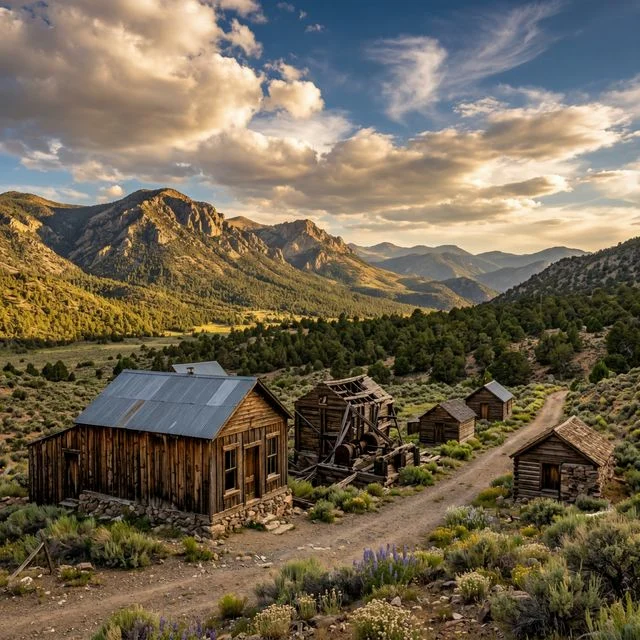
In the remote Shoshone Mountains of central Nevada, where the nearest traffic light is hours away, Berlin-Ichthyosaur State Park brings together two seemingly unrelated stories separated by 225 million years: the fossilized remains of giant prehistoric marine reptiles and the weathered ruins of a turn-of-the-century gold mining ghost town. It’s a combination found nowhere else on earth, and it makes this isolated park one of the most fascinating and underrated destinations in the American West.
Table of Contents
The Ichthyosaurs: Nevada’s Ancient Giants
Approximately 225 million years ago, during the Triassic period, central Nevada was covered by a warm, shallow ocean. In those ancient waters swam Shonisaurus popularis—Nevada’s official state fossil—a species of ichthyosaur that could reach an astonishing 50 to 70 feet in length, making it one of the largest marine reptiles ever to have lived.
The fossils were first noted by local miners but were officially “discovered” by Dr. Siemon Muller in 1928. Systematic excavations beginning in 1954 ultimately uncovered the remains of nearly 40 individual ichthyosaurs, making this the largest and most concentrated ichthyosaur fossil site in North America. Today, the Fossil House protects and displays these extraordinary remains in situ. Guided tours offer an intimate look at the bones exactly as they were found, while viewing windows allow self-guided visits when tours are not running.
The Ghost Town of Berlin
The park’s second story begins 225 million years later, in 1896, when prospectors struck significant gold veins in the hillside. The town of Berlin sprang up almost overnight, supporting 200 to 250 residents at its peak. The Berlin Mine produced an estimated $849,000 in gold (equivalent to tens of millions today) from three miles of underground tunnels before becoming unprofitable around 1911, after which the town was swiftly abandoned.
What makes Berlin exceptional among Nevada’s many ghost towns is its state of arrested decay. Rather than fully restoring or allowing complete destruction, the state maintains the original 1890s buildings—an ore mill, stamp mill, homes, a blacksmith shop, and assay office—in exactly the condition they were found. Walking through Berlin feels genuinely eerie and authentic, a rare quality in the age of over-restored heritage sites.
Trails and Exploration
Self-guided trails wind through the Berlin townsite with extensive interpretive signage explaining the structures and the lives of the people who built them. A nature trail connects the campground to the Fossil House, and the park sits astride the American Discovery Trail, the only coast-to-coast non-motorized trail in the United States. The Richmond Canyon trail offers a rewarding loop that combines both the fossil sites and the ghost town into a single hike. The park’s 14 campsites offer a primitive, off-the-grid camping experience under some of the darkest skies in the Lower 48.
Essential Visitor Information
- Location: State Route 844, Austin, Nevada 89310. The park is extremely remote—plan accordingly with fuel, water, and supplies.
- Fossil House Tours: Guided tours are available seasonally (typically Memorial Day through Labor Day). Check with the park for the current schedule. Viewing windows allow year-round access.
- Camping: 14 primitive campsites are available on a first-come, first-served basis. No hookups, no cell service.
- Established: 1957. The park celebrates both the 1928 fossil discovery and the 1896 mining history.
FAQ: Berlin-Ichthyosaur State Park
What is an ichthyosaur?
Is Berlin-Ichthyosaur State Park really that remote?
Can you see the fossils without a guided tour?