
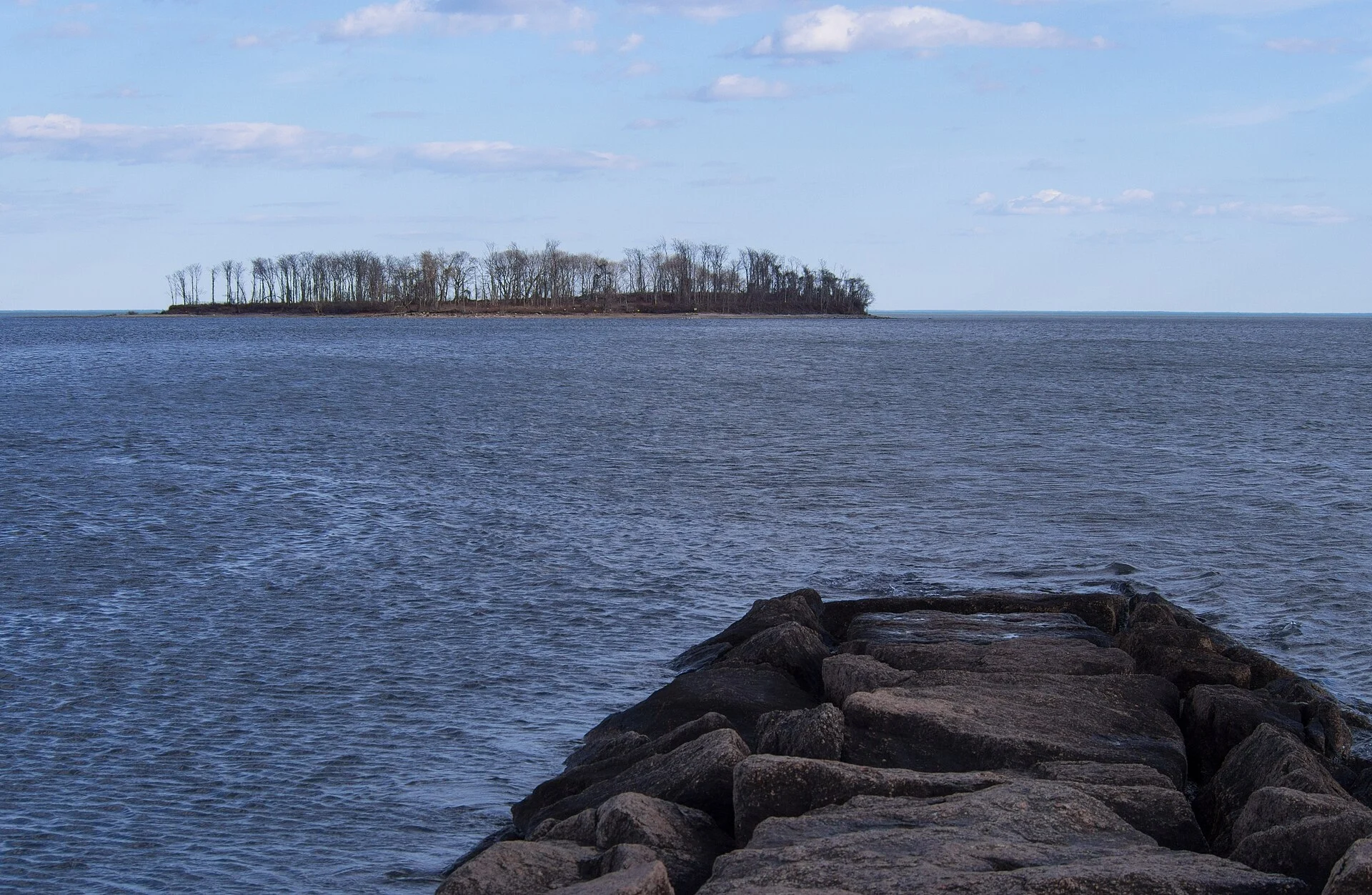
🌤 Weather at Charles E. Wheeler Wildlife Management Area by season
| Spring | Summer | Fall | Winter |
|---|---|---|---|
| 32–68 °F | 62–83 °F | 38–75 °F | 24–44 °F |
Each range runs from the coldest monthly average low to the warmest monthly average high in that season (1991-2020 climate normals), measured at Bridgeport Sikorsky Mem Airport, 4 mi away, elevation 5 ft. Conditions at the park can differ from the station, especially where elevation differs — check a forecast before you go.

🏆 Long Island Sound Marsh — 800+ acre salt marsh on Long Island Sound — critical stopover for migratory shorebirds
Charles E. Wheeler Wildlife Management Area protects over 800 acres of salt marsh, mudflats, and coastal habitat along Long Island Sound in Milford. The extensive marsh is a critical stopover for migratory shorebirds on the Atlantic Flyway and provides year-round habitat for wading birds, osprey, and salt marsh sparrows. The Wheeler marsh is one of the largest contiguous salt marshes remaining on Connecticut’s coastline — most have been filled or developed since colonial times.
Visitor Information
| Detail | Information |
|---|---|
| Location | Milford, New Haven County, CT |
| Size | 800+ acres |
| Entry Fee | Free |
| Flyway | Atlantic Flyway stopover |
| Birds | Shorebirds, osprey, salt marsh sparrow |
Frequently Asked Questions
When are the shorebirds?
Spring migration (May) and fall migration (August–September) bring thousands of shorebirds including sandpipers, plovers, and dowitchers. Low tide exposes the mudflats that shorebirds depend on for feeding.
Is CT known for oysters?
Yes — Connecticut has been harvesting oysters since colonial times. Long Island Sound’s mix of salt and fresh water creates ideal oyster-growing conditions. CT oysters (especially from the Norwalk and Milford areas) are prized for their clean, briny flavor. The industry declined in the mid-1900s due to pollution and disease but has recovered significantly. CT now produces millions of oysters annually — both wild-harvested and farmed.
About Charles E. Wheeler WMA
Charles E. Wheeler Wildlife Management Area in Milford stretches along the Housatonic River estuary — one of the most productive coastal ecosystems in Long Island Sound. The area includes salt marsh, tidal flats, and upland buffer zones that provide critical habitat for migrating shorebirds, waterfowl, and horseshoe crabs spawning on the beaches.
Things to Do
Outstanding birdwatching (shorebirds, herons, egrets, osprey), fishing for striped bass and bluefish in the Housatonic, crabbing, and observing horseshoe crab spawning in spring (May-June). One of the best coastal birding sites in Connecticut.
Insider Tips
Long Island Sound: Wheeler WMA protects tidal marshland along Long Island Sound — one of the most productive estuaries on the East Coast. Pro tip: Long Island Sound was declared an estuary of national significance — its marshes filter water, protect coastlines, and provide nursery habitat for commercially important fish and shellfish. Oystermen: CT’s oyster industry has been active since colonial times.
Best Time to Visit
Fall: Waterfowl migration. Spring: Shorebird migration and osprey nesting. Summer: Salt marsh ecology. Winter: Wintering waterfowl.
Wildlife & Nature
Wheeler WMA protects coastal salt marsh habitat along the Housatonic River estuary — where Connecticut’s second-longest river meets Long Island Sound. Salt marshes are among the most productive ecosystems on Earth — producing more biomass per acre than most tropical rainforests. Smooth cordgrass (Spartina alterniflora) dominates the lower marsh, while salt meadow hay (Spartina patens) covers the upper marsh. Saltmarsh sparrows — one of the most endangered songbirds in North America — nest exclusively in coastal salt marshes and are threatened by sea level rise. Ospreys, herons, and egrets feed in the estuary. Horseshoe crabs — “living fossils” unchanged for 450 million years — spawn on adjacent beaches each May.
Nearby Attractions
Silver Sands State Park in Milford features a tombolo (sand bar) connecting to Charles Island — accessible at low tide. Connecticut Audubon Coastal Center in Milford offers birding programs and Long Island Sound ecology exhibits. Stratford was home to Igor Sikorsky’s helicopter factory — where the practical helicopter was perfected. The Boothe Memorial Park in Stratford features eccentric architecture including a miniature lighthouse and clock tower. Milford Green is one of New England’s longest town greens — a center of community life since 1639.
More parks nearby: Silver Sands State Park is a short drive away, while Indian Well State Park lies a short drive away.
🦅 Visit Charles E. Wheeler WMA
800+ acres of Sound salt marsh — Atlantic Flyway shorebird capital.

🐾 Dogs & Pets at Charles E. Wheeler Wildlife Management Area
- Pets allowed? statewide rule
- Pets on a leash are permitted in most Connecticut state parks and forests, but not in buildings, swimming areas or state park campgrounds.
- Leash rule statewide rule
- Pets must be leashed and under control at all times; in state forest camping areas the leash may be no longer than 7 feet.
- Beaches & swim areas statewide rule
- Pets are prohibited in swimming areas; Sherwood Island and Squantz Pond State Parks ban pets entirely April 15 - September 30.
- Cabins & lodging statewide rule
- Pets are banned from all state park campgrounds; they are allowed only in the American Legion, Pachaug and Salt Rock state forest campgrounds, but not on rustic cabin sites.
- Statewide exceptions statewide rule
- Pets prohibited year-round at Dinosaur State Park and in the formal gardens and beach at Harkness Memorial State Park.
Are dogs allowed at Charles E. Wheeler Wildlife Management Area?
Pets on a leash are permitted in most Connecticut state parks and forests, but not in buildings, swimming areas or state park campgrounds. Individual parks can post stricter rules — check signage on arrival.
Rules verified July 2026 via portal.ct.gov. More: Connecticut state parks guide · Dog rules in all 50 states compared
Park Location
Plan your gear for Charles E. Wheeler Wildlife Management Area
From our editorial guides, matched to this park’s activities:

Top Tours & Activities Near New Haven
 from $28
 from $10
 from $26