Crater of Diamonds State Park
Imagine finding a diamond. Not in a jewelry store—in the ground. You dig it up yourself, and it’s yours to keep. No catch. No limits. That’s Crater of Diamonds State Park.
Located in Murfreesboro, Arkansas, this 911-acre park is built around something that exists nowhere else in the world: a 37-acre eroded volcanic crater where the public can search for real diamonds in their original geological source. Since becoming a state park in 1972, visitors have discovered more than 35,000 diamonds—including stones worth hundreds of thousands of dollars. An average of two diamonds are found every single day.
But this isn’t just about luck. The largest diamond ever found in the United States—the 40.23-carat Uncle Sam—was unearthed right here. So was the flawless Strawn-Wagner Diamond, graded as a perfect gem. And the Kahn Canary Diamond, worn by First Lady Hillary Clinton at two presidential inaugural galas. These aren’t legends from a distant past. The 8.52-carat Esperanza was found in 2015. A visitor from France found a 7.46-carat diamond in 2022.
Whether you’re a geology enthusiast, a family looking for an unforgettable adventure, or someone who simply wants to try their luck—Crater of Diamonds delivers an experience unlike anything else on Earth.
What Makes Crater of Diamonds Legendary
Finders Keepers
Keep every diamond, gemstone, and mineral you find—no limits, no fees.
2 Diamonds Daily
On average, two diamonds are discovered by visitors every single day.
Only in America
The only diamond-bearing site in the world open to the public.
Famous Finds
Home to the largest US diamond (40.23 carats) and multiple flawless gems.
Famous Diamonds Found Here
Crater of Diamonds has produced some of the most significant diamond discoveries in American history. Here are the legendary finds that have put this park on the map:
| Diamond Name | Carats | Year | Notable Facts |
|---|---|---|---|
| 💎 Uncle Sam | 40.23 | 1924 | Largest diamond ever found in the USA; cut into 12.42-carat emerald gem |
| 💎 Amarillo Starlight | 16.37 | 1975 | Largest diamond found by a visitor after the park opened in 1972 |
| 💎 Star of Arkansas | 15.33 | 1956 | One of the largest white diamonds from the crater |
| 💎 Esperanza | 8.52 | 2015 | Most significant recent find; discovered by a first-time visitor |
| 💎 Star of Shreveport | 8.82 | 1981 | Found on the surface in the search field |
| 💎 Kahn Canary | 4.25 | 1977 | Worn by Hillary Clinton at two presidential inaugural galas; left uncut |
| 💎 Strawn-Wagner | 3.03 (rough) | 1990 | Graded as a “perfect” diamond (D/Flawless); on display at visitor center |
✨ Recent Big Finds
In 2022, a visitor from France found a 7.46-carat diamond. In 2021, a teacher discovered a 4.87-carat gem. These aren’t rare events—significant diamonds are found multiple times per year!
How to Search for Diamonds
There are three main methods for searching—choose based on your experience level and how much time you have:
Surface Searching (Beginner)
Walk slowly through the plowed rows, scanning the ground for anything that sparkles or looks unusual. This is the simplest method and has yielded many major finds, including the 8.82-carat Star of Shreveport. Best after rain when diamonds are washed to the surface.
Digging & Screening (Intermediate)
Dig down 6-12 inches, turn over the soil, and sift it through screens. This requires more effort but covers more ground. Bring or rent a shovel, screens, and bucket.
Wet Sifting (Advanced)
For serious prospectors: dig deeper, remove diamond-bearing soil, wash it through screens at the park’s wash stations, and sort through concentrated gravels. This technique requires time but dramatically increases your odds.
| Search Method | Effort Level | Best For |
|---|---|---|
| 🚶 Surface Searching | Easy | Beginners, families with young kids, after rain |
| ⛏️ Digging & Screening | Moderate | Most visitors, multi-hour searches |
| 💧 Wet Sifting | Advanced | Serious prospectors, all-day treasure hunters |
Pro Tips for Finding Diamonds
⛈️ THE GOLDEN RULE: Visit After Rain!
Experienced diamond hunters know: rain is your best friend. Heavy rain washes away lighter soil, exposing heavier rocks, minerals, and diamonds on the surface. The day after a rainstorm is ideal. The ground is also softer for digging.
| Tip | Why It Matters |
|---|---|
| 🌧️ Go After Rain | Diamonds wash to surface; ground softer for digging |
| 🌅 Arrive Early (8 AM) | Cooler temps, fresh plowed rows, first picks |
| 👀 Know What to Look For | Diamonds here are often rough, opaque—white, brown, or yellow |
| 👢 Wear Rubber Boots | Field is often muddy even in dry weather |
| 🧴 Sunscreen & Bug Spray | Open field = no shade; summer months have mosquitoes |
| 🆓 Use Free ID Service | Park staff will identify and certify any diamonds you find |
🔮 What Do Rough Diamonds Look Like?
Unlike polished gems, rough diamonds often look dull, greasy, or metallic. They can be translucent or nearly opaque. The three colors found here are white, brown, and yellow (in that order of frequency). If something catches your eye—take it to the Discovery Center for free identification!
Your Odds of Finding a Diamond
Let’s be realistic about expectations—but also optimistic:
| Statistic | Data |
|---|---|
| 💎 Diamonds Found Daily | ~2 on average |
| 📊 Odds (2017 Data) | 445 diamonds / 182,000 visitors = ~1 in 400 |
| 📈 Total Since 1972 | 35,000+ diamonds |
| ⚖️ Average Size | Most under 1 carat; large finds are rare but happen yearly |
The takeaway: You probably won’t find a massive gem—but finding something is very possible, especially if you spend several hours searching. And the experience itself is unforgettable regardless of what you take home.
Other Gemstones & Minerals
Diamonds aren’t the only treasures. The volcanic soil contains dozens of rocks and minerals you can collect:
- 💜 Amethyst: Purple quartz, popular for jewelry
- ❤️ Garnet: Dark red gemstone
- 🧡 Jasper: Red, yellow, and brown varieties
- 🤍 Agate: Banded chalcedony
- ⬜ Quartz: Clear and milky varieties abundant
- ⚫ Peridot: Olive-green volcanic gem
Fees & Hours
| Category | Fee |
|---|---|
| 🎟️ Adults (13+) | $13 |
| 👧 Children (6-12) | $6 |
| 👶 Under 6 | FREE |
| ⛏️ Tool Rental | Available at Discovery Center |
| Facility | Hours |
|---|---|
| ⛏️ Diamond Search Area | 8 AM – 4 PM daily |
| 🏛️ Visitor Center/Gift Shop | 8 AM – 5 PM daily |
| 🏊 Diamond Springs Water Park | 11 AM – 4 PM (Memorial Day – Labor Day, Wed-Sun) |
| 🚫 Closed | New Year’s Day, Thanksgiving, Christmas Eve & Day |
Camping & Lodging
| Site Type | Details |
|---|---|
| 🔌 Class AAA Campsites | 47 sites with 50/30 amp, water, sewer; free Wi-Fi |
| ⛺ Walk-In Tent Sites | 5 sites for primitive camping |
| 🏕️ Nearby RV Parks | Murfreesboro RV Park, Castle Keepers Resort, Miners’ Camping |
Beyond Diamond Hunting
🥾 Hiking Trails
| Trail | Distance | Features |
|---|---|---|
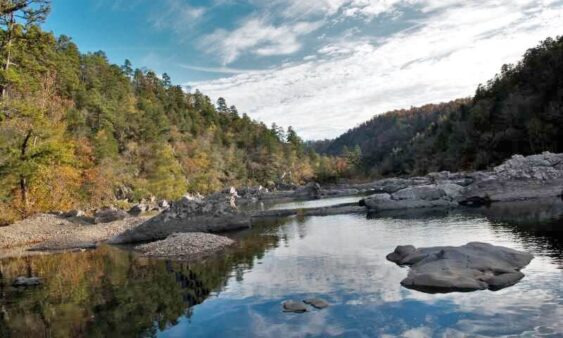
| 🌊 Little Missouri River Trail | 1.2 miles | Half paved/wheelchair accessible; scenic river views |
| ⛰️ Prospector Trail | 1.2 miles | Geological features; loops past diamond field (requires entry fee) |
| 🦌 Wildlife Observation Blind Trail | 0.2 miles | Short hike to wildlife blind; deer, armadillos, birds |
🎣 Fishing
Fish the Little Missouri River from the bank for bream, catfish, and largemouth bass. Below Lake Greeson Dam, trout fishing is excellent in late fall through early spring (stocked by Arkansas Game & Fish). Fishing license required.
🏊 Diamond Springs Water Park
Cool off after a day of digging! This 4,166-square-foot wading pool features water jets, slides, geysers, and animated waterspouts—all with a mining theme. Open Memorial Day through Labor Day (Wed-Sun, 11 AM – 4 PM).
History of the Crater
The diamond-bearing volcanic pipe formed approximately 100 million years ago when a deep-source volcanic eruption brought diamonds from deep within the Earth’s mantle to the surface. The crater was discovered in 1906 by John Wesley Huddleston, a local farmer who found two unusual crystals on his property.
Several companies attempted commercial diamond mining over the decades, but lawsuits, lack of profit, and a devastating fire ended those ventures. From 1952 to 1972, the site operated as a private tourist attraction before the State of Arkansas purchased it, creating the state park we know today.
When to Visit
🌧️ After Rain (BEST)
Regardless of season, the day after a heavy rain is the absolute best time to search. Diamonds wash to the surface, and the ground is soft for digging.
🌸 Spring (March – May)
Pleasant weather, moderate crowds. Occasional spring rains = excellent surface searching conditions.
☀️ Summer (June – August)
Peak season with highest crowds. Hot—bring sunscreen, water, and consider early morning or late afternoon visits. Water park is open!
🍂 Fall (September – November)
Excellent. Cooler temperatures, smaller crowds, and often good rain conditions. Many experienced hunters prefer fall.
❄️ Winter (December – February)
Smallest crowds but cold conditions. The search field is still open daily. Hardy prospectors have the field almost to themselves.
Getting There
- 📍 Address: 209 State Park Rd, Murfreesboro, AR 71958
- 📞 Phone: (870) 285-3113
- 📍 From Little Rock: ~120 miles southwest via I-30 and AR-26
- 📍 From Texarkana: ~70 miles northeast via US-71 and AR-27
- 📍 From Hot Springs: ~75 miles west via US-70 and AR-27
Frequently Asked Questions
Are there still diamonds at Crater of Diamonds State Park?
Absolutely. An average of two diamonds are found by visitors every single day. Major finds happen multiple times per year—including a 7.46-carat diamond found by a visitor from France in 2022. The volcanic crater continues to produce diamonds, and regular plowing brings new material to the surface.
What are the odds of finding a diamond?
Based on 2017 data: approximately 1 in 400 visitors finds a diamond (445 diamonds among 182,000 visitors). Your odds improve significantly if you spend multiple hours searching, visit after rain, and use proper techniques.
Are diamonds from Crater of Diamonds worth anything?
It depends on size, clarity, and color. Most finds are small (under 1 carat) and worth modest amounts as souvenirs. However, larger diamonds can be quite valuable—the Esperanza (8.52 carats, found in 2015) was appraised at several hundred thousand dollars. Several diamonds found here have sold for $100,000+.
Is Crater of Diamonds State Park worth visiting?
Yes! Even if you don’t find a diamond, the experience is unlike anything else in America. Where else can you search for real diamonds in an ancient volcanic crater, potentially walk away with a treasure, learn about geology at a world-class visitor center, and cool off at a themed water park? It’s a memorable day for families, rockhounds, and adventure seekers alike.
What should I bring?
Essentials: water, sunscreen, hat, bug spray, rubber boots or shoes you don’t mind getting muddy. Optional: your own screens/shovels, knee pads, gloves. Tools are also available for rent at the park.
Can I bring my own equipment?
Yes—shovels, screens, buckets, and hand tools are allowed. No motorized or battery-operated tools are permitted.
💎 The Only Place on Earth
There’s nowhere else like this. A 37-acre volcanic crater in the Arkansas countryside where you can dig for real diamonds—and keep everything you find. The Uncle Sam, the Kahn Canary, the Esperanza—they were all unearthed right here, by regular people just like you. Maybe you’ll be next.
📍 Address: 209 State Park Rd, Murfreesboro, AR 71958
📞 Phone: (870) 285-3113
Frequently Asked Questions
Can you really keep the diamonds you find?
Yes! This is the only diamond mine in the world where the public can search and keep any diamonds or gems they find. Whether you uncover a tiny crystal or a multi-carat stone, it is yours to take home. Over 35,000 diamonds have been found by visitors since the park opened in 1972.
What is the largest diamond ever found at Crater of Diamonds?
The Uncle Sam diamond at 40.23 carats is the largest diamond ever unearthed in the United States. Other notable finds include the Amarillo Starlight (16.37ct), Star of Arkansas (15.33ct), and the Esperanza (8.52ct). Diamonds come in white, brown, and yellow colors at this site.
How likely am I to find a diamond?
On average, 1-2 diamonds are found per day by visitors. Your chances improve with time, technique, and weather conditions—many experienced diggers recommend coming after heavy rains when diamonds are washed to the surface. Park staff offer free diamond identification and mining demonstrations to help you search effectively.
What equipment do I need to search for diamonds?
You can bring your own equipment (shovels, buckets, screens, trowels) or rent tools from the park. Battery-operated and motorized equipment are not allowed. Popular techniques include surface searching, wet sifting, and dry screening. The park provides complimentary identification of any rocks or minerals you find.
Can you camp at Crater of Diamonds State Park?
Yes! The park offers 47 Class AAA campsites with full hookups (50/30 amp, water, sewer) plus 5 walk-in tent sites. The campground is open year-round and provides a great base for multi-day diamond hunting adventures.
Is Diamond Springs Water Park included with admission?
Diamond Springs Water Park is a separate amenity open seasonally from Memorial Day through Labor Day (11am-4pm, closed Mon-Tue). It is a great way to cool off after a day of diamond searching! Note that it may operate weekends only starting mid-August as students return to school.