🌤 Weather at Fort Bridger by season
| Spring | Summer | Fall | Winter |
|---|---|---|---|
| 20–63 °F | 40–80 °F | 17–70 °F | 11–34 °F |
Each range runs from the coldest monthly average low to the warmest monthly average high in that season (1991-2020 climate normals), measured at Mountain View, 4 mi away, elevation 6,800 ft. Conditions at the park can differ from the station, especially where elevation differs — check a forecast before you go.

⛺ Where the Oregon Trail Stopped for Supplies — Jim Bridger’s Trading Post at the Crossroads of the West — Fort Bridger State Historic Site in southwestern Wyoming, Oregon Trail, California Trail, Mormon Trail, Jim Bridger 1843, fur trade, mountain man rendezvous, Pony Express, transcontinental railroad, restored buildings, museum — Uinta County, WY
Every wagon train heading west knew this name. Fort Bridger — the supply post that Jim Bridger built in 1843 where the Oregon, California, and Mormon Trails converged. If you were crossing Wyoming in a covered wagon, this was where you fixed your axle, bought flour, and asked a mountain man which pass wouldn’t kill you.
The fort changed hands like the West itself. Mountain men built it. Mormons took it over. The Army rebuilt it. The Pony Express stopped here. The transcontinental telegraph hummed through. And when the railroad arrived, it made the fort obsolete — the same pattern that played out across the entire frontier. The state historic site preserves it all.
What to See
| Feature | Details |
|---|---|
| Jim Bridger’s Trading Post | A reconstruction of the original 1843 trading post — where mountain man Jim Bridger and Louis Vasquez sold supplies to emigrants and traded with Native Americans. Bridger was one of the first white men to see Yellowstone and the Great Salt Lake. This was his business address |
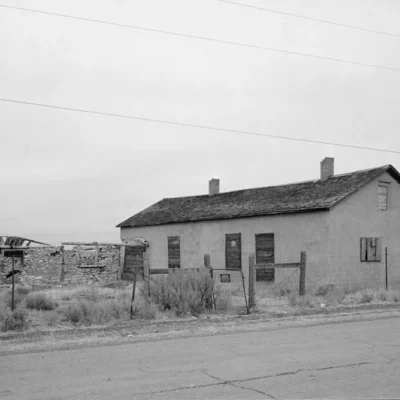
| Military Buildings | The U.S. Army occupied Fort Bridger from 1858 to 1890 — restored barracks, officers’ quarters, and the commanding officer’s house tell the story. The 1888 stone barracks now houses the museum. The architecture is frontier military — practical, solid, and built to last |
| Museum | Artifacts from five eras of occupation — Mountain Men, Mormons, Military, private ownership, and modern preservation. Fur trade items, military uniforms, wagon train equipment, and the story of the Utah War. The museum is small but dense with history |
| Mormon Wall | Remnants of the cobble rock wall built by Mormon settlers in the 1850s — before they burned the fort during the Utah War of 1857-58 to prevent federal troops from using it. The stones are still there, telling a complicated story of faith, territory, and conflict |
| Mountain Man Rendezvous | Every Labor Day weekend — the annual Fort Bridger Rendezvous brings muzzle-loading rifles, period costumes, black powder shooting competitions, and mountain man camping. One of the largest rendezvous events in the West. The fort comes alive with the era it was built for |
The Crossroads of the West
| Feature | Details |
|---|---|
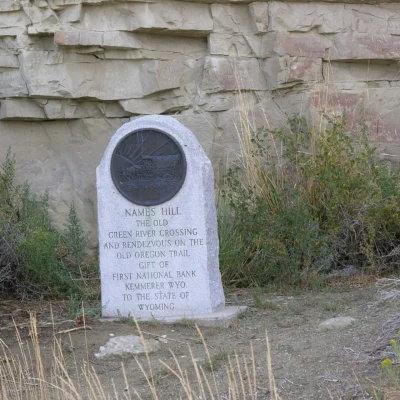
| Oregon Trail | The 2,170-mile trail from Missouri to Oregon passed directly through Fort Bridger. From 1843 to the 1860s, an estimated 400,000 emigrants traveled this route. The fort was one of the last supply stops before the difficult mountain crossings ahead |
| Pony Express | Fort Bridger served as a Pony Express relay station in 1860-61 — riders changed horses here on the 10-day sprint from St. Joseph, Missouri to Sacramento, California. The service lasted only 18 months before the telegraph made it obsolete |
| Transcontinental Railroad | The Union Pacific Railroad bypassed the fort in 1869 — ending its role as a crossroads. The railroad did what the fort couldn’t: it made the West accessible without risk, hardship, or mountain men. Progress killed the frontier |
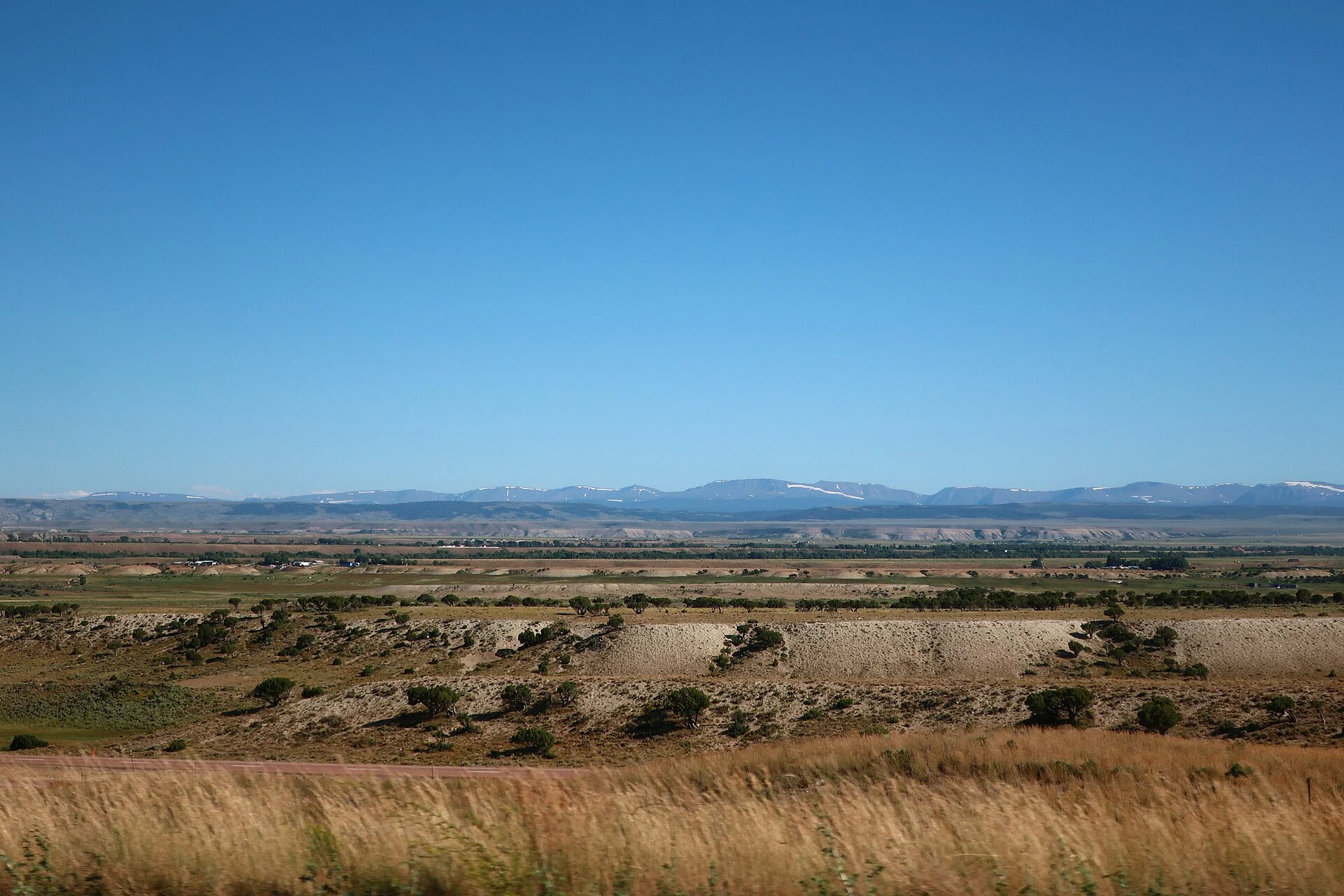
| Location | Just off Interstate 80, Exit 34 — in the high desert of southwestern Wyoming. The Uinta Mountains rise to the south. The landscape is sagebrush and open sky. The fort sits in a green valley where Black’s Fork of the Green River provided water for everything that passed through |
Best Time to Visit
| Season | Best For |
|---|---|
| Summer (Jun–Aug) | ☀️ Buildings open. Full interpretive programs. Living history demonstrations. The grounds green. Long days |
| Labor Day Weekend | 🔥 Mountain Man Rendezvous — the event of the year. Black powder. Period costumes. The fort as it was meant to be |
| Fall (Sep–Oct) | Cool, clear days. Fewer visitors. The cottonwoods along Black’s Fork turning gold. Quiet history |
| Winter (Nov–Apr) | Grounds open; buildings may have limited hours. Cold and windy. The fort in winter light — dramatic but challenging |
Frequently Asked Questions
Is this a state park or a historic site?
Wyoming calls it a State Historic Site — managed by the Wyoming Department of State Parks. It functions as a living history museum with grounds to explore. There’s no camping at the fort itself, but nearby facilities are available.
How long should I plan to visit?
Two to three hours for the museum, buildings, and grounds. If you’re a history enthusiast, half a day. The Labor Day Rendezvous is a full-day event. The fort is right off I-80 — easy to visit on a cross-country road trip.
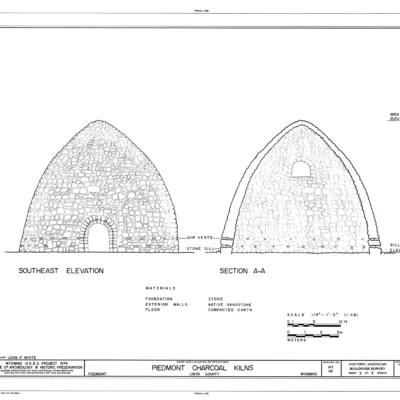
Make it a road trip: Pair a visit with Piedmont Charcoal Kilns (a short drive away) or Granger Stage Station (within about an hour’s drive).
⛺ Jim Bridger Built It. 400,000 Pioneers Stopped Here. The West Started at This Fort.
Stand where the Oregon Trail, the Pony Express, and the transcontinental railroad all converged. Walk through a mountain man’s trading post. See where Mormons built walls and armies built barracks. The West is a story of movement — and Fort Bridger is where everyone stopped.
Wildlife & Nature
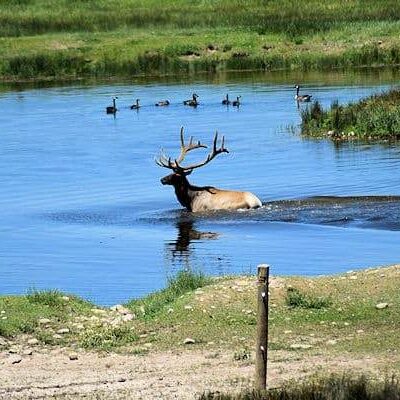
Fort Bridger — established by mountain man Jim Bridger in 1843 — a vital supply point on the Oregon Trail, California Trail, and Mormon Trail. The fort’s Black Fork River, sagebrush, and prairie support mule deer, pronghorn, and bald eagles.
Nearby Attractions
Fort Bridger — adjacent. Uinta County — surrounding. Flaming Gorge NRA — 35 miles south.

🐾 Dogs & Pets at Fort Bridger
- Pets allowed? statewide rule
- Pets are welcome in Wyoming state parks, historic sites and recreation areas, but must be in a vehicle or on a leash whenever outside a camping unit.
- Leash rule statewide rule
- Leash no longer than 10 feet, physically controlled at all times (statewide rule)
- Beaches & swim areas statewide rule
- Pets are prohibited on designated beach areas statewide
- Cabins & lodging statewide rule
- Pets are prohibited in public buildings, eating places and food stores; no statewide pet-lodging policy published
- Statewide exceptions statewide rule
- Guide dogs are exempt; hunting dogs allowed where hunting is permitted; pets may not be left unattended longer than one hour; pets are prohibited in the reservoirs at Curt Gowdy State Park
Are dogs allowed at Fort Bridger?
Pets are welcome in Wyoming state parks, historic sites and recreation areas, but must be in a vehicle or on a leash whenever outside a camping unit. Individual parks can post stricter rules — check signage on arrival.
Rules verified July 2026 via wyoparks.wyo.gov. More: Wyoming state parks guide · Dog rules in all 50 states compared
Park Location
Plan your gear for Fort Bridger
From our editorial guides, matched to this park’s activities: