
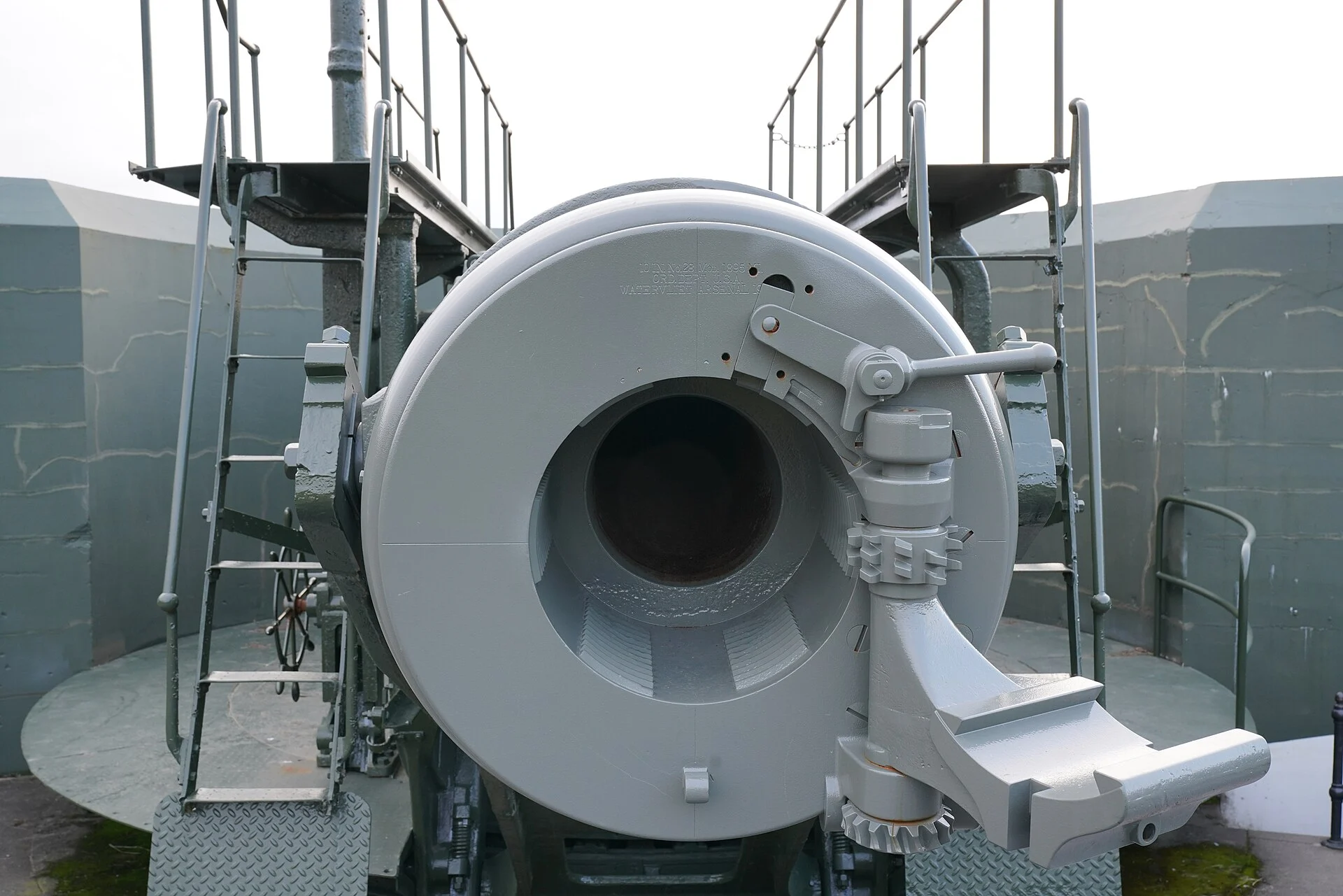

Coastal Artillery Fort With Lighthouse on Whidbey Island — 999-Acre Marine State Park on Whidbey Island Preserving a 19th-Century Coastal Fortification, Explorable Gun Batteries and Disappearing Carriages Built to Defend Admiralty Inlet, Historic Admiralty Head Lighthouse With Museum, Campground With Views of the Strait of Juan de Fuca, Part of the Triangle of Fire Coastal Defense Network With Fort Worden and Fort Flagler, Scenic Bluffs Overlooking the Water and Olympic Mountains, Near Coupeville Island County Whidbey Island Washington
Fort Casey Historical State Park is a 999-acre marine state park on Whidbey Island near Coupeville, Island County, Washington, managed by Washington State Parks. The park features explorable gun batteries and disappearing carriages from a 19th-century coastal fortification built to defend Admiralty Inlet, the historic Admiralty Head Lighthouse with interpretive museum, a campground with views of the Strait of Juan de Fuca and the Olympic Mountains, membership in the Triangle of Fire — a coordinated coastal defense network with Fort Worden and Fort Flagler that protected Puget Sound, scenic bluffs overlooking the water with paragliding and kite flying, picnic areas and interpretive trails through the fortifications, and the Keystone-Port Townsend ferry terminal providing easy access.
The disappearing gun carriages are fascinating — these engineering marvels allowed massive coastal guns to fire over the protective concrete walls, then automatically drop back below the parapet using the recoil energy. Fort Casey’s restored examples are among the best-preserved disappearing carriages in the country.
The Triangle of Fire concept was brilliant military strategy — three forts positioned at the entrance to Puget Sound could create overlapping fields of fire that no enemy warship could survive. Fort Casey, Fort Worden in Port Townsend, and Fort Flagler on Marrowstone Island formed this impenetrable defensive triangle.
Things to Do
- Gun batteries — disappearing carriages
- Lighthouse — Admiralty Head
- Camping — strait views
- Triangle of Fire — 3-fort network
- Paragliding — coastal bluffs
- Ferry — to Port Townsend
Park Information
| Feature | Details |
|---|---|
| Location | Near Coupeville, Whidbey Island, WA |
| Size | 999 acres |
| Fort | 19th-C coastal artillery |
| Lighthouse | Admiralty Head |
| Camping | Yes — strait views |
| Managed By | Washington State Parks |
| Coordinates | 48.1667° N, 122.6833° W |
Frequently Asked Questions
Wildlife & Nature
Fort Casey State Park — 467 acres on Whidbey Island — preserves a turn-of-the-century coastal defense fortification built in the 1890s to protect Puget Sound’s Admiralty Inlet. The fort’s massive concrete gun batteries and disappearing guns (10-inch rifles that rose to fire, then lowered behind the parapet) are open for exploration. The Admiralty Head Lighthouse (1903) stands at the park’s edge. The park’s bluffs and open grasslands support raptors — red-tailed hawks and northern harriers hunt the prairies. Bald eagles perch on snags overlooking Admiralty Inlet. The underwater park at Keystone Jetty is a premier scuba diving site with lingcod, rockfish, and giant Pacific octopus.
Nearby Attractions
Coupeville — 3 miles north — is Whidbey Island’s historic county seat within Ebey’s Landing NHR. Fort Ebey State Park is 5 miles north with WWII bunkers and beach access. Coupeville-Port Townsend ferry departs from Keystone (adjacent). Fort Worden State Park is across the inlet in Port Townsend.
What is the Triangle of Fire in Washington state?
The Triangle of Fire was a coordinated coastal defense system of three forts — Fort Casey on Whidbey Island, Fort Worden in Port Townsend, and Fort Flagler on Marrowstone Island — positioned to create overlapping fields of fire defending the entrance to Puget Sound. Fort Casey Historical State Park preserves explorable gun batteries with disappearing carriages, the Admiralty Head Lighthouse, and a campground on 999 acres. Near Coupeville, Washington.
The Admiralty Head Lighthouse adds a romantic dimension to the military history. The white lighthouse perched on the bluff above the Strait of Juan de Fuca has guided ships since 1861, and its interpretive museum tells the story of the lighthouse keepers who maintained the light through generations of Pacific Northwest weather.
Last updated: May 2026
More parks nearby: Lake Sylvia State Park is a short drive away, while Sequim Bay State Park lies a short drive away.

Park Location

Top Tours & Activities Near Leavenworth
 from $70
 from $10
 from $135