🧭 Know Before You Go: Fort Leaton State Historic Site
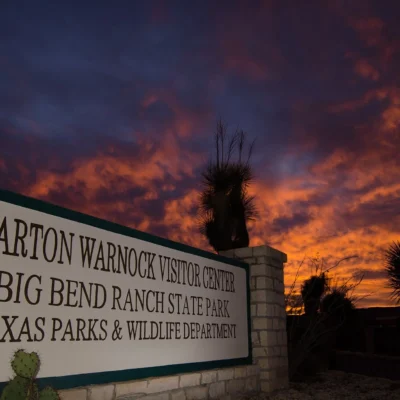
| Entry & permits | Check in here or at the Barton Warnock Visitor Center. Backpacking, camping and river-use permits for the Big Bend region are issued at either park entrance. |
|---|---|
| On-site services | The restored buildings and grounds show life on the border in the 1800s. |
| Seasonal access | Guided tours run November through April; self-guided tours of the fort are available year-round. |
Source: tpwd.texas.gov (verified July 2026). Rules and seasons change — confirm before you go.
🌤 Weather at Fort Leaton State Historic Site by season
| Spring | Summer | Fall | Winter |
|---|---|---|---|
| 48–98 °F | 74–103 °F | 45–95 °F | 34–74 °F |
Each range runs from the coldest monthly average low to the warmest monthly average high in that season (1991-2020 climate normals), measured at Presidio, 3 mi away, elevation 2,610 ft. Conditions at the park can differ from the station, especially where elevation differs — check a forecast before you go.

Texas Border Fortress — Fort Leaton State Historic Site, 1848 Adobe Trading Post on the Rio Grande, Chihuahua Trail History, Presidio County Big Bend Region, Museum and Interpretive Center
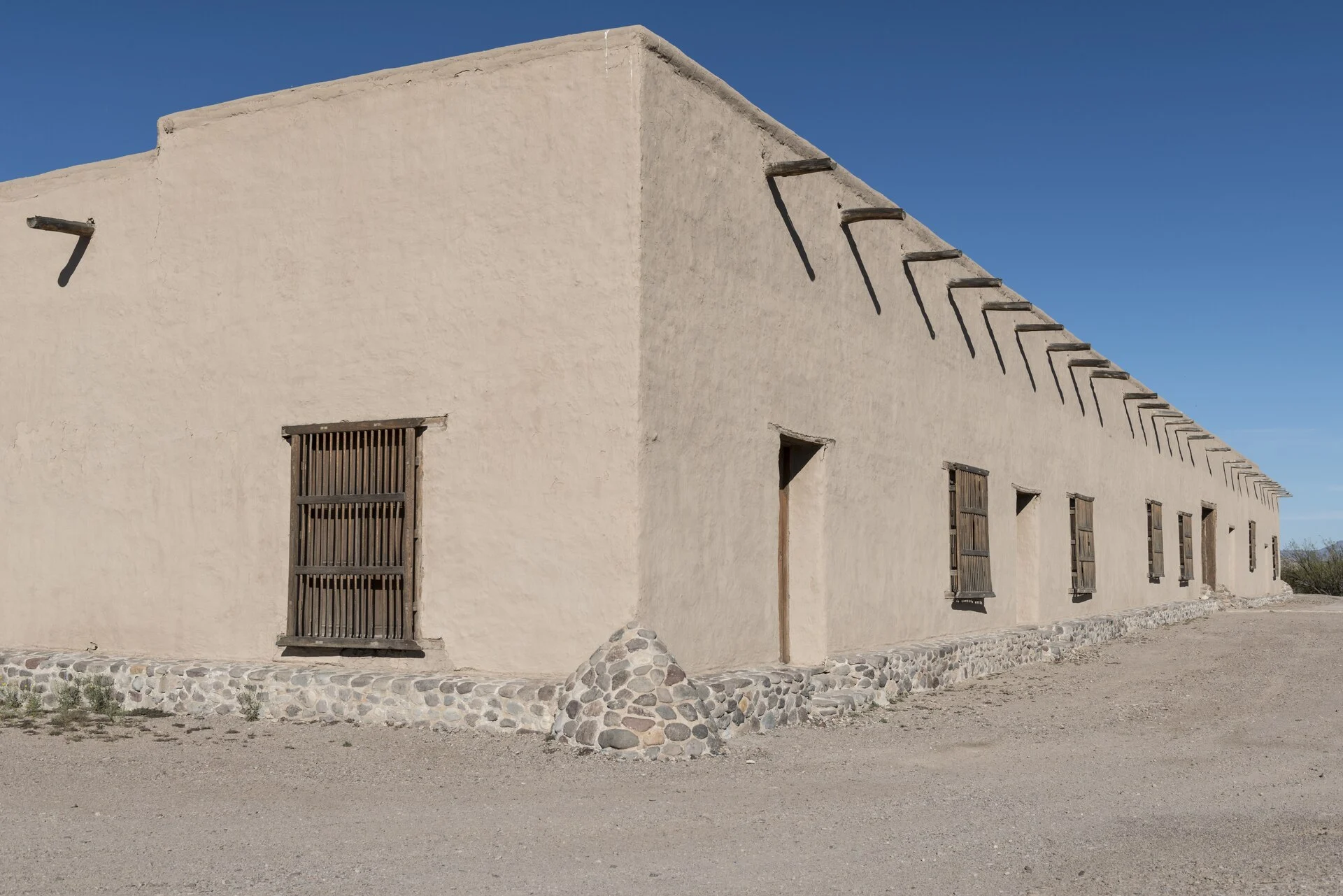
Fort Leaton State Historic Site is a massive adobe fortress and trading post on the Rio Grande near Presidio, Presidio County, Texas, in the Big Bend region. Built around 1848 by Benjamin Leaton, this fortified compound served as a trading post on the Chihuahua Trail and is one of the largest adobe structures in Texas. Features include one of the largest adobe fortifications in Texas, museum interpreting Chihuahua Trail and border history, site dating to pre-Columbian agricultural settlement, part of the Big Bend Ranch State Park complex, and 4 miles southeast of Presidio on FM 170 (River Road).
Benjamin Leaton’s Fortress
Benjamin Leaton arrived in the Big Bend in the late 1840s and built his massive adobe compound on the site of an existing Spanish presidio and mission. The fortified structure featured walls several feet thick, interior courtyards, and rooms that could house his family, workers, and trade goods. Leaton positioned himself as the dominant trader on the Chihuahua Trail, controlling commerce between Texas and Mexico.
Centuries of Settlement
Archaeological evidence shows this location has been occupied for thousands of years. Pre-Columbian peoples farmed the Rio Grande floodplain here, followed by Spanish missionaries and soldiers who established El Presidio del Norte. Leaton built his fortress atop these earlier foundations.
Frequently Asked Questions
Is Fort Leaton part of Big Bend Ranch State Park?
Yes, it serves as the eastern entrance and visitor center for Big Bend Ranch State Park along FM 170.
What can I see inside?
The restored adobe rooms house a museum with exhibits on border history, the Chihuahua Trail, and regional archaeology.
Insider Tips
Border fortress: Fort Leaton was a private fortified trading post on the Rio Grande — built by Ben Leaton in 1848 on the US-Mexico border. Pro tip: Leaton was rumored to sell weapons to Comanche raiders and profit from both sides of the border conflict. Adobe architecture: The massive adobe compound (with walls 3+ feet thick) is one of the largest adobe structures in Texas.
Frequently Asked Questions
What was the Texas-Mexico border like in the 1800s?
The Texas-Mexico border in the 1800s was a lawless frontier — Comanche raids, bandits, smugglers, and rival armies created constant violence. Trading posts like Fort Leaton served as combination stores, forts, and diplomatic posts. The border was permeable — people, goods, and cultures crossed freely. The current border infrastructure (walls, patrols, checkpoints) didn’t exist until the 20th century. The Rio Grande was a lifeline, not a barrier.
Wildlife & Nature
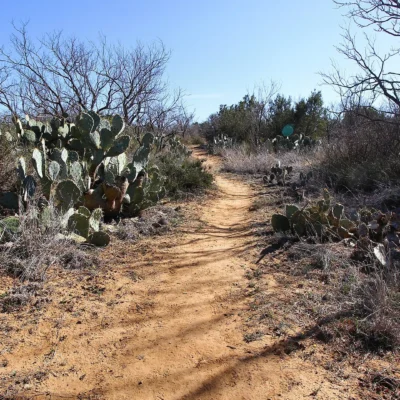
Fort Leaton SHS — a massive 1848 adobe fortress-trading post built by Ben Leaton on the Rio Grande. One of the best-preserved adobe structures in Texas. The site’s Chihuahuan Desert, Rio Grande, and desert terrain support roadrunners, javelinas, and raptors.
Nearby Attractions
Presidio — adjacent — on the US-Mexico border. Big Bend Ranch SP — nearby.
More parks nearby: Big Bend Ranch State Park is within about an hour’s drive, while Barton Warnock Visitor Center lies within about an hour’s drive.

🐾 Dogs & Pets at Fort Leaton State Historic Site
- Pets allowed? statewide rule
- Pets are welcome at almost all Texas State Parks on trails and in campgrounds, but must be on leash, in a car, or in a crate at all times and may not be left unattended.
- Leash rule statewide rule
- 6 ft maximum leash required at all times
- Beaches & swim areas statewide rule
- Pets are not allowed in the water or on land around designated swim areas
- Cabins & lodging statewide rule
- Pets are not permitted in any state park buildings, including motels, cabins, screened shelters and group facilities
- Statewide exceptions statewide rule
- Several parks restrict dogs in specific areas (Big Bend Ranch, Enchanted Rock, Government Canyon, Hueco Tanks); proof of current rabies vaccination required
Are dogs allowed at Fort Leaton State Historic Site?
Pets are welcome at almost all Texas State Parks on trails and in campgrounds, but must be on leash, in a car, or in a crate at all times and may not be left unattended. Individual parks can post stricter rules — check signage on arrival.
Rules verified July 2026 via tpwd.texas.gov. More: Texas state parks guide · Dog rules in all 50 states compared