🌤 Weather at Halekiʻi-Pihana Heiau State Monument by season
| Spring | Summer | Fall | Winter |
|---|---|---|---|
| 65–86 °F | 70–90 °F | 68–90 °F | 64–83 °F |
Each range runs from the coldest monthly average low to the warmest monthly average high in that season (1991-2020 climate normals), measured at Kahului Airport, 4 mi away, elevation 51 ft. Conditions at the park can differ from the station, especially where elevation differs — check a forecast before you go.

Ancient Hawaiian Temple Ruins on Maui — Two Major Luakini (Sacrificial) Heiau, Associated With Chief Kahekili and Kamehameha I, National Register of Historic Places, Interpretive Signs, Quiet Residential Neighborhood Setting, Hawai’i DLNR Division of State Parks, Wailuku Maui Hawai’i
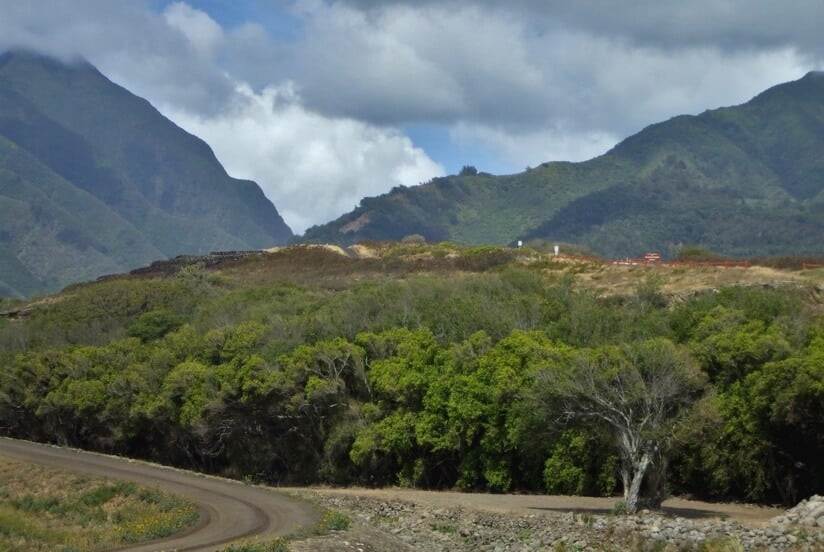
Halekiʻi-Pihana Heiau State Monument is a state monument and National Register of Historic Places site in Wailuku, Maui, Hawai’i, managed by the Hawai’i Department of Land and Natural Resources (DLNR) Division of State Parks. The monument features the ruins of two major luakini (sacrificial) heiau (ancient Hawaiian temples) — Halekiʻi and Pihana, stone platform foundations and terraced walls of the temple complexes, deep connections to powerful Hawaiian chiefs including Kahekili (last ruling chief of Maui) and Kamehameha I, interpretive signs explaining the historical and cultural significance, panoramic views of Kahului Harbor, the Wailuku plain, and the West Maui Mountains from the elevated site, National Register of Historic Places listing (1985), and a location in a quiet residential neighborhood of Wailuku.
These two heiau sit on a sand-dune ridge above the Wailuku plain — Halekiʻi (“House of Images”) was a residential compound for Maui’s ruling chiefs, while Pihana served as a luakini heiau — a temple where human sacrifices were performed to consecrate the power of chiefs.
Kahekili, the last independent chief of Maui, used these temples before Kamehameha I conquered Maui in the Battle of Kepaniwai (1790). Kamehameha reportedly rededicated the temples after his victory.
What to See
- Halekiʻi Heiau — “House of Images,” chiefly residence
- Pihana Heiau — luakini (sacrificial) temple
- Stone foundations — terraced walls and platforms
- Interpretive signs — historical context
- Views — Kahului Harbor, West Maui Mountains
Site Information
| Feature | Details |
|---|---|
| Location | Wailuku, Maui, HI |
| Type | State Monument / NRHP (1985) |
| Temples | Halekiʻi + Pihana heiau |
| Chiefs | Kahekili, Kamehameha I |
| Camping | ❌ Not available |
| Restrooms | ❌ None on-site |
| Access | Gate sometimes closed — walk from parking |
| Managed By | Hawai’i DLNR |
| Coordinates | 20.9042° N, 156.4831° W |
Wildlife & Nature
Haleki’i-Pihana Heiau SM — preserves two ancient Hawaiian temples (heiau) — Pihana was a luakini heiau (sacrificial temple) where Kamehameha the Great performed ceremonies before uniting the Hawaiian Islands. The site’s hilltop location above Wailuku supports native birds and coastal vegetation.
Nearby Attractions
Wailuku — adjacent. Iao Valley SM — 3 miles west. Kahului — 2 miles east.
What is Halekiʻi-Pihana Heiau?
Halekiʻi-Pihana Heiau State Monument in Wailuku, Maui preserves two ancient Hawaiian temples — Halekiʻi (“House of Images”), a chiefly residence, and Pihana, a luakini (sacrificial) heiau. Associated with Kahekili (last ruling chief of Maui) and Kamehameha I, the site is listed on the National Register of Historic Places (1985). Located in a quiet residential area with interpretive signs and views of Kahului Harbor. No facilities — no camping, restrooms, or recreational amenities. Gate access may be restricted; be prepared to walk from nearby parking.
Last updated: May 2026
Keep exploring: The closest neighbors are ʻĪao Valley State Park (a short drive away) and Iao Valley State Park (a short drive away).

🐾 Dogs & Pets at Halekiʻi-Pihana Heiau State Monument
- Pets allowed? statewide rule
- Pets are heavily restricted in Hawaii state parks: they are not permitted in pavilions, swimming areas, campgrounds, lodges, on beaches or wherever posted, and only limited areas allow them.
- Leash rule statewide rule
- Where permitted, pets must be crated, caged, on a 6-foot or shorter leash, or otherwise under physical restrictive control at all times
- Beaches & swim areas statewide rule
- Pets are not permitted on beaches or in swimming areas statewide
- Cabins & lodging statewide rule
- Pets are not permitted in lodges or campgrounds, so overnight accommodations are effectively pet-free
- Statewide exceptions statewide rule
- Rules vary by park and posting; effectively day-use only in the limited unposted areas where pets are tolerated
Are dogs allowed at Halekiʻi-Pihana Heiau State Monument?
Pets are heavily restricted in Hawaii state parks: they are not permitted in pavilions, swimming areas, campgrounds, lodges, on beaches or wherever posted, and only limited areas allow them. Individual parks can post stricter rules — check signage on arrival.
Rules verified July 2026 via dlnr.hawaii.gov. More: Hawaii state parks guide · Dog rules in all 50 states compared
Park Location
Plan your gear for Halekiʻi-Pihana Heiau State Monument
From our editorial guides, matched to this park’s activities: