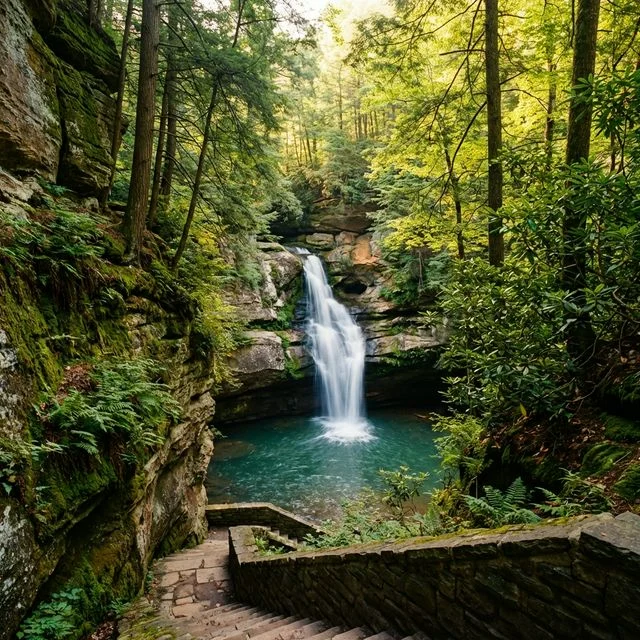
Hocking Hills State Park
Hocking Hills State Park: Ohio’s Natural Masterpiece
In the forested hills of southeastern Ohio, Hocking Hills State Park protects 2,356 acres of ancient Blackhand sandstone formations sculpted by water and time into some of the most dramatic gorges, waterfalls, and recess caves in the Midwest. Ranked among the top state parks in America with a 4.8-star rating across 18,000+ reviews, Hocking Hills draws millions of visitors annually to experience landscapes that feel more like the Pacific Northwest than the heartland of Ohio.
The park’s legendary Big Three — Old Man’s Cave, Cedar Falls, and Ash Cave — are connected by the 6-mile Grandma Gatewood Trail, named after the first woman to solo thru-hike the Appalachian Trail. But Hocking Hills extends far beyond its headline attractions: from the only true cave in the region at Rock House, to the deepest gorge in Ohio at Conkle’s Hollow, to frozen waterfalls that transform the park into an ice palace every winter. Add a luxury lodge, 40 cabins, and the “canopy tour capital of the Midwest” surrounding it, and you have Ohio’s most complete outdoor destination.
Park Facts at a Glance
| Information | Details |
|---|---|
| 📍 Location | Logan, Hocking County, Ohio |
| 📐 Park Size | 2,356 acres |
| 🥾 Trail Miles | 25+ miles across 7 major areas |
| 💧 Key Waterfalls | Upper Falls, Middle Falls, Lower Falls (Old Man’s Cave), Cedar Falls, Ash Cave Falls |
| 🏕️ Camping | 159 sites + Sherman Cabins + hike-in primitive |
| 🏨 Lodge | 81-room Lodge at Hocking Hills + 40 cabins |
| 🕐 Hours | 30 min before sunrise – 30 min after sunset, daily |
| 💰 Entry Fee | FREE (no admission or parking fees) |
| 📞 Phone | (740) 385-6842 |
| 🌐 Website | ohiodnr.gov |
| 📍 Address | 19852 OH-664, Logan, OH 43138 |
| ⭐ Rating | 4.8/5 (18,000+ reviews) |
History: From Ancient Peoples to Ohio’s Crown Jewel
Human history in the Hocking Hills stretches back nearly 7,000 years. The Adena culture thrived in the Hocking River valley between 500 BCE and 100 CE, leaving burial mounds along Salt Creek and near The Plains. Their spiritual connection to the caves and gorges is evidenced by the massive ash deposits found in Ash Cave — remnants of thousands of years of fires for cooking, warmth, and ceremony.
From 1600 to 1800, the Delaware, Shawnee, and Wyandot tribes inhabited the region. The name “Hocking” derives from the Delaware word “Hockhockin,” meaning “bottleneck” — a reference to the narrow, gourd-shaped gorge of the Hocking River near present-day Lancaster. The landscape served as both hunting ground and shelter, with Rock House and the larger recess caves providing natural protection from the elements.
American settlers arrived in the 1790s, and the area developed slowly. The Hocking Canal (1840) opened commerce by transporting iron and coal. Richard Rowe, a hermit fleeing the Civil War, made his home in the cave that would bear his name — Old Man’s Cave — living there until his death. His grave sits silently beneath the cliff overhang to this day.
The scenic beauty attracted visitors as early as the 1860s, with Old Man’s Cave, Ash Cave, and Rock House becoming popular destinations by the late 1800s. In 1924, Ohio purchased the first 146 acres including Old Man’s Cave, establishing the state park under the Department of Forestry. The Civilian Conservation Corps (CCC) transformed the park beginning in 1933, with two camps — Camp Hocking and Camp Logan — constructing the stone stairways, bridges, and trails that still serve visitors today. The Lodge at Hocking Hills opened in 1972, and a major renovation in 2020 elevated it to modern luxury standards.
Geology: 350 Million Years in the Making
The breathtaking landscapes of Hocking Hills are written in Blackhand sandstone — a geological formation deposited over 350 million years ago when southeastern Ohio lay beneath a warm, shallow sea. Sediments from rivers flowing westward from the ancient Appalachian Mountains created a massive delta (similar to today’s Mississippi River delta), with layers of sand and gravel compressing into rock over millions of years.
The Blackhand sandstone consists of three distinct layers — a critical detail that explains every gorge, cave, and waterfall in the park:
- Upper Zone: Hard, well-cemented by iron and silica — forms the resistant caprock at the rim
- Middle Zone: Softer, poorly cemented — erodes easily, creating the recess caves and overhangs
- Lower Zone: Hard again — forms the floors and resistant ledges that create waterfalls
This differential erosion is the engine behind every signature formation in the park. Water percolates through the porous middle layer, dissolving the cement binding sand grains together. Freeze-thaw cycles pry loose additional material. Over millennia, this process hollowed out the massive recess caves like Ash Cave while the harder upper and lower layers remained intact — creating the dramatic overhangs and shelters.
While the glaciers of the last Ice Age (~20,000 years ago) didn’t directly cover Hocking Hills, their meltwater dramatically accelerated erosion, carving deeper gorges and wider caves. The glaciers also brought a cool, moist microclimate that allowed northern tree species — eastern hemlocks, Canada yew, yellow and black birch — to establish themselves in the gorges, where they persist today as botanical relics of the Ice Age.
The Major Hiking Areas: Complete Trail Guide
Hocking Hills features seven distinct hiking areas, each with its own parking area, trailhead, and unique geological character. All major trails use one-way loop systems to improve safety and reduce trail congestion.
| Area | Trail Length | Difficulty | Highlight |
|---|---|---|---|
| Old Man’s Cave | 1–1.5 mi loop | Moderate | 5-section gorge, multiple waterfalls, deepest formation |
| Ash Cave | 0.25 mi (paved) | Easy | Largest recess cave in Ohio (700 ft), wheelchair-accessible |
| Cedar Falls | 1 mi loop | Moderate | Greatest water volume of all Hocking Hills falls |
| Conkle’s Hollow | 1 mi rim / 0.5 mi floor | Moderate/Easy | Deepest gorge in Ohio, 200-ft sandstone walls |
| Rock House | 0.5 mi | Moderate | Only true tunnel-cave in the region, 200 ft corridor |
| Cantwell Cliffs | 1 mi loop | Strenuous | Remote, least crowded, dramatic slot passage (Fat Woman’s Squeeze) |
| Grandma Gatewood Trail | 6 mi one-way | Moderate | Epic connector: Old Man’s Cave → Cedar Falls → Ash Cave |
Old Man’s Cave: The Signature Experience
Old Man’s Cave is the park’s most visited and most iconic area — a deep gorge carved into Blackhand sandstone and divided into five dramatic sections: Upper Falls, Upper Gorge, Middle Falls, Lower Falls, and Lower Gorge. Named after Richard Rowe, a 19th-century hermit who lived and died in the cave, the area feels like stepping into another world.
The one-way loop trail (1–1.5 miles, 60–90 minutes) descends through towering hemlock-lined cliffs past stone bridges and stairways built by the CCC in the 1930s. Key features along the route include:
- Devil’s Bathtub — A deep pool carved into the creek bed by centuries of swirling water
- The “A” Frame Bridge — A stone bridge spanning the gorge with dramatic views
- Sphinx Head — A sandstone formation resembling the Great Sphinx
- Lower Falls — The gorge’s most photographed waterfall, dropping into a deep grotto
- Broken Rock Falls — Accessible via a short spur trail, quieter than the main gorge
A wheelchair- and stroller-accessible trail runs from the Park Office past the visitor center to an observation deck at Upper Falls. The Hocking Hills Visitor Center at the Old Man’s Cave parking lot features interactive exhibits, wildlife displays, and a raptor enclosure.
Ash Cave: Ohio’s Largest Recess Cave
Ash Cave is a sight that stops visitors in their tracks — a massive horseshoe-shaped Blackhand sandstone overhang stretching 700 feet wide, 100 feet deep, and 90 feet high. A seasonal waterfall cascades over the lip, creating a misty curtain that’s most powerful in spring and after heavy rains.
The cave takes its name from the enormous ash deposits found by early settlers — believed to be remnants of Native American fires spanning thousands of years. The scale of the cave allowed communities to shelter hundreds of people, and the wide, sandy floor still evokes the feeling of standing in a natural cathedral.
What makes Ash Cave exceptional for all visitors: the 0.25-mile paved trail from the parking lot is fully wheelchair- and stroller-accessible, making it the most accessible major formation in the park. For hikers wanting more, the Grandma Gatewood Trail continues 2.3 miles to Cedar Falls and includes the Ash Cave Fire Tower along the route.
Camping, Cabins & Lodge
Hocking Hills offers the full spectrum from primitive tent camping to luxury lodge rooms, all within the park boundaries. Reservations are strongly recommended — especially for weekends and the fall foliage season.
| Option | Sites/Units | Cost/Night | Features |
|---|---|---|---|
| Non-Electric Sites | ~80 sites | $25 | Tent/trailer, fire ring, picnic table |
| Electric Sites | ~50 sites | $35 | 20/30/50 amp hookups |
| Full Hookup Sites | ~25 sites | $29–$45 | Water + electric + sewer, rigs up to 50 ft |
| Sherman Cabin Shelters | Limited | $70 | Rustic cabins, no plumbing, sleeps 4–6 |
| Primitive Hike-in | Limited | $12–$15 | Tent-only, no amenities, secluded |
| Lodge at Hocking Hills | 81 rooms | $150–$300+ | Restaurant, indoor/outdoor pools, jacuzzi, ballroom |
| Lodge Cabins | 40 cabins | $200+ | Full kitchen, gas fireplace, 2 BR, screened porch, 20% pet-friendly |
Campground amenities include heated showers, flush toilets, laundry, dump station, camp store, swimming pool (Memorial Day–Labor Day), playgrounds, horseshoe pits, and volleyball court. A limited number of RV-friendly sites are available first-come, first-served.
Seasonal Guide
| Season | Highlights | Insider Tips |
|---|---|---|
| 🌸 Spring (Mar–May) | Peak waterfalls, wildflowers, lush greens, trillium blooms | Most powerful water flow. Trails muddy and slippery. Best waterfall photography. |
| ☀️ Summer (Jun–Aug) | Full access, ziplines, pool open, canopy tours, longest days | Most crowded. Parking lots full by 10 AM on weekends. Arrive before 9 AM or visit mid-week. |
| 🍂 Fall (Sep–Nov) | Spectacular fall foliage, cooler temps, Grandma Gatewood Trail at its finest | Peak color mid-October. Busiest weekends of the year. Book lodge 12+ months ahead. |
| ❄️ Winter (Dec–Feb) | Frozen waterfalls, ice caves, snow-covered gorges, fewest crowds | Magical but dangerous — ice on trails is serious. Bring traction devices (microspikes). Worth it for photographers. |
Photography Guide
Hocking Hills is one of the most photogenic state parks in America — the combination of gorges, waterfalls, moss-covered sandstone, and hemlock forests creates conditions that reward photographers in every season.
- Best Light: The gorges face roughly east-west, meaning soft, diffused morning light penetrates the deepest formations. Overcast days are often better than sunny days — clouds eliminate harsh shadows and intensify the green tones
- Waterfall Shots: Bring a tripod. Shoot at 1/4 second or slower (f/11–f/16) for silky water effects. A circular polarizer is essential to cut glare on wet sandstone
- Best Spots: Lower Falls at Old Man’s Cave (morning light), Ash Cave (afternoon diffused light illuminates the overhang), Cedar Falls (frame through hemlock branches), Conkle’s Hollow rim trail (sweeping canyon views)
- Winter Special: Frozen Ash Cave waterfall is the single most dramatic winter photo opportunity in Ohio. Visit after sustained below-freezing temps. The ice formations change daily
- Crowds: For empty-trail photos, arrive at parking lots before 8:30 AM on weekdays or visit November through February
- Gear Warning: Protect equipment from mist near waterfalls. The gorge microclimates are significantly more humid than the rim. Bring lens cloths
Adventures Beyond Hiking
The Hocking Hills region has earned its reputation as the “canopy tour capital of the Midwest” — a cluster of adventure operators surrounds the state park:
| Activity | Details | Cost Range |
|---|---|---|
| 🪢 Zipline Canopy Tours | Multiple operators (Hocking Hills Canopy Tours est. 2007, first in Midwest). Over 1 mile of air time through trees. SuperZip reaches ~50 mph | $60–$100 |
| 🧗 Rappelling | Guided rappelling down cliff faces with certified instructors | $50–$80 |
| 🪨 Rock Climbing | Bouldering on Blackhand sandstone outcrops in surrounding forest | Free–$60 (guided) |
| 🛶 Kayaking/Canoeing | Hocking River trips, calm water suitable for families | $30–$50 |
| 🐴 Horseback Riding | Several stables in the area offer guided trail rides through forest | $40–$70 |
| 👧 DragonFly Kids Zipline | 8 kid-friendly zip lines and bridges designed for younger visitors | $30–$50 |
| 🌌 Stargazing | Dark skies in surrounding forest. John Glenn Astronomy Park has programs | Free |
Nearby Attractions
| Attraction | Distance | Why Visit |
|---|---|---|
| Conkle’s Hollow State Nature Preserve | Adjacent | Ohio’s deepest gorge (200-ft walls), rim trail with stunning views |
| Rock House | 5 miles | Only true cave in the region — walk through a 200-ft sandstone tunnel |
| Cantwell Cliffs | 12 miles | Most remote, least crowded area — dramatic slot passages |
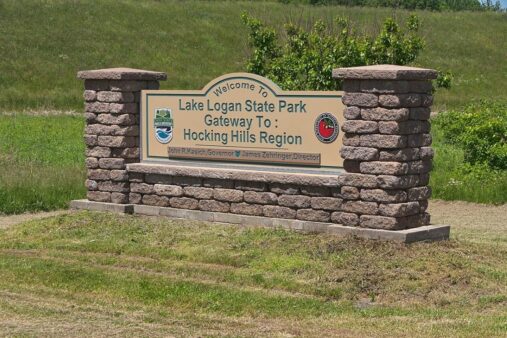
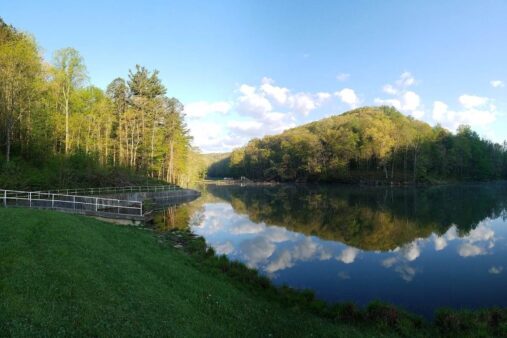
| Lake Logan State Park | 10 miles | Swimming beach, kayaking, fishing, picnicking |
| John Glenn Astronomy Park | 5 miles | Dark sky observatory, free public programs, named for Ohio astronaut |
| Hocking Hills Canopy Tours | 3 miles | Premier zipline operator, first canopy tour in the Midwest (2007) |
| Wayne National Forest | 15 miles | Additional backcountry hiking, mountain biking, hunting |
| Hocking Hills Scenic Byway | Through park | 26.4-mile driving route connecting all major attractions |
| Logan (Town) | 12 miles | Restaurants, grocery, gas, Washboard Factory museum |
Pro Tips from Experienced Visitors
- 🅿️ Parking Strategy: Old Man’s Cave lot fills by 10 AM on weekends from May–October. Start at Ash Cave or Cedar Falls instead — these lots rarely fill, and you can hike the Grandma Gatewood Trail back to Old Man’s Cave
- 🥾 The Grandma Gatewood Shuttle Hack: For the full 6-mile trail, park one car at Ash Cave and drive to Old Man’s Cave. Hike south — it’s mostly downhill in that direction and ends at your second car
- 📱 No Cell Service: Most of the gorge trails have zero cell reception. Download offline maps and tell someone your plans before heading out
- 👟 Footwear Matters: Wet Blackhand sandstone is extremely slippery — more than typical rock. Wear shoes with aggressive tread. Flip-flops and smooth-soled shoes cause the majority of injuries
- 🐕 Dog Reality Check: Dogs are allowed on-leash on most trails but NOT in Conkle’s Hollow Nature Preserve. Even where allowed, trails with steep steps, narrow ledges, and cliff edges are not safe for pets. Leave dogs at the campsite if possible
- 🍂 Fall Foliage Secret: The best color isn’t at the rim — it’s inside the gorges. The hemlock-mixed hardwoods at gorge floor level create layered color you can’t see from above. Ash Cave’s overhang frames the colors dramatically
- ❄️ Winter Gold: January and February are the park’s best-kept secret. Frozen waterfalls, empty trails, and surreal ice formations in the caves. Bring microspikes and dress in layers. The lodge makes a warm base camp
- 💰 Budget Trip: Park entry and parking are free. Pack sandwiches, hike Old Man’s Cave and Ash Cave, and you’ve had a world-class day trip from Columbus for the cost of gas
Safety & Trail Etiquette
- One-way trails: Old Man’s Cave and several areas use one-way loop systems — follow directional signs to avoid trail congestion and safety hazards
- No swimming: Swimming and wading in waterfalls, creeks, and pools is strictly prohibited — enforced for both safety and ecosystem preservation
- Stay on trails: Going off-trail erodes the fragile sandstone and puts you on unstable ground. Social trails have caused significant damage
- Cliff awareness: Several fatal falls have occurred at Hocking Hills. Stay behind railings and away from cliff edges, especially when wet or icy
- Winter precautions: Ice forms quickly and persists in shaded gorges. Traction devices (microspikes/crampons) are essential December–March
- Wildlife: Black bears have been increasingly spotted in southeastern Ohio. Practice proper food storage at campsites
Getting There
| From | Distance | Drive Time | Route |
|---|---|---|---|
| Columbus, OH | 60 miles | ~1 hour | US-33 South — most direct |
| Cincinnati, OH | 120 miles | ~2 hours | US-35 East to US-33 |
| Cleveland, OH | 175 miles | ~2.5 hours | I-71 South to US-33 |
| Pittsburgh, PA | 200 miles | ~3 hours | I-70 West to US-33 |
| Indianapolis, IN | 250 miles | ~3.5 hours | I-70 East to US-33 |
Address: 19852 OH-664, Logan, OH 43138
Frequently Asked Questions
Is Hocking Hills State Park free to visit?
Yes — there is no admission fee or parking fee to visit Hocking Hills State Park. All trails, including Old Man’s Cave, Ash Cave, Cedar Falls, and the Grandma Gatewood Trail, are completely free to access year-round. You only pay for camping ($12–$45/night), lodge rooms ($150–$300+/night), or private adventure activities like zipline tours ($60–$100). This makes Hocking Hills one of the best-value outdoor destinations in the Midwest.
Which trail should I hike first at Hocking Hills?
Start with Old Man’s Cave — it’s the most dramatic and iconic trail in the park, featuring five distinct sections with multiple waterfalls. If you have limited time, add Ash Cave (wheelchair-accessible, ¼ mile) for Ohio’s largest recess cave. For a full-day adventure, hike the 6-mile Grandma Gatewood Trail connecting Old Man’s Cave → Cedar Falls → Ash Cave. Don’t skip Conkle’s Hollow if you love canyon views — its rim trail overlooks Ohio’s deepest gorge.
Can you swim at Hocking Hills?
No — swimming and wading in the waterfalls, streams, and pools at Hocking Hills is strictly prohibited. This rule is enforced for visitor safety (extremely slippery Blackhand sandstone, unpredictable water levels) and ecosystem preservation. For swimming, Lake Logan State Park has a public beach about 10 miles east, or the campground’s seasonal pool is open from Memorial Day to Labor Day.
What is the best time to visit Hocking Hills?
Each season offers something extraordinary. Spring (March–May) brings the most powerful waterfalls and wildflower displays. Fall (October) delivers spectacular foliage — peak color is typically mid-October. Winter transforms the waterfalls into otherworldly ice formations. Summer is warmest but most crowded. For the best balance of beauty and manageable crowds, visit on a weekday in May, September, or early October.
How big is Ash Cave?
Ash Cave is the largest recess cave in Ohio — a horseshoe-shaped Blackhand sandstone overhang spanning 700 feet wide, 100 feet deep, and 90 feet high, with a seasonal waterfall cascading over its lip. It’s named for massive ash deposits left by thousands of years of Native American fires. The 0.25-mile paved trail from the parking lot is fully wheelchair- and stroller-accessible, making it the easiest major formation to visit.
Who was Grandma Gatewood?
Emma “Grandma” Gatewood (1887–1973) was an Ohio farm woman who, at age 67, became the first person to solo thru-hike the entire Appalachian Trail in 1955 — carrying only a shower curtain for shelter and wearing sneakers. She completed the AT three times total. The 6-mile trail connecting Old Man’s Cave, Cedar Falls, and Ash Cave is named in her honor, celebrating one of the most remarkable figures in American outdoor history.
Are dogs allowed at Hocking Hills?
Dogs are permitted on-leash (6-foot maximum) on most park trails and in the campground. However, pets are NOT allowed in Conkle’s Hollow State Nature Preserve. Even where dogs are allowed, trails with steep steps, narrow ledges, and cliff edges can be hazardous for animals. Many experienced visitors recommend leaving dogs at the campsite. 20% of the lodge cabins are pet-friendly — book early as these are popular.
How far is Hocking Hills from Columbus?
Hocking Hills State Park is approximately 60 miles southeast of Columbus — about a 1-hour drive via US-33 South. This makes it one of the easiest world-class outdoor destinations to access from a major Midwest city. From Cincinnati, it’s about 2 hours; from Cleveland, about 2.5 hours; and from Pittsburgh, about 3 hours.