🌤 Weather at Madison Buffalo Jump State Park by season
| Spring | Summer | Fall | Winter |
|---|---|---|---|
| 21–64 °F | 44–84 °F | 19–73 °F | 10–37 °F |
Each range runs from the coldest monthly average low to the warmest monthly average high in that season (1991-2020 climate normals), measured at Logan Landfill, 6 mi away, elevation 4,243 ft. Conditions at the park can differ from the station, especially where elevation differs — check a forecast before you go.

Where Bison Fell — A 2,000-Year Archaeological Monument in the Madison Valley
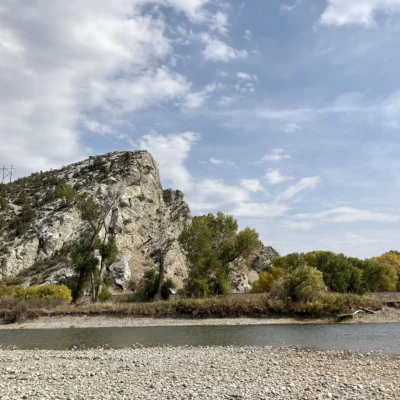
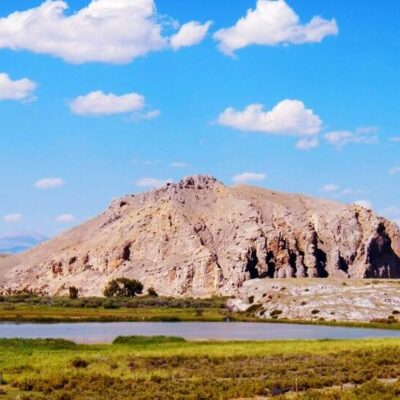
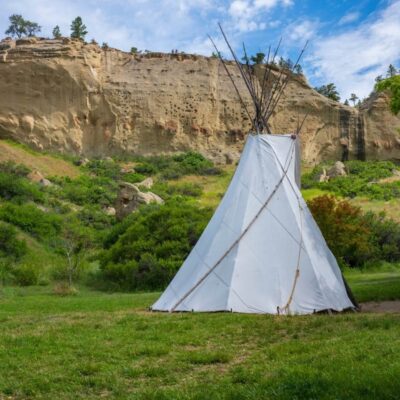
Madison Buffalo Jump State Park preserves one of the most significant prehistoric bison hunting sites in North America — a limestone cliff used by Native American tribes for approximately 2,000 years to drive bison herds to their deaths. Known as a “pishkun” (Blackfeet for “deep blood kettle”), this cliff served the Shoshone, Blackfeet, Crow, Salish, Cheyenne, and other peoples long before European contact, providing essential food, clothing, shelter, and tools from a single coordinated hunt.
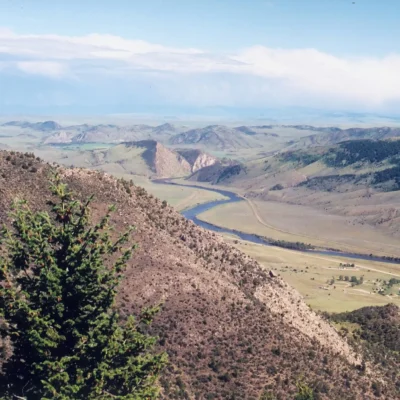
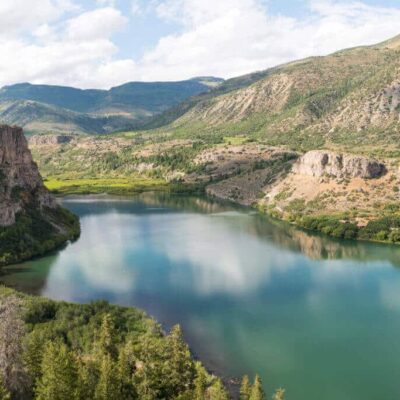
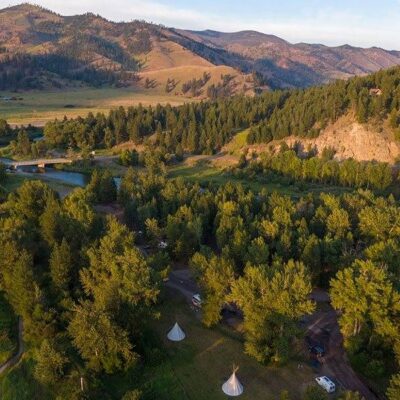
The park is located near Logan, Montana, about 23 miles west of Bozeman, overlooking the Madison River Valley. An interpretive trail leads to the cliff’s edge, where visitors can stand at the exact point where thousands of bison were driven over the precipice. At the base, deep deposits of bison bone fragments and tipi rings provide tangible evidence of the intensive communal activity that took place here for millennia. This is a day-use park — no camping, no elaborate facilities — just a cliff, a trail, and one of the most powerful archaeological stories in the American West.
Things to Do
Interpretive Trails
Two trails explore the site:
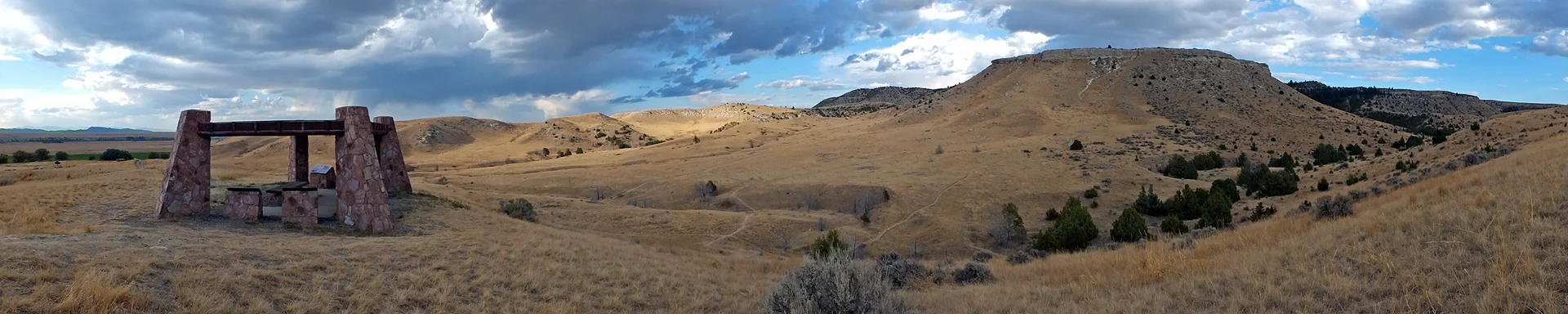
- Lower Trail: A shorter walk to a covered observation shelter with interpretive panels explaining the hunt process, the role of “runners” who drove the bison, and the cultural significance of the pishkun.
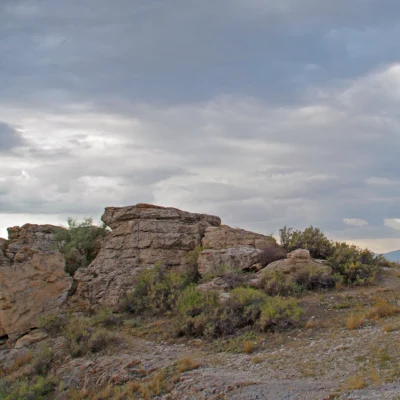
- Upper Trail: Climbs to the top of the cliff, providing expansive views of the Madison River Valley. From the cliff edge, you can see the landscape exactly as the hunters did — the approach lanes, the natural terrain features used to funnel the herd, and the drop-off itself.
Archaeological Interpretation
Interpretive panels throughout the park explain:
- The “drive lane” system — rock cairns and log barriers placed strategically to channel stampeding bison toward the cliff
- The role of “runners” — skilled young hunters who disguised themselves in buffalo or wolf skins to initiate the stampede
- Post-kill processing at the cliff base, where communities butchered and preserved bison for food, hide, bone tools, and shelter materials
Wildlife & Scenery
The surrounding Madison Valley landscape supports raptors, deer, and small mammals. The cliff-top viewpoint offers sweeping views of Montana’s mountain ranges — a landscape essentially unchanged since the last hunts took place here around 1750.
Trails
| Trail | Distance | Difficulty | Highlights |
|---|---|---|---|
| Lower Interpretive Trail | ~0.5 mi | Easy | Covered observation shelter; interpretive panels; cliff base bone deposits |
| Upper Cliff Trail | ~1 mi RT | Moderate | Cliff-top views; Madison Valley panorama; drive lane remnants; dramatic drop-off |
Camping
No camping is available at Madison Buffalo Jump — this is a day-use only park, open year-round during daylight hours. Facilities include vault toilets and a picnic area. For camping, nearby options include Missouri Headwaters State Park (20 minutes) and multiple campgrounds in the Gallatin National Forest.
Best Time to Visit
| Season | Highlights | Considerations |
|---|---|---|
| Spring (Apr–May) | ⭐ Wildflowers; green valley; comfortable hiking; raptors nesting on cliffs | Muddy access road possible; variable weather; wind |
| Summer (Jun–Aug) | Full trail access; long days for exploration; clear valley views | Hot midday; bring water and sun protection; no shade on upper trail |
| Fall (Sep–Oct) | ⭐ Golden grasslands; crisp air; fewer visitors; dramatic light on cliffs | Shorter days; cold evenings; gravel road may be rough |
| Winter (Nov–Mar) | Solitude; snow-dusted cliffs; winter wildlife | Road may be snow-covered; dress for wind and cold; limited daylight |
Visitor Tips
- Gravel road access: The last stretch of Buffalo Jump Road is gravel. Standard vehicles can navigate it in dry conditions, but check after rain or snowmelt.
- No shade: The upper trail and cliff-top have no shade. Bring a hat, sunscreen, and water, especially in summer.
- Respect the site: This is an archaeological site — do not remove any artifacts, bone fragments, or rocks. Leave everything as you find it.
- Combine with Missouri Headwaters: Missouri Headwaters State Park (where the Jefferson, Madison, and Gallatin rivers converge to form the Missouri River) is just 20 minutes away — a natural Lewis & Clark companion visit.
- Self-service fee: The park has an “iron ranger” for self-service fee payment. Bring cash or check.
Frequently Asked Questions
What is a buffalo jump?
A buffalo jump (or “pishkun” in Blackfeet) is a cliff used by Native American peoples to hunt bison by driving herds over the edge. Skilled runners would disguise themselves to initiate a stampede, while drive lanes made of rock cairns and logs funneled the bison toward the cliff. The Madison Buffalo Jump was used for approximately 2,000 years by multiple tribes including the Shoshone, Blackfeet, Crow, and Salish, ending around 1750 when horses and firearms changed hunting practices.
Can you camp at Madison Buffalo Jump State Park?
No — Madison Buffalo Jump is a day-use only park, open during daylight hours year-round. Facilities include vault toilets and a picnic area. For camping, nearby options include Missouri Headwaters State Park (about 20 minutes away) and multiple campgrounds in the surrounding Gallatin National Forest.
Last updated: April 2026
Make it a road trip: Pair a visit with Madison Buffalo Jump State Park (a short drive away) or Missouri Headwaters State Park (a short drive away).

🐾 Dogs & Pets at Madison Buffalo Jump State Park
- Pets allowed? statewide rule
- Pets are allowed at most Montana state parks but must be leashed and not left unattended.
- Leash rule statewide rule
- Leash no longer than 8 feet required, unless otherwise posted.
- Beaches & swim areas statewide rule
- Pets are prohibited from swimming beaches and posted restricted areas.
- Statewide exceptions statewide rule
- Pets prohibited at Frenchtown Pond and Wild Horse Island; kennel service offered during Lewis and Clark Caverns tours; Spring Meadow Lake no pets April 16 - October 14; Lake Elmo has a fenced dog park.
Are dogs allowed at Madison Buffalo Jump State Park?
Pets are allowed at most Montana state parks but must be leashed and not left unattended. Individual parks can post stricter rules — check signage on arrival.
Rules verified July 2026 via fwp.mt.gov. More: Montana state parks guide · Dog rules in all 50 states compared
Park Location
Plan your gear for Madison Buffalo Jump State Park
From our editorial guides, matched to this park’s activities: