Niagara Falls State Park
🏆 America’s Oldest State Park — Established in 1885, Niagara Falls State Park welcomes over 8 million visitors each year to witness the raw power of 750,000 gallons of water plunging 167 feet every second.
The first thing you notice isn’t the sight of water — it’s the sound. A deep, subsonic rumble that rises through the pavement and enters your body before your eyes can fully process the spectacle ahead. Then the mist hits your face, cool and faintly electric, and suddenly you understand why 8 million people a year make this pilgrimage: Niagara Falls isn’t something you observe. It’s something you feel.
Every single second, 750,000 gallons of water plummet over a 167-foot precipice in a display so thunderous, so visceral, and so magnificently terrifying that it has drawn kings, daredevils, honeymooners, and seekers of wonder from around the world for over two centuries. Established on July 15, 1885 as the Niagara Reservation, this is America’s oldest state park — a title earned not merely by age but by the revolutionary principle that a natural wonder of this magnitude should belong to the public, not to the hotels, toll collectors, and private profiteers who had walled off the falls for decades.
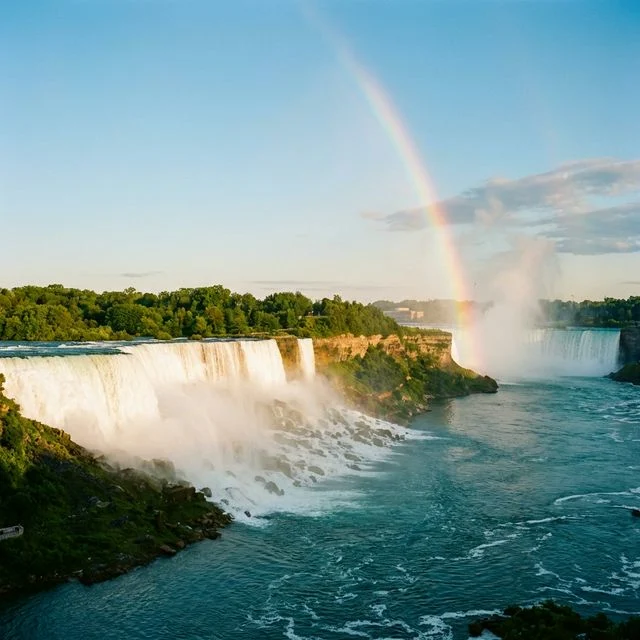
The campaign to create Niagara Reservation — led by Frederick Law Olmsted, the legendary landscape architect of Central Park, and the artist Frederic Edwin Church — was America’s first major conservation victory and the template for every public park that followed. Olmsted and his partner Calvert Vaux designed the park’s 400+ acres along the Niagara River to provide free, democratic access to all three waterfalls of the Niagara Falls complex: the thundering Horseshoe Falls (the largest), the steep American Falls, and the delicate Bridal Veil Falls. His vision — that the landscape itself should be the experience, unadorned by commercial distractions — endures today in a park that charges no admission fee, ever.
Why Niagara Falls State Park?
Niagara Falls needs no introduction, but the state park that protects it deserves more attention than most visitors give it. Here’s what makes this park genuinely extraordinary beyond the obvious spectacle of falling water:
- Three waterfalls, one park: American Falls (110 ft), Bridal Veil Falls, and Horseshoe Falls (167 ft) — each with a completely different character and viewing experience
- Free admission, 24/7/365: Unlike nearly every other major natural attraction in the world, seeing Niagara Falls costs nothing — you can stand at the brink of one of the planet’s most powerful waterfalls for free, any time of day or night
- America’s oldest state park: The 1885 reservation established the template for public parks nationwide, designed by Frederick Law Olmsted himself
- Immersive experiences: Cave of the Winds puts you 20 feet from the falls; Maid of the Mist takes you into the basin of Horseshoe Falls — experiences available nowhere else on Earth
- Year-round spectacle: Summer thundering power, fall foliage framing the gorge, winter ice formations that transform the entire landscape into a frozen wonderland, spring snowmelt surge
10 Best Things to Do at Niagara Falls State Park
1. Stand at the Brink of Horseshoe Falls — Terrapin Point
The single most powerful viewpoint in the entire park is Terrapin Point on Goat Island, where you can stand at the very edge of Horseshoe Falls — the largest and most powerful of Niagara’s three cataracts. Horseshoe Falls spans 2,200 feet in a sweeping crescent shape, dropping 167 feet with over 90% of the Niagara River’s total volume cascading over this single, magnificent cataract. At 750,000 gallons per second, the numbers are almost incomprehensible. Standing here, you’ll feel the deep bass vibration in your chest, the railing trembling beneath your hands, and the earth itself seeming to shift as millions of tons of water vanish into the churning turquoise basin below. The mist plume rises hundreds of feet, creating perpetual rainbows on sunny days. This is the single greatest free experience in any American state park — and it’s available 24 hours a day, 365 days a year.
2. Cave of the Winds: Twenty Feet From Thunder
The Cave of the Winds experience is Niagara Falls State Park’s most immersive and viscerally thrilling attraction — a descent 175 feet by elevator into the Niagara Gorge, followed by a series of wooden walkways and staircases that lead to the legendary Hurricane Deck. Here, standing just 20 feet from the base of Bridal Veil Falls, water crashes around you from every direction with the force of a tropical storm — wind gusts reaching genuine hurricane speed, spray so thick it obliterates vision, and the sheer volume of sound consuming every other sense. You don’t watch the waterfall from Hurricane Deck. You become part of it.
The original Cave of the Winds — an actual rock cavern behind Bridal Veil Falls — was destroyed by a rockfall in 1920, but the modern experience brings visitors even closer to the water than the old cave ever did. Ponchos are provided, but you will be completely drenched from the waist down — and you will love every second of it. The full Hurricane Deck experience operates from May through October ($14 adults, $10 youth 6–12). During winter months, a modified “Gorge Trip” provides observation platform views and spectacular ice formation photography.
3. Maid of the Mist: Into the Basin of Horseshoe Falls
Since 1846, the Maid of the Mist has been carrying passengers directly into the churning basin at the base of Horseshoe Falls — making it one of the longest continuously operating tourist attractions in North America and arguably the most iconic boat ride in the world. The current fleet of electrically powered catamarans (replacing diesel in 2020) departs from the base of the Observation Tower approximately every 15 minutes during peak season, carrying passengers past the towering face of the American Falls and the delicate Bridal Veil Falls before turning toward Horseshoe Falls and entering the horseshoe-shaped plunge pool.
What follows is unforgettable: the mist thickens until visibility drops to arm’s length, the thundering of 750,000 gallons per second fills every frequency of hearing, and the boat pitches gently in the churning currents as you realize you are inside one of the largest waterfalls on the planet. The season runs from early April through early November, weather permitting. Tickets: $30.25 adults, $17.50 children 6–12 (children 5 and under free). Recyclable souvenir rain ponchos are provided. The experience is fully wheelchair accessible.
4. Explore Goat Island and the Three Sisters Islands
Goat Island divides the Niagara River between the American Falls and Horseshoe Falls, offering forested trails, picnic areas, and access to the Three Sisters Islands — three small islands in the rapids above the falls connected by footbridges. Walking onto the Three Sisters is a surreal experience: you’re standing amid ferocious Class V whitewater, watching the Niagara River accelerate from a placid 2 mph to over 25 mph as it races toward the brink. The sound of rushing rapids surrounds you on all sides. Bring a camera for sunrise shots from the third island — the soft morning light reflecting off the rapids creates some of the most unique photographs in the park. These islands are part of Olmsted’s original 1887 design and remain gloriously free of commercial development.
5. Climb the Observation Tower
The 282-foot Observation Tower extends out over the Niagara Gorge and provides the only panoramic view of all three falls simultaneously from the American side. The elevator ride down to the gorge floor is included with your Maid of the Mist ticket, but the tower’s upper observation deck is free. On clear days, you can see the mist plume from miles away, and at night, the LED illumination of the falls (upgraded in 2016) creates a vivid, color-shifting spectacle that is worth staying late for. The tower also serves as the departure point for the Maid of the Mist.
6. Walk the Niagara Gorge Trail
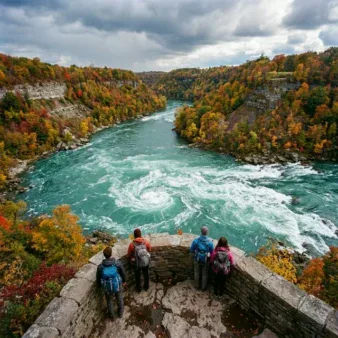
The Niagara Gorge Trail offers a challenging but deeply rewarding hike along the rapids, whirlpool, and Devil’s Hole downstream from the falls, providing a completely different perspective on the Niagara River’s relentless power. Descending steeply into the gorge via stone staircases, the trail connects to Whirlpool State Park and Devil’s Hole State Park, passing the enormous Class VI rapids and the giant whirlpool where the river makes an abrupt 90-degree turn. The gorge walls rise 200+ feet on either side, exposing 400-million-year-old rock layers. It’s particularly spectacular during peak fall foliage (mid-October) when the gorge becomes a corridor of blazing color.
7. Visit the Ralph C. Wilson Jr. Centennial Discovery Center
Opened in 2022, on the site of the former Welcome Center, the 28,000-square-foot Ralph C. Wilson Jr. Centennial Discovery Center is far more than a visitor hub — it’s an immersive museum exploring the geology, ecology, and human history of the Niagara region. Interactive exhibits explain the Ice Age origins of the falls, the hydroelectric power story, and the Free Niagara Movement that saved this landscape from commercial exploitation. The center also houses the Niagara Gift Shop and the starting point for the Scenic Trolley. Free admission.
8. Ride the Niagara Scenic Trolley
The Niagara Scenic Trolley provides a narrated hop-on/hop-off tour of all major viewpoints within the park ($5 adults, $4 children). For first-time visitors, this is the smartest way to orient yourself — the trolley stops at Prospect Point, Goat Island, Terrapin Point, Cave of the Winds, and the Three Sisters Islands. The narration provides historical context and insider tips. During peak summer, the trolley runs approximately every 20 minutes.
9. See the Falls Illuminated at Night
Every evening, year-round, the falls are illuminated with a powerful LED light system that cycles through vivid colors — deep blues, emerald greens, fiery reds, and brilliant purples washing across the cascading water. The illumination typically begins at dusk and continues for several hours (check the current schedule at niagarafallsstatepark.com). During winter holidays (November through January), the Festival of Lights adds millions of additional holiday lights throughout the park and downtown. Seeing the falls lit up against a dark sky is an entirely different experience from the daytime visit — quieter, more intimate, and genuinely magical.
10. Discover the Nikola Tesla Statue and Hydroelectric History
Near the park entrance stands the Nikola Tesla Monument — a bronze statue honoring the Serbian-American inventor who harnessed Niagara’s power for the world’s first major alternating current hydroelectric power plant in 1895. This single engineering achievement literally changed the world: Tesla’s Niagara generators proved that AC power could be transmitted over long distances, powering Buffalo 26 miles away and ultimately enabling the modern electrical grid. The statue sits on a base shaped like an AC motor, with Tesla standing atop it holding a set of technical drawings — a fitting memorial at the place where the age of electricity was born.
Trails and Walking Paths
While Niagara Falls State Park isn’t a traditional hiking destination, its network of paved paths and the more rugged Niagara Gorge Trail system offer excellent walking opportunities with some of the most spectacular scenery in New York State. The park’s trails were designed by Frederick Law Olmsted to create a seamless connection between all major viewpoints, and his vision holds beautifully today — you can walk from Prospect Point to Terrapin Point to the Three Sisters Islands along entirely paved, accessible paths.
| Trail / Path | Distance | Difficulty | Highlights |
|---|---|---|---|
| Goat Island Loop | 1.5 mi | Easy | Paved; passes Terrapin Point, Three Sisters Islands, top-of-falls views |
| Prospect Point to Goat Island | 0.8 mi | Easy | Paved; crosses pedestrian bridge over rapids, direct American Falls views |
| Niagara Gorge Rim Trail | 3.5 mi | Easy–Moderate | Paved gorge-top path from falls to Whirlpool State Park |
| Niagara Gorge Trail (to Devil’s Hole) | 4.4 mi one-way | Strenuous | 300+ stone steps; gorge-bottom rapids, whirlpool, Devil’s Hole |
| Three Sisters Islands Walk | 0.5 mi | Easy | Footbridges over Class V rapids above the falls; peaceful, stunning |
For families with strollers or wheelchair users, the Goat Island Loop and Prospect Point paths are fully ADA-accessible with gentle grades and wide paved surfaces. For serious hikers seeking a challenge, the Niagara Gorge Trail descending 300+ stone steps to the gorge floor is genuinely demanding but spectacularly rewarding.
📸 Photography Guide: Best Shots at Niagara Falls
• Golden Hour (Sunrise): Face east from Terrapin Point on Goat Island. The early morning light catches the mist plume of Horseshoe Falls, creating intense golden halos and vivid rainbows. Arrive by 6:00 AM in summer for the best conditions with almost no crowds.
• Night Illumination: Shoot from Prospect Point for direct, unobstructed views of the LED-lit American Falls. Use a tripod, 2–8 second exposures at f/8, ISO 100. The best colors cycle every 15–30 minutes.
• Long Exposure Silk: From the Goat Island bridge over the rapids, use a 10-stop ND filter for 30-second exposures to transform the turbulent rapids into glass-smooth silk. Works best on overcast days to avoid blown highlights.
• Frozen Winter: January and February create extraordinary ice formations on trees, railings, fences, and the gorge walls. The entire landscape transforms into a frozen wonderland. Use a UV filter to protect your lens from constant mist spray.
• Cave of the Winds Action: Bring a waterproof case or GoPro. Your phone or camera WILL get drenched on Hurricane Deck. Shoot video rather than photos — the spray makes still photography nearly impossible but the video footage is incredible.
• Internal Tip: The Whirlpool State Park overlook (1 mile north) provides a unique angle on the gorge and rapids that most photographers miss entirely.
Geology: 12,000 Years of Erosion in Real Time
Niagara Falls was born approximately 12,000 years ago when retreating glaciers from the last Ice Age (the Wisconsin Glaciation) carved the Great Lakes basin and released massive volumes of meltwater northward toward the Atlantic. The Niagara River began flowing over the Niagara Escarpment — a resistant ridge of 400-million-year-old dolostone limestone — creating the original falls near present-day Queenston/Lewiston, seven miles downstream from their current position.
Since then, the falls have been cutting steadily upstream through the bedrock, carving the dramatic 7-mile Niagara Gorge at a rate that once exceeded 3 feet per year — fast enough that the falls’ retreat was visible within a single human lifetime. The mechanism is elegant and relentless: the Niagara Escarpment consists of hard dolostone cap rock sitting atop much softer Rochester Shale. The tumbling water erodes the soft shale behind and beneath the dolostone, eventually undermining the cap rock until massive slabs break off and crash into the gorge below. Each rockfall moves the falls another few feet upstream.
Water diversions for hydroelectric power (beginning with Nikola Tesla’s pioneering AC power plant in 1895) have dramatically slowed the erosion rate to roughly 1 foot per decade — but the geological process continues. The massive boulder talus at the base of the American Falls is the most visible evidence of this ongoing transformation. The Great Rockfall of 1954, which deposited an enormous quantity of rock at the base, actually reshaped the falls’ appearance permanently.
Best Time to Visit Niagara Falls State Park
Niagara Falls is spectacular in every season, but your experience will vary dramatically depending on when you visit. Summer brings full attraction access and festival energy but also peak crowds; winter offers a hauntingly beautiful frozen landscape with almost no one else around.
| Season | Weather | Crowds | Best For |
|---|---|---|---|
| 🍂 Fall (Sep–Nov) | 50–70°F | Moderate | Fall foliage in gorge, fewer crowds, Maid of Mist still running through early November |
| ☀️ Summer (Jun–Aug) | 70–85°F | Very High | All attractions open, fireworks over falls, Festival events, long daylight hours |
| 🌸 Spring (Apr–May) | 45–65°F | Low–Moderate | Powerful snowmelt water flow, attractions reopening, spring wildflowers |
| ❄️ Winter (Dec–Mar) | 15–35°F | Very Low | Frozen mist formations, Festival of Lights, free snowshoe rentals, dramatic ice photography |
Insider tip: The absolute best time to visit is the last two weeks of September and first week of October. Maid of the Mist and Cave of the Winds are still open, the gorge is framed in peak fall foliage, temperatures are comfortable, and summer crowds have largely disappeared. Weekday mornings in this window feel almost private — you may have Terrapin Point nearly to yourself.
Where to Stay: Camping and Lodging Near Niagara Falls
Niagara Falls State Park is a day-use only park with no campgrounds or overnight accommodations within its boundaries. However, several excellent camping and lodging options exist within a short drive. The Niagara Falls area offers everything from tent camping to luxury hotels within minutes of the falls.
| Campground / Lodging | Distance | Type | Price Range |
|---|---|---|---|
| Four Mile Creek State Park | 7 miles | Tent & RV (275 sites, electric hookups) | $20–35/night |
| Niagara Falls KOA | 3 miles | Full hookup RV, cabins, tent | $45–95/night |
| Branches of Niagara Campground | 8 miles | Full hookup RV, tent, cabin | $40–85/night |
| Cinderella Campground | 12 miles | Tent & RV | $30–50/night |
| Downtown Hotels (walking distance) | 0.5–1 mile | Hotels, motels, Airbnb | $80–350/night |
Best choice for campers: Four Mile Creek State Park on the shores of Lake Ontario offers 275 campsites (many with electric hookups), direct lake access, and is just a 15-minute drive from the falls. It’s a New York State Park, so it’s well-maintained and reasonably priced. Reserve through Reserve America — peak summer weekends book 3–4 months in advance.
💰 Trip Cost Estimator
One of the best things about Niagara Falls State Park is that the most spectacular experiences — standing at the brink, walking Goat Island, seeing the illumination — are completely free. Here’s what a full visit actually costs:
| Expense | Budget Day Trip | Full Experience Day | Weekend (2 Days) |
|---|---|---|---|
| Park Admission | FREE | FREE | FREE |
| Parking | $10 | $10–15 | $20–30 |
| Cave of the Winds | — | $14 | $14 |
| Maid of the Mist | — | $30.25 | $30.25 |
| Scenic Trolley | — | $5 | $5 |
| Aquarium of Niagara | — | — | $16.95 |
| Food & Drinks | $15 | $25–40 | $50–80 |
| Accommodation | — | — | $80–250/night |
| Total (per adult) | $25 | $84–104 | $216–426 |
Money-saving tip: The Niagara Falls USA Discovery Pass ($46 adults) bundles Cave of the Winds, Maid of the Mist, Scenic Trolley, Niagara Gorge Discovery Center, and the Aquarium of Niagara — saving over $20 compared to individual tickets. Available at the Discovery Center or online.
🗓️ Sample Itineraries
Perfect Day Trip (6–8 Hours)
8:00 AM: Arrive early and park in Lot 1 ($10). Walk directly to Prospect Point for your first face-to-face view of American Falls with minimal crowds. 8:30 AM: Cross the pedestrian bridge to Goat Island. Walk the loop trail to Terrapin Point — stand at the brink of Horseshoe Falls in glorious morning solitude. Continue to the Three Sisters Islands for quiet contemplation above the rapids. 10:00 AM: Cave of the Winds opens — be among the first on Hurricane Deck before summer crowds build. Allow 60–90 minutes including elevator descent and gorge walkways. 11:30 AM: Walk back to the Observation Tower and board the Maid of the Mist. Allow 30–45 minutes for the full boat experience. 12:30 PM: Lunch at Top of the Falls Restaurant on Goat Island (the only restaurant in any U.S. state park directly overlooking a major waterfall). 1:30 PM: Ride the Scenic Trolley for a narrated overview and rest your feet. 2:30 PM: Visit the Discovery Center for geology exhibits and gift shopping. 3:00 PM: If energy permits, hike the first section of the Gorge Trail toward Whirlpool State Park for a completely different perspective. 4:00 PM: Depart — or stay through dusk for the illumination show.
Weekend Explorer (2 Days)
Day 1: Follow the Day Trip itinerary above, but stay for the evening illumination. Dine at one of the downtown restaurants on Old Falls Street (walking distance). If visiting June–August, check the schedule for fireworks over the falls. Stay overnight at a downtown hotel or camp at Four Mile Creek State Park.
Day 2: Start the morning at Devil’s Hole State Park and hike the Gorge Trail (bring proper footwear — 300+ stone steps). Continue along the gorge rim to Whirlpool State Park for views of the massive whirlpool. Afternoon: visit the Aquarium of Niagara (sea lions, penguins, sharks — great for kids), then explore Fort Niagara State Park for its 18th-century French castle and stunning Lake Ontario views at sunset. If time allows, cross the Rainbow Bridge to the Canadian side for the opposite-angle panoramic view of the falls (passport required).
🐦 Wildlife and Nature
Despite being an urban park surrounded by the city of Niagara Falls, the park’s gorge ecosystem supports a surprisingly diverse community of wildlife adapted to the unique microclimate created by constant mist and spray.
| Wildlife | Best Months | Where to Look | Tips |
|---|---|---|---|
| 🦅 Peregrine Falcons | Year-round | Gorge cliffs, Observation Tower | Nesting pairs on gorge walls; best seen from Gorge Rim Trail |
| 🦆 Gulls & Waterfowl | Year-round | Rapids above falls, river below gorge | Ring-billed and Herring Gulls surf the thermals above the falls |
| 🦌 White-tailed Deer | Year-round | Goat Island, Three Sisters area | Early morning; deer are habituated to visitors but maintain distance |
| 🐟 Lake Sturgeon | Apr–Jun | Lower Niagara River | Ancient species (200M+ years); can reach 6 feet; catch-and-release only |
| 🦋 Monarch Butterflies | Sep–Oct | Goat Island meadows | Migration staging area; thousands pass through in fall |
| 🦉 Great Horned Owls | Year-round | DeVeaux Woods, gorge rim | Dawn/dusk; listen for calls from the wooded areas upstream |
The Niagara Gorge is a designated Important Bird Area (IBA) by the National Audubon Society, particularly significant as a raptor migration corridor. Over 270 bird species have been recorded in the greater Niagara region. Visit the nearby Buckhorn Island State Park (15 minutes north) for dedicated wetland birding habitat.
⚠️ Safety Information
Niagara Falls is one of the most powerful natural forces on Earth, and the park demands respect. The water flow, slippery surfaces, and sheer drops present genuine hazards that cause multiple injuries and several fatalities each year.
| Hazard | Risk Level | Prevention |
|---|---|---|
| 💧 Slippery Surfaces | High | Constant mist makes all surfaces — railings, paths, stairs — extremely slick. Wear non-slip shoes with good grip, NEVER sandals or flip-flops near the falls |
| 🌊 Water Current | Extreme | NEVER enter the water above the falls — the current is deceptively powerful and has swept people over the brink. Stay behind ALL barriers without exception |
| 🧗 Gorge Trail Falls | Moderate–High | The Gorge Trail stone stairs are steep, uneven, and often wet. Wear proper hiking boots, use both hands on railings, and avoid in icy conditions |
| 🥶 Hypothermia (Winter) | Moderate | Winter mist spray + wind chill can drop perceived temperature below 0°F. Dress in waterproof layers, especially near Prospect Point |
| 📱 Selfie Hazards | Moderate | Multiple fatalities from climbing barriers for photos. NEVER cross safety railings — no photo is worth your life |
Emergency: Dial 911. New York State Park Police patrol the park 24/7. First aid stations are located at the Discovery Center and on Goat Island. The nearest hospital is Niagara Falls Memorial Medical Center, 2 miles from the park (621 10th Street).
Getting There & Parking
Niagara Falls State Park is located in downtown Niagara Falls, New York — one of the most accessible major natural attractions in the country. The park entrance is at the intersection of Prospect Street and Old Falls Street, walkable from most downtown hotels.
By Car: Take I-190 to Exit 22 (Robert Moses Parkway/Niagara Scenic Parkway) and follow signs to the park. From Buffalo: 25 minutes (20 miles). From Toronto: 90 minutes (80 miles). From New York City: 6.5 hours (400 miles). From Rochester: 90 minutes (75 miles).
By Air: Buffalo Niagara International Airport (BUF) is 25 minutes away. Niagara Falls International Airport (IAG) is 15 minutes but has limited service.
Parking: Four lots available. Lot 1 (closest to Prospect Point): $10–15 depending on season. Lots 2–4: $5–10. During peak summer weekends, lots fill by 10 AM — arrive early or use the free NFTA Discover Niagara Shuttle (operates May–October connecting downtown hotels, park entrances, and nearby attractions).
Nearby Attractions
The Niagara region offers far more than just the falls. Within 30 minutes of the park, you’ll find historic forts, gorge trails, island wildlife refuges, and one of the most spectacular state parks in the eastern United States.
- Fort Niagara State Park (14 miles north) — 18th-century French castle on Lake Ontario; living history demonstrations, stunning lake views, and beach access
- Whirlpool State Park (3 miles north) — Dramatic views of the massive Niagara Whirlpool and Class VI rapids; connects to the Gorge Trail
- Devil’s Hole State Park (3 miles north) — Historic site of the 1763 Devil’s Hole Massacre; steep gorge trail descent to river-level rapids views
- DeVeaux Woods State Park (2 miles north) — Peaceful old-growth forest with massive tulip trees; picnic areas and nature trails
- Buckhorn Island State Park (6 miles north) — Wetland preserve on Grand Island; excellent birding, hiking, and kayaking
- Artpark State Park (7 miles south) — Performing arts venue in the gorge; summer concert series, art installations, and gorge-rim trails
- Letchworth State Park (70 miles southeast) — “The Grand Canyon of the East” with three massive waterfalls on the Genesee River; worth a full-day trip
- Aquarium of Niagara (0.5 miles) — Sea lions, penguins, sharks, and interactive exhibits; excellent for families
🎒 What to Pack
Niagara Falls is wetter than you expect — even on a “dry” visit staying well behind the railings, the constant mist will dampen your clothes and fog your glasses. For Cave of the Winds, you’ll be soaked. Plan accordingly:
- Waterproof phone case — Essential for Cave of the Winds; useful everywhere near the falls
- Non-slip footwear — Constant mist makes all surfaces slippery; leave the sandals at the hotel
- Light rain jacket — Even on sunny days, mist drifts across viewing areas
- Dry change of clothes — Leave in your car for after Cave of the Winds
- Sunscreen + sunglasses — Sun reflecting off water and mist is intense, especially in summer
- Tripod + ND filters for photographers — Long exposures of the rapids and falls at night
- Binoculars — Peregrine falcons on gorge walls, gulls riding thermals above the falls
- Winter: Waterproof layers + hand warmers — Mist spray + wind chill creates extreme cold
Frequently Asked Questions
Do I need to pay to see the falls?
No — Niagara Falls State Park has free admission, 24 hours a day, 365 days a year. Viewing all three waterfalls from multiple spectacular vantage points throughout the park is completely free. Only the individual experiences — Cave of the Winds ($14), Maid of the Mist ($30.25), Scenic Trolley ($5) — and parking ($10–15) carry fees. You can have an extraordinary visit without spending anything beyond parking.
Which is better — Cave of the Winds or Maid of the Mist?
Both are exceptional but fundamentally different. Cave of the Winds puts you physically closer to the falls (20 feet from Bridal Veil) and is more viscerally intense — you feel the power in your bones on the Hurricane Deck. Maid of the Mist offers the iconic boat-into-the-mist experience at the base of Horseshoe Falls — more awe-inspiring in scale and grandeur. If time and budget allow, do both — they complement each other perfectly and together provide the full Niagara experience. If forced to choose one: Cave of the Winds for thrill-seekers, Maid of the Mist for the iconic photo and the sense of scale.
Can I see the falls well from the American side?
Absolutely — contrary to the common misconception that “the Canadian side is better,” the American side offers spectacular and unique perspectives that Canada simply cannot match. Prospect Point provides a direct face-on view of the American Falls impossible from Canada. Terrapin Point on Goat Island puts you at the very brink of Horseshoe Falls. And the Cave of the Winds experience — exclusive to the American side — is the most immersive waterfall encounter anywhere in the world. The Canadian side offers a wider panoramic view, so ideally visit both sides if you have a passport.
Are the falls illuminated at night?
Yes — the falls are illuminated every night, year-round, with an LED light system upgraded in 2016 that cycles through vivid colors including deep blues, emerald greens, fiery reds, and brilliant purples. Illumination typically begins at dusk and continues until midnight (later on weekends and holidays). During winter holidays (November through January), the Festival of Lights adds millions of additional holiday lights throughout the park and downtown. Check niagarafallsstatepark.com for the current illumination schedule.
Is the Niagara Gorge Trail worth hiking?
Yes — the Gorge Trail offers a challenging but deeply rewarding experience along the rapids, whirlpool, and Devil’s Hole downstream from the falls, providing a completely different perspective on the Niagara River’s relentless power. The trail descends 300+ stone steps into the gorge — proper hiking boots are essential, and the climb back up is demanding. The views of Class VI rapids and the giant whirlpool are exceptional and utterly different from the falls themselves. Allow 3–4 hours for the full trail to Devil’s Hole and back. It’s particularly spectacular during peak fall foliage season (mid-October).
Is there camping at Niagara Falls State Park?
No — Niagara Falls State Park is day-use only with no camping facilities. The nearest state park camping is at Four Mile Creek State Park, 7 miles north on the Lake Ontario shore, with 275 sites (many with electric hookups) for $20–35/night. Several private campgrounds are also within 10 miles, including the Niagara Falls KOA (3 miles) with full-hookup RV sites and cabins. Reserve summer weekends 3–4 months in advance through Reserve America.
Can I walk across to Canada from the park?
Yes — the Rainbow Bridge pedestrian crossing is about a 10-minute walk from the park entrance. You’ll need a valid passport (or passport card/enhanced driver’s license for U.S. citizens). The walk across offers outstanding aerial views of both the American Falls and Horseshoe Falls. Canadian entry fees apply ($18.50 CAD for Niagara Parks). Many visitors walk across for the panoramic view and return the same day — allow 30–45 minutes for border crossings in each direction during peak season.
Are dogs allowed at Niagara Falls State Park?
Yes — dogs are welcome on leash (6 feet maximum) throughout the park’s outdoor areas, including Goat Island and the gorge rim trails. Dogs are NOT permitted on the Cave of the Winds, Maid of the Mist, Scenic Trolley, or inside the Discovery Center. There are no designated off-leash areas. Water bowls are available at the Discovery Center entrance. The park can be overwhelming for noise-sensitive dogs due to the constant thunder of the falls — consider your pet’s temperament before bringing them.
🌊 Ready to Experience Niagara Falls?
America’s oldest state park awaits — with free admission 24/7 and three of the world’s most powerful waterfalls just steps from your car. Save over $20 with the Discovery Pass bundle for Cave of the Winds, Maid of the Mist, and more.
🗺️ Plan Your Visit at NiagaraFallsStatePark.com 🏕️ Reserve Camping at Four Mile Creek