🌤 Weather at Santa Cruz Mission State Historic Park by season
| Spring | Summer | Fall | Winter |
|---|---|---|---|
| 44–71 °F | 52–76 °F | 44–77 °F | 41–64 °F |
Each range runs from the coldest monthly average low to the warmest monthly average high in that season (1991-2020 climate normals), measured at Santa Cruz, 2 mi away, elevation 70 ft. Conditions at the park can differ from the station, especially where elevation differs — check a forecast before you go.

⛪ The Last Surviving Adobe of a Spanish Empire — Where California’s Mission System Met Its End — Santa Cruz Mission State Historic Park in Santa Cruz, California, Mission Santa Cruz (1791), Neary-Rodriguez Adobe (1822–1824), oldest surviving structure in Santa Cruz County, only surviving building from Mission Santa Cruz, Ohlone and Yokuts peoples, Franciscan mission system, “People Who Lived Here” multimedia experience, mission-era Indigenous housing — Santa Cruz County, CA
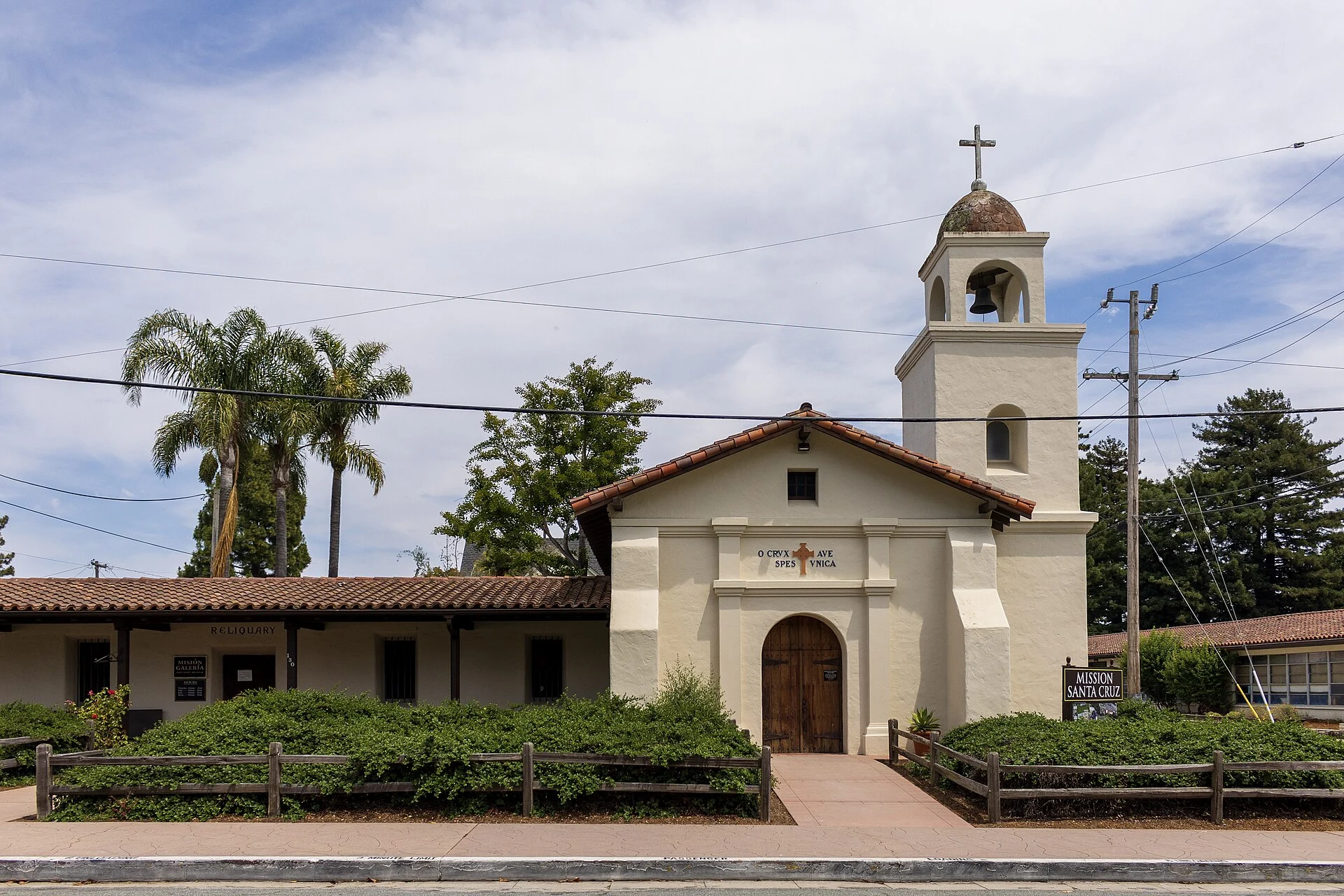
In 1791, Franciscan padres founded Mission Santa Cruz — the twelfth in California’s chain of 21 missions that stretched from San Diego to Sonoma. By the 1830s, secularization had stripped the mission of its power. By the 1850s, earthquakes had destroyed the church. By the 1900s, almost everything was gone.
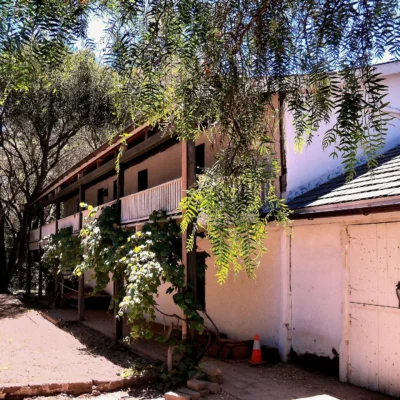
Except for one building: the Neary-Rodriguez Adobe, built between 1822 and 1824 as housing for the Ohlone and Yokuts people who lived and worked at the mission. It is the oldest surviving structure in Santa Cruz County — and the best-preserved example of mission-era Indigenous housing in all of California.
What to See
| Feature | Details |
|---|---|
| Neary-Rodriguez Adobe | 1822–1824 adobe building — the only surviving structure from Mission Santa Cruz. Thick adobe walls, original floor plan, restored rooms showing mission-era living conditions |
| Restored Rooms | Period-interpreted rooms showing how Ohlone and Yokuts families lived within the mission system — a complex story of faith, labor, cultural loss, and survival |
| Museum Exhibits | Focus on Indigenous perspectives of the mission system. Artifacts from mission-era life, the impact of Spanish colonization, and the families who occupied the adobe after secularization |
| “People Who Lived Here” | Multimedia experience co-created with contemporary Native American community members. Audio narratives, artistic renderings, and personal stories of individuals connected to the mission |
| Gardens & Grounds | Historic patio with city views. A massive heritage avocado tree. Gardens reflecting mission-era agriculture |
The Timeline
| Year | Event |
|---|---|
| 1791 | Mission Santa Cruz founded — the 12th of 21 California missions. Built at a riverside site; floods force relocation to Mission Hill |
| 1797 | Villa de Branciforte established nearby — one of only three Spanish civilian pueblos in California. Tension with the mission is immediate |
| 1822–1824 | The Neary-Rodriguez Adobe constructed as Indigenous housing — the building that survives today |
| 1834 | Mexican government secularizes the mission. Mission lands are distributed. The church begins to decline |
| 1857 | A major earthquake destroys the original mission church |
| 1931 | A half-scale replica of the mission church is built nearby (this is what most visitors see today — it is not the state historic park) |
| 1991 | The Neary-Rodriguez Adobe is restored and opened as Santa Cruz Mission State Historic Park — the real surviving structure |
Best Time to Visit
| Season | Best For |
|---|---|
| Spring (Mar–May) | 🌸 Comfortable weather. Gardens blooming. Fewer tourists than summer. Perfect for the outdoor spaces |
| Fall (Sep–Nov) | 🌅 Warm days, clear skies. Santa Cruz at its best. Combine with the boardwalk and redwoods |
| Summer (Jun–Aug) | Peak Santa Cruz tourism. Full hours. Can be foggy mornings, warm afternoons |
| Winter (Dec–Feb) | Mild but rainy. Reduced hours possible. The adobe is atmospheric in winter light |
Frequently Asked Questions
Is this the mission church I see on Mission Hill?
No — the church on Mission Hill is a 1931 half-scale replica. The original mission church was destroyed by an earthquake in 1857. The State Historic Park preserves the Neary-Rodriguez Adobe — the only genuinely surviving structure from Mission Santa Cruz.
What happened to the Ohlone and Yokuts people?
The mission system profoundly disrupted Indigenous communities. Native people were brought into the missions to be converted and to labor. Disease, cultural suppression, and forced labor devastated their populations. The park’s exhibits interpret this complex history through Indigenous perspectives.
Is this part of the California Mission Trail?
Yes — Mission Santa Cruz was the 12th of 21 Franciscan missions established between 1769 and 1823 along El Camino Real. The state historic park is the authentic surviving structure from this mission.
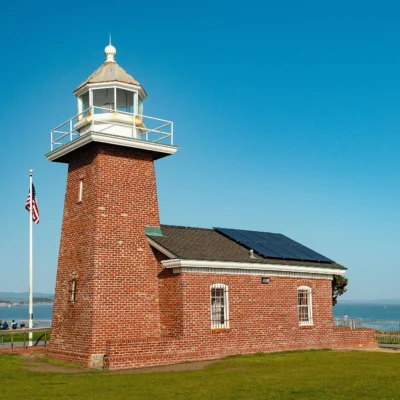
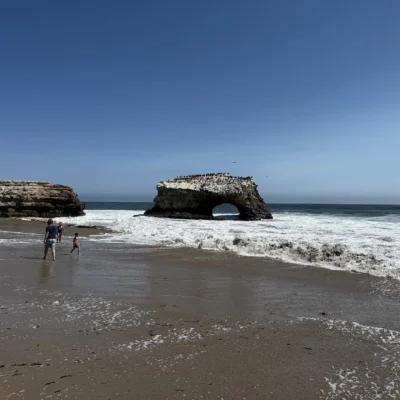
Nearby state parks: If you have extra time, Lighthouse Field State Beach is a short drive away, and Natural Bridges State Beach is a short drive away.
⛪ The Oldest Building in Santa Cruz County
Built 1822. Adobe walls. The only surviving structure from Mission Santa Cruz — and the best-preserved mission-era Indigenous housing in California. The real thing, not the replica.
Wildlife & Nature
Santa Cruz Mission SHP — preserves the only surviving building from the Santa Cruz Mission complex — the Neary-Hopcroft Adobe (c. 1824), originally housing Native Americans working at the mission. The adobe — one of the oldest buildings in Santa Cruz — tells the story of the mission system’s impact on the Ohlone people. The park includes a replica of the original mission church (1/3 scale). California scrub-jays and Anna’s hummingbirds visit the gardens.
Nearby Attractions
Santa Cruz — adjacent — has the Beach Boardwalk, Pacific Avenue downtown, and UC Santa Cruz. Holy Cross Catholic Church — adjacent — incorporates the mission replica. Natural Bridges State Beach — 2 miles west — has monarchs and tide pools. Santa Cruz Surfing Museum — 1 mile south — has the lighthouse.

🐾 Dogs & Pets at Santa Cruz Mission State Historic Park
- Pets allowed? statewide rule
- Dogs are permitted in California State Parks only in developed areas — campgrounds, picnic areas, parking lots and paved roads — and are prohibited on most trails, beaches and undeveloped areas unless specifically designated as dog-friendly.
- Leash rule statewide rule
- Maximum 6-foot leash at all times; dogs may not be left unattended.
- Beaches & swim areas statewide rule
- Dogs are prohibited on most state beaches; only beaches specifically designated as dog-allowed permit them (varies by park).
- Cabins & lodging statewide rule
- Pets are generally not allowed in buildings or cabins; overnight campers must keep dogs inside a tent or vehicle at night.
- Statewide exceptions statewide rule
- Designated dog-friendly trails and beaches vary park by park; misrepresenting a pet as a service animal is a misdemeanor.
Are dogs allowed at Santa Cruz Mission State Historic Park?
Dogs are permitted in California State Parks only in developed areas — campgrounds, picnic areas, parking lots and paved roads — and are prohibited on most trails, beaches and undeveloped areas unless specifically designated as dog-friendly. Individual parks can post stricter rules — check signage on arrival.
Rules verified July 2026 via parks.ca.gov. More: California state parks guide · Dog rules in all 50 states compared
Park Location
Plan your gear for Santa Cruz Mission State Historic Park
From our editorial guides, matched to this park’s activities:
Top Tours & Activities Near Santa Cruz
 from $85
 from $220
 from $205