
🌤 Weather at Taylor Mill State Historic Site by season
| Spring | Summer | Fall | Winter |
|---|---|---|---|
| 24–68 °F | 54–82 °F | 30–73 °F | 15–38 °F |
Each range runs from the coldest monthly average low to the warmest monthly average high in that season (1991-2020 climate normals), measured at W Hampstead, 3 mi away, elevation 288 ft. Conditions at the park can differ from the station, especially where elevation differs — check a forecast before you go.

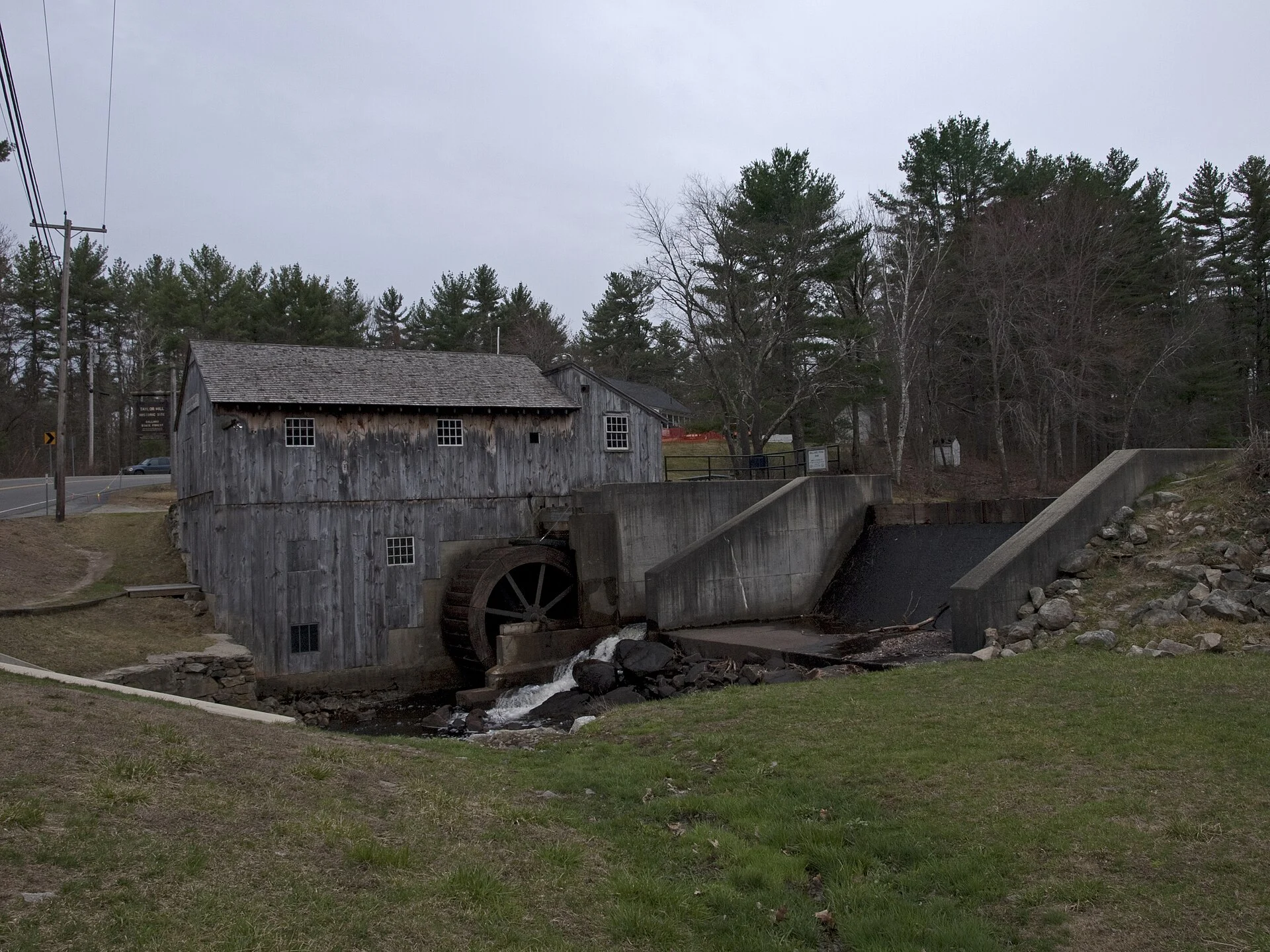
🏆 New Hampshire — Preserved 19th-century water-powered sawmill — one of the last working examples of New England’s timber industry heritage. The mill demonstrates how waterpower drove the region’s economy before electricity.
Visitor Information
| Detail | Info |
|---|---|
| Location | New Hampshire |
About Taylor Mill
Taylor Mill State Historic Site in Derry preserves a historic sawmill site in the Merrimack Valley. Derry’s most famous resident was Robert Frost, who farmed here from 1900-1911 — the years that transformed him from struggling farmer to America’s most beloved poet. The woods, stone walls, and snowy fields of Derry became the raw material for poems like “The Road Not Taken” and “Stopping by Woods on a Snowy Evening.”
Things to Do
Visiting the historic mill site, connecting to the Robert Frost Farm (nearby), hiking, and exploring the Derry landscape that inspired America’s most famous poems.
Getting There
Located off Island Pond Road in Derry, Rockingham County. Robert Frost Farm (NH Division of Parks) is 2 miles south — the farmstead where Frost lived 1900-1911. The combination of Taylor Mill and Frost Farm creates a literary pilgrimage through the landscapes that inspired “The Road Not Taken” and “Mending Wall.” Derry is 30 minutes from Manchester and 45 from Boston.
History & Ecology
Derry was home to Robert Frost from 1900-1911 — the formative years that produced his most famous poems. The stone walls, birch trees, and snowy fields of Derry appear throughout his work. “Two roads diverged in a yellow wood” was inspired by walks with his friend Edward Thomas near this landscape. The mill site connects Derry’s industrial past with Frost’s literary legacy.
Insider Tips
Sawmill heritage: Taylor Mill preserves one of New Hampshire’s historic sawmills — part of the state’s timber heritage. Pro tip: New Hampshire’s White Pine trees were once reserved by the British Crown for ship masts — trees marked with the “King’s Broad Arrow” couldn’t be cut. Mast trees: White pines 24+ inches in diameter were Crown property — colonists resented this restriction, contributing to Revolutionary anger.
Best Time to Visit
Summer: Mill site tours. Fall: Forest foliage. Spring: Stream in full flow powering the concept. Year-round: Historic site accessible.
Frequently Asked Questions
What was the King’s Broad Arrow?
The Broad Arrow Policy (1691) reserved all white pine trees 24+ inches in diameter for the Royal Navy — surveyors marked them with three hatchet cuts forming an arrow. Colonists who cut marked trees faced heavy fines. The policy was deeply resented — pine forests were New Hampshire’s primary resource. The Pine Tree Flag (1775) — one of the first American flags — symbolized resistance to this British control of colonial resources.
Keep exploring: The closest neighbors are Elm Brook State Park (a short drive away) and Echo Lake State Park (Cathedral Ledge) (a short drive away).
Wildlife & Nature
Taylor Mill State Historic Site — an alternate listing for the historic water-powered mill preserving New Hampshire’s industrial heritage. The mill demonstrates the transition from waterpower to steam in 19th-century New England manufacturing. The surrounding forest supports white-tailed deer, wild turkeys, and pileated woodpeckers.
Nearby Attractions
New Hampshire’s industrial history — from sawmills to textile mills to shoe factories — shaped the state’s economy and culture. Local museums and historical sites document this heritage.

🐾 Dogs & Pets at Taylor Mill State Historic Site
- Pets allowed? statewide rule
- Many NH state parks allow pets year-round, but policies vary by park and some parks prohibit pets entirely.
- Leash rule statewide rule
- Standard or retractable leash not greater than 6 feet required; animals may not be left unattended.
- Beaches & swim areas statewide rule
- Pets are prohibited at beaches and designated swim areas seasonally from May 1 through September 30.
- Cabins & lodging statewide rule
- Pets are permitted at 13 campgrounds (including Bear Brook, Coleman, Greenfield, Lake Francis, Milan, Mollidgewock, Moose Brook, Pawtuckaway, Pillsbury, Sunapee and Umbagog); cabin/yurt rules vary by park — check before booking.
- Statewide exceptions statewide rule
- Monadnock, North Hampton State Beach, Odiorne Point and most of Rhododendron State Park prohibit pets year-round; Crawford Notch, Franconia Notch and Mount Washington allow pets only on hiking trails and designated dog-walk areas.
Are dogs allowed at Taylor Mill State Historic Site?
Many NH state parks allow pets year-round, but policies vary by park and some parks prohibit pets entirely. Individual parks can post stricter rules — check signage on arrival.
Rules verified July 2026 via nhstateparks.org. More: New Hampshire state parks guide · Dog rules in all 50 states compared
Park Location
Plan your gear for Taylor Mill State Historic Site
From our editorial guides, matched to this park’s activities:


Top Tours & Activities Near Manchester
 from $48
 from $20
 from $50