
Umbagog Lake State Park

Remote Wilderness Paddling, Moose Country & Boat-In Camping
Umbagog Lake State Park offers one of New England’s most authentic wilderness experiences, set on the shores of a wild, undeveloped lake straddling the New Hampshire—Maine border. Rated as the fifth-best kayaking destination in New England by the Boston Globe, Umbagog is a paddler’s paradise where moose outnumber motorboats and bald eagles soar overhead.
The park’s defining feature is its collection of remote, boat-access-only campsites scattered along the lakeshore and up the Magalloway River — offering a backcountry camping experience that’s vanishingly rare in the northeastern United States.
Paddling & Boating
Umbagog Lake covers roughly 7,850 acres of clean, clear water surrounded by undeveloped forest. The lake’s irregular shoreline creates countless coves, islands, and marshy inlets to explore.
- Kayak & Canoe Rentals: Available at the park. A public boat launch sits on the southern shore.
- Magalloway River: Paddle upstream through pristine marshland — one of the best wildlife-viewing paddling routes in northern New England.
- Big Island: Circumnavigate the lake’s largest island for a full-day adventure.
- Gear Transport: Park staff can ferry camping gear and boats to remote sites for a fee.
Wildlife — Moose Country
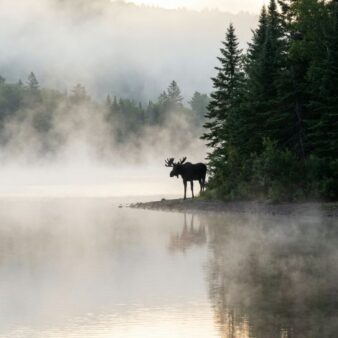
This is prime moose habitat. The marshy lake edges and surrounding bogs are among the most reliable moose-viewing areas in New Hampshire. Early morning and dusk are the best times — paddle quietly along the marshy shoreline and you’re likely to spot these magnificent animals wading and feeding. Beyond moose, watch for bald eagles, ospreys, loons, great blue herons, river otters, deer, and black bears.
Camping
- Base Campground (27+ sites): Drive-in sites with some electric/water hookups, flush toilets, hot showers, dump station, park store, and boat launch.
- Remote Campsites (33–35 sites): Accessible only by boat! Each site features a fire ring, picnic table, and pit toilet. Scattered along the lakeshore and river — true wilderness camping.
- Cabins (6 total): 2–3 base camp cabins plus 4 remote cabins accessible only by water.
- Season: Memorial Day through Columbus Day. Reserve up to 11 months in advance.
Visitor Tips
- Best Time: June–September for paddling and wildlife. September for fall foliage on the water.
- Loon Protection: Some remote sites close until July 20th to protect nesting loons.
- Firewood: Must be purchased at the park store — outside wood is prohibited.
- Bugs: This is deep wilderness. Bring serious insect repellent, especially in June.
- Pets: Allowed on leash at the base camp. Restrictions apply at some remote sites within the National Wildlife Refuge.
Frequently Asked Questions
How much does it cost to visit New Hampshire state parks?
Day-use admission is typically $4-$5 per adult and $2 for children. Coastal beach parks charge parking fees instead. Some parks like Flume Gorge at Franconia Notch charge separate entry fees for attractions.
Do I need a reservation for Franconia Notch?
Reservations are strongly recommended for the Flume Gorge attraction at Franconia Notch, especially on summer and fall weekends. The gorge trail and parking area can fill to capacity on peak days.
When is peak fall foliage in New Hampshire?
Fall foliage in New Hampshire typically peaks from late September in the White Mountains to mid-October in the southern part of the state. The Kancamagus Highway and Franconia Notch are iconic foliage destinations.
What are the best state parks for hiking in New Hampshire?
Franconia Notch (Flume Gorge and Cannon Mountain), Monadnock (one of the most-climbed mountains in the world), Crawford Notch, and Mount Sunapee offer excellent hiking from moderate to challenging.
Explore More New Hampshire State Parks
Umbagog Lake State Park is one of many outstanding state parks in New Hampshire. Discover more parks in our Best State Parks in New Hampshire guide, or use our Park Finder to search by activity, location, or features.

Park Location

Top Tours & Activities Near New Hampshire
 from $85
 from $99
 from $125