Viking Lake State Park
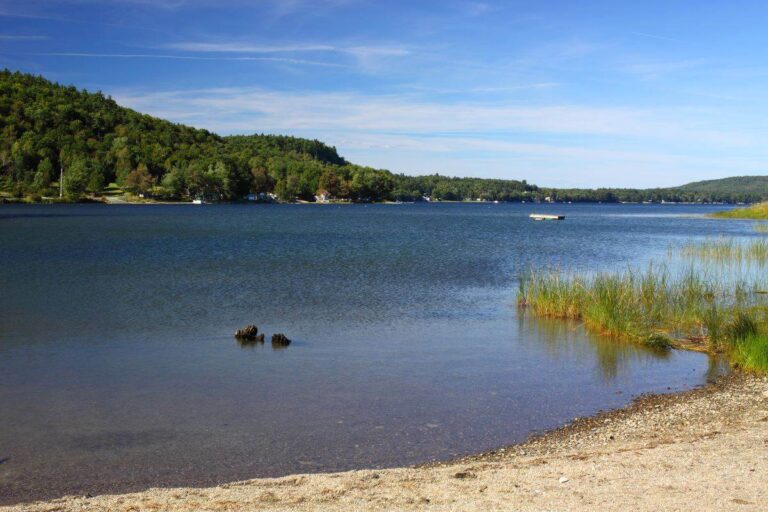
Viking Lake State Park lies nestled within the rolling farmland of Montgomery County, Iowa, a 1,000-acre outdoor haven centered around a sparkling 136-acre lake that was born from a community’s dream in the 1950s. Named after a local newspaper contest won by The Stanton Viking, this park delivers an authentic Iowa outdoor experience — from bass fishing off universally accessible jetties to hiking the 5.5-mile loop trail that encircles the entire lake. Whether you’re casting a line at dawn, swimming at the sandy beach, or settling into one of 120 shady campsites, Viking Lake rewards visitors with quiet Midwestern charm and surprising natural diversity.
History & Heritage
The story of Viking Lake State Park begins in 1947, when Montgomery County residents began campaigning for a local lake project. After funding delays in 1950, construction on the dam finally commenced in 1956 at a cost of $114,987. During construction, Native American artifacts were uncovered, revealing that indigenous tribes had once camped and lived along these rolling hills. The lake was originally called Stanton Lake, but a naming contest held by The Stanton Viking newspaper gave it the distinctive name it carries today. The park was formally dedicated on October 13, 1957, and has been a beloved recreation destination ever since.
Major renovations in the early 2000s modernized the park substantially. A comprehensive campground renovation in 2003 upgraded facilities throughout, and a significant water quality restoration in 2009 involved draining the lake, reshaping the basin, and completely restocking the fishery — a project that transformed Viking Lake into one of the finest fishing lakes in southwest Iowa.
Trails & Hiking
| Trail | Distance | Difficulty | Highlights |
|---|---|---|---|
| 🥾 Viking Lake Trail | 5.5 miles | Moderate | Full lake loop, panoramic dam views, shaded timber sections |
| 🌿 Burr Oak Nature Trail | 1.0 mile | Easy | Self-guided interpretive trail, observation tower, wildflower meadows |
| 🏖️ Hultman Trail | 0.2 miles | Easy | Connects boat ramp to sandy beach, lakeside views |
| ❄️ Snowmobile Trails | Varies | Varies | Designated winter trails for snowmobiling |
The park’s trail system covers over six miles of diverse terrain. The crown jewel is the Viking Lake Trail, a 5.5-mile multi-use loop that encircles the entire lake. Starting from the campground, the trail passes through shaded timber, crosses the dam with panoramic views of the water, and winds along the quiet southern shoreline where wildlife sightings are common. The most spectacular views come from the dam overlook, where the full expanse of the lake stretches before you.
Don’t miss the Burr Oak Nature Trail — a one-mile self-guided interpretive loop that explores the park’s native oak-hickory forest. Pick up the accompanying booklet at the trailhead to learn about local flora, from towering burr oaks to seasonal wildflowers. The trail features an observation tower that provides elevated views of the surrounding landscape and is particularly rewarding during fall foliage season.
Fishing
| Species | Best Season | Notes |
|---|---|---|
| 🐟 Largemouth Bass | Spring–Fall | Excellent populations since 2009 restocking |
| 🐟 Bluegill | Spring–Summer | Abundant throughout the lake |
| 🐟 Redear Sunfish | Late Spring | Good numbers, especially near structure |
| 🐟 Channel Catfish | Summer | Best at night, stocked regularly |
| 🐟 Crappie | Early Spring | Excellent during spawn near brush piles |
| 🐟 Walleye | Spring–Fall | Stocked periodically, popular target |
Viking Lake’s 2009 renovation transformed it into one of southwest Iowa’s premier fishing destinations. The lake was completely drained, the basin reshaped to improve water quality and fish habitat, and then restocked with a carefully managed population of game fish. Today, anglers enjoy outstanding catches of largemouth bass, bluegill, redear sunfish, channel catfish, crappie, and walleye.
The park provides six universally accessible fishing jetties spaced around the lake, making shoreline fishing easy and inclusive. Four boat ramps provide convenient access for boat anglers, and a fish cleaning station ensures you can process your catch on-site. Boat motors of any size are permitted, but must operate at “no wake” speeds. For dedicated anglers, after-hours bank fishing is permitted between 10:30 PM and 4:00 AM in designated areas — though vessels are prohibited on the lake during these hours.
Beyond the main lake, adventurous anglers can hike or bike to 16 silt retention ponds scattered throughout the park, where bass, bluegill, and catfish thrive in quieter, less-pressured waters — a hidden gem that most visitors overlook.
Camping
| Site Type | Sites | Peak Season Rate | Features |
|---|---|---|---|
| ⚡ Electric Sites | 94 | $20/night | 30-amp electric hookup, fire ring, picnic table |
| 🔌 Full Hookup Sites | 22 | $25/night | Electric, water, sewer, fire ring, picnic table |
| 👫 Buddy Sites | 9 | $20/night | Side-by-side sites for groups |
| ⛺ Non-Electric Sites | 26 | $12/night | Primitive setting, fire ring, picnic table |
Viking Lake’s 120-site campground sits in a prime lakeshore location beneath a canopy of mature shade trees — making it one of Iowa’s most pleasant camping environments, especially during hot summer months. The 2003 renovation modernized the entire campground with modern restrooms, hot showers, and a trailer dump station. A playground within the campground keeps younger visitors entertained.
The campground fills quickly on summer weekends, so advance reservations are recommended through the Iowa DNR online reservation system. However, half of the campsites remain available on a first-come, first-served basis through self-registration, giving spontaneous campers a fighting chance. Peak season runs from May 1 through October 15, with reduced off-season rates available.
Beach & Swimming
A sandy swimming beach lines the western shore of Viking Lake, providing a refreshing escape during Iowa’s humid summers. The beach is unsupervised (no lifeguards on duty), so swimmers should exercise caution. The Hultman Trail connects the main boat ramp area directly to the beach, making it easy to combine a morning paddle with an afternoon swim. The beach area includes additional picnic facilities, making it ideal for a full-day family outing.
Seasonal Guide
| Season | Highlights | Considerations |
|---|---|---|
| 🌸 Spring (Apr–May) | Crappie spawn, wildflower blooms, migrating birds | Trails may be muddy after rain |
| ☀️ Summer (Jun–Aug) | Peak camping, beach swimming, catfish at night | Campground fills on weekends — reserve early |
| 🍂 Fall (Sep–Nov) | Fall foliage on Burr Oak Trail, bass fishing peak | Reduced campground services after Oct 15 |
| ❄️ Winter (Dec–Mar) | Snowmobiling on designated trails, ice fishing | Limited facilities, roads may close |
Wildlife & Nature
| Wildlife | Best Time | Where to Look |
|---|---|---|
| 🦌 White-tailed Deer | Dawn/Dusk | Timber sections along southern shore |
| 🦃 Wild Turkey | Morning | Oak-hickory forest, Burr Oak Trail |
| 🦫 Beaver | Evening | Quiet coves and retention pond areas |
| 🦆 Waterfowl | Spring/Fall migration | Lake surface, marshy shorelines |
| 🐦 Migratory Songbirds | Spring | Burr Oak Nature Trail, observation tower |
A large portion of Viking Lake State Park is intentionally left in its natural state, creating a mosaic of native prairie, oak-hickory forest, and wetland habitats that support remarkable wildlife diversity for a Midwestern park. The park’s position along the Missouri River flyway makes it particularly rewarding for birdwatchers during spring and fall migrations, when ducks, geese, and songbirds pass through in significant numbers.
Photography Guide
The most dramatic shots at Viking Lake come from the dam overlook at sunrise, when fog lifts off the water and the eastern sky paints golden light across the surface. The observation tower on the Burr Oak Nature Trail provides elevated perspectives perfect for fall foliage photography, when the surrounding oaks and hickories blaze with color. For wildlife photography, position yourself near the fishing jetties at dawn — great blue herons, kingfishers, and bald eagles frequent these areas.
Budget Planning
| Expense | Cost | Notes |
|---|---|---|
| 🅿️ Park Entry | Free | No day-use fee |
| ⛺ Camping (Electric) | $20/night | Peak season (May 1 – Oct 15) |
| ⛺ Camping (Non-Electric) | $12/night | Peak season |
| 🔌 Full Hookup | $25/night | Electric + water + sewer |
| 🎣 Iowa Fishing License | $22 (resident) | Annual; required ages 16+ |
| 🏠 Shelter Rental | $50–75 | Open shelters with kitchenettes |
Nearby Attractions
Viking Lake’s location in southwest Iowa puts several interesting attractions within easy reach. The charming town of Stanton (3 miles) is famous for its Swedish heritage and two oversized attractions: a water tower shaped like a Swedish coffee pot and another shaped like a coffee cup — the world’s largest! Red Oak (12 miles) offers dining, shopping, and the Montgomery County Historical Society museum. For a longer day trip, Waubonsie State Park (45 miles) provides dramatic Loess Hills hiking, while Lake of Three Fires State Park (35 miles) offers another excellent Iowa fishing and camping destination.
Safety & Tips
- Swimming is unsupervised — no lifeguards are on duty at the beach. Never swim alone.
- Boat motors must operate at “no wake” speeds — no exceptions on Viking Lake.
- Ticks and mosquitoes are prevalent in summer — apply DEET repellent before hiking through timber areas.
- After-hours fishing is bank-only between 10:30 PM and 4:00 AM — vessels are prohibited.
- Check ice conditions before winter ice fishing — contact the park office for current reports.
- Poison ivy grows along some trail edges, especially on the southern shore sections.
Visitor Information
| Detail | Information |
|---|---|
| 📍 Address | 2780 Viking Lake Road, Stanton, IA 51573 |
| 📞 Phone | (712) 829-2235 |
| 🌐 Website | Iowa DNR – Viking Lake |
| 🕐 Hours | 4:00 AM – 10:30 PM daily |
| 💲 Entry Fee | Free (no day-use fee) |
| 🅿️ Parking | Multiple lots near beach, boat ramps, and campground |
| ♿ Accessibility | 6 universally accessible fishing jetties, accessible restrooms |
| 📍 GPS | 40.9647°N, 95.0394°W |
Frequently Asked Questions
Is there an entry fee for Viking Lake State Park?
No. Viking Lake State Park has no day-use entry fee. Fees apply only for camping ($12–25/night depending on site type) and shelter rentals. An Iowa fishing license is required for anglers ages 16 and older.
What fish species are in Viking Lake?
Viking Lake was completely renovated and restocked in 2009, and now supports excellent populations of largemouth bass, bluegill, redear sunfish, channel catfish, crappie, and walleye. The lake features six accessible fishing jetties, four boat ramps, and a fish cleaning station.
Can I reserve a campsite in advance?
Yes. Advance reservations can be made through the Iowa DNR online reservation system. However, approximately half of the 120 campsites are available on a first-come, first-served basis through self-registration at the campground entrance. Summer weekends fill quickly, so reservations are strongly recommended.
Are motorboats allowed on Viking Lake?
Yes, boat motors of any size are permitted on Viking Lake. However, all boats must operate at “no wake” speeds — no exceptions. Four boat ramps provide easy access, and yearly boat rental spaces are available on a first-come basis.
Is the beach supervised?
No. The sandy beach on the western shore is unsupervised — there are no lifeguards on duty. Visitors swim at their own risk. The beach is open during regular park hours (4:00 AM to 10:30 PM) and is connected to the rest of the park via the short Hultman Trail.
🎣 Cast Your Line at Viking Lake
With a renovated fishery, 120 shady campsites, and over six miles of trails, Viking Lake State Park is southwest Iowa’s best-kept outdoor secret. Visit the Iowa DNR website to plan your visit and reserve your campsite.