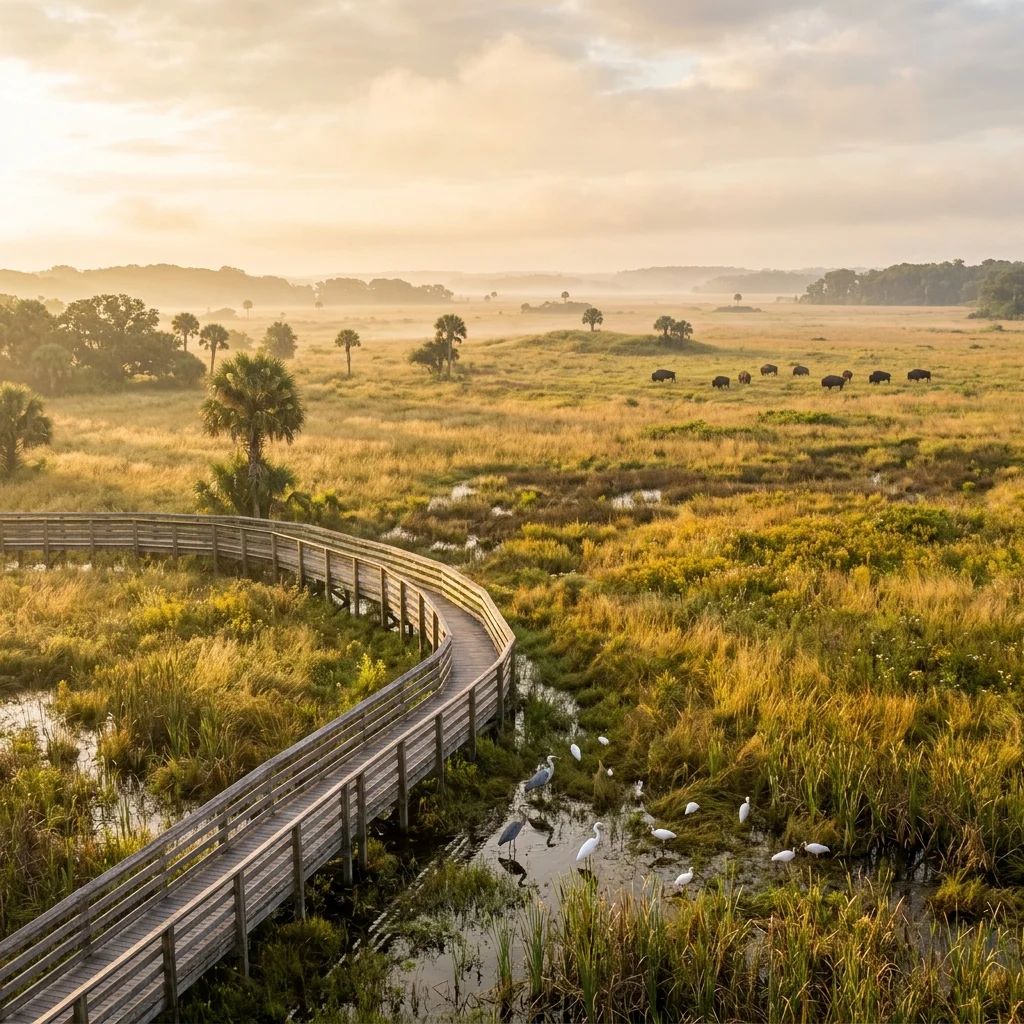
Washington Oaks Gardens State Park

Coquina Rock Beach, Formal Gardens & Florida’s Largest Coastal Rose Garden
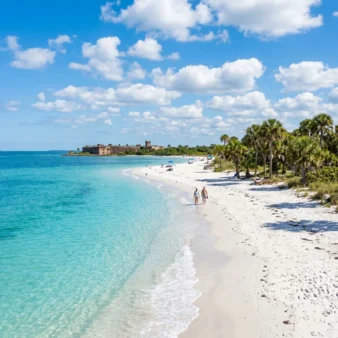
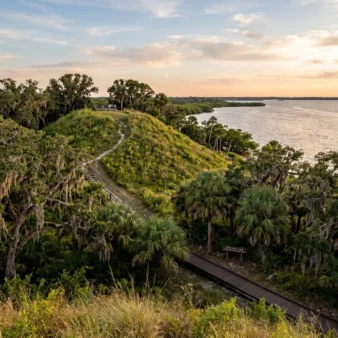
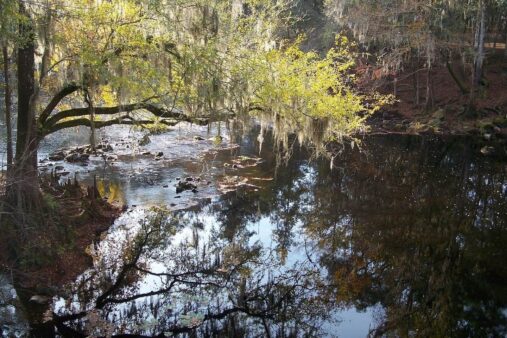
Washington Oaks Gardens State Park in Palm Coast, Florida, is a botanical and geological treasure stretching from the Atlantic Ocean to the Matanzas River. The park is famous for two things: a stunning coquina rock shoreline that creates one of the most photographed beaches in Florida, and meticulously maintained formal gardens built beneath ancient live oaks draped in Spanish moss.
The Coquina Beach
The Atlantic-side beach at Washington Oaks is unlike any other in Florida. Instead of flat sand, ancient coquina rock formations — compressed shells and coral from the Anastasia formation, hundreds of thousands of years old — jut from the shoreline, creating dramatic tide pools, channels, and rock gardens. The formations shift with the seasons as storms move sand on and off the beach, so the landscape changes from visit to visit.
This is a beachcombing and photography destination, not a swimming beach. Explore tide pools teeming with small marine life at low tide.
The Gardens
- Formal Gardens: A curated collection of native and exotic plants — azaleas, camellias, bird of paradise — shaded by ancient live oak hammock
- Rose Garden: The largest public rose garden on the Florida coast, featuring ~150 hybrid tea roses in a 3,000-square-foot circular design. Peak bloom: early May.
- Oak Hammock: Walking paths through towering live oaks draped in resurrection fern and Spanish moss
Activities
- Hiking & Biking: Short trails through maritime hammock and along the Matanzas River seawall
- Fishing: Cast from the seawall along the Matanzas River
- Birding: Shorebirds, wading birds, and songbirds throughout the diverse habitats
- Picnicking: Shaded areas with tables available throughout the gardens
Visitor Tips
- No Camping: Day use only. Open daily 8 AM–sunset, year-round.
- Entry Fee: $5 per vehicle (up to 8 people).
- Best Time: Early May for rose bloom; winter for comfortable temps and bird migration; low tide for the best coquina rock exploration.
- Location: Between St. Augustine and Daytona Beach — a perfect stop on a coastal road trip.
Frequently Asked Questions
How much does it cost to enter a Florida state park?
Most Florida state parks charge $4 to $6 per vehicle (up to 8 occupants). An individual annual pass costs $60, and a family annual pass costs $120, covering unlimited visits to all state parks.
Can I swim with manatees at Florida state parks?
While you cannot swim with manatees (they are protected), several spring parks like Blue Spring State Park offer excellent viewing from boardwalks. Manatees gather in springs from November through March when river temperatures drop.
Are alligators dangerous in Florida state parks?
Alligators are present in virtually all freshwater bodies in Florida. They are generally not aggressive toward humans, but you should never approach, feed, or harass them. Keep children and pets at a safe distance from water edges.
What is the best time to visit Florida state parks?
Winter and spring (November through April) offer the best conditions: pleasant temperatures, low humidity, fewer mosquitoes, and peak manatee viewing. Summer brings extreme heat, humidity, and daily thunderstorms.
Explore More Florida State Parks
Washington Oaks Gardens State Park is one of many outstanding state parks in Florida. Discover more parks in our Best State Parks in Florida guide, or use our Park Finder to search by activity, location, or features.