Valley of Fire State Park
🏆 Nevada’s Oldest State Park — #2 Most-Searched in America — Updated for 2026 with current fees, trail closures, and seasonal tips

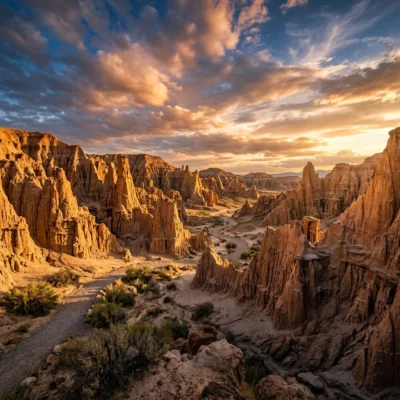
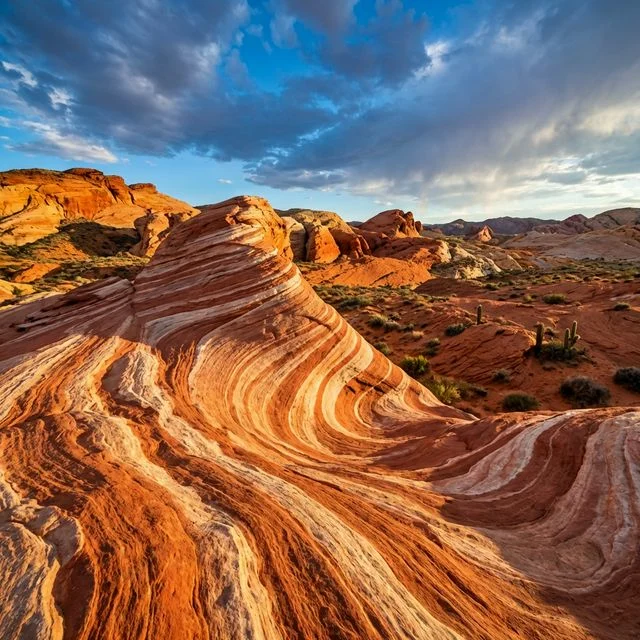
The sunrise paints already-red sandstone in impossible shades of crimson and orange. Waves of stone — white and red stripes frozen in time — ripple across the desert floor like an ocean that turned to rock 150 million years ago. In the distance, a natural arch frames the morning sky, and somewhere in these canyons, petroglyphs carved 2,000 years ago still tell their ancient stories. This is Valley of Fire — Nevada’s oldest, largest, and most spectacular state park.
Welcome to Valley of Fire State Park, a landscape so otherworldly it has served as Mars, alien planets, and prehistoric Earth in dozens of Hollywood productions. Located just 50 miles northeast of Las Vegas, the park’s 40,000+ acres of brilliantly colored Aztec Sandstone offer an escape from the neon Strip into a world of natural fire. Established in 1935 as Nevada’s first state park, this geological masterpiece preserves formations that appear to blaze in the sunlight — hence the name — creating one of the most photogenic landscapes in the American Southwest.
But Valley of Fire is more than stunning geology. The park preserves thousands of ancient petroglyphs carved by the Basketmaker and Ancestral Puebloan peoples over 2,000 years ago. Two campgrounds offer overnight experiences beneath stars undimmed by city lights. And trails ranging from easy strolls to challenging scrambles provide access to iconic formations like the Fire Wave, Elephant Rock, Pink Canyon, and the striking White Domes — where an abandoned 1960s movie set adds a surreal touch. For visitors to Las Vegas seeking a half-day escape into genuine wilderness, there is no better option within an hour’s drive.
☀️ Summer Heat Warning — Trail Closures
Valley of Fire lives up to its name: summer temperatures regularly exceed 110°F (43°C) and can reach 120°F. From approximately May through September, several popular trails are CLOSED due to extreme heat, including the Fire Wave, White Domes Loop, and Seven Wonders Loop. If you must visit in summer, arrive at sunrise, hike only short trails (Elephant Rock, Arch Rock), carry at least 1 gallon of water per person, and leave by 10 AM. Best months: October through April.
What Makes Valley of Fire Legendary
Fire Wave
“Nevada’s Wave” — zebra-striped sandstone frozen in ribbons of red and white. No permit needed.
Elephant Rock
Natural rock formation shaped like an elephant — easy, family-friendly trail near the east entrance.
3,000+ Year Old Petroglyphs
Ancient rock art by Basketmaker and Ancestral Puebloan peoples at Atlatl Rock and Mouse’s Tank.
150 Million Years of Fire
Aztec Sandstone — ancient Jurassic sand dunes turned to stone, blazing red with iron oxide.
Hiking Trails
Valley of Fire’s trails range from 5-minute roadside stops to multi-hour scrambles through slot canyons. Unlike many desert parks, most trails here are short — but what they lack in distance they make up for in visual drama. Every trail delivers payoff-per-step that’s hard to match anywhere in the Southwest.
| Trail | Distance | Difficulty | Highlights | Summer Status |
|---|---|---|---|---|
| 🔥 Fire Wave / Seven Wonders | 1.5 mi RT / 4.4 mi loop | Easy-Moderate | Zebra-striped sandstone waves, Pastel Canyon, Pink Canyon | ⛔ CLOSED May-Sep |
| 🏔️ White Domes Loop | 1.25 mi loop | Moderate | Slot canyon, colorful sandstone, abandoned movie set | ⛔ CLOSED May-Sep |
| 🐘 Elephant Rock | 0.5 mi RT | Easy | Iconic elephant-shaped rock; family-friendly | ✅ Open (go early) |
| 🐭 Mouse’s Tank | 0.75 mi RT | Easy | Petroglyphs along canyon walls; natural water basin | ✅ Open (go early) |
| 🏛️ Atlatl Rock | Short stairs | Easy | Best petroglyph viewing; metal staircase to rock face | ✅ Open |
| 🌀 Arch Rock | Roadside | Easy | Natural sandstone arch; great photo spot | ✅ Open |
| 🌈 Rainbow Vista | 1.0 mi RT | Easy | Panoramic views of multi-colored sandstone landscape | ✅ Open (go early) |
| 🔭 Fire Canyon / Silica Dome | Overlook (short walk) | Easy | Sweeping views of Fire Canyon; large silica dome | ✅ Open |
| 🐝 Beehives | Roadside | Easy | Unique honeycomb-shaped erosion patterns in sandstone | ✅ Open |
Fire Wave: Nevada’s Most Photographed Trail
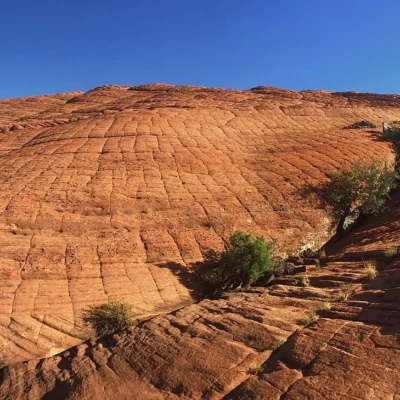
The Fire Wave is Valley of Fire’s signature attraction — a stunning formation of swirling red and white sandstone that resembles frozen ocean waves. Often called “Nevada’s Wave” as an accessible alternative to the famous permit-only Wave in Arizona’s Vermilion Cliffs, Fire Wave delivers similar jaw-dropping geology without the lottery system, without the permit, and without the 6-mile hike. You just park and walk 0.75 miles across open desert to reach it.
The Seven Wonders Loop (4.4 miles) extends the Fire Wave trail into a circuit that includes Pastel Canyon — a narrow slot canyon with pastel-pink walls — and Pink Canyon, where the sandstone glows in shades of salmon and rose. This loop is the best way to experience the full range of Valley of Fire’s geological diversity in a single hike.
| Detail | Fire Wave Only | Seven Wonders Loop |
|---|---|---|
| 📏 Distance | 1.5 miles round trip | 4.4 miles loop |
| 💪 Difficulty | Easy to Moderate | Moderate (some scrambling) |
| ⏱️ Time | 1-1.5 hours | 3-4 hours |
| 📸 Best Light | Sunrise or late afternoon | Start at sunrise for full loop |
| ⛔ Summer | CLOSED May-September | CLOSED May-September |
| 💧 Water | Bring 1 liter minimum | Bring 2+ liters minimum |
📸 Fire Wave Photography Tips
- Best light: Sunrise offers warm, low-angle light that makes the stripes glow — and virtually no other people
- Equipment: Wide-angle lens (16-24mm) to capture the sweeping wave patterns. Polarizing filter cuts glare on the stone
- Perspective: Get low — lying flat on the sandstone and shooting along the surface exaggerates the wave effect dramatically
- Overcast days: Actually excellent — reduce harsh shadows and improve color saturation in the stripes
- Avoid midday: The overhead sun flattens the formations and washes out the reds
Elephant Rock & White Domes

Elephant Rock is exactly what it sounds like — a natural sandstone formation that strikingly resembles an elephant, complete with a trunk reaching toward the ground. Located near the park’s east entrance, it’s the most accessible trail in Valley of Fire and perfect for families with small children. The short walk takes you past other fascinating formations as well — look for natural arches and hoodoos along the way.

The White Domes Loop (1.25 miles) is a must-do for its variety — within a single short loop, you’ll walk through a dramatic narrow slot canyon, pass the crumbling remains of a 1966 movie set (from “The Professionals” starring Burt Lancaster), and traverse landscapes of white, pink, and red sandstone. The slot canyon section is the highlight — walls tower overhead in bands of cream and rust, narrowing to just shoulder-width in places.
Ancient Petroglyphs
Valley of Fire preserves one of the Southwest’s most significant collections of prehistoric rock art. Petroglyphs carved into the sandstone by the Basketmaker people (3,000-1,450 years ago) and later by the Ancestral Puebloans (1,500-850 years ago) depict humans, animals, geometric patterns, and scenes that still puzzle archaeologists. These weren’t graffiti — they were meaningful communications, likely recording events, marking territory, or serving ceremonial purposes.
| Site | Access | What You’ll See |
|---|---|---|
| 🏛️ Atlatl Rock | Metal staircase to viewing platform | Best-preserved petroglyphs in the park. Depicts an atlatl (ancient spear-thrower), bighorn sheep, and human figures. The metal stairs bring you face-to-face with 3,000-year-old art |
| 🐭 Mouse’s Tank Trail | 0.75 mi easy trail | Petroglyphs scattered along both canyon walls. Named for a Southern Paiute renegade who hid here in the 1890s. The “tank” is a natural water basin at the end |
| 🪨 Petroglyph Canyon | Various pull-offs along Valley of Fire Hwy | Less visited, more dispersed rock art. Requires more exploring but rewards with solitude |
🚫 Protect the Petroglyphs — Federal Law
These rock carvings are irreplaceable archaeological treasures protected by the Archaeological Resources Protection Act. Do NOT touch, trace, chalk, wet, or disturb petroglyphs. Oils from human skin accelerate deterioration. Photography is encouraged; physical contact carries fines up to $20,000.
Scenic Drives
Even if you never leave your car, Valley of Fire delivers. The park’s two main roads pass through some of the most visually dramatic landscapes accessible by vehicle in the Southwest.

| Route | Distance | Highlights |
|---|---|---|
| 🛣️ Valley of Fire Highway | ~10.5 miles (West to East Entrance) | Main park road. Passes Arch Rock, Beehives, Seven Sisters, and The Cabins. Stunning red rock walls on both sides |
| 🛣️ Mouse’s Tank Road (White Domes Road) | ~7 miles (dead-end) | Branches north from the highway. Passes Rainbow Vista, Fire Wave Trailhead, Mouse’s Tank, and ends at White Domes Trailhead. The park’s most scenic stretch |
Pro tip: Drive the full park at sunrise or sunset for the most dramatic colors. The sandstone literally glows in low-angle light. Mouse’s Tank Road is especially spectacular — pull over at Rainbow Vista for a panoramic photo that captures the full color spectrum of Valley of Fire.
Visitor Center
The Valley of Fire Visitor Center is an essential first stop, especially for first-time visitors. Located along the main park road, the building itself is designed to blend into the surrounding sandstone landscape.
- ⏰ Hours: 9:00 AM – 4:00 PM daily (closed Christmas Day)
- 📚 Exhibits: Geology, ecology, Native American history, and wildlife displays
- 🗺️ Trail Maps: Free park maps and current trail condition information
- 🎁 Gift Shop: Books, postcards, souvenirs, and regional guides
- 🚻 Restrooms: Clean, well-maintained — one of the few facilities in the park
- 💧 Water: Fill your bottles here — there’s limited water elsewhere in the park
Geology: 150 Million Years of Fire
The brilliant red rock of Valley of Fire is Aztec Sandstone — the fossilized remains of vast sand dunes that covered this region 150 million years ago during the Jurassic period, when dinosaurs roamed and this area looked more like the Sahara Desert than the Mojave. Wind-blown sand accumulated in massive dune fields, eventually compressing and cementing into stone under the weight of newer deposits. The cross-bedding patterns you see — the sweeping curves and swirls in the rock — are the preserved internal structure of those ancient dunes, frozen in stone.
The red color comes from iron oxide (rust) that coats the individual sand grains. Where iron is absent, the stone remains white or cream-colored — which is why the Fire Wave’s zebra stripes exist. Different concentrations of iron, deposited by groundwater over millions of years, created the park’s entire color palette.
- 🔴 Red/Orange: Iron oxide (rust) staining — the dominant color, especially vivid at sunrise and sunset
- ⚪ White/Cream: Pure silica sand without iron — most visible at Fire Wave and White Domes
- 🟤 Brown bands: Varying iron concentrations create the striped patterns
- 🔥 “Fire” effect: Sunlight reflecting off iron oxide at certain angles creates the appearance of living flame
- 🪨 Gray limestone: The older Kaibab formation (250 million years) underlies the Aztec Sandstone and is visible in some areas
Photography Guide
📸 Best Photo Spots & Camera Settings
• Fire Wave (sunrise): Arrive 20 min before sunrise. Shoot along the surface with a wide-angle (16mm). f/11, ISO 100. The low angle makes the stripes glow. You’ll have the entire formation to yourself at dawn.
• Elephant Rock (mid-morning): Best with front lighting. 35-50mm lens captures the full elephant shape. Include a person for scale — the formation is larger than it appears in photos.
• White Domes Slot Canyon (10 AM-2 PM): Overhead sun penetrates the slot, creating shafts of light. ISO 400-800, f/4-5.6. The narrow walls bounce warm light beautifully.
• Atlatl Rock Petroglyphs (morning): Side-lighting reveals the carvings best. Shoot from the metal staircase platform. 70-200mm lens for detail shots of individual petroglyphs.
• Rainbow Vista (sunset): West-facing overlook catches the last light across the entire valley. Panoramic shots with a wide-angle. Tripod recommended for HDR brackets.
• Stargazing (night): Valley of Fire has Bortle Class 3-4 dark skies. For Milky Way, visit March-October. Set up at the Arch Rock campground area. 14-20mm, f/2.8, 20-25 sec, ISO 3200-6400.
Camping Under Dark Skies
Valley of Fire’s two campgrounds offer a desert camping experience that’s hard to match anywhere near Las Vegas. The real magic happens after dark — with almost no light pollution, the Milky Way arches clearly overhead, and on moonless nights, the number of visible stars is staggering. If you’re debating between a day trip and an overnight, choose overnight.
| Campground | Sites | Amenities | Price |
|---|---|---|---|
| 🏕️ Atlatl Rock | 44 | Shaded tables, grills, water, restrooms, showers, dump station; some sites with RV hookups (W/E) | $20/night + $10 for hookups |
| 🏕️ Arch Rock | 29 | Shaded tables, grills, water, restrooms; more primitive, quieter feel, closer to natural formations | $20/night |
🏕️ Camping Strategy
- Reservations: Most sites are first-come, first-served — arrive by early Friday morning for weekend stays. Reservations available through ReserveNevada.com for some sites
- Best season: October–April. Summer camping is not recommended (dangerous heat, even at night)
- Stargazing: Bring binoculars or a telescope — Bortle Class 3-4 dark skies are exceptional. The Milky Way is visible March–October
- Pro tip: Arch Rock campground is quieter and more immersive for stargazing. Atlatl Rock is better for RVs and families needing showers
- Pets: Allowed on leash (6 ft max) in campgrounds and on trails. Not allowed in the Visitor Center
When to Visit: Seasonal Guide
| Season | Months | Temps | Trails | Best For |
|---|---|---|---|---|
| 🍂 Fall | Oct–Nov | 60-85°F | All open | 🏆 Hiking, photography, camping — perfect balance |
| ❄️ Winter | Dec–Feb | 40-65°F | All open | Fewest crowds, comfortable midday hiking, crisp light |
| 🌸 Spring | Mar–Apr | 60-85°F | All open | Wildflowers (after wet winter), pleasant weather |
| ☀️ Summer | May–Sep | 100-120°F | Many CLOSED | ⚠️ Dangerous heat — sunrise-only visits, short trails only |
Best Overall: Late October through mid-November is the sweet spot — all trails are open, temperatures hover around 70°F, crowds are thinner than spring, and the low-angle autumn sunlight makes the red sandstone absolutely glow. If you can only visit once, pick a Tuesday or Wednesday in early November.
Sample Itineraries
🌅 Half-Day Trip from Las Vegas (4-5 Hours)
6:00 AM — Leave Las Vegas. Grab coffee at a drive-through on I-15 North. 7:00 AM — Arrive at west entrance. Pay $15 entry fee. Drive to Fire Wave Trailhead on Mouse’s Tank Road. 7:15 AM — Hike Fire Wave trail (1.5 mi RT, ~75 min). Catch sunrise light on the striped formations. 8:45 AM — Drive to Elephant Rock near east entrance (15 min). Quick 20-min walk to the formation. 9:15 AM — Stop at Atlatl Rock. Climb the metal stairs to see 3,000-year-old petroglyphs face-to-face. 9:45 AM — Visit the Visitor Center. Browse exhibits, refill water, use restrooms. 10:15 AM — Drive the scenic Valley of Fire Highway. Stop at Arch Rock and Beehives for photos. 11:00 AM — Head back to Las Vegas or continue to Lake Mead (30 min east).
🏕️ Overnight Camping Trip (Full Experience)
Day 1 Afternoon: Arrive at Atlatl Rock campground, set up camp. Walk to Atlatl Rock petroglyphs (5 min). Drive to Rainbow Vista for sunset photography. Day 1 Evening: Campfire dinner. Watch the stars emerge — the Milky Way is clearly visible from camp. Day 2 Sunrise: Drive to Fire Wave trailhead. Hike the full Seven Wonders Loop (4.4 mi, 3-4 hours) — Fire Wave → Pastel Canyon → Pink Canyon. Day 2 Late Morning: White Domes Loop (1.25 mi) — slot canyon and abandoned movie set. Day 2 Afternoon: Mouse’s Tank trail for petroglyphs. Pack up camp and head out via the scenic Lake Mead route.
Budget Calculator
| Expense | Half-Day Trip | Overnight (2 people) | Notes |
|---|---|---|---|
| Vehicle Entry | $15 | $15 | $10 for NV residents; $75/year annual pass |
| Camping (1 night) | — | $20-30 | $20 standard + $10 hookups if needed |
| Gas (from Vegas) | $10-15 | $10-15 | ~100 miles round trip |
| Water & Supplies | $5-10 | $15-25 | No stores in park — buy everything in Las Vegas |
| Food | $0 (bring lunch) | $20-40 | No restaurants in or near the park |
| Estimated Total | $30-$40 | $80-$125 | One of the best-value day trips from Las Vegas |
Money-Saving Tip: If you plan to visit Valley of Fire more than 5 times per year (locals/photographers), the Nevada State Parks Annual Permit ($75) pays for itself quickly. It covers entry to all Nevada state parks including nearby Cathedral Gorge, Berlin-Ichthyosaur, and Kershaw-Ryan.
Safety & Desert Survival
| Hazard | Risk Level | Prevention |
|---|---|---|
| 🌡️ Extreme Heat | VERY HIGH (summer) | Visit Oct-Apr. In summer, hike only at sunrise. Carry 1 gallon water per person. Heat stroke kills — recognize symptoms: confusion, no sweating, rapid pulse |
| 🐍 Rattlesnakes | Moderate | Watch where you step and place your hands, especially near rock crevices. Most active spring-fall. Give them wide berth — they’re protected wildlife |
| 🦂 Scorpions | Low-Moderate | Shake out shoes and clothing left on the ground, especially at campgrounds. Check sleeping bags before entry |
| 📱 No Cell Service | High (navigation risk) | Download offline maps before arriving. Tell someone your plans. The park has very limited cell coverage — don’t rely on your phone for navigation |
| ⛈️ Flash Floods | Moderate (monsoon season) | Avoid slot canyons during storms. July-September monsoon season can produce sudden, deadly floods in narrow canyons with zero warning |
| 🌵 Desert Plants | Low | Cholla cactus segments can detach and attach to skin/clothing. Stay on trails. Long pants protect legs |
Emergency: 911 (may not connect without cell service). Park Office: (702) 397-2088. Nearest hospital: Mesa View Regional Hospital, Mesquite — 35 miles from the park.
Packing List
☀️ October–April (Peak Season): Sturdy hiking shoes (sandstone can be slippery), 2+ liters of water per person, sun hat, sunscreen (SPF 50+), sunglasses, layers (desert mornings are cold — 40s°F — but afternoons hit 70-80s°F), camera with wide-angle lens, offline map downloaded to phone, snacks (no food available in park).
🔥 Summer (if you must): Everything above PLUS: electrolyte packets, light-colored sun-protective clothing (long sleeves), cooling towel, extra gallon of water in the car, first aid kit with heat exhaustion supplies. Start hiking at sunrise, return to car by 9 AM. No exceptions.
🏕️ Camping Add-ons: Headlamp (no light pollution = very dark), warm sleeping bag (desert nights drop to 30-40°F in winter), campfire wood (purchase in Overton or Las Vegas — no gathering in park), binoculars or telescope for stargazing, tarp for shade.
Hollywood Connection
Valley of Fire’s alien landscape has served as a stand-in for other planets, prehistoric Earth, and fantasy worlds in dozens of productions. The White Domes area still contains the crumbling remains of a set from “The Professionals” (1966). Film crews continue to use the park regularly:
- 🖖 Star Trek: Generations (1994) — Captain Kirk’s final scenes
- 🎬 Total Recall (1990) — Mars surface sequences
- 🦖 One Million Years B.C. (1966) — Raquel Welch’s prehistoric landscape
- 🏎️ Transformers (2007) — Desert battle sequences
- 📺 Countless commercials, music videos, fashion shoots, and Instagram content
Getting There
Valley of Fire sits in the Mojave Desert approximately 50 miles northeast of the Las Vegas Strip. There are two ways to reach the park — the fast way and the scenic way.
🚗 Fast Route (1 hour from the Strip)
- Take I-15 North from Las Vegas for ~35 miles
- Take Exit 75 → head East toward Valley of Fire / Lake Mead
- Continue ~17 miles to the West Entrance Station
🛣️ Scenic Route via Lake Mead (1.5 hours)
- Take I-15 North → Lake Mead Blvd East
- Turn right onto Lakeshore Road (NV-166)
- Continue to Northshore Drive (NV-167)
- Follow to the East Entrance of Valley of Fire
- This route passes along Lake Mead with dramatic desert lake views
Address: 29450 Valley of Fire Road, Overton, NV 89040
Nearby Attractions
Valley of Fire pairs perfectly with other attractions in the Las Vegas / Southern Nevada region:
- 🌊 Lake Mead National Recreation Area: 30 minutes south. Swimming, boating, fishing on America’s largest reservoir. The drive between the two along Northshore Road is spectacular
- 🏜️ Red Rock Canyon National Conservation Area: 1 hour west (back toward Vegas). Scenic 13-mile loop drive and hiking. A different geological story — Aztec Sandstone here too, but different formations
- 🌵 Lost City Museum (Overton): 15 minutes from the park’s east entrance. Excellent museum covering the Ancestral Puebloan settlements that once thrived in this region
- 🎰 Las Vegas Strip: 50 miles southwest. The contrast between neon casinos and ancient sandstone in a single day is one of Nevada’s great experiences
- 🏔️ Cathedral Gorge State Park: 2 hours north. Dramatic clay spires and narrow slot canyons — a completely different desert landscape
Frequently Asked Questions
How long should I plan to visit Valley of Fire?
A half-day (3-4 hours) covers the greatest hits: Fire Wave, Elephant Rock, and Atlatl Rock petroglyphs. A full day allows you to hike the Seven Wonders Loop, visit White Domes, and explore the scenic drives. Camping overnight is the ultimate experience — sunsets, stargazing, and sunrise at Fire Wave with no crowds make the extra time absolutely worth it.
Is Valley of Fire worth the drive from Las Vegas?
Without question. One hour from the Strip, Valley of Fire is another world entirely. It’s one of the best half-day escapes from Las Vegas and far less crowded than Red Rock Canyon. The dramatic contrast between casinos and 150-million-year-old sandstone formations makes for an unforgettable day.
Can I visit Valley of Fire in summer?
Technically yes, but with serious caution. Temperatures regularly exceed 110°F and can hit 120°F. Several popular trails — including Fire Wave, White Domes Loop, and Seven Wonders Loop — are closed from approximately May through September. If you must visit, arrive at sunrise, stick to short trails (Elephant Rock, Arch Rock), carry at least 1 gallon of water per person, and leave by 10 AM.
Is Fire Wave really as good as “The Wave” in Arizona?
Different but absolutely comparable. Fire Wave doesn’t require a permit, a lottery, or a 6-mile hike — making it accessible to everyone. The striped sandstone patterns are stunning and photograph beautifully. Arizona’s Wave purists may see differences, but the vast majority of visitors are thrilled by Fire Wave. The zero-barrier access is a major advantage.
Are pets allowed in Valley of Fire?
Yes — dogs are welcome on all trails and in campgrounds but must be kept on a leash no longer than 6 feet. Pets are NOT allowed inside the Visitor Center. Be aware that desert ground temperatures can burn paw pads in warm weather — if it’s too hot for your bare hand, it’s too hot for their feet.
Is there cell phone service in the park?
Very limited. Most of the park has no cell coverage at all. Download offline maps (Google Maps or AllTrails) before arriving. Tell someone your plans before entering the park. The Visitor Center area may have weak signal, but don’t count on it.
How much does it cost to enter Valley of Fire?
Entry is $15 per vehicle for non-Nevada residents and $10 per vehicle for Nevada residents (2026 prices). An annual Nevada State Parks permit is available for $75 and covers entry to all Nevada state parks. Camping is $20/night for standard sites plus $10 extra for RV hookups.
Can I see the Milky Way from Valley of Fire?
Yes — Valley of Fire has outstanding dark skies (Bortle Class 3-4), making it one of the best stargazing locations within an hour of a major city. On moonless nights from March through October, the Milky Way is clearly visible. The campgrounds provide perfect viewing conditions with no artificial light sources.
What’s the difference between the two campgrounds?
Atlatl Rock (44 sites) is the larger, more developed campground with showers, a dump station, and some RV hookup sites. It’s adjacent to the Atlatl Rock petroglyphs. Arch Rock (29 sites) is smaller, more primitive, and quieter — better for tent campers seeking a more immersive desert experience and superior stargazing.
Do I need a guide or tour from Las Vegas?
No — Valley of Fire is entirely self-guided and well-signed for independent visitors. The park is easy to navigate with a simple map from the Visitor Center. That said, guided tours from Las Vegas (some include ATV experiences) can be convenient if you don’t want to rent a car. Self-driving gives you more flexibility and is significantly cheaper.

🔥 Where Ancient Dunes Turned to Fire
Fifty miles from the neon glitter of Las Vegas lies a landscape 150 million years in the making. Valley of Fire is the antidote to the Strip — a place where time is measured in geological epochs, where ancient peoples left messages we still can’t fully decode, and where the stone itself appears to burn in the desert sun. Walk the frozen waves. Stand face-to-face with 3,000-year-old rock art. Watch the canyon walls ignite at sunset. Camp beneath a canopy of stars so bright you’ll forget Las Vegas exists. This is Nevada’s oldest state park, and it deserves more than a quick photo stop.
📍 Address: 29450 Valley of Fire Road, Overton, NV 89040
📞 Phone: (702) 397-2088