
Westmoreland State Park
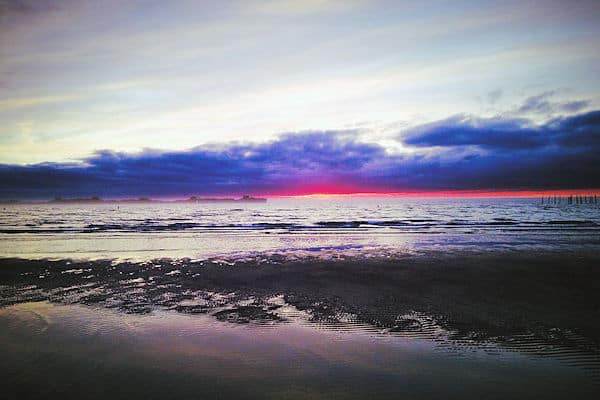
Westmoreland State Park sits on 1,321 acres along the Potomac River in Virginia’s Northern Neck region, where towering Horsehead Cliffs rise 150 feet above the water and beaches are littered with 15-million-year-old shark teeth and marine fossils. This is one of the most geologically fascinating state parks on the East Coast — and one of the best places in Virginia to literally pick up prehistoric history with your bare hands.
Built in part by the Civilian Conservation Corps (CCC) during the 1930s, Westmoreland combines dramatic river scenery, fossil hunting, scenic hiking trails, camping, and cabin stays into a family-friendly package that’s just 90 minutes from Washington, DC.
Quick Facts at a Glance
| Location | Westmoreland County, Virginia (Northern Neck / Potomac River) |
| Park Size | 1,321 acres |
| River Frontage | 1.5 miles along the Potomac River |
| Key Feature | Horsehead Cliffs (150 ft) & Fossil Beach |
| Fossils | 15-million-year-old shark teeth, whale bones, marine shells |
| Trails | ~6 miles of hiking trails |
| Camping | Campground B (33 sites, water/50-amp electric) + cabins |
| Discovery Center | Fossil exhibits, educational programs |
| Nearest City | Montross, VA |
Fossil Beach: 15 Million Years Under Your Feet
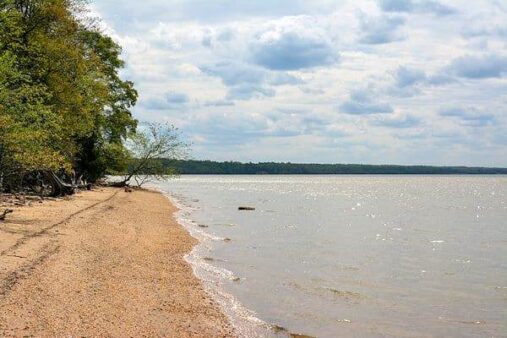
Westmoreland’s star attraction is Fossil Beach, where the erosion of the Horsehead Cliffs continuously exposes fossils from the Miocene epoch (15 million years ago). When this area was submerged beneath a warm, shallow sea, sharks, whales, rays, and shellfish thrived here. Their fossilized remains are now scattered across the beach after every rain and high tide.
What you can find:
- Shark teeth — from multiple species including ancestors of the Great White, Bull Shark, and Mako
- Whale bone fragments — dark, dense, and unmistakable
- Ray dental plates — smooth, rounded crushing teeth
- Scallop and oyster shells — fossilized marine shells embedded in clay
- Whale ear bones — rare finds prized by collectors
Fossil hunting tips:
- Bring a small sifter or colander to screen gravel and sand
- Hunt at low tide after storms for the best finds — erosion uncovers fresh fossils
- Look for dark, shiny triangular shapes among the gravel — that’s shark teeth
- The Big Meadow Trail leads directly down to Fossil Beach
- All fossils you find on the beach are yours to keep
Discovery Center
The park’s Discovery Center features fossil exhibits, geological displays, and educational programs including shark tooth necklace making and guided fossil hikes — excellent for kids and families.
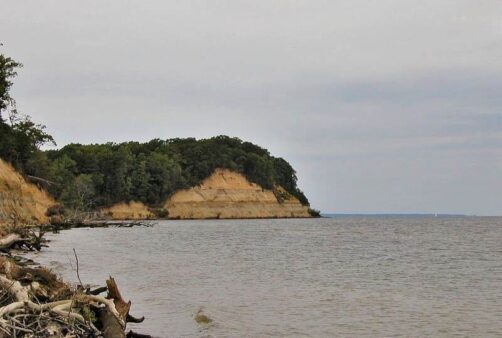
Horsehead Cliffs
These dramatic 150-foot sandstone and clay cliffs are the park’s most striking visual feature. Formed from layered Miocene-era sediments, they’re constantly eroding — which is what keeps Fossil Beach supplied with fresh finds. Several trails offer cliff-top views of the Potomac River stretching toward Maryland.
Trails & Hiking
Westmoreland offers approximately 6 miles of hiking trails through coastal forest and along river bluffs:
| Trail | Highlights | Difficulty |
| Big Meadow Trail | Access to Fossil Beach, meadow wildflowers | Easy-Moderate |
| Beach Trail | Stunning Potomac River views along the cliffs | Moderate |
| Laurel Point Trail | Wooded peninsula, river overlooks | Moderate (steep sections) |
| Turkey Neck Trail | Remote forest loop, wildlife spotting | Moderate |
| Rock Spring Pond Trail | Freshwater pond, amphibian habitat | Easy |
| CCC Fitness Trail | Exercise stations, bike-friendly | Easy |
Wildlife
- Bald Eagle — nesting along the Potomac, frequently visible from cliffs
- Osprey — diving for fish in the river, nesting on platforms
- Great Blue Heron — wading in shallow river coves
- White-tailed Deer — common along forest trails
- Box Turtle — frequently seen on trails in summer
Camping & Cabins
Campground B (recently renovated): 33 sites with water and 50-amp electric hookups. Restrooms with showers.
Cabins: Currently undergoing major renovations (anticipated completion March 2027). Check with the park for availability.
Note: The park swimming pool has been permanently closed. Swimming in the Potomac is at your own risk.
How to Get There
- From Washington, DC (1.5 hours): I-95 South to Route 3 East to Route 347 North.
- From Richmond (1.5 hours): I-95 North to Route 3 East.
- From Fredericksburg (45 min): Route 3 East directly to the park.
Insider Tips
- Low tide after a storm = best fossil hunting — check tide charts before you go
- Bring a sifter — a small kitchen colander works perfectly for screening shark teeth
- Morning light on Horsehead Cliffs is spectacular for photography
- Visit in spring for Bald Eagle and Osprey nesting season along the river
- The Discovery Center fossil programs are excellent for kids — check the schedule online
- Combine with George Washington’s Birthplace (national monument, 2 miles east)
Frequently Asked Questions
Can I keep the fossils I find?
Yes — any fossils found on the beach are yours to keep. The ongoing erosion of Horsehead Cliffs continuously exposes fresh specimens.
What kind of shark teeth can I find?
Multiple species from the Miocene epoch (15 million years ago), including ancestors of the Great White Shark, Bull Shark, and Mako Shark. Teeth range from tiny (pea-sized) to occasionally impressive specimens over an inch.
Can I swim in the Potomac River?
Swimming is permitted at your own risk — there are no lifeguards. The park pool is permanently closed.
Explore More Virginia State Parks
Discover more in our Best State Parks in Virginia guide, or use our Park Finder to search by activity or features.