Fort Churchill State Park
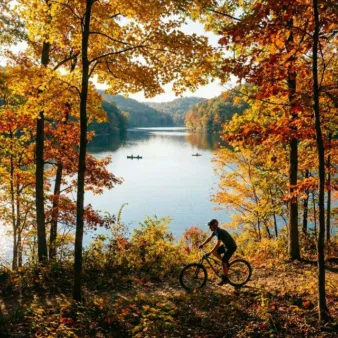
Kanawha State Forest is a stunning 9,300-acre mountainous retreat located just seven miles from downtown Charleston, West Virginia’s state capital. This remarkable proximity to an urban center belies the wild, deeply forested character of the landscape — here you’ll find more than 60 miles of trails threading through rugged Appalachian hollows, past rock outcrops, and over forested ridgelines. Originally developed by the Civilian Conservation Corps (CCC) during the 1930s, Kanawha State Forest has evolved into one of West Virginia’s premier destinations for hiking, mountain biking, and camping, offering genuine mountain wilderness just minutes from civilization.
🚴 Mountain Biking Hotspot
With 60+ miles of trails including purpose-built singletrack with berms, drops, and rock gardens, Kanawha State Forest is one of West Virginia’s top mountain biking destinations. Trails range from beginner-friendly forest roads to expert technical descents.
Trails & Hiking
| Trail | Distance | Difficulty | Highlights |
|---|---|---|---|
| 🌿 Spotted Salamander Trail | 0.25 mi | Easy (ADA) | Paved, wheelchair-accessible, near campground |
| 🏞️ CCC Snipe Trail | 0.75 mi | Easy | Historic CCC-era route through mature forest |
| 🌲 Davis Creek Trail | 2.5 mi | Easy-Mod | Gentle creek-side hike, great for beginners |
| 🔭 Overlook Rock Trail | 1.5 mi | Moderate | Panoramic views into surrounding hills and hollows |
| 🪨 Alligator Rock Trail | 0.5 mi | Moderate | Distinctive rock formation at trail’s end |
| 💧 Hemlock Falls Trail | 0.75 mi | Moderate | Passes through hemlock groves to waterfall |
| 🐍 Rattlesnake Trail | 1.0 mi | Moderate | Rocky terrain, rewarding ridgeline views |
| 🏔️ Ballard Trail | 1.5 mi | Strenuous | Tough climb with rocks and roots, views at top |
| 🌲 Wildcat Ridge Trail | 2.0 mi | Strenuous | Remote ridgeline through dense forest |
| 🐦 Pigeon Roost Trail | 0.75 mi | Moderate | Ascends Pigeon Roost Hollow, MTB-friendly |
Kanawha State Forest’s trail network is remarkably diverse, ranging from the paved, wheelchair-accessible Spotted Salamander Trail (perfect for families with strollers) to the rugged Ballard Trail, which challenges even experienced hikers with steep, root-laced climbs. The Overlook Rock Trail is particularly rewarding: a moderate 1.5-mile hike that culminates in a panoramic viewpoint overlooking the forest’s seemingly endless green canopy, with distant ridgelines fading into haze on humid summer mornings.
For nature lovers, the Hemlock Falls Trail winds through atmospheric groves of Eastern hemlock to a picturesque waterfall, while the Davis Creek Trail follows a cheerful mountain stream and is the best option for beginning hikers. With 16+ named trails totaling 60+ miles, you could spend a week here and hike a different route every day.
Mountain Biking
Kanawha State Forest has become one of West Virginia’s most popular mountain biking destinations, with 60+ miles of trails open to bikes. The terrain varies dramatically:
| Trail/Route | Difficulty | Character |
|---|---|---|
| 🚴 Davis Creek Trail | Beginner | Smooth, creek-side, few technical sections |
| 🚴 Forest Service Roads | Beginner–Med | Wide gravel roads, rolling terrain |
| 🚴 Black Bear MTB Trail | Intermediate | Purpose-built singletrack, 1 mile |
| 🚴 Pigeon Roost Trail | Intermediate | Moderate climb through hollow |
| 🚴 Teaberry Rock Trail | Expert | Steep descents, tight switchbacks, technical drops |
| 🚴 Mossy Rock | Expert | Technical climb, rock gardens |
The dedicated Black Bear Mountain Bike Trail is a popular singletrack ride with flowing turns through dense forest. For advanced riders, Teaberry Rock Trail serves up steep descents, tight switchbacks, and technical rock sections that rival any trail in the state. The forest’s trail system includes berms, bridges, drops, jumps, and rock gardens — making it a genuine mountain biking playground. Peak season runs summer through early fall when trails are driest, but year-round riding is possible for the adventurous.
Camping
| Site Type | Sites | Features |
|---|---|---|
| ⚡ Electric/Water Hookup | 25 | Electricity + water, fire ring, picnic table |
| ⛺ Primitive Sites | 21 | Tent/small RV (up to 26 ft), fire ring, picnic table |
The 46-site campground sits nestled in a shaded hollow with mature hardwood canopy overhead. Each site comes with a fire ring and picnic table, and campers have access to two bathhouses with flush toilets and hot showers plus coin-operated laundry — a luxury in the woods! The campground operates from April through December (weather permitting), with reservations recommended for weekends throughout the season.
The campground’s proximity to the trail network makes it an ideal base camp for multi-day hiking or biking adventures. Cool mountain air and the sounds of nearby streams create a relaxing atmosphere that feels worlds away from Charleston — despite being just a 15-minute drive.
Wildlife & Nature
| Wildlife | Best Time | Where to Look |
|---|---|---|
| 🦌 White-tailed Deer | Dawn/Dusk | Forest edges, creek valleys |
| 🐻 Black Bear | Spring–Fall | Remote ridgelines, berry patches (rare sighting) |
| 🦃 Wild Turkey | Morning | Forest floor, oak-hickory stands |
| 🐦 Pileated Woodpecker | Year-round | Mature hardwood trees, listen for drumming |
| 🦎 Spotted Salamander | Spring rains | Damp forest floor, small streams (park namesake trail) |
| 🌺 Wildflowers | April–May | Trillium, Virginia bluebells along creek trails |
The forest’s 9,300 acres of contiguous Appalachian hardwood support a rich ecosystem. White-tailed deer are abundant, and the forest is home to black bears — though they’re rarely seen. Spring brings an explosion of wildflowers including trillium, Virginia bluebells, and jack-in-the-pulpit carpeting the forest floor. The spotted salamander — honored with its own accessible trail — is a flagship species of these damp Appalachian woods, emerging during spring rains for dramatic breeding migrations.
Seasonal Guide
| Season | Highlights | Considerations |
|---|---|---|
| 🌸 Spring (Apr–May) | Wildflower carpets, salamander migrations, waterfalls flowing | Muddy trails, campground opening, bugs emerging |
| ☀️ Summer (Jun–Aug) | Peak MTB season, swimming in streams, lush canopy | Hot, humid, afternoon thunderstorms |
| 🍂 Fall (Sep–Nov) | Spectacular Appalachian foliage, ideal hiking temps | Peak foliage mid-October, shorter days |
| ❄️ Winter (Dec–Mar) | Solitude, snow-dusted ridgelines, winter MTB for hardcores | Campground may close, icy trails |
CCC History
Kanawha State Forest was developed during the 1930s by the Civilian Conservation Corps (CCC) as part of the New Deal era’s massive public works program. Young CCC enrollees built the original road system, trails, picnic shelters, and forest infrastructure that still forms the backbone of the park today. Walking the CCC Snipe Trail, you’re literally following in the footsteps of Depression-era workers who transformed this logged-over hillside into the magnificent public forest it is today. The CCC legacy is visible throughout the park in stone walls, bridge abutments, and shelter designs that reflect the craftsmanship of a bygone era.
Budget Planning
| Expense | Cost | Notes |
|---|---|---|
| 🅿️ Day Use | Free | No entry fee for day visitors |
| ⛺ Primitive Camping | $18–22/night | 21 tent/small RV sites |
| ⚡ Electric/Water Camping | $26–30/night | 25 sites with hookups |
| 🏠 Picnic Shelter | $50–100 | Reservable for groups |
Nearby Attractions
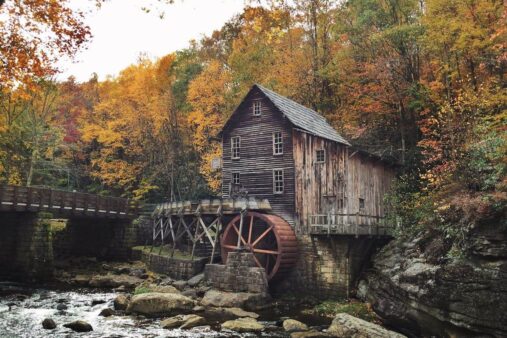
The forest’s proximity to Charleston creates unique pairing opportunities. The West Virginia State Capitol (7 miles) features a stunning gold-leaf dome. The Capitol Market is a year-round farmers market in a restored train station. Coonskin Park (5 miles) offers a golf course and community pool. For more wild places, Babcock State Park (60 miles southeast) has the iconic Glade Creek Grist Mill, while the New River Gorge National Park (60 miles SE) offers world-class climbing and whitewater rafting.
Visitor Information
| Detail | Information |
|---|---|
| 📍 Address | 7500 Kanawha State Forest Drive, Charleston, WV 25314 |
| 📞 Phone | (304) 558-3500 |
| 🌐 Website | WV State Parks – Kanawha |
| 🕐 Hours | 6:00 AM – 10:00 PM daily |
| 💲 Entry Fee | Free |
| 📍 GPS | 38.3003°N, 81.6583°W |
Frequently Asked Questions
Is Kanawha State Forest really only 7 miles from Charleston?
Yes! Kanawha State Forest is located just seven miles south of downtown Charleston, making it one of the most accessible wilderness areas from any state capital in America. The drive takes about 15 minutes from the center of the city.
Can I mountain bike on all trails?
Not all trails. While over 60 miles of trails are available for biking, some trails are designated as foot traffic only. Check the trail map at the forest entrance or visitor center for current trail designations. The Black Bear MTB Trail, Teaberry Rock, and Davis Creek are among the most popular biking routes.
Is there an entry fee?
No. Day use at Kanawha State Forest is free of charge. Fees apply only for camping ($18–30/night depending on site type) and picnic shelter reservations.
Are there wheelchair-accessible trails?
Yes. The Spotted Salamander Trail is a paved, 0.25-mile, wheelchair-accessible trail located near the campground. It provides a gentle introduction to the forest environment and is suitable for visitors with mobility challenges, strollers, and young children.
When is the best time for fall foliage?
Peak fall foliage at Kanawha State Forest typically occurs in mid to late October. The predominantly hardwood forest — including oak, hickory, maple, and beech — creates a spectacular display of reds, oranges, and golds. The Overlook Rock Trail and Ballard Trail offer the best elevated vantage points for autumn views.
🌲 9,300 Acres of Appalachian Wilderness — Minutes from Charleston
With 60+ miles of trails for hiking and mountain biking, shaded camping, and free admission, Kanawha State Forest is one of West Virginia’s most accessible and rewarding outdoor destinations. Visit the WV State Parks website for reservations and trail maps.